
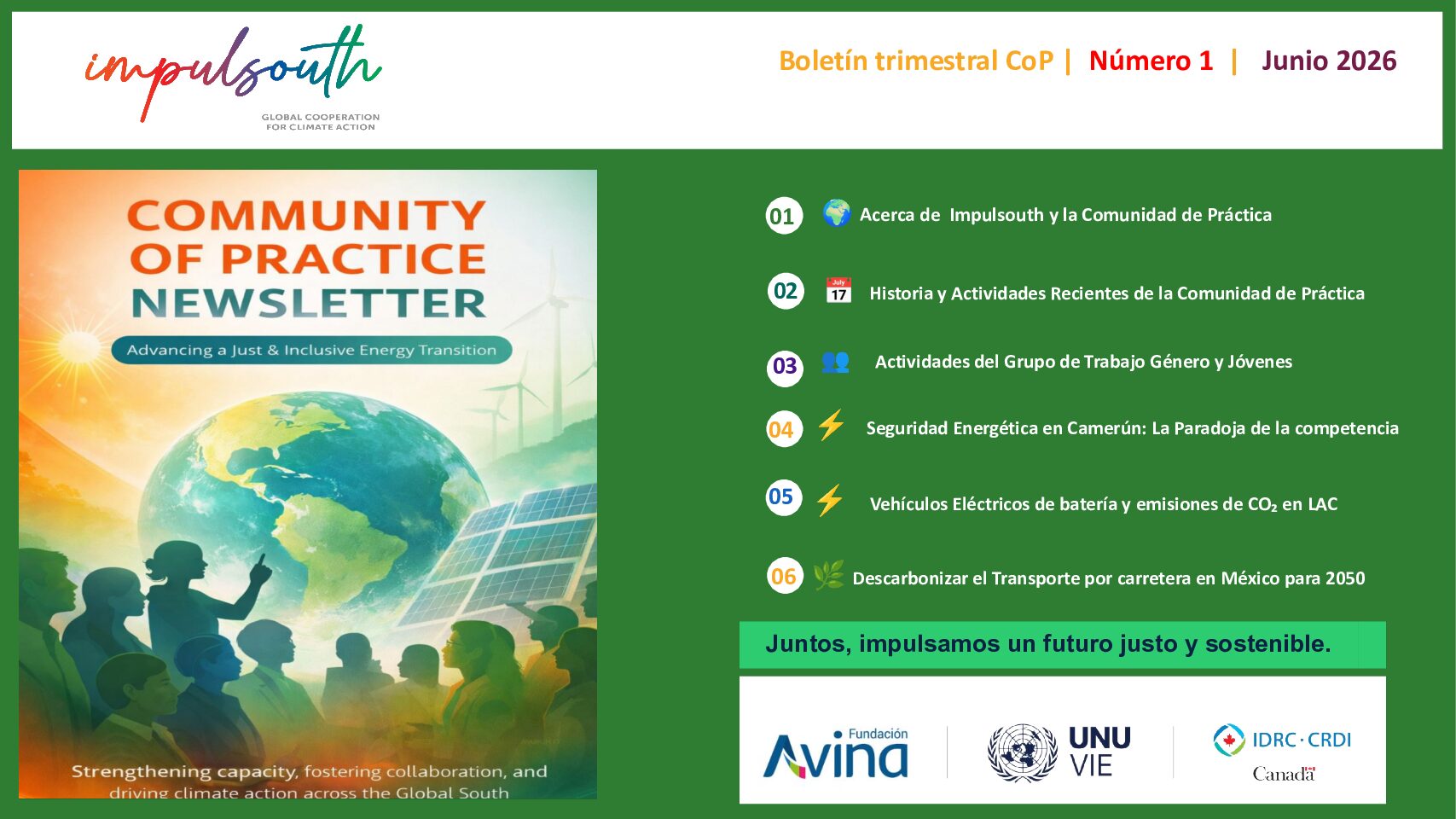
Este es el boletín de la Comunidad de Práctica (CoP) Impulsouth. La CoP es una plataforma colaborativa que fortalece las capacidades dentro del sector energético, apoyando una transición energética justa e inclusiva con un enfoque en la igualdad de género. Al reunir a diversos actores, la CoP promueve el intercambio de conocimientos, fortalece la capacidad … Continue reading “Boletín trimestral de la CoP – Número 1 – junio de 2026”
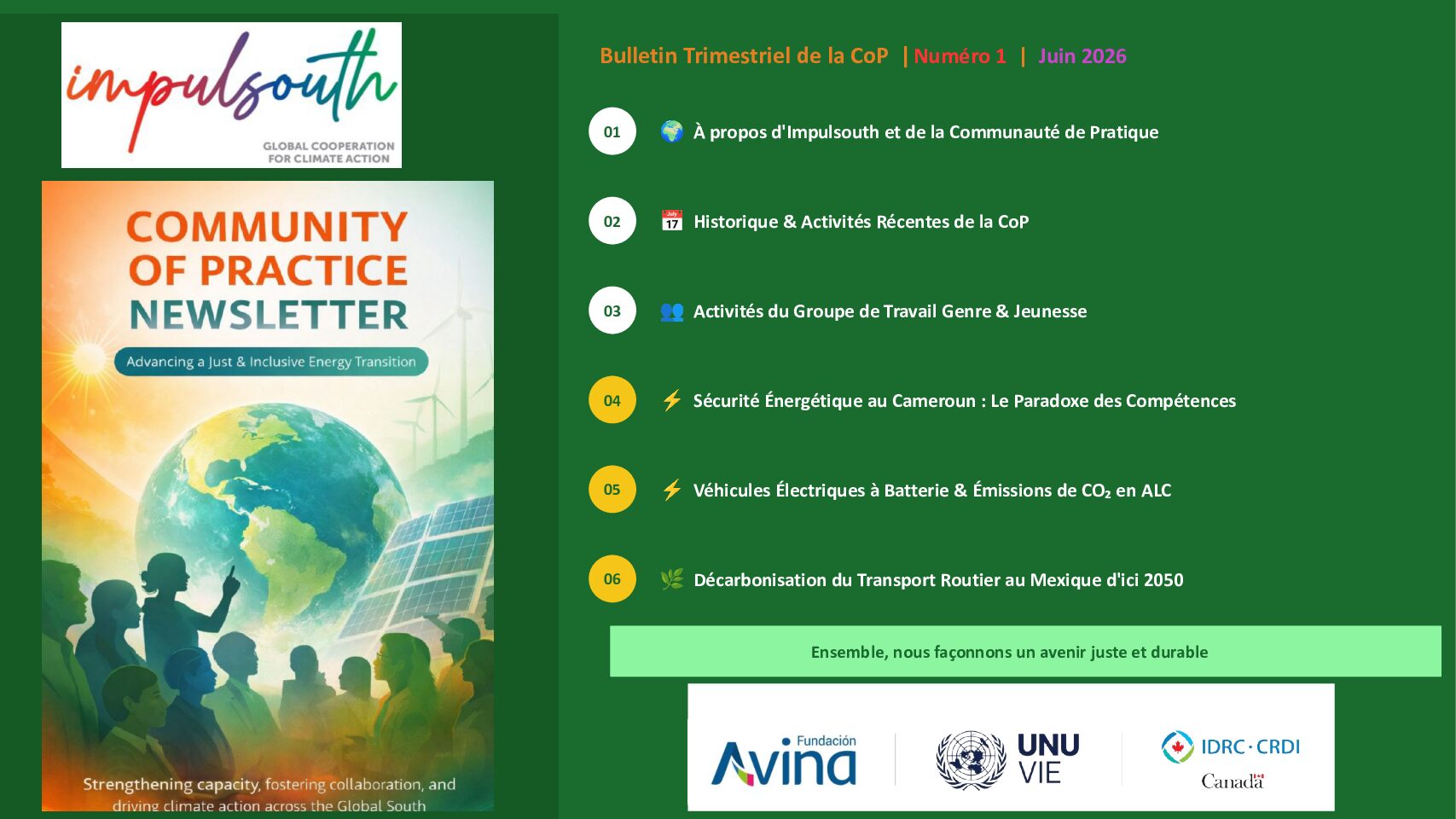
Voici le bulletin d’information de la Communauté de Pratique (CoP) d’Impulsouth. La CoP est une plateforme collaborative qui renforce les capacités dans le secteur de l’énergie, en soutenant une transition énergétique juste et inclusive, avec un fort accent sur l’égalité de genre. Réunissant diverses parties prenantes, la CoP favorise le partage de connaissances, renforce les … Continue reading “Bulletin trimestriel de la Communauté de Pratique (CoP) d’Impulsouth – Numéro 1 – Juin 2026”
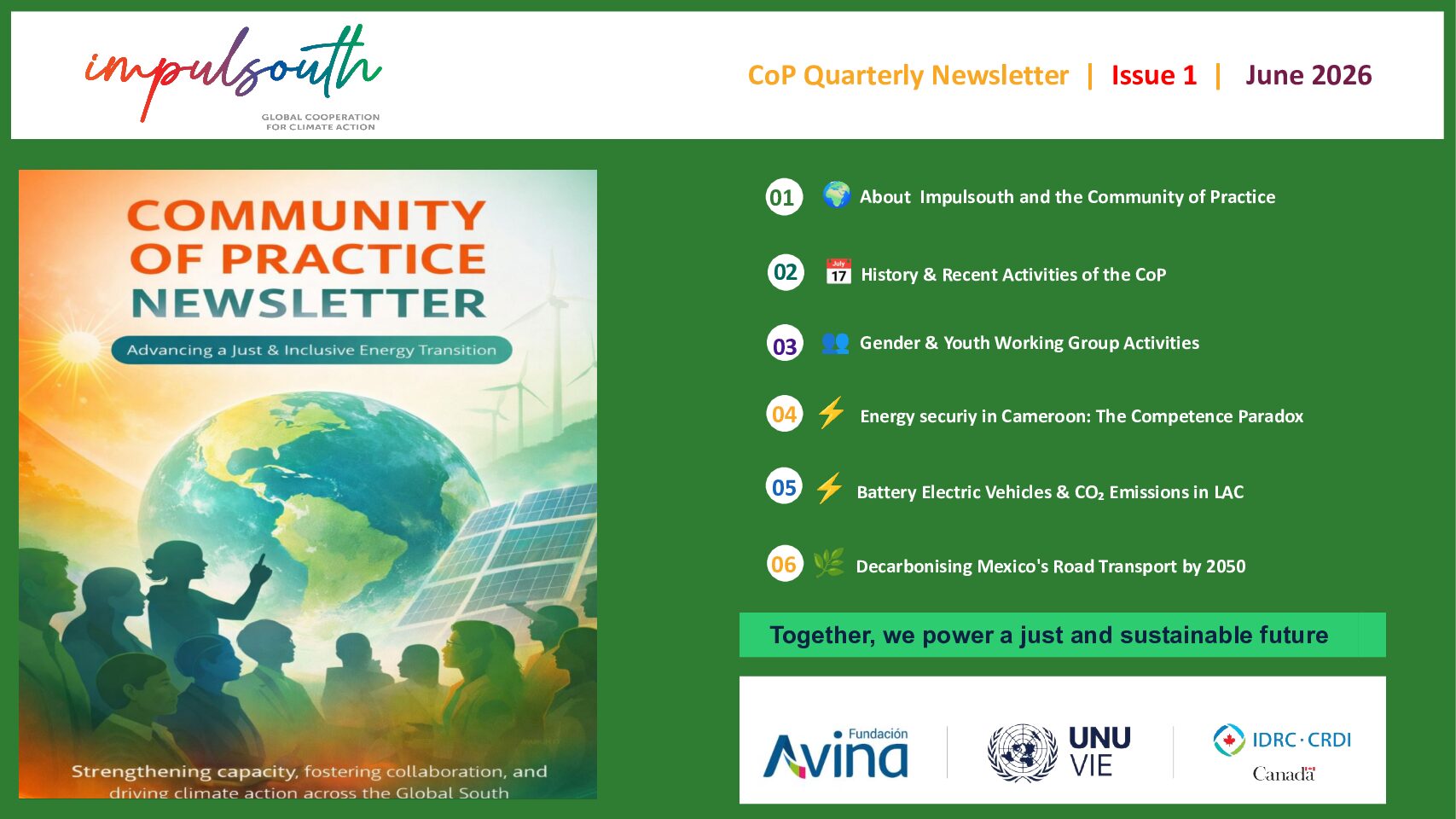
This is the Impulsouth Community of Practice (CoP) newsletter. The CoP is a collaborative platform that strengthens capacities within the energy sector, supporting a just and inclusive energy transition with a strong focus on gender equality. Bringing together diverse stakeholders, the CoP fosters knowledge exchange, strengthens institutional capacity, and promotes effective South-South cooperation across nine … Continue reading “CoP Quarterly Newsletter – Issue 1 – June 2026”
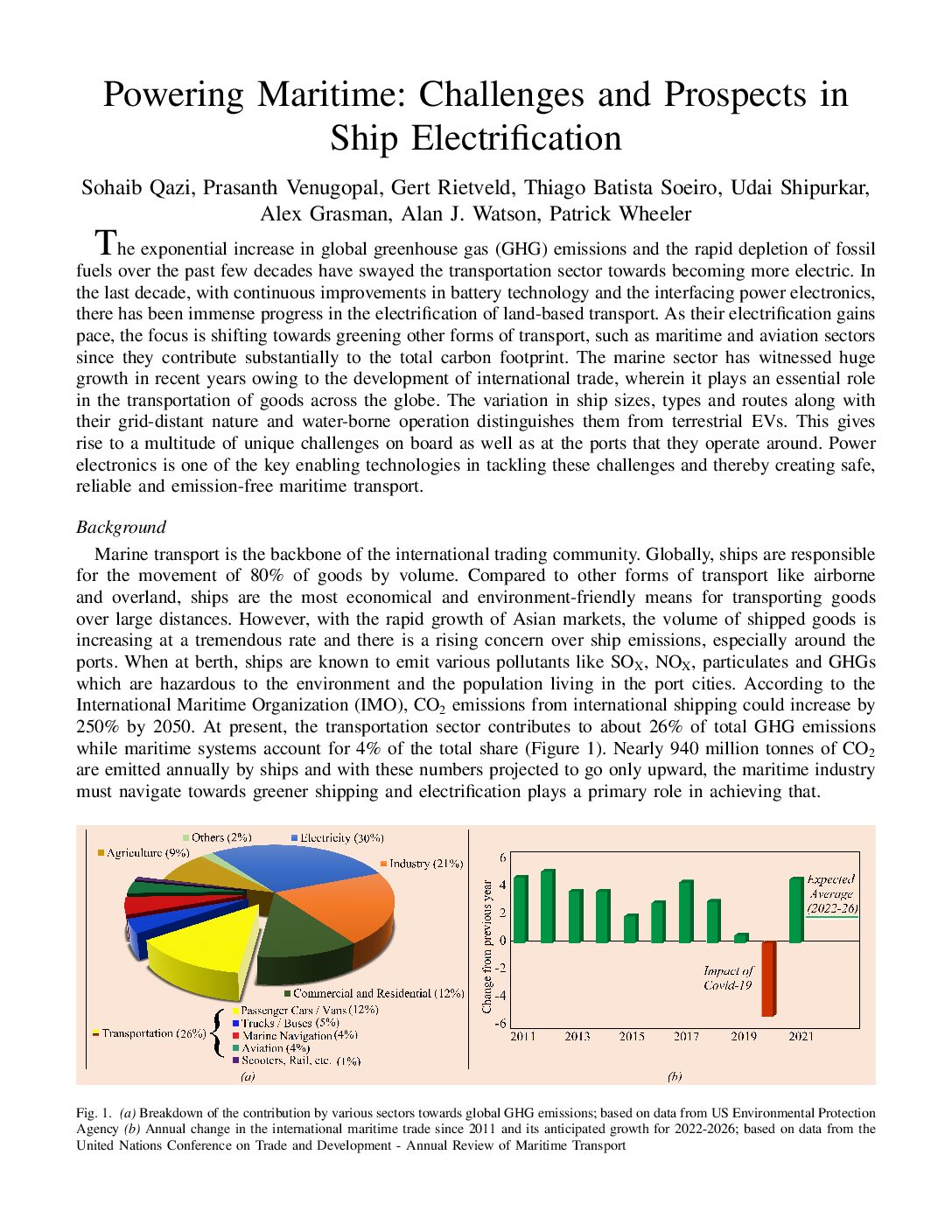
This research paper gives an overview of the technical challenges for both ports and shipping companies associated with the electrification of shipping, and explains how electric ships could work.
This report highlights the importance of sector coupling as a key source of flexibility that cities can explore to stabilise power grid operations when integrating high shares of variable renewable energy sources. It presents a range of sector coupling opportunities available for use in cities, including self-consumption of variable RE sources, the role of thermal … Continue reading “Sector Coupling in Facilitating Integration of Variable Renewable Energy in Cities”
This document discusses how transitioning fossil fuel-powered urban mobility to renewable energy-based e-mobility can mitigate different environmental issues.
This report offers a comprehensive view of the advantages and challenges of electric mobility development jointly with the development of electrical infrastructure for the Latin American context, emphasizing the importance of synchronizing these developments to facilitate the energy transition and leverage underlying new technologies.
This report provides answers to three critical questions: Why should developing countries pursue e-mobility? When does an accelerated transition to electric vehicles (EVs) make sense for developing countries? How can governments make this transition happen?
This brief provides a high-level overview of the status of Uganda’s off-grid solar markets, as well as relevant policies and programs.
RENAC offers a range of affordable online courses on most technical aspects of energy transitions, from systems design to carbon pricing.