
This guide aims to accelerate the flexibility and responsiveness of learning systems by providing guidance on the design, issue and recognition of micro-credentials.
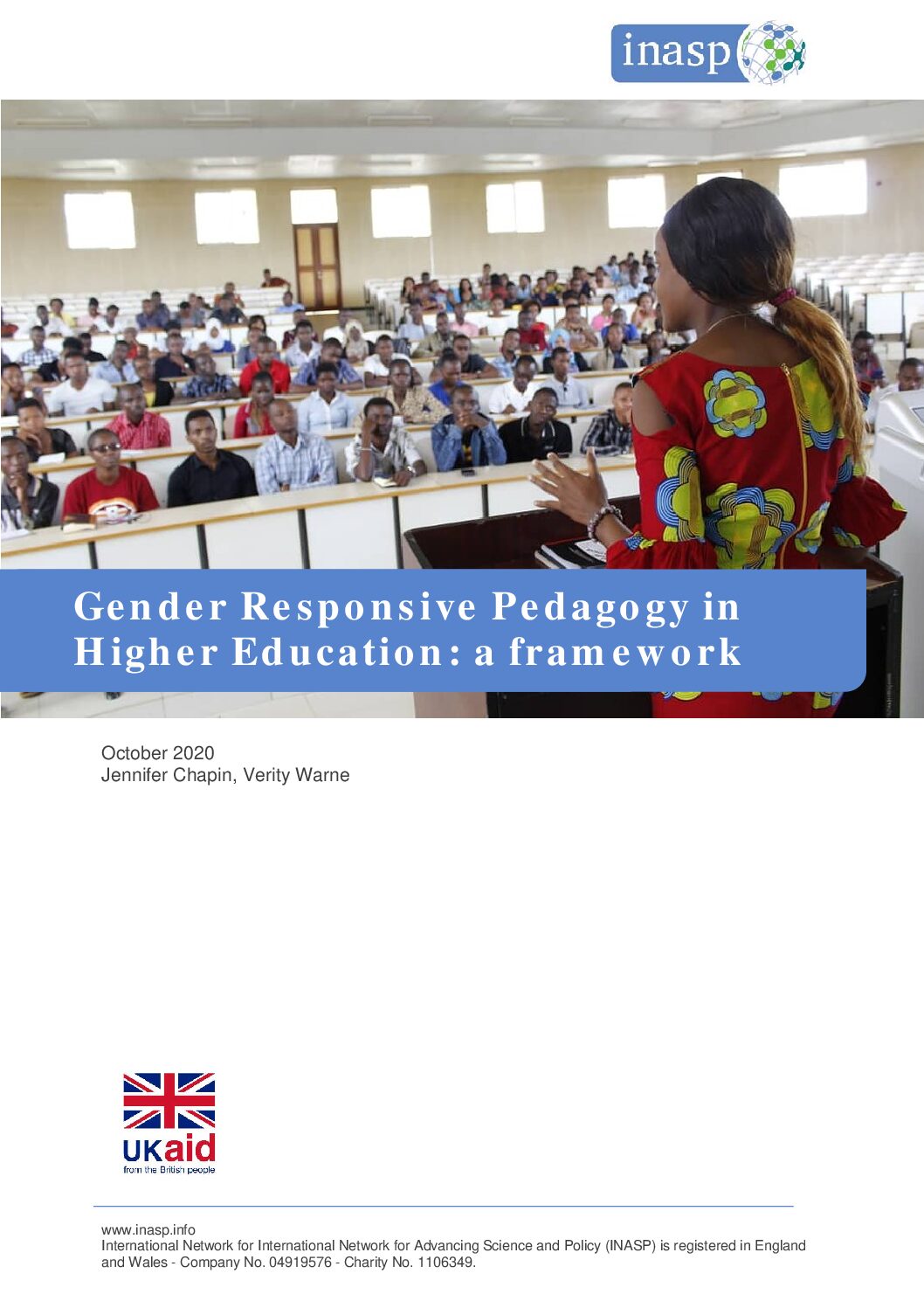
This report describes an approach to gender-responsive pedagogy by working with faculty in higher education to build an awareness of gendered stereotypes and biases in their teaching and learning, and, from there, explore new practices.
Institutions all over the world are setting up microcredentials in responses to calls from governments and industry: short courses, usually offered online by accredited institutions, with an emphasis on the needs of the workplace. They are also often used for retraining and upskilling. This book explains how to start offering microcredentials as an academic institution.
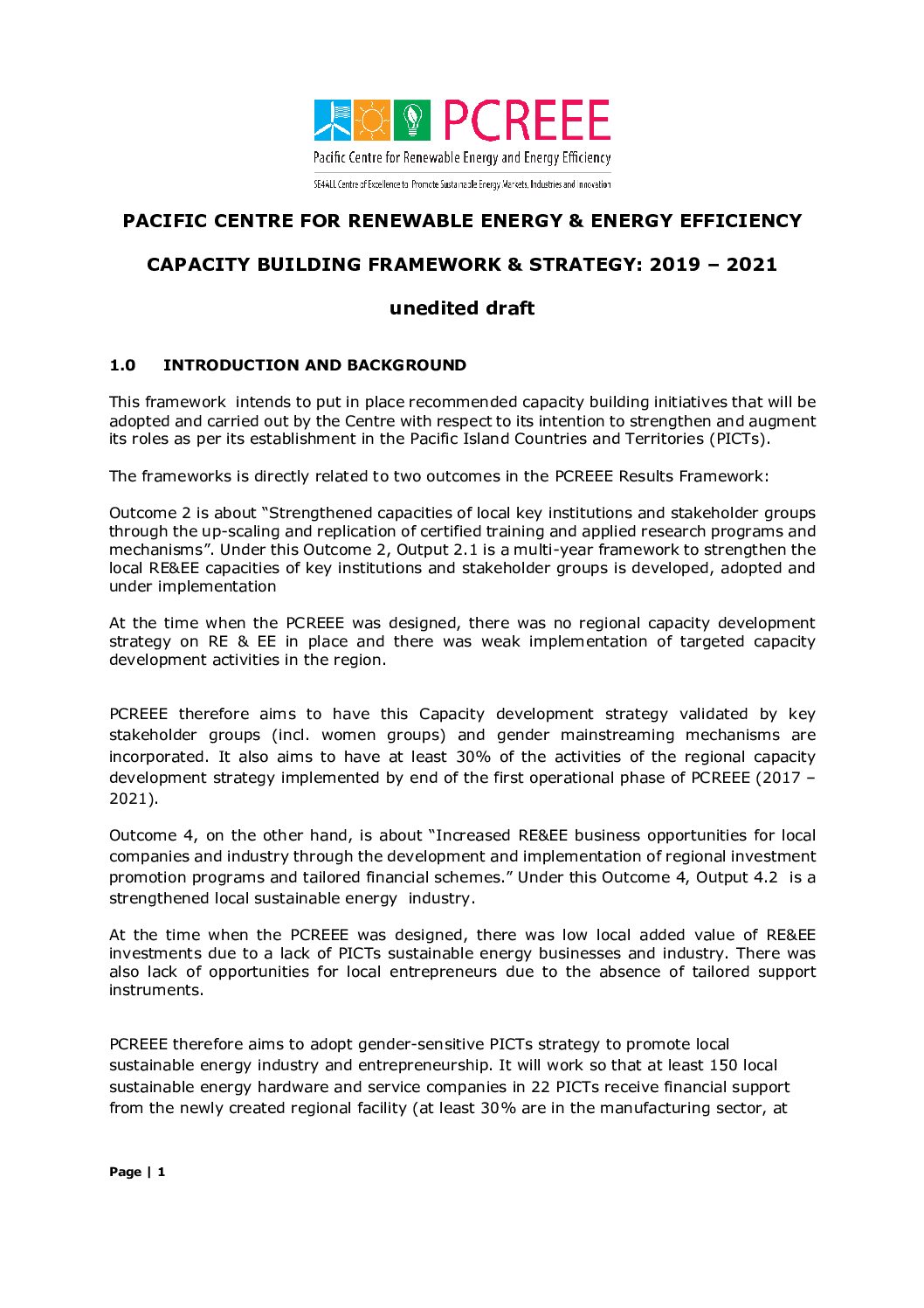
This is an example of a regional capacity building strategy based on a comprehensive needs assessment.
A course on energy subsidies, their costs, and the design of a successful reform based on country case studies.
The is comprehensive course is intended for energy statisticians working at national statistical offices and ministries in charge of energy.
This course offers an introduction to the SEEA – Energy.
These guidelines aim to support countries to improve their policies, technologies and environmental conditions for the deployment of small hydropower.
This paper shares lessons for donors, policymakers in beneficiary governments, and financial institutions on whether and how best to deploy blended finance in the clean energy sector.
This paper underscores the need for sustainable utilities to deliver the energy transition in lower- and middle-income countries, and provides recommendations to governments and other stakeholders.