
This is a good practice example of a ministerial agreement to promote the design and implementation of gender-inclusive strategies in the Ecuadorian energy sector.
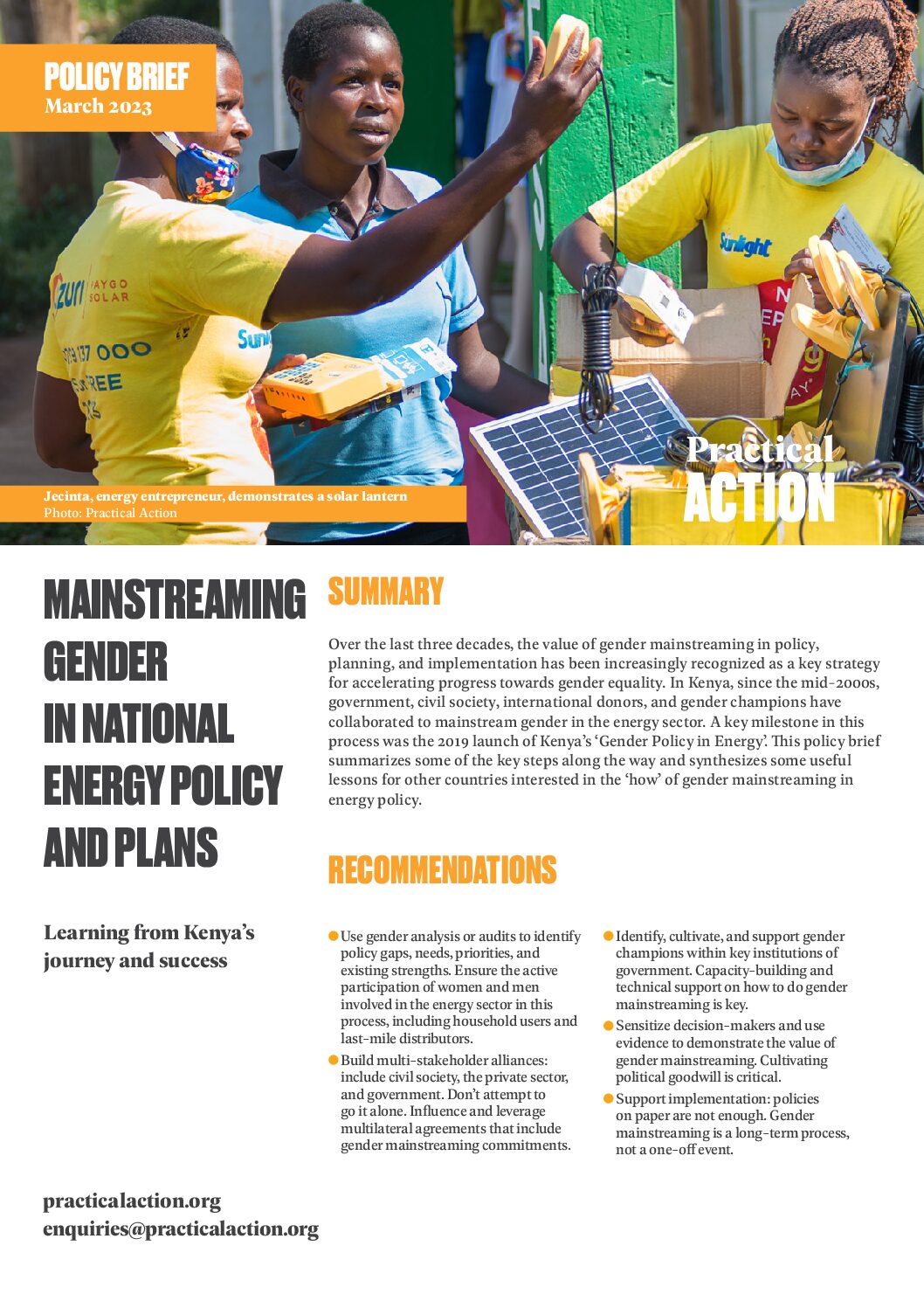
This brief shares learnings about mainstreaming gender in energy policies, based on the process through which the Government of Kenya developed its Gender Policy in Energy.
This is a good practice example of a gender policy for a national energy ministry.
This report provides concrete instructions on how to develop a gender-sensitive energy policy.
This toolkit provides advice on how to assess capacity needs for the implementation of the Paris Agreement, and provides good practice examples and further resources.
This tool helps governments and universities ensure that gender equality is mainstreamed in national curricula
This resource pack includes six modules to train users in the development of gender-responsive STEM education: (i) policy formulation; (ii) curriculum development and design; (iii) strategies for pedagogy, learning and assessment; (iv) teacher education and teacher professional development; (v) resources; and (vi) community involvement.
The CaDRE methodology helps policy makers, organisations and capacity development/renewable energy practitioners shape an environment conducive to the development of renewable energy.
The CaDRE methodology helps policy makers, organisations and capacity development/renewable energy practitioners shape an environment conducive to the development of renewable energy.
This guide aims to help energy statisticians understand the various elements and processes involved in renewable energy data collection and management, and identify capacity gaps. It covers seven requirements for effective data management: 1. Legal and institutional frameworks; 2. Well-defined data requirements; 3. Sufficient skilled personnel; 4. Clear methodologies and processes; 5. Appropriate data collection … Continue reading “Capacity needs assessment for renewable energy statistics”