
Este es el boletín de la Comunidad de Práctica (CoP) Impulsouth. La CoP es una plataforma colaborativa que fortalece las capacidades dentro del sector energético, apoyando una transición energética justa e inclusiva con un enfoque en la igualdad de género. Al reunir a diversos actores, la CoP promueve el intercambio de conocimientos, fortalece la capacidad … Continue reading “Boletín trimestral de la CoP – Número 1 – junio de 2026”
Voici le bulletin d’information de la Communauté de Pratique (CoP) d’Impulsouth. La CoP est une plateforme collaborative qui renforce les capacités dans le secteur de l’énergie, en soutenant une transition énergétique juste et inclusive, avec un fort accent sur l’égalité de genre. Réunissant diverses parties prenantes, la CoP favorise le partage de connaissances, renforce les … Continue reading “Bulletin trimestriel de la Communauté de Pratique (CoP) d’Impulsouth – Numéro 1 – Juin 2026”
This is the Impulsouth Community of Practice (CoP) newsletter. The CoP is a collaborative platform that strengthens capacities within the energy sector, supporting a just and inclusive energy transition with a strong focus on gender equality. Bringing together diverse stakeholders, the CoP fosters knowledge exchange, strengthens institutional capacity, and promotes effective South-South cooperation across nine … Continue reading “CoP Quarterly Newsletter – Issue 1 – June 2026”
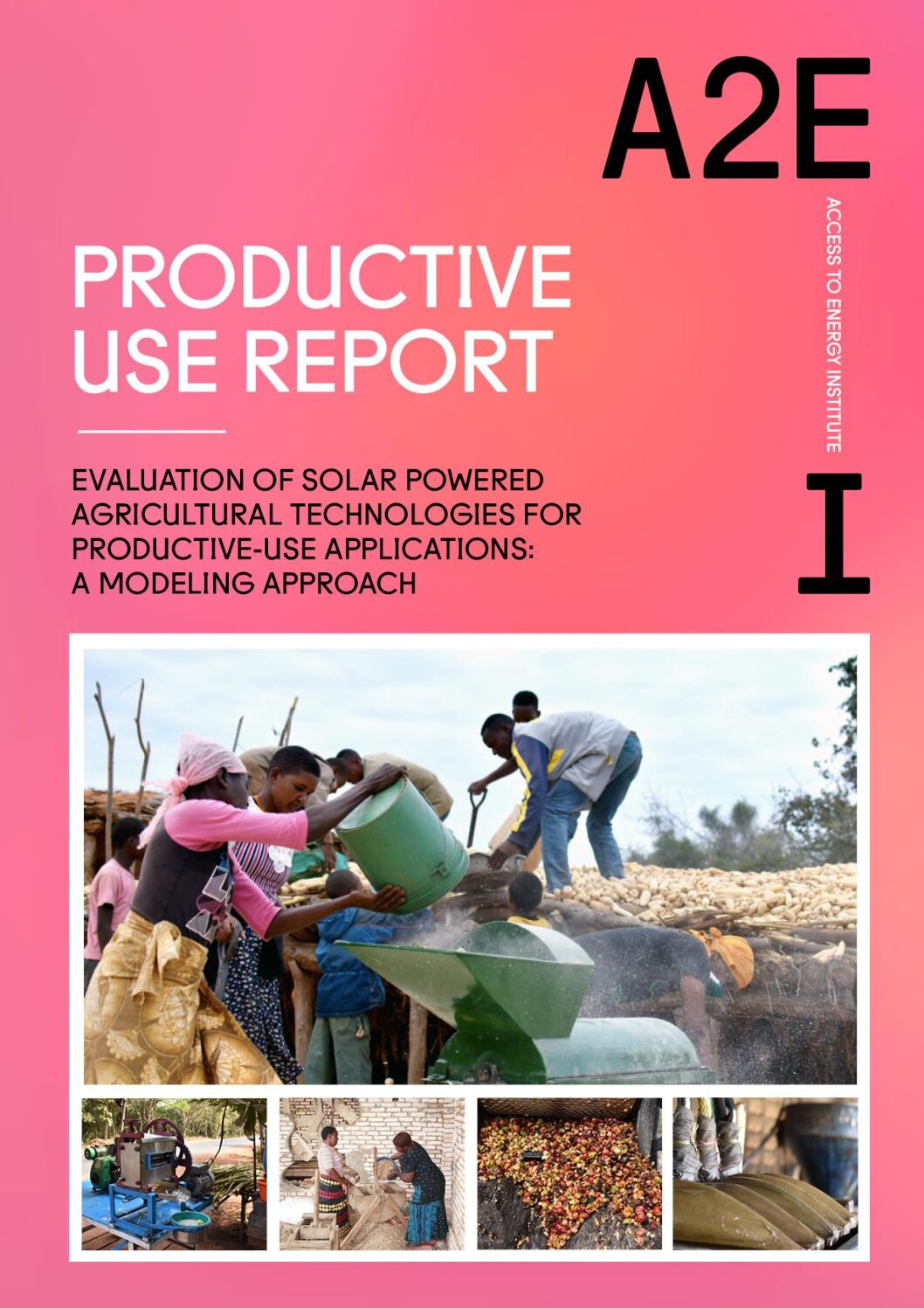
This report uses economic modelling to investigate the viability of ten different productive use applications of solar power in agriculture (oil extraction, maize shelling, rice hulling, fruit juice making, sugar cane juicing, fruit drying, flour milling, peanut shelling and coffee pulping). It investigates each technology in detail and then calculates the profits and other benefits … Continue reading “Productive Use Report – Evaluation of solar-powered agricultural technologies for productive-use applications: A modelling approach”
This brief report introduces the concept of the WEF nexus and explains how the FAO has applied the nexus approach in its work, with many case study examples.
This is a ‘landscape and market sizing report’ developed to inform the design of a gender-responsive results-based financing (RBF) programme for PUE appliances. It investigates the impact of energy access on women, identifies the appliances that generate the greatest benefits for women, summarizes learnings from previous RBF programmes, and estimates the market size for gender-responsive … Continue reading “Results Based Financing for Productive Use Appliances to Promote Gender Outcomes”
This policy brief discusses why PUE projects should adopt a gender-responsive approach to enhance their effectiveness, as gender blind PUE initiatives are more likely to benefit men than women. It explains how gender-responsive approaches benefit both men and women, and provides policy recommendations for maximizing those benefits.
GET.invest is a programme funded by the EU and several of its member states, that mobilises investment in renewable energy in low- and middle-income countries, including by providing coaching to renewable energy companies and linking them with investors. This report assesses the current state of PUE finance, highlights challenges to scaling up investment in PUE, … Continue reading “Financing and Scaling Productive Use of Energy: Challenges and opportunities for catalytic growth”
This Energypedia article explains how to undertake a PUE assessment as part of a mini-grid development project, to evaluate the potential and feasibility of different types of PUE to support community income generation and mini-grid viability.
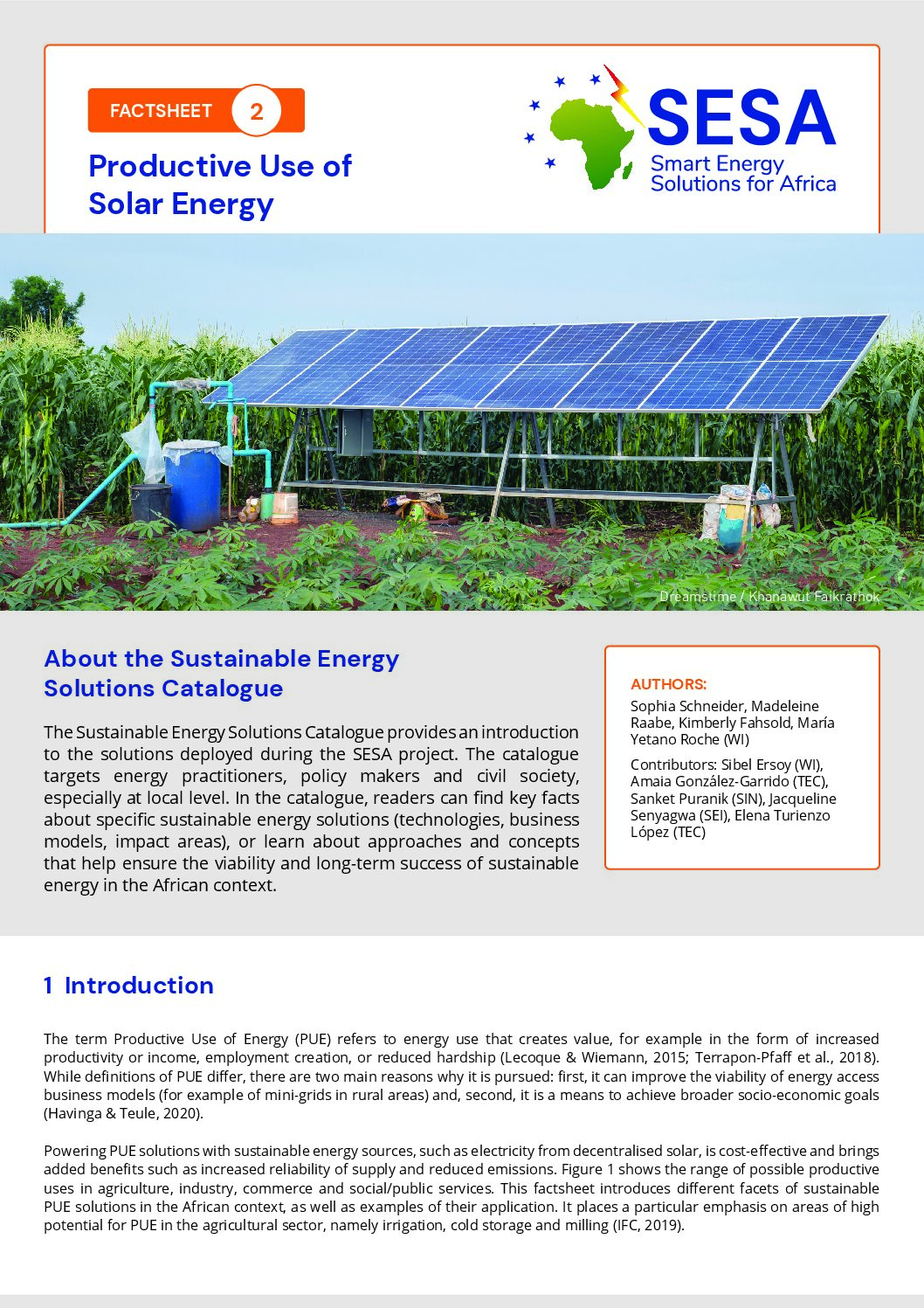
This fact sheet provides a quick overview of different PUE technologies and business and financing models, as well as their socio-economic and sustainability impacts, and their upscaling potential.