
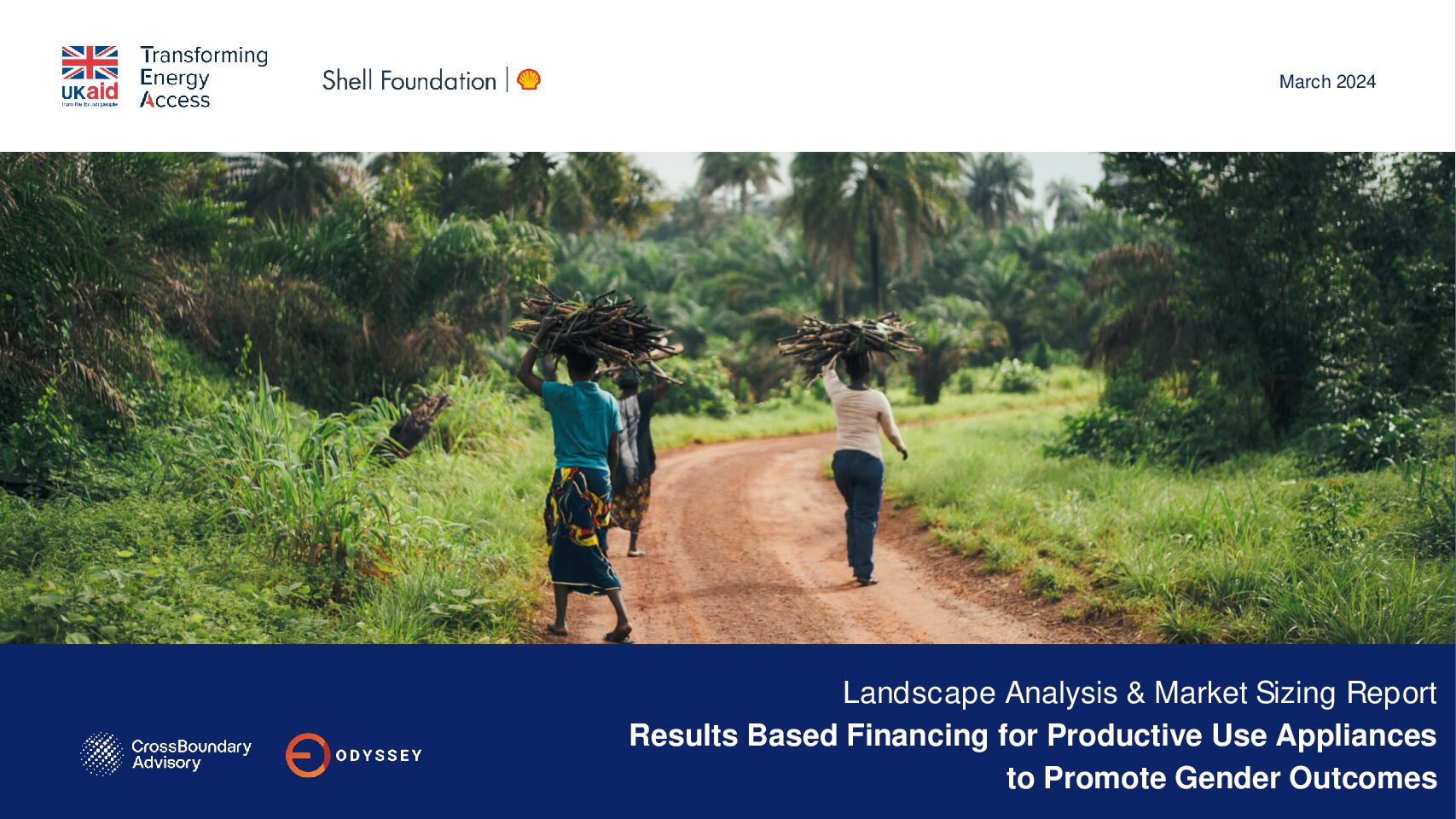
This is a ‘landscape and market sizing report’ developed to inform the design of a gender-responsive results-based financing (RBF) programme for PUE appliances. It investigates the impact of energy access on women, identifies the appliances that generate the greatest benefits for women, summarizes learnings from previous RBF programmes, and estimates the market size for gender-responsive … Continue reading “Results Based Financing for Productive Use Appliances to Promote Gender Outcomes”
This policy brief discusses why PUE projects should adopt a gender-responsive approach to enhance their effectiveness, as gender blind PUE initiatives are more likely to benefit men than women. It explains how gender-responsive approaches benefit both men and women, and provides policy recommendations for maximizing those benefits.
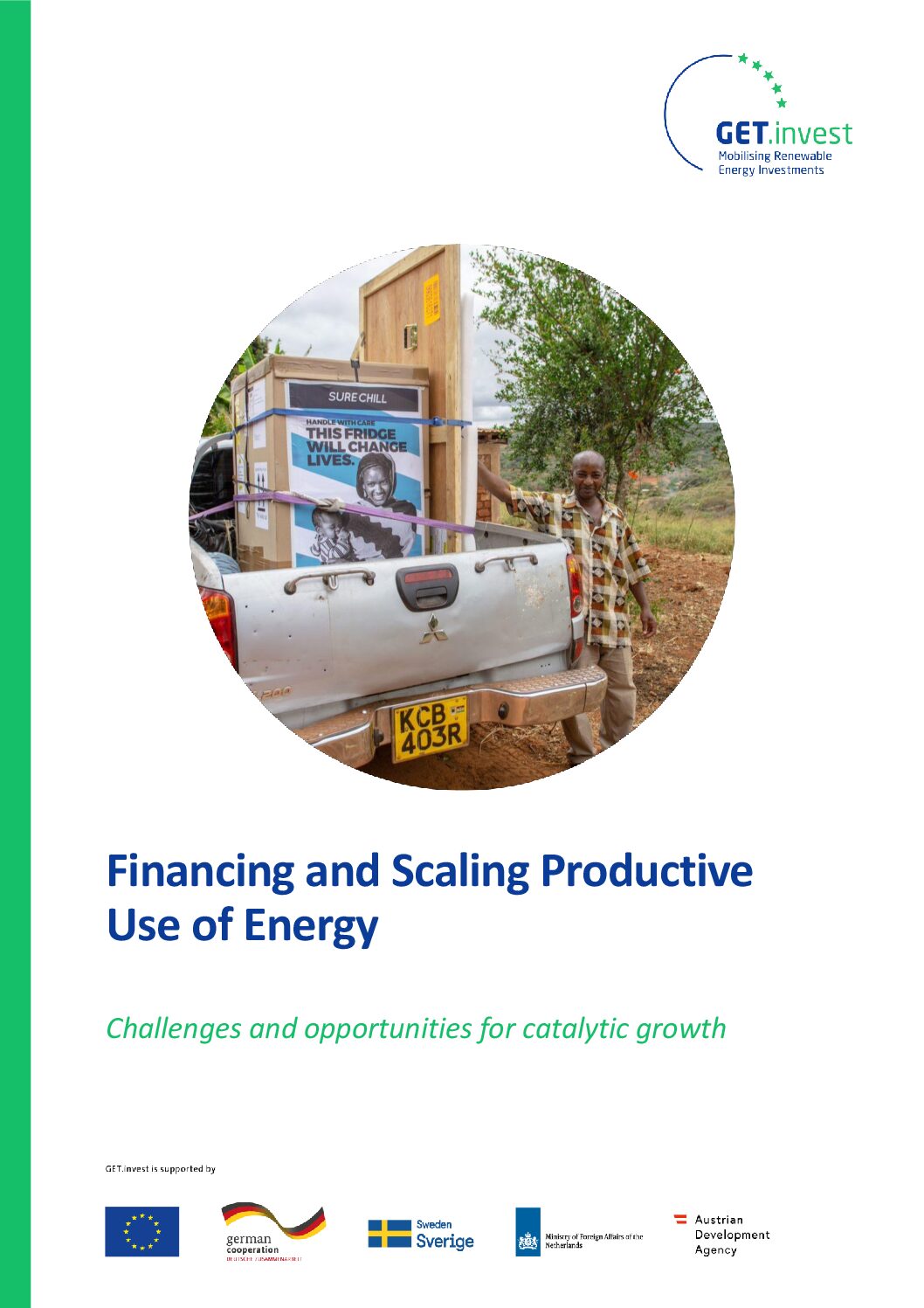
GET.invest is a programme funded by the EU and several of its member states, that mobilises investment in renewable energy in low- and middle-income countries, including by providing coaching to renewable energy companies and linking them with investors. This report assesses the current state of PUE finance, highlights challenges to scaling up investment in PUE, … Continue reading “Financing and Scaling Productive Use of Energy: Challenges and opportunities for catalytic growth”
This Energypedia article explains how to undertake a PUE assessment as part of a mini-grid development project, to evaluate the potential and feasibility of different types of PUE to support community income generation and mini-grid viability.
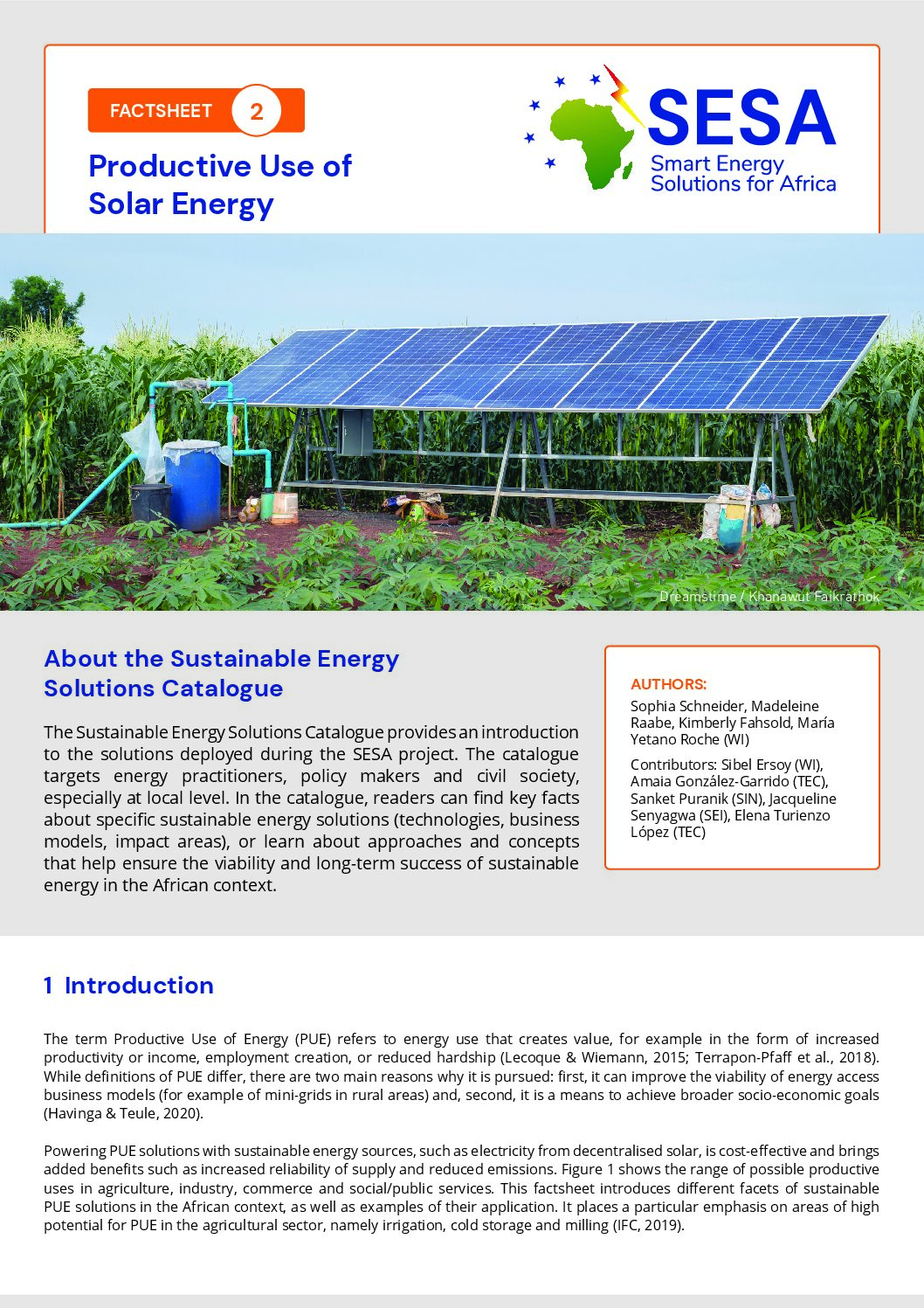
This fact sheet provides a quick overview of different PUE technologies and business and financing models, as well as their socio-economic and sustainability impacts, and their upscaling potential.
This webinar introduces the theme of gender and mobility from a Latin American perspective, exploring examples of policies, projects and initiatives for a gender-sensitive transportation system and women’s empowerment in the sector.
This page presents studies and policies related to electric mobility in Bolivia.
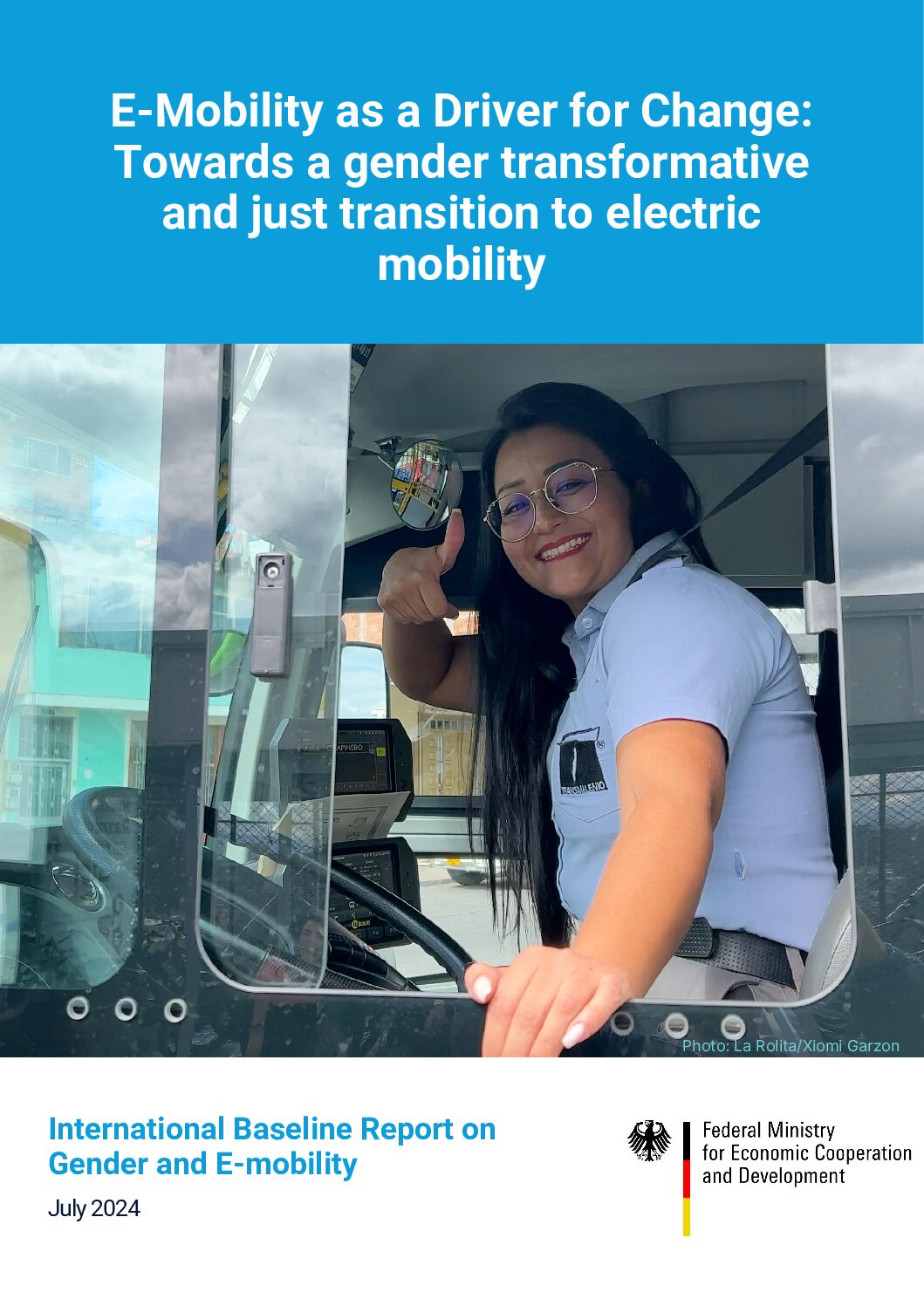
This international baseline study sets out the current state-of-the-art on the introduction of EMobility and identifies potential entry points for women to benefit and become more involved in this transition.
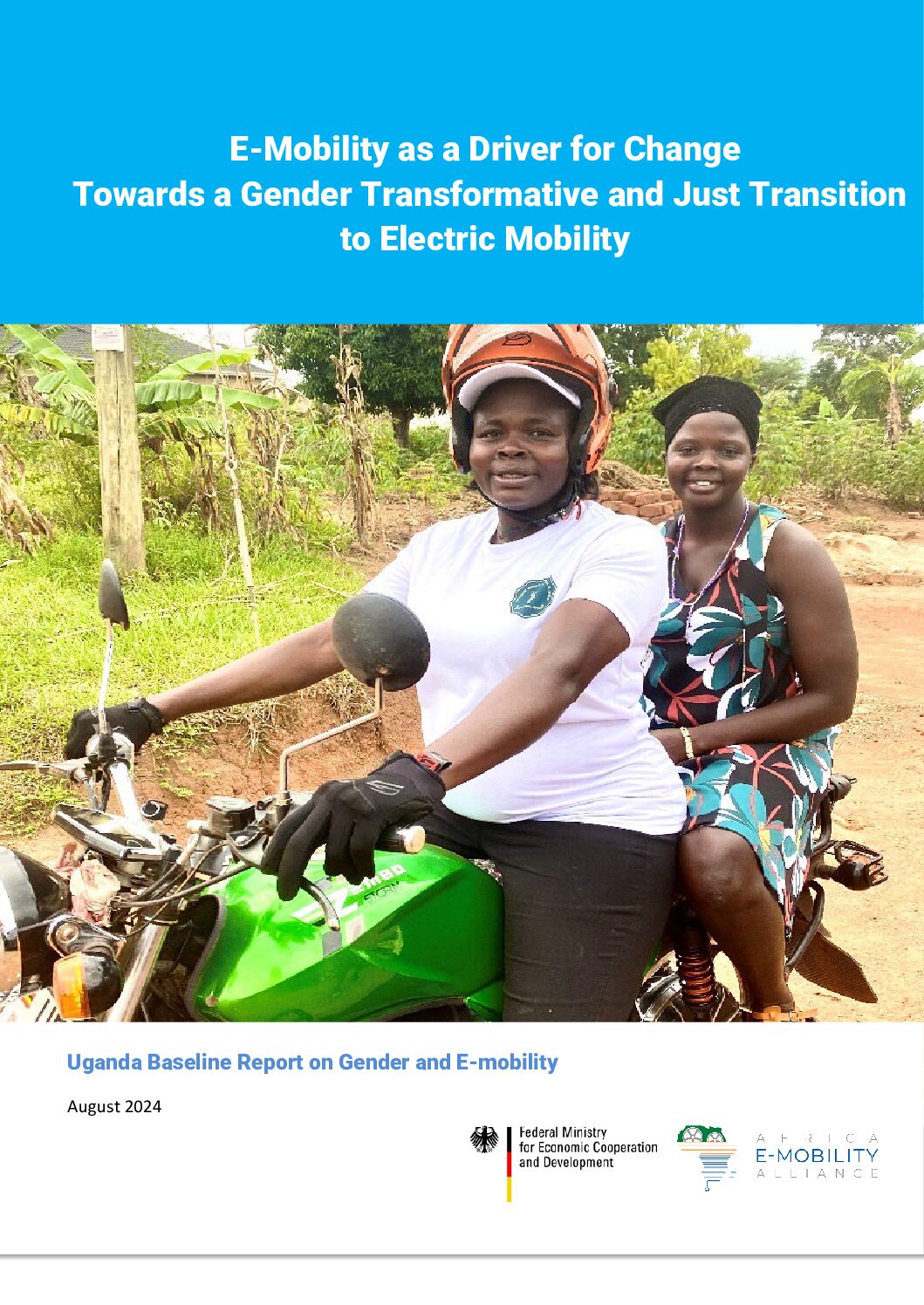
This baseline study outlines the current status of gender equality in the transport sector in Uganda, and identifies potential for the advancement of gender equality in transport while also advancing the e-mobility transition.
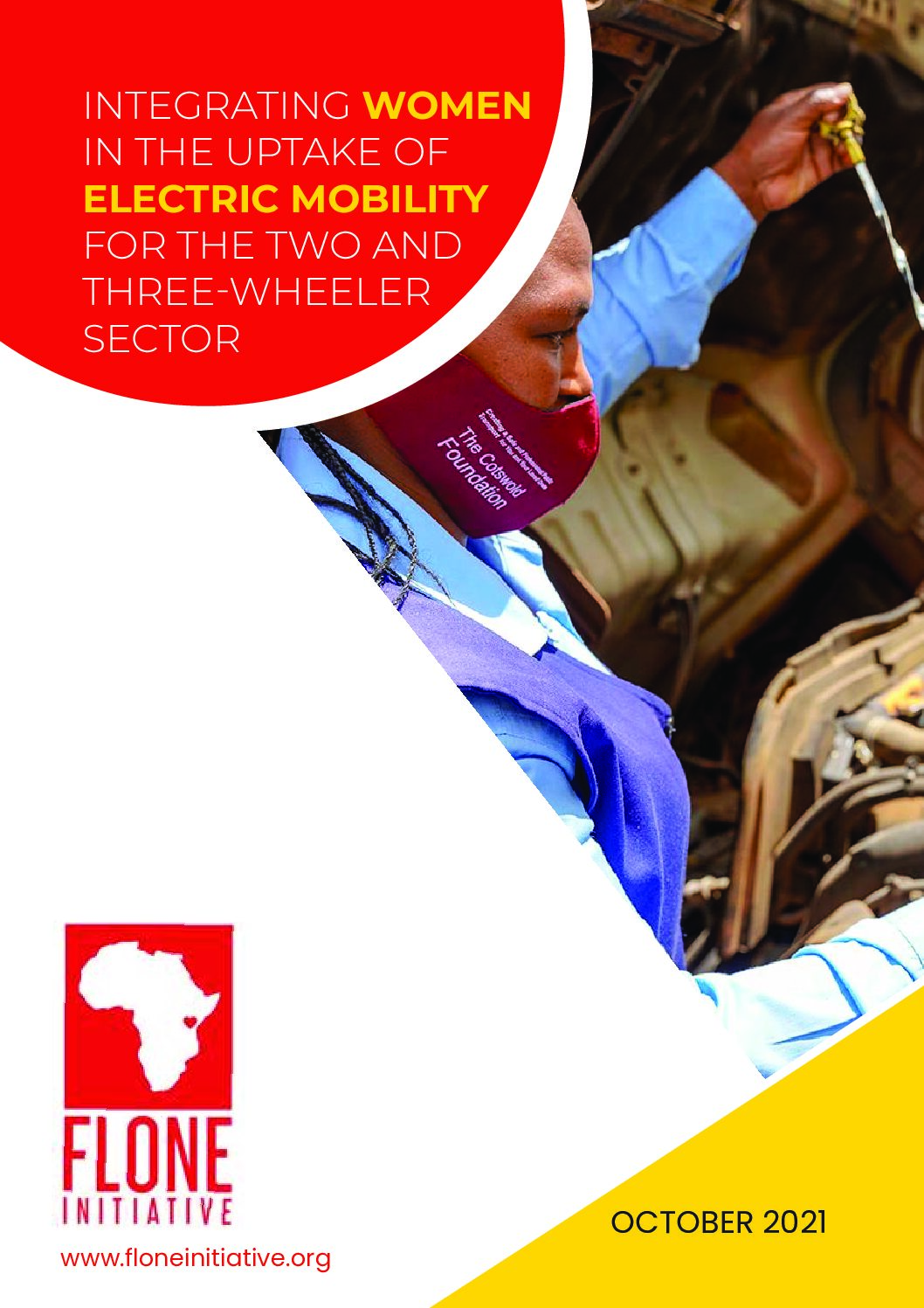
The study examines gender dimensions in the uptake of electric 2/3 wheelers in Kenya, and identifies policy gaps and available opportunities for advancing gender mainstreaming in electric mobility.