
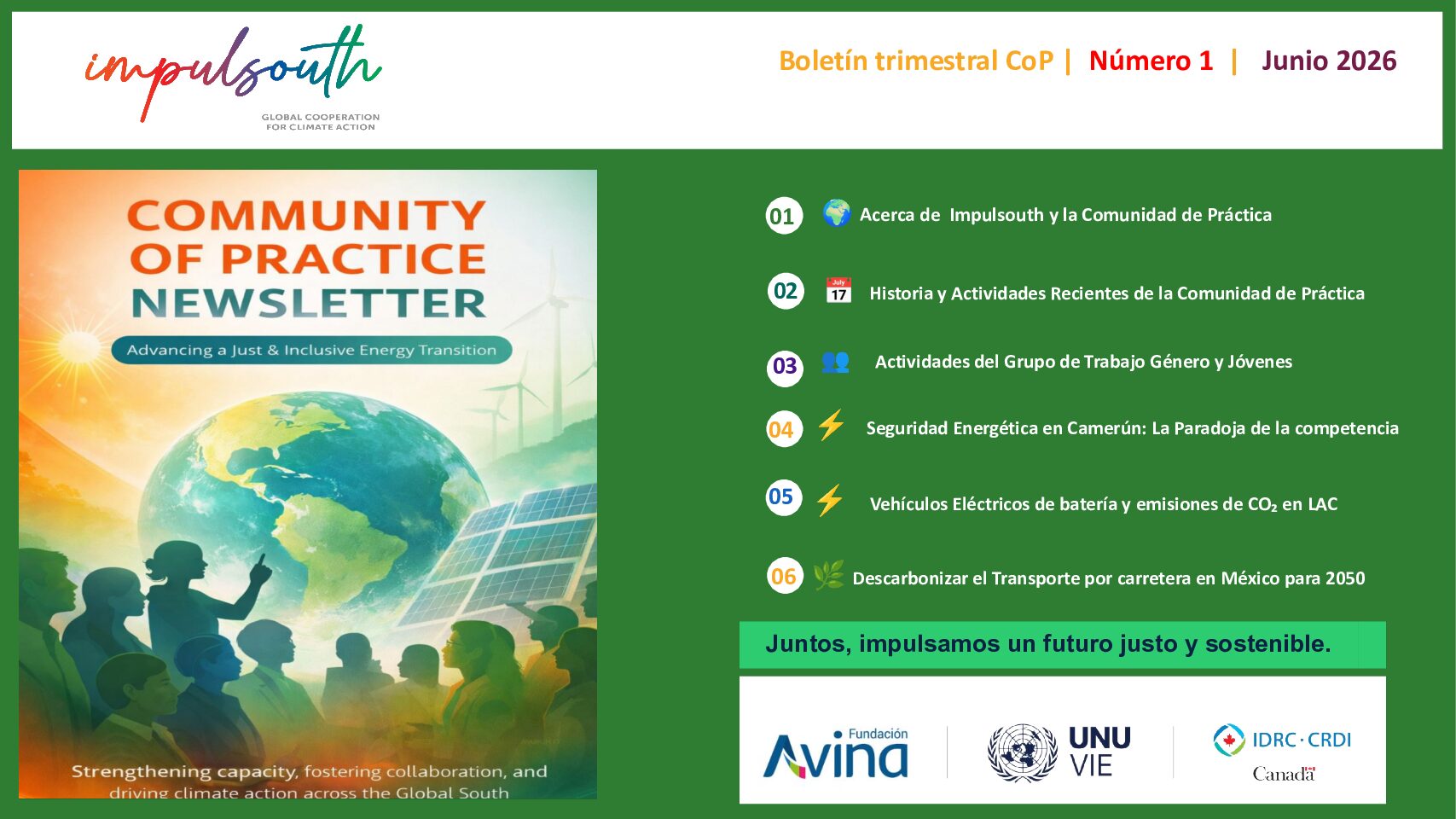
Este es el boletín de la Comunidad de Práctica (CoP) Impulsouth. La CoP es una plataforma colaborativa que fortalece las capacidades dentro del sector energético, apoyando una transición energética justa e inclusiva con un enfoque en la igualdad de género. Al reunir a diversos actores, la CoP promueve el intercambio de conocimientos, fortalece la capacidad … Continue reading “Boletín trimestral de la CoP – Número 1 – junio de 2026”
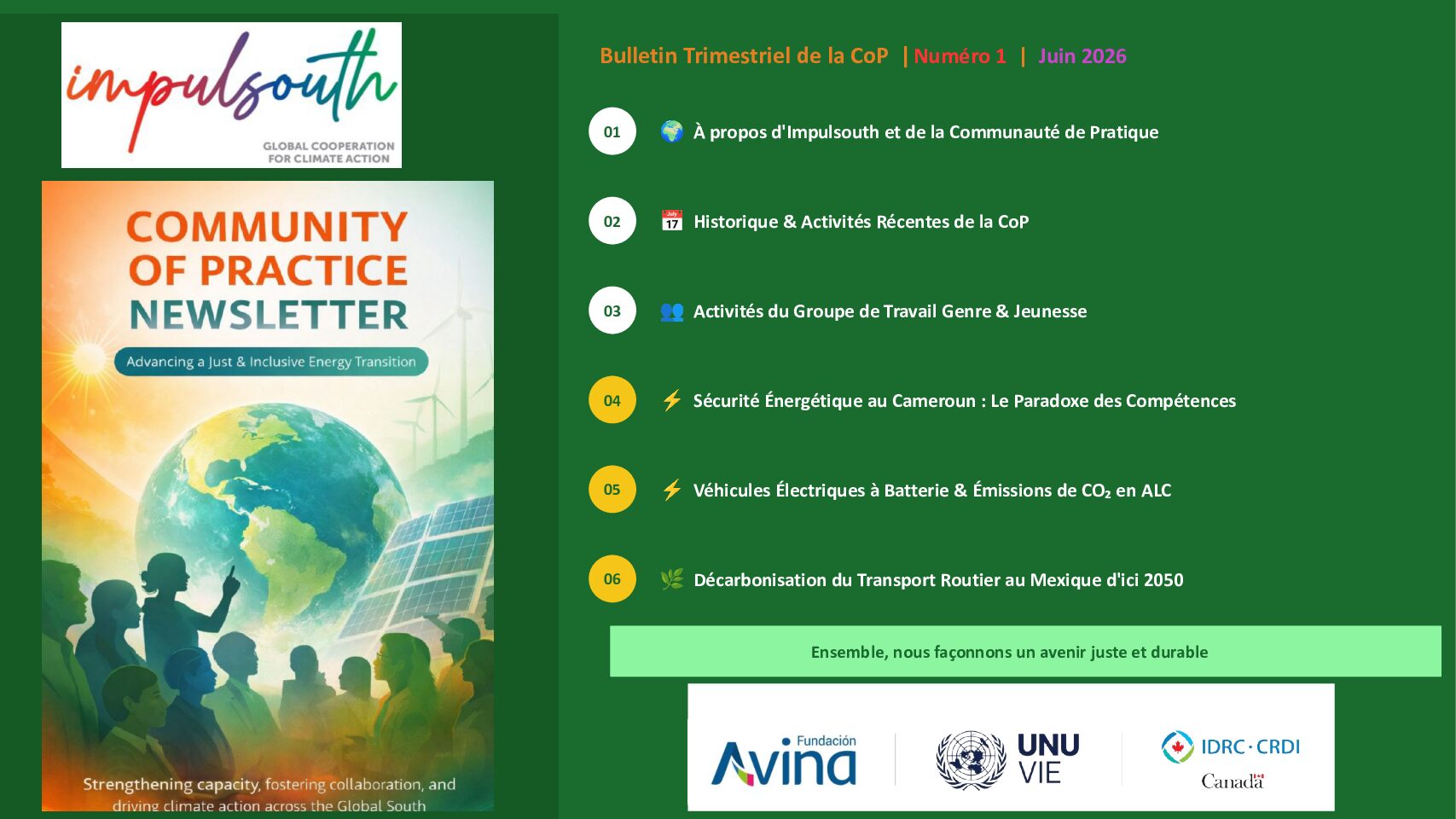
Voici le bulletin d’information de la Communauté de Pratique (CoP) d’Impulsouth. La CoP est une plateforme collaborative qui renforce les capacités dans le secteur de l’énergie, en soutenant une transition énergétique juste et inclusive, avec un fort accent sur l’égalité de genre. Réunissant diverses parties prenantes, la CoP favorise le partage de connaissances, renforce les … Continue reading “Bulletin trimestriel de la Communauté de Pratique (CoP) d’Impulsouth – Numéro 1 – Juin 2026”
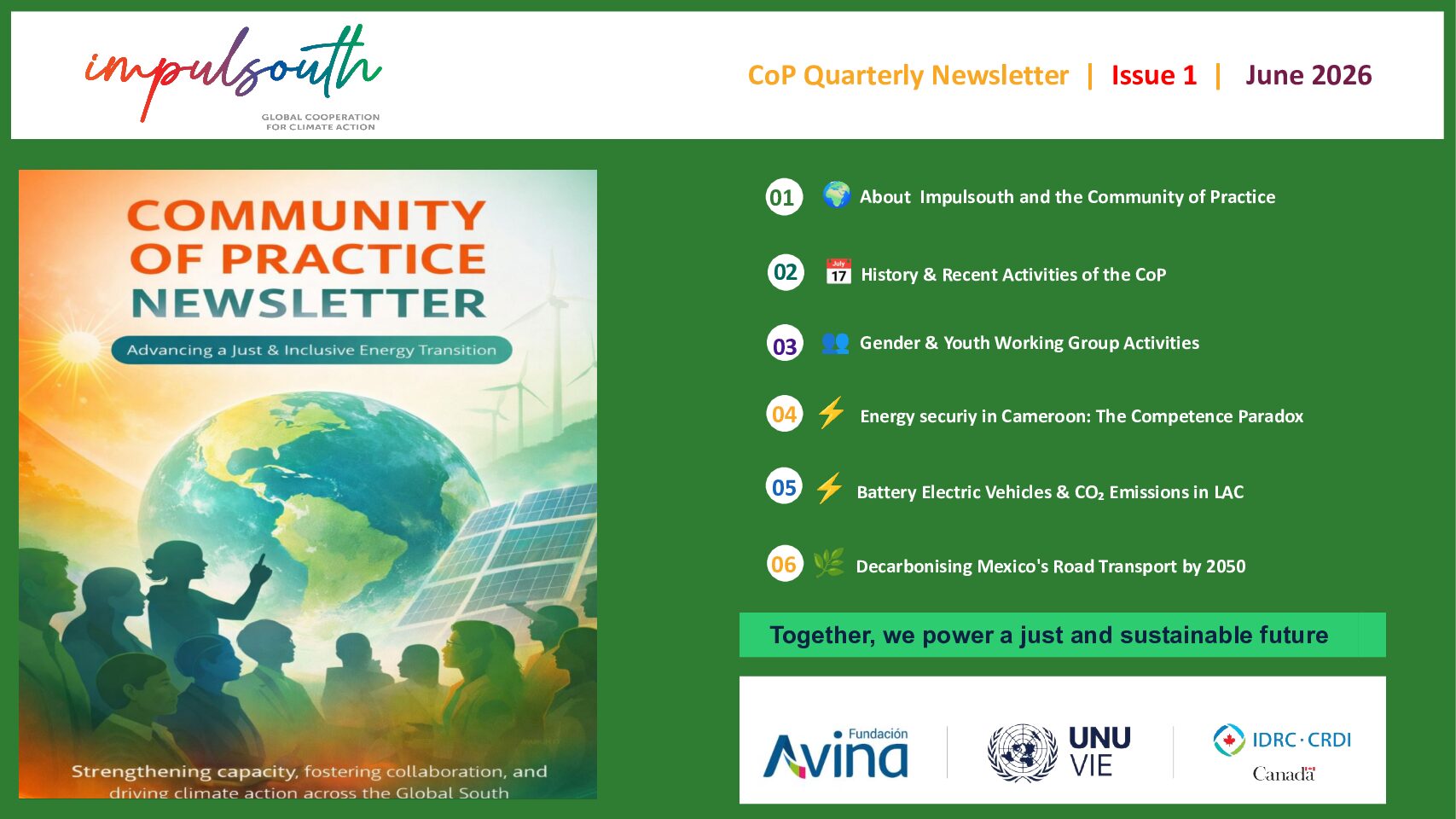
This is the Impulsouth Community of Practice (CoP) newsletter. The CoP is a collaborative platform that strengthens capacities within the energy sector, supporting a just and inclusive energy transition with a strong focus on gender equality. Bringing together diverse stakeholders, the CoP fosters knowledge exchange, strengthens institutional capacity, and promotes effective South-South cooperation across nine … Continue reading “CoP Quarterly Newsletter – Issue 1 – June 2026”
The average lifespan of a building is 50 years, so the design of buildings that are constructed now will have an effect on energy consumption in our cities until well into the 2070s. This article presents the most effective options for cities to set mandatory minimum energy performance standards for buildings, to prevent locking in … Continue reading “How to set energy efficiency requirements for new buildings”

This publication shares the learnings from eight EU-funded research projects on energy behaviour and modelling, and presents their implications for policy design.
This report explores the opportunities and challenges that lie ahead in Latin America’s energy transition. It provides insights on the ways in which the outlook for the region and the biggest global energy trends are deeply intertwined – as well as recommendations on policies that could allow Latin America and the Caribbean to take full … Continue reading “Latin American Energy Outlook”
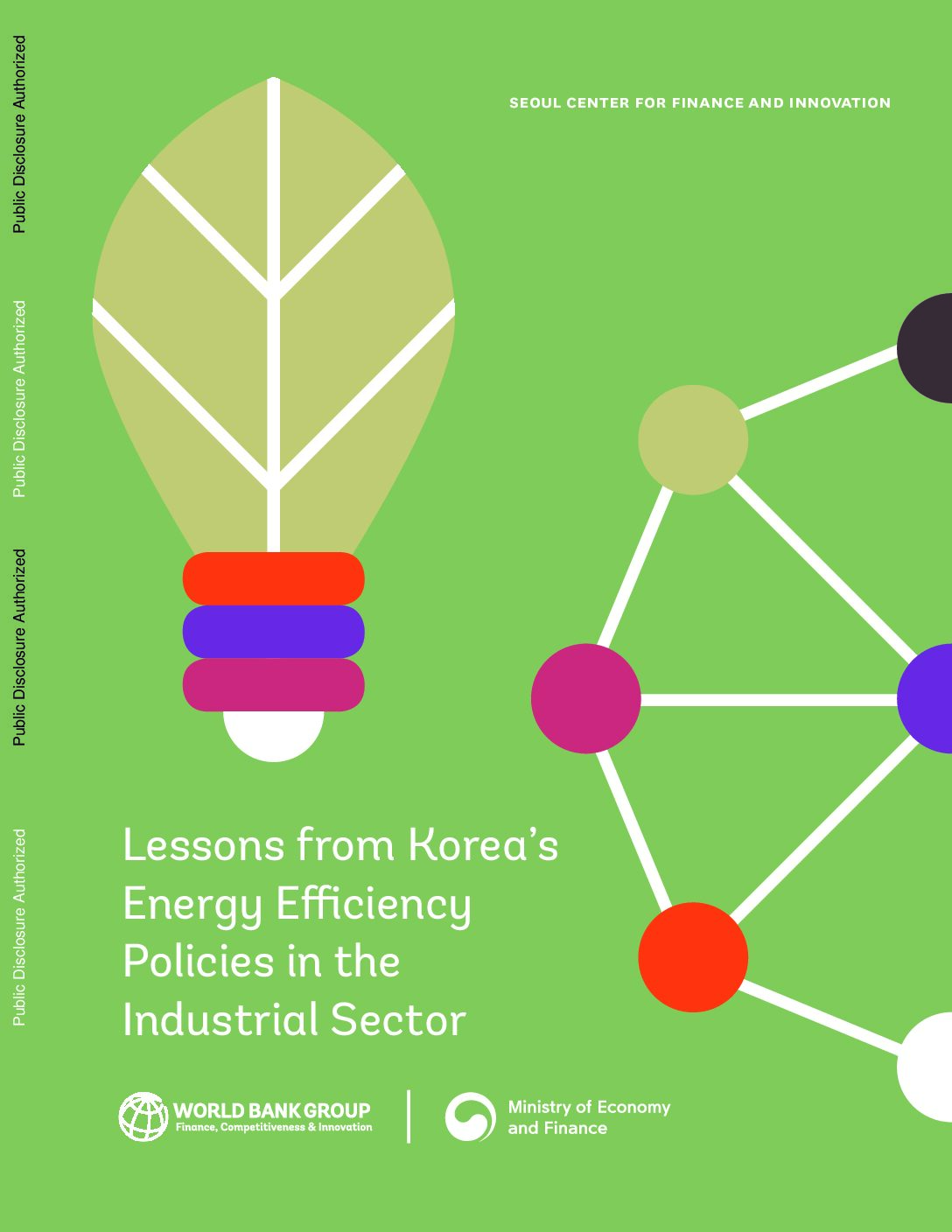
This report shares successful industrial efficiency practices from the Republic of Korea.
This action plan, developed with support from ECREEE, lays out the energy effiency strategy of Côte d’Ivoire for 2016-2020/2030. It includes extensive information on the context and relevant actors, as well as strategic priorities and measures to promote these.
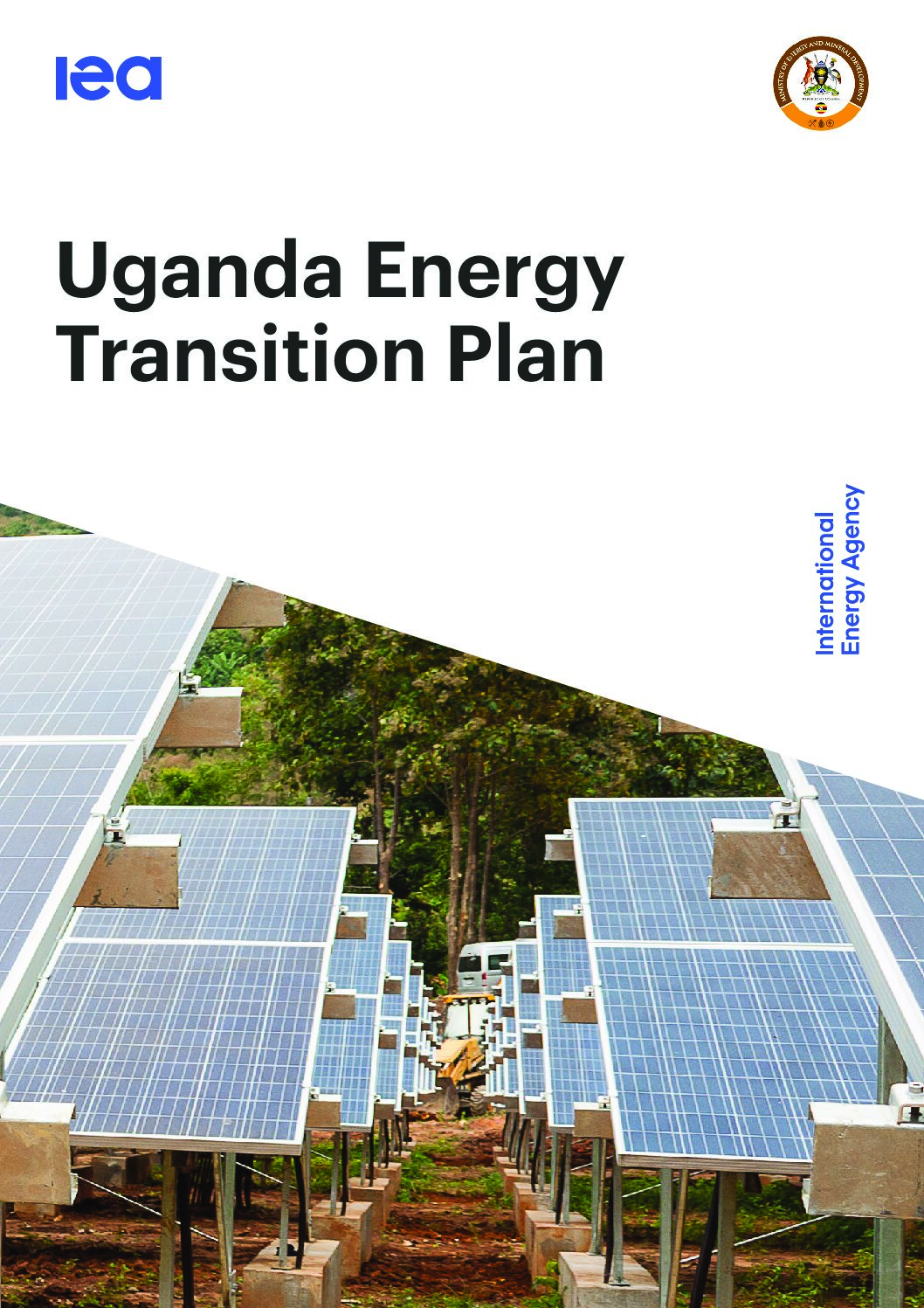
Uganda’s Energy Transition Plan sets goals for different sectors and discusses enablers for implementation, including financing.
This report presents progress in the advancement of energy efficiency in Latin America, both by country and by sector. It discusses market and non-market barriers to energy efficiency and proposes policy measures that can be used to accelerate progress.