
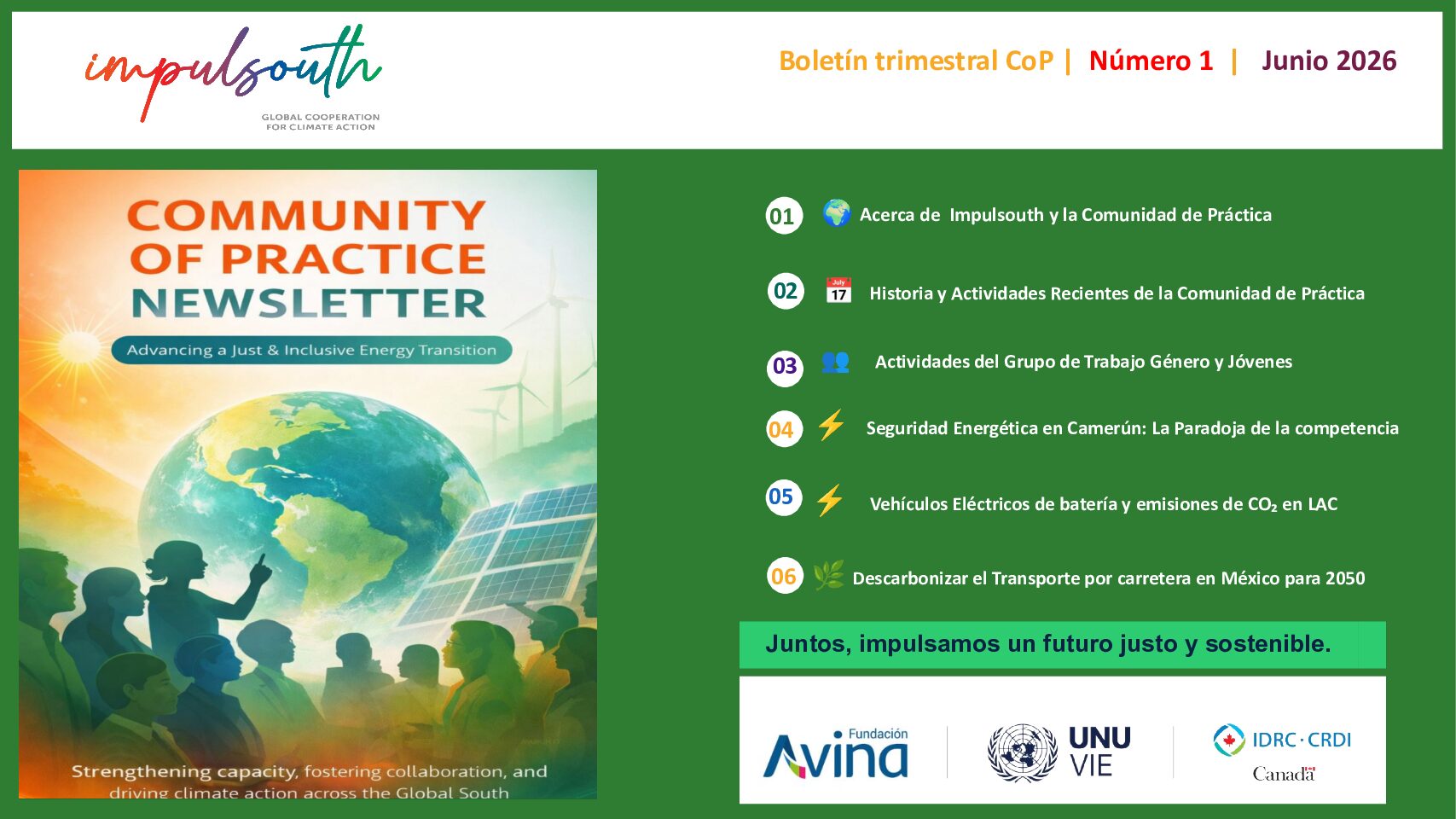
Este es el boletín de la Comunidad de Práctica (CoP) Impulsouth. La CoP es una plataforma colaborativa que fortalece las capacidades dentro del sector energético, apoyando una transición energética justa e inclusiva con un enfoque en la igualdad de género. Al reunir a diversos actores, la CoP promueve el intercambio de conocimientos, fortalece la capacidad … Continue reading “Boletín trimestral de la CoP – Número 1 – junio de 2026”
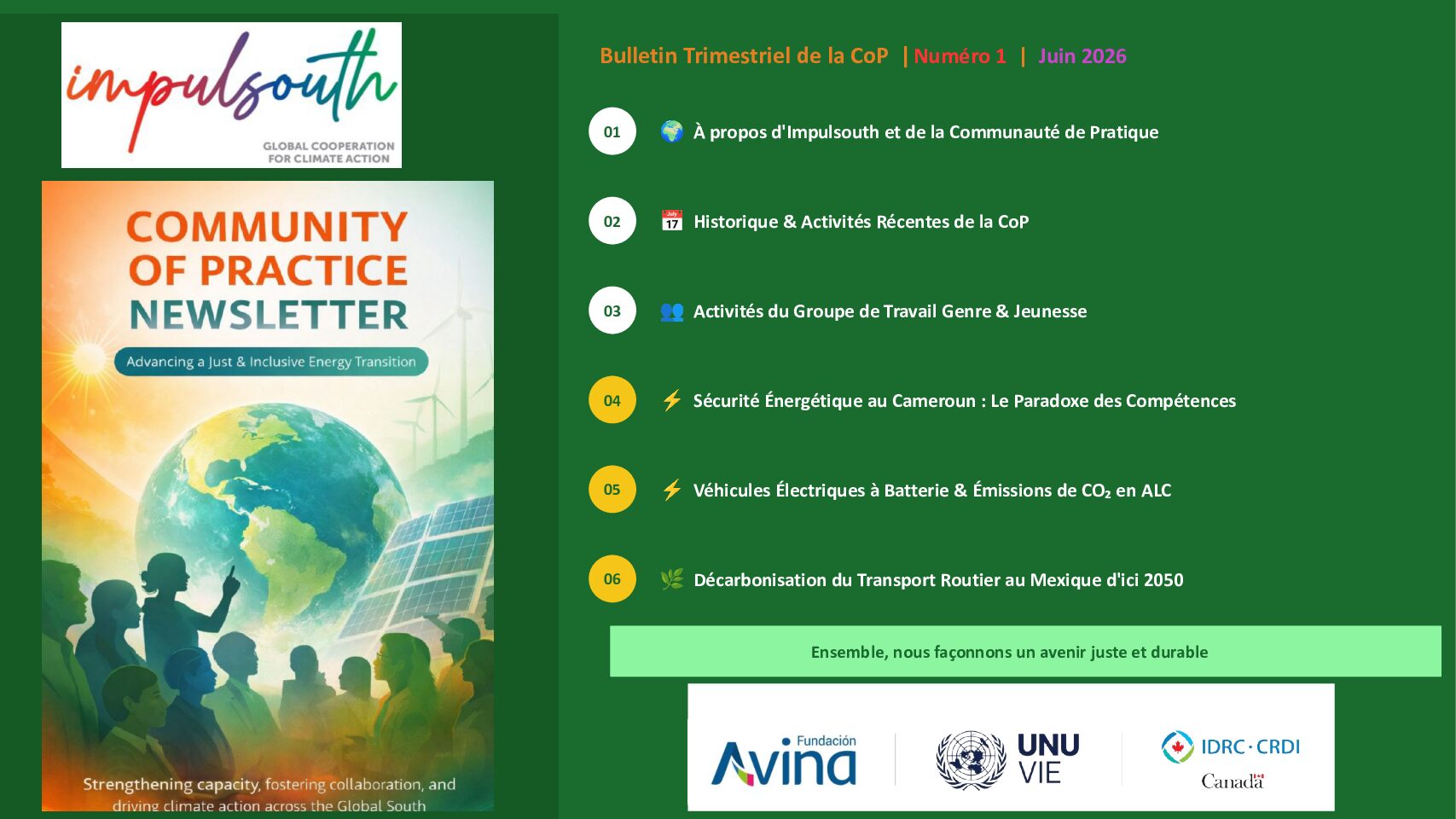
Voici le bulletin d’information de la Communauté de Pratique (CoP) d’Impulsouth. La CoP est une plateforme collaborative qui renforce les capacités dans le secteur de l’énergie, en soutenant une transition énergétique juste et inclusive, avec un fort accent sur l’égalité de genre. Réunissant diverses parties prenantes, la CoP favorise le partage de connaissances, renforce les … Continue reading “Bulletin trimestriel de la Communauté de Pratique (CoP) d’Impulsouth – Numéro 1 – Juin 2026”
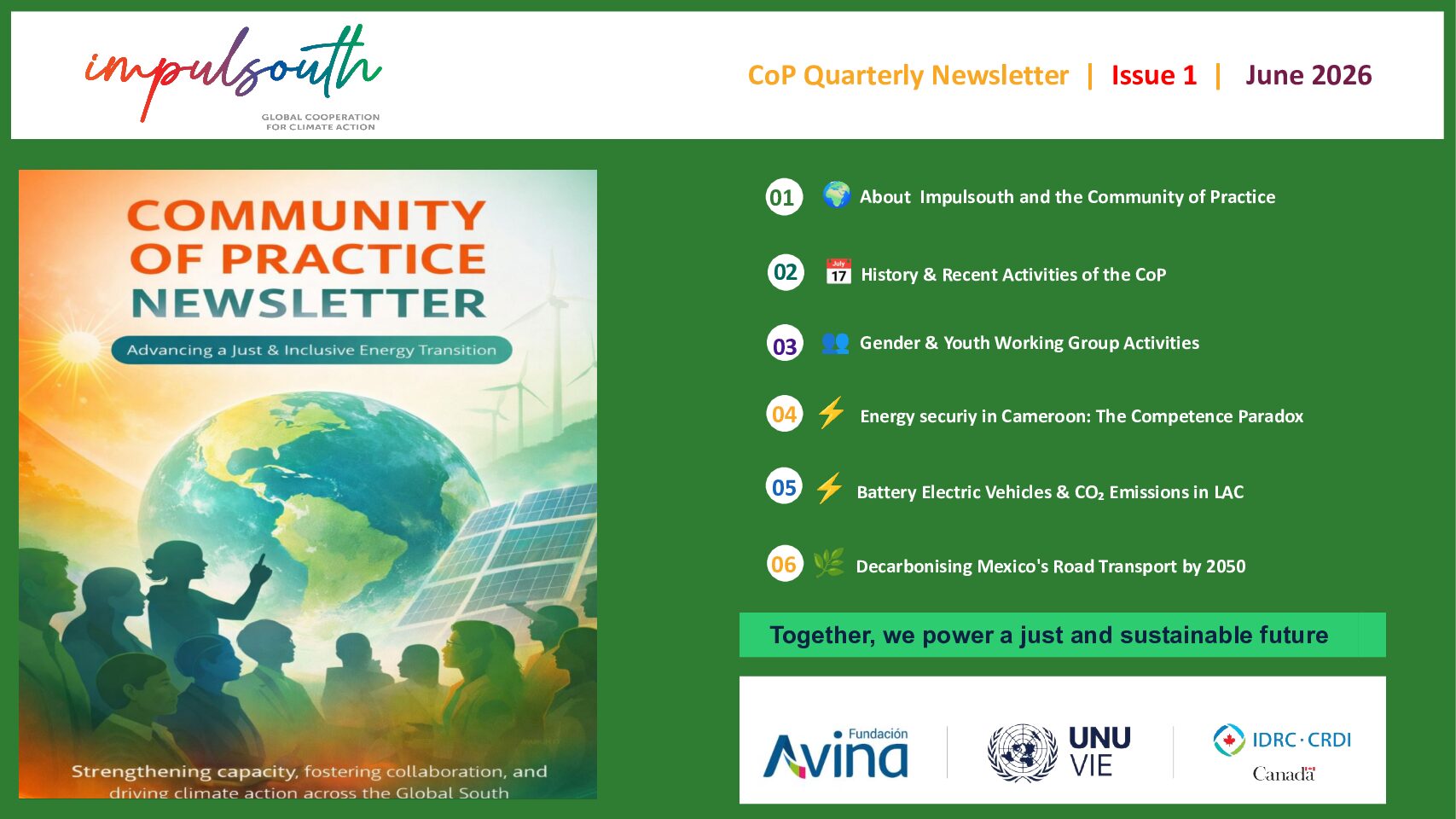
This is the Impulsouth Community of Practice (CoP) newsletter. The CoP is a collaborative platform that strengthens capacities within the energy sector, supporting a just and inclusive energy transition with a strong focus on gender equality. Bringing together diverse stakeholders, the CoP fosters knowledge exchange, strengthens institutional capacity, and promotes effective South-South cooperation across nine … Continue reading “CoP Quarterly Newsletter – Issue 1 – June 2026”
This guide leverages FAO’s extensive experience of developing and delivering e-learning solutions to offer practical advice and guidance to trainers and instructional designers who wish to develop effective capacity building initiatives.
This article provides some practical tips for increasing engagement in training sessions in order to strengthen knowledge retention and application of learned skills. SessionLab also provides a useful library of facilitation techniques.
This page presents various methods that can be used to make trainings and workshops more interactive and engaging.
This guidance note provides practical tools and strategies for training providers to design and deliver gender-responsive learning programs, especially within technical and business education contexts. It highlights how gender dynamics, norms, and barriers influence learning outcomes and participation—especially for women and marginalized groups.
This guide helps practitioners design, implement and evaluate training programmes in a way that enables equal access and provides equal benefits to women and men. It provides tips and approaches based on international good practice and lessons learned from programmes implemented by IFC, the World Bank and other organisations.
This report shares insights and tools to support more inclusive and effective entrepreneurship education and training, especially for people from underrepresented and marginalized groups. It includes a list of assessment criteria to evaluate whether a programme is gender-smart.