
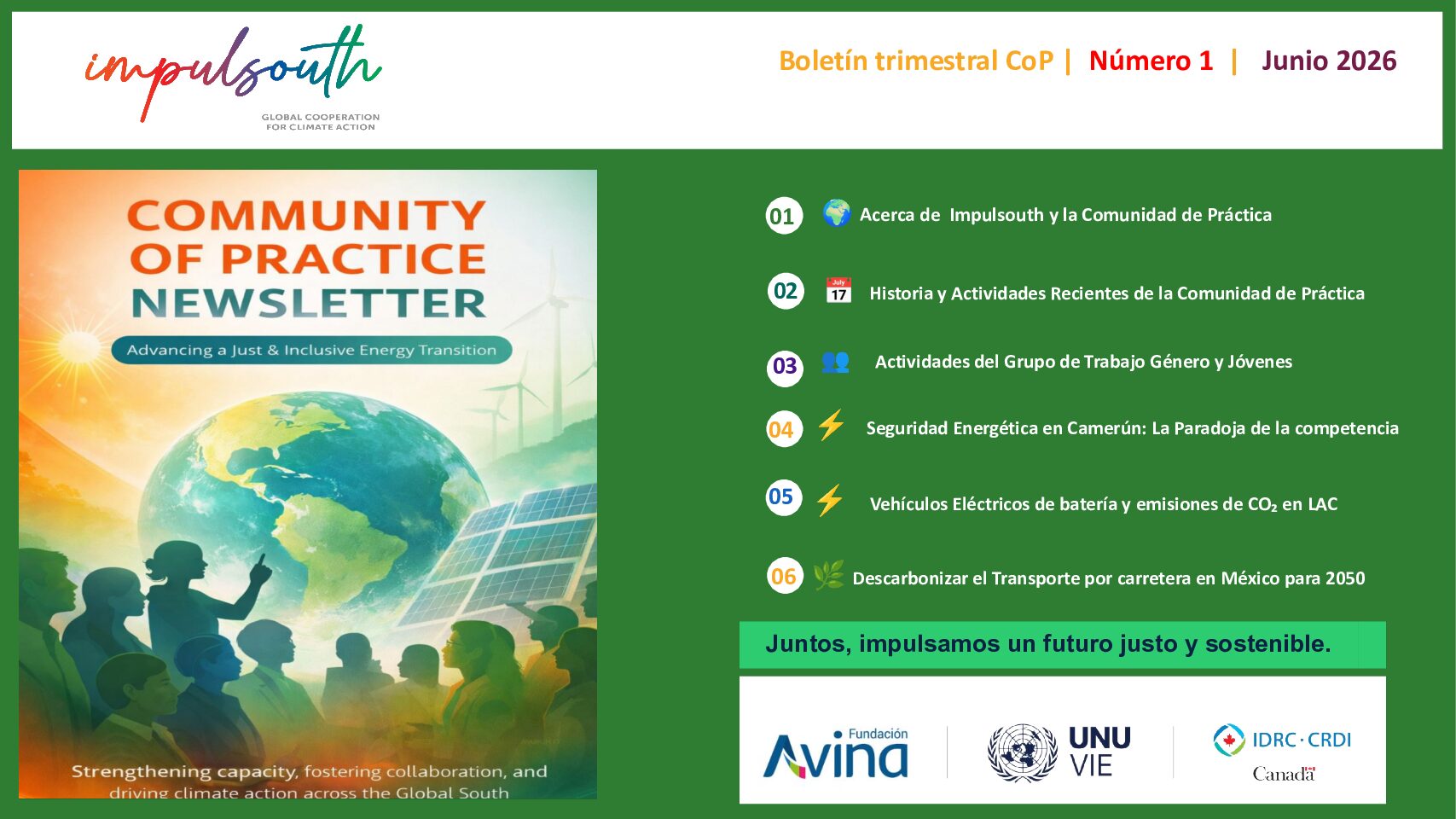
Este es el boletín de la Comunidad de Práctica (CoP) Impulsouth. La CoP es una plataforma colaborativa que fortalece las capacidades dentro del sector energético, apoyando una transición energética justa e inclusiva con un enfoque en la igualdad de género. Al reunir a diversos actores, la CoP promueve el intercambio de conocimientos, fortalece la capacidad … Continue reading “Boletín trimestral de la CoP – Número 1 – junio de 2026”
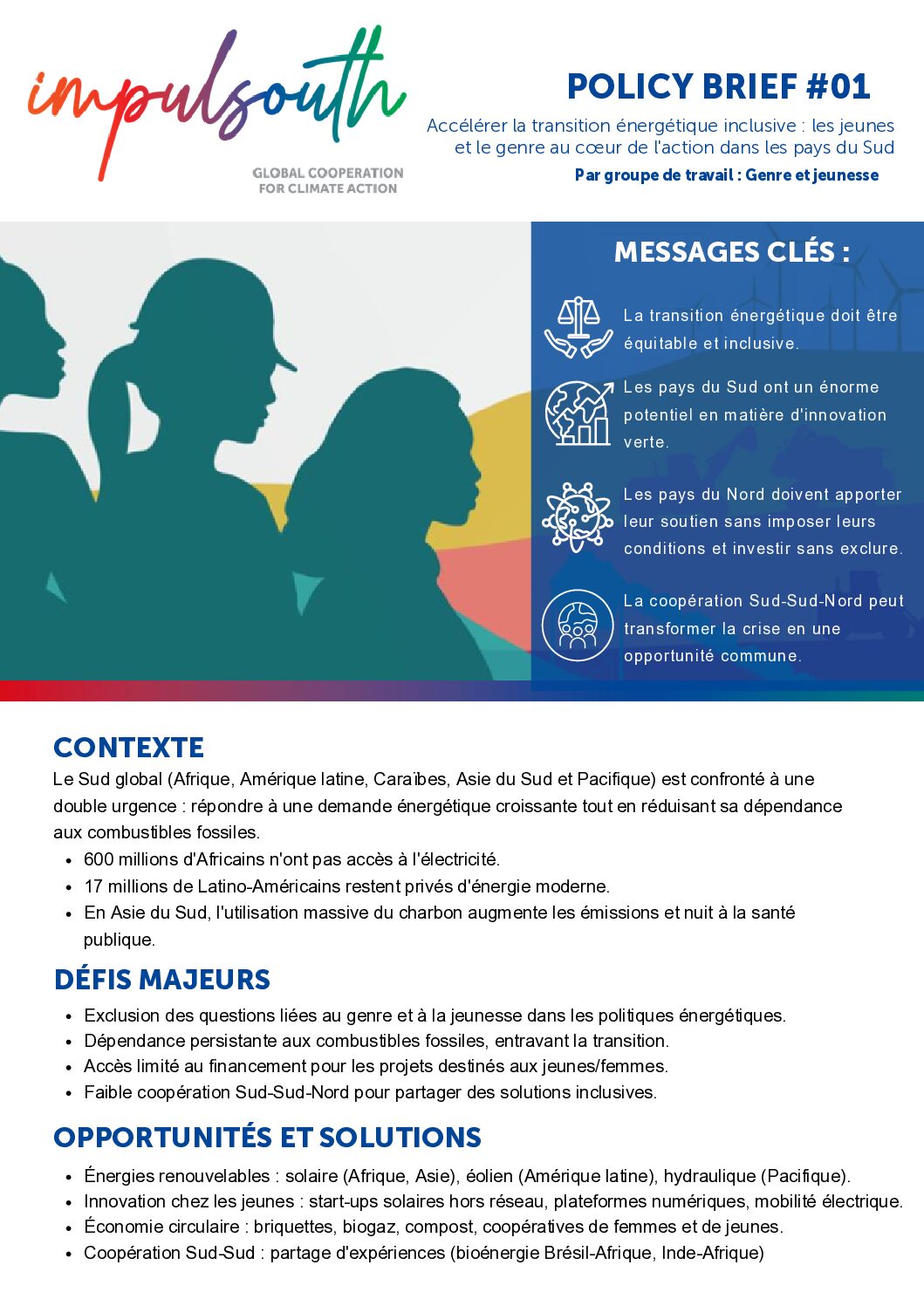
Cette ressource a été élaborée par les membres du groupe de travail « Genre et jeunesse », qui fait partie de la communauté de pratique d’Impulsouth.
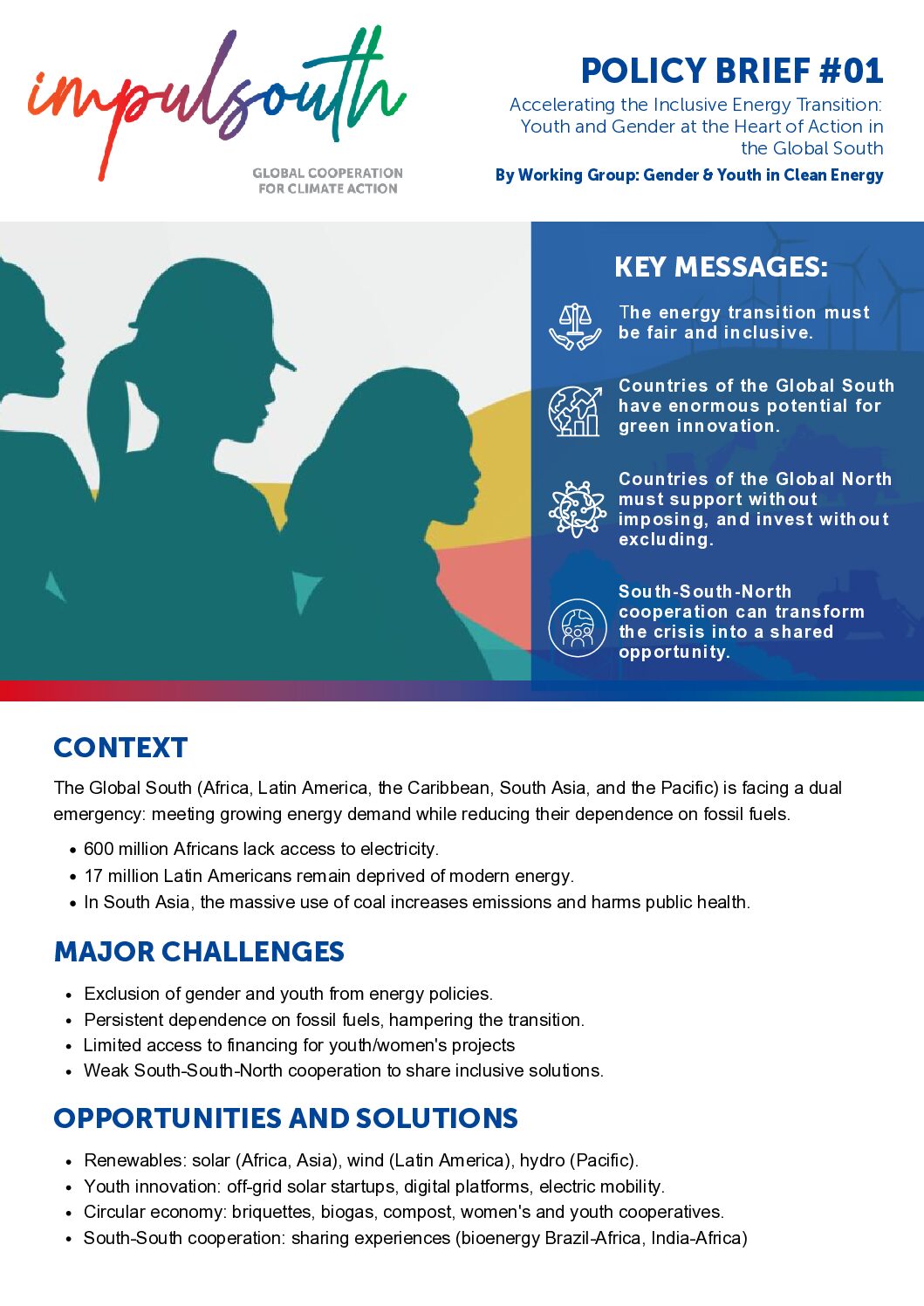
This resource was developed by members of the Working Group on Gender & Youth in Clean Energy, within Impulsouth’s Community of Practice.
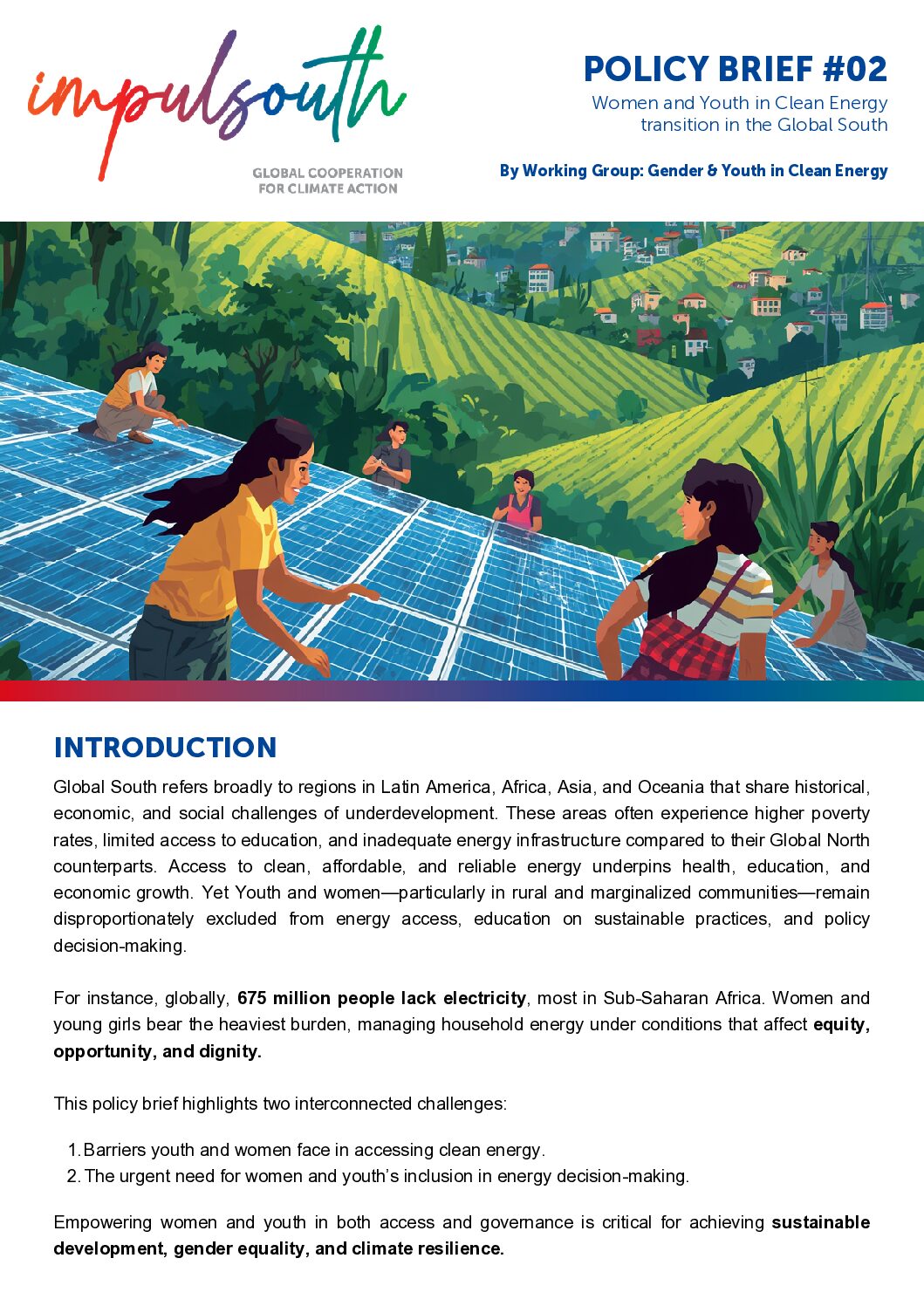
This resource was developed by members of the Working Group on Gender & Youth in Clean Energy, within Impulsouth’s Community of Practice.
This briefing to the United Nations Commission on the Status of Women shows that climate finance flows remain largely exclusionary to women and girls. One of the reasons is that most climate finance is provided as loans, which are less accessible to women. It recommends different ways in which financing institutions can guarantee greater access … Continue reading “Gender-responsive climate finance: The key to just climate action and tackling inequalities”
This executive summary of a larger report provides a quick overview of the growth of battery demand since the early 1990s. It shows that the reduction in battery costs and the increase in efficiency has led to a domino effect, as batteries become viable alternatives to other energy sources for ever more applications.
This article provides a quick and accessible introduction to different energy storage technologies, including thermal energy storage, pumped storage, hydrogen, and gravity batteries, with links to recent projects.
This explainer by the German Heinrich Böll Foundation provides a quick overview of green hydrogen, the way it is produced, the role it can play in the energy transition, and the main challenges.
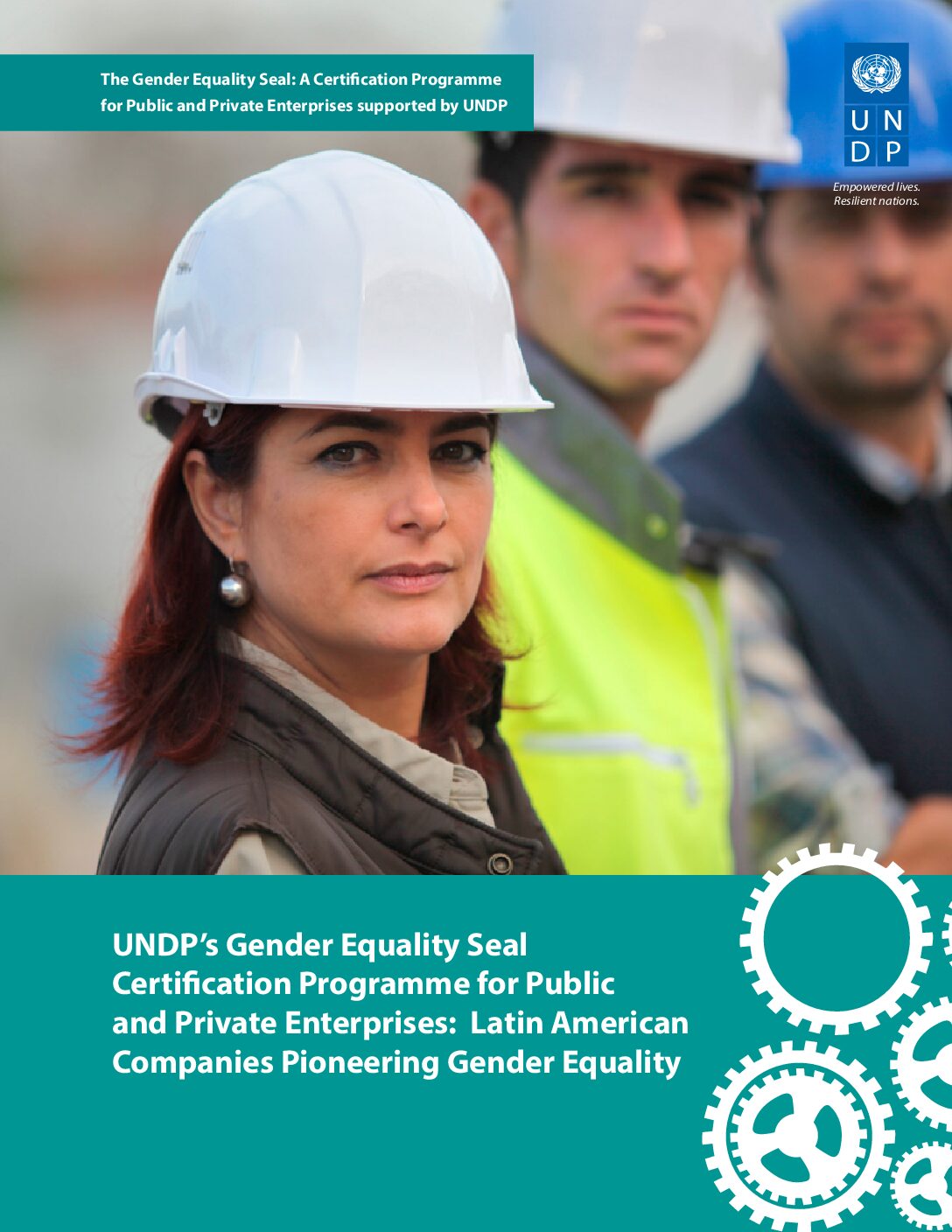
UNDP’s Gender Equality Seal has been implemented under different names in 11 countries and has engaged over 1400 companies. Companies, including many in male-dominated sectors such as the energy sector, can qualify for the seal by following a ten-step plan.