
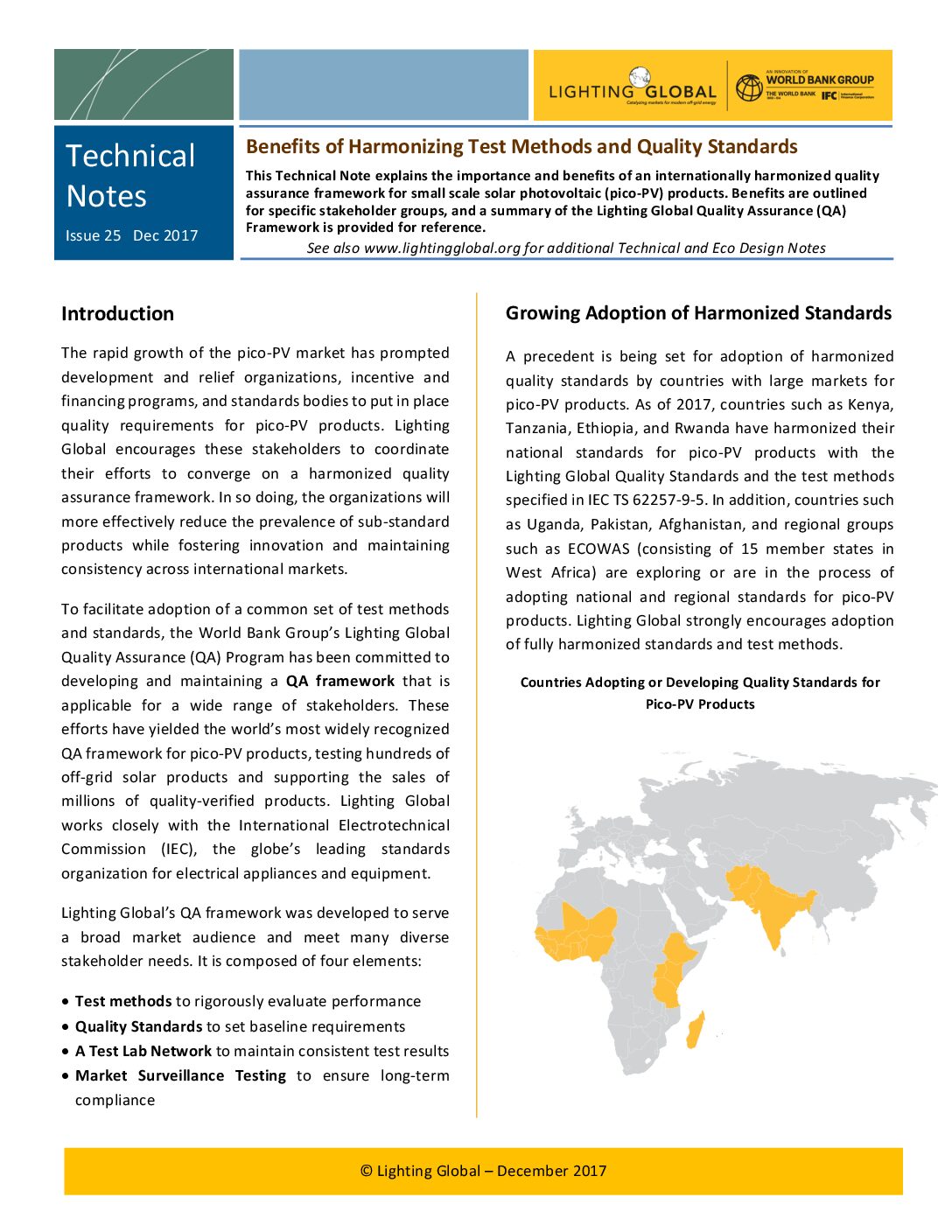
This brief explains the importance and benefits of an internationally harmonized quality assurance framework for small scale solar photovoltaic (pico-PV) products. Benefits are outlined for specific stakeholder groups, and a summary of the Lighting Global Quality Assurance (QA) Framework is provided for reference.
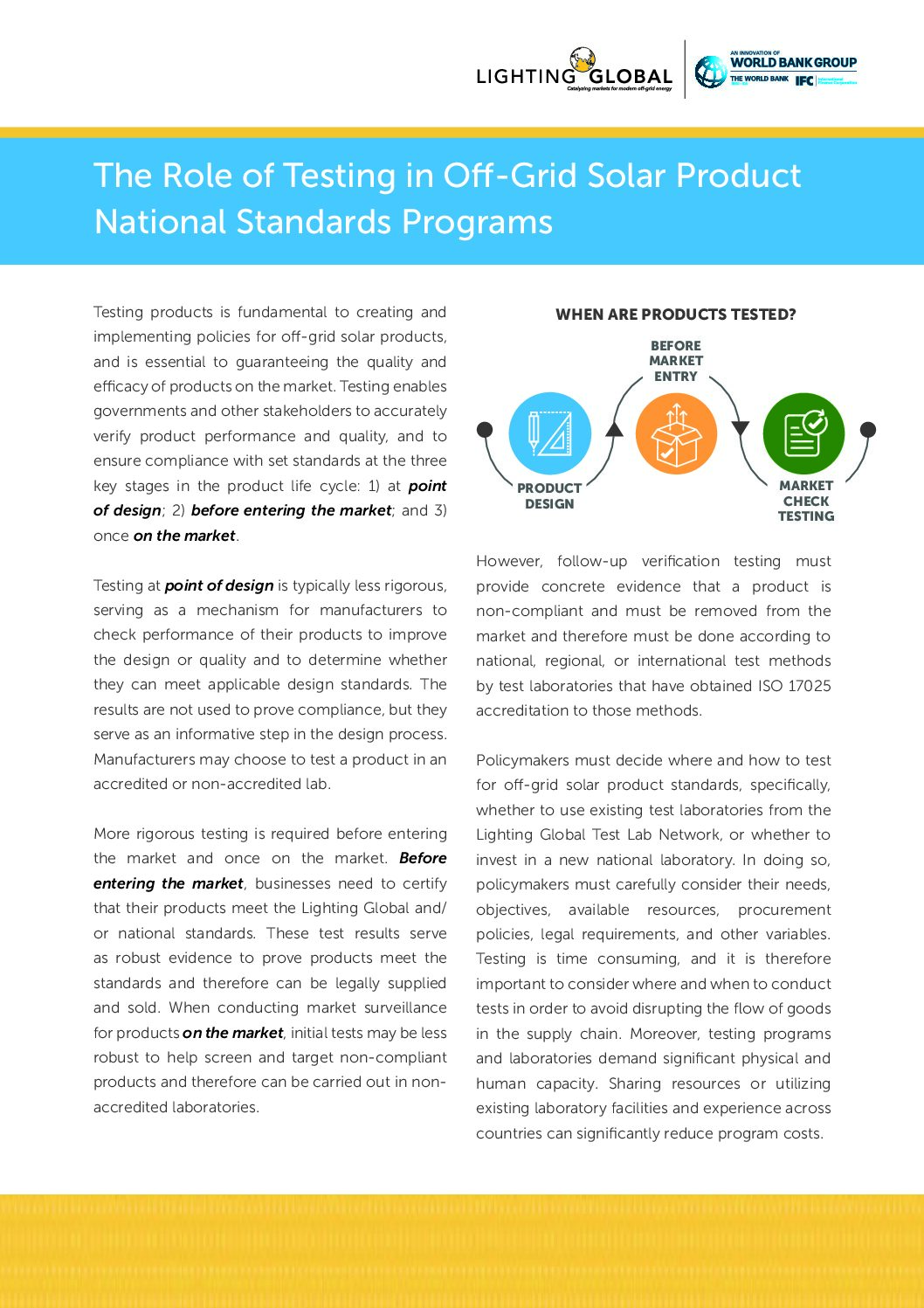
This brief explains the role of product testing in standard-setting for off-grid solar products. It provides recommendations based on good practices and explains how the Lighting Global Quality Assurance Program can help governments implement and enforce standards.
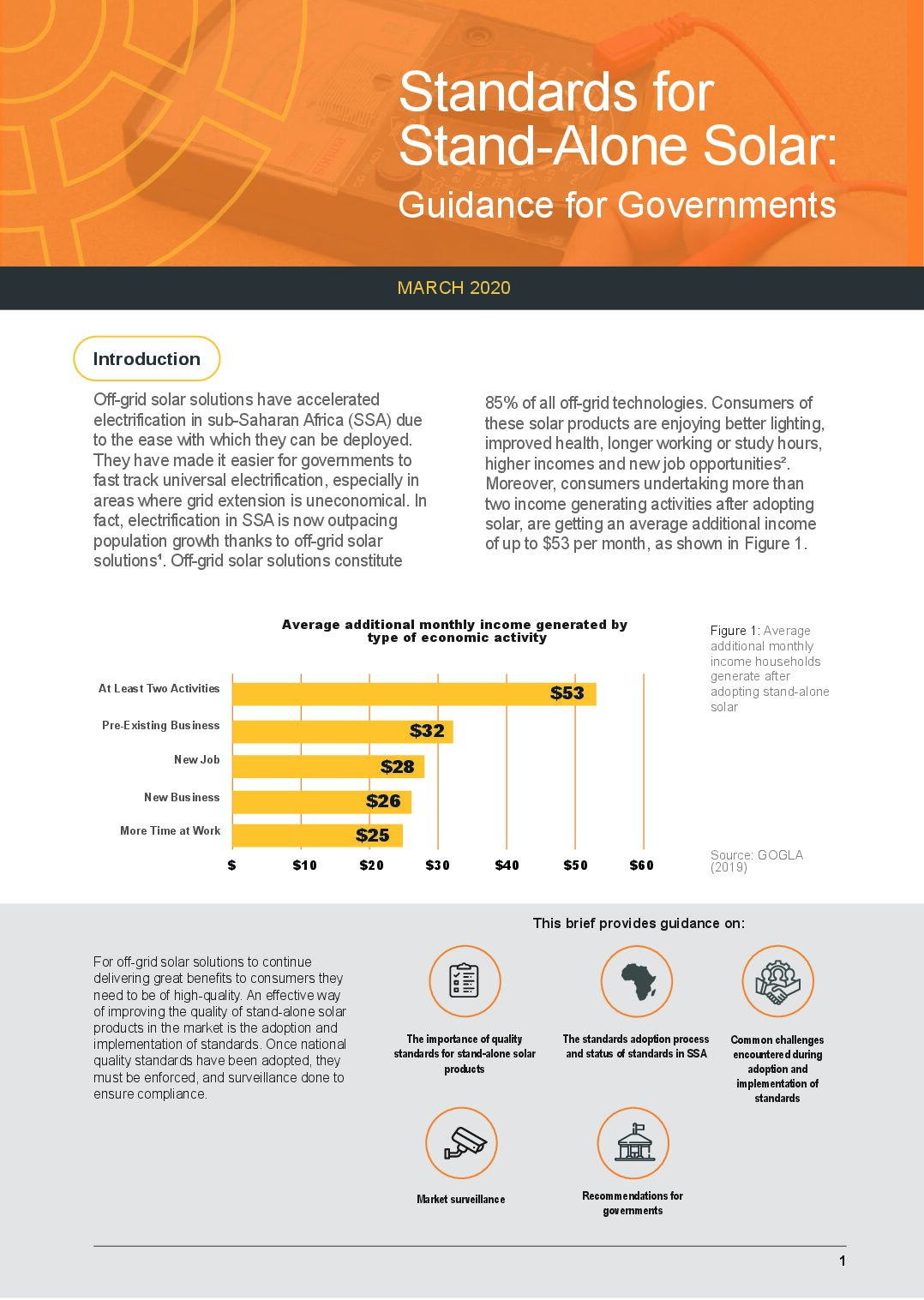
This policy brief provides guidance on the importance of quality standards for stand-alone solar products; how to develop and adopt standards, and the current status in Africa; common challenges encountered in this process; and market surveillance; as well as recommendations for governments.
This page provides an introduction to energy transition challenges in the industrial sector. It also tracks progress, presents data and lists seven key recommendations to policymakers and businesses.
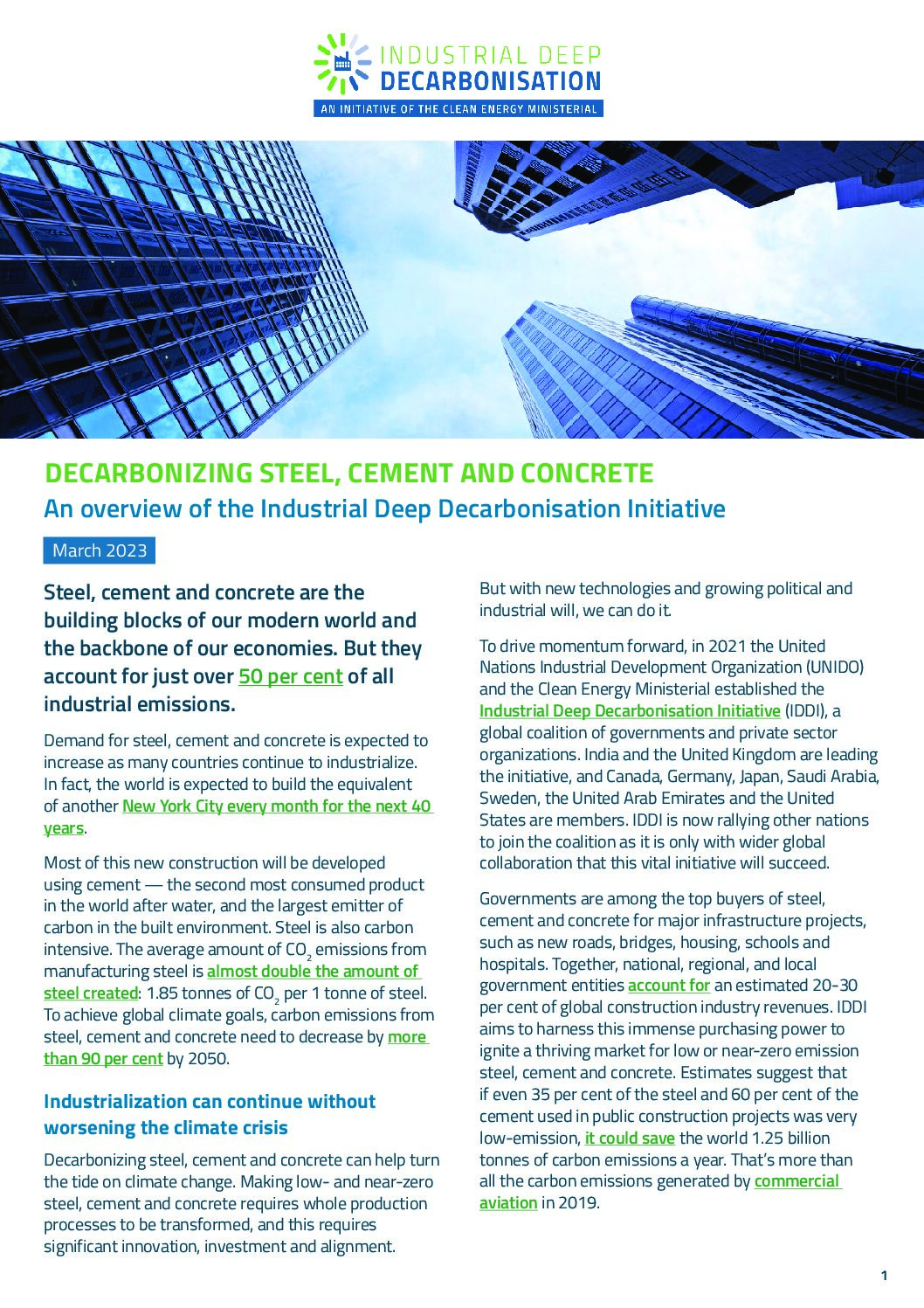
The Industrial Deep Decarbonisation Initiative, established by the UN Industrial Development Organization (UNIDO) and the Clean Energy Ministerial, is a coalition of governments and companies. Among its goals, it seeks to motivate governments, which are major buyers of steel, cement and concrete for infrastructure projects, to apply sustainable procurement principles and prioritise the buying of … Continue reading “Decarbonizing steel, cement and concrete: An overview of the Industrial Deep Decarbonisation Initiative”
This paper focuses on strategies, policies, and programs that industry and government can develop to ensure that supply chains for EVs and their batteries are secure, circular, and reduce the need for mining virgin minerals, thus reducing adverse impacts on the planet and its people.
This report looks at the mineral demand for a net-zero emissions energy system, focusing on seven critical minerals and discussing the role of technological choices, circular economy strategies, and responsible mining in reducing the environmental impact of the transition.
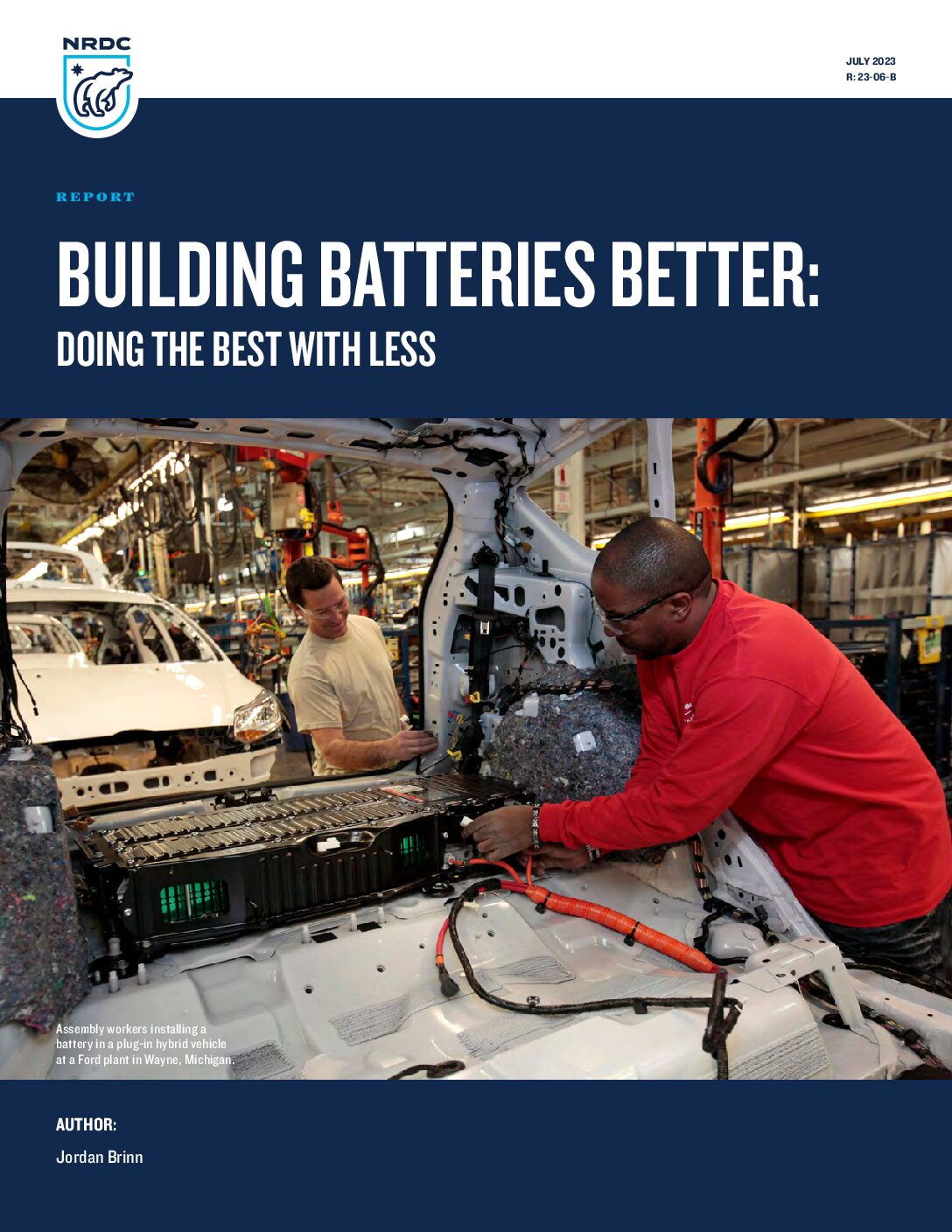
This report investigates the potential to develop circular supply chains for EV batteries.
This report brings together the latest data and information on batteries from around the world, including recent market developments and technological advances. It also offers insights and analysis on leading markets and key barriers to growth, and identifies synergies and potential bottlenecks across different sectors and parts of the supply chain.
This report investigates opportunities to reduce consumption of scarce raw materials by recycling metals and other resources from energy technologies such as wind turbines, solar PV panels and batteries.