
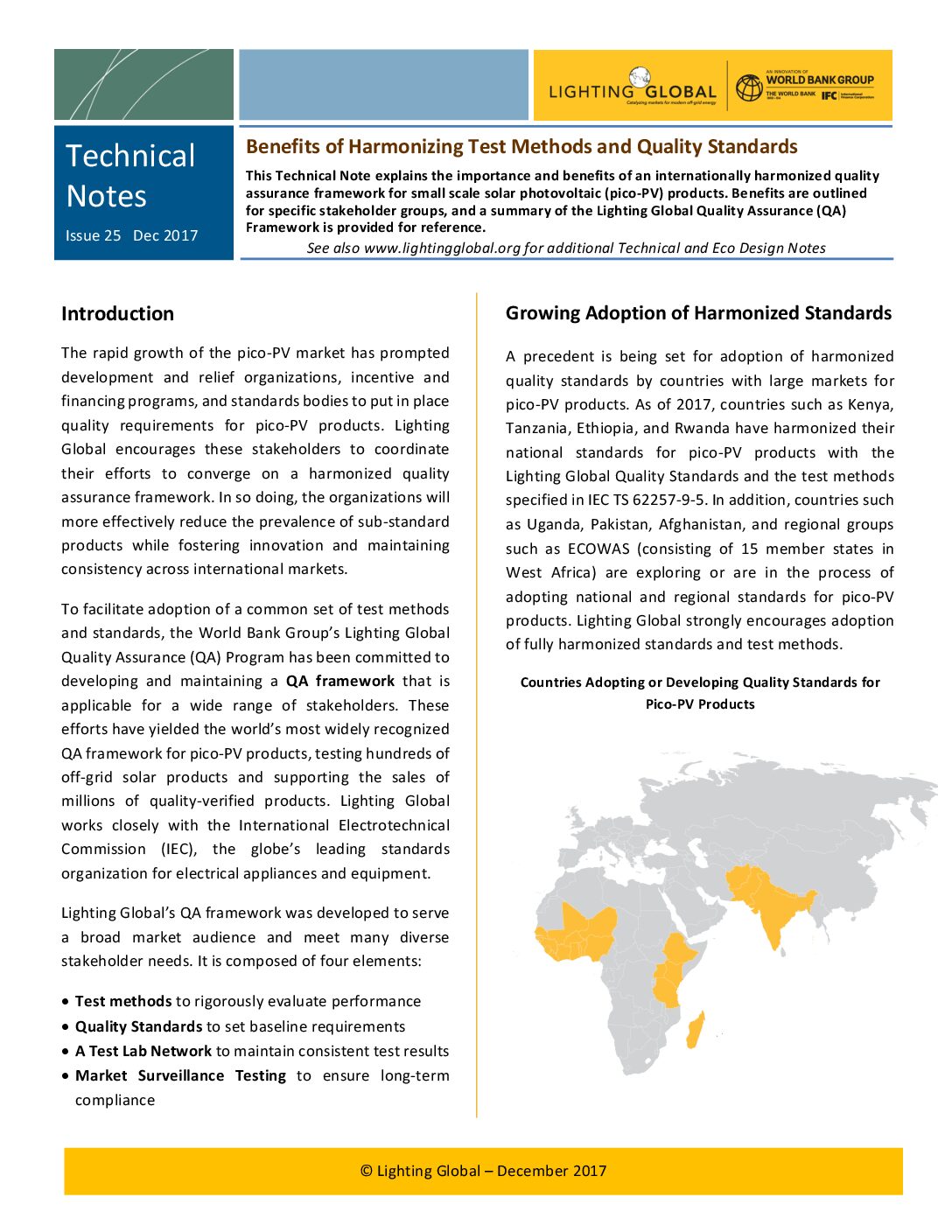
This brief explains the importance and benefits of an internationally harmonized quality assurance framework for small scale solar photovoltaic (pico-PV) products. Benefits are outlined for specific stakeholder groups, and a summary of the Lighting Global Quality Assurance (QA) Framework is provided for reference.
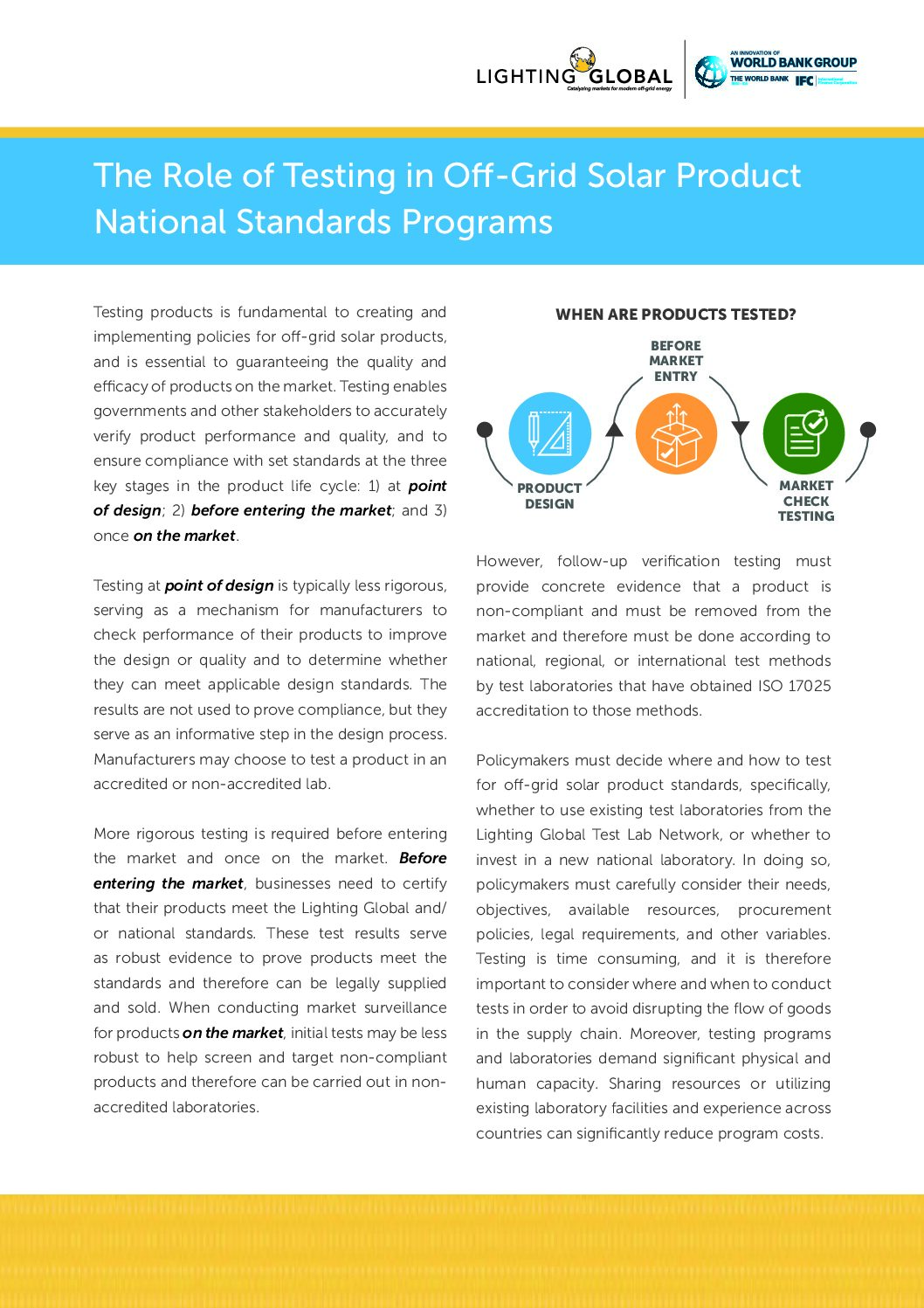
This brief explains the role of product testing in standard-setting for off-grid solar products. It provides recommendations based on good practices and explains how the Lighting Global Quality Assurance Program can help governments implement and enforce standards.
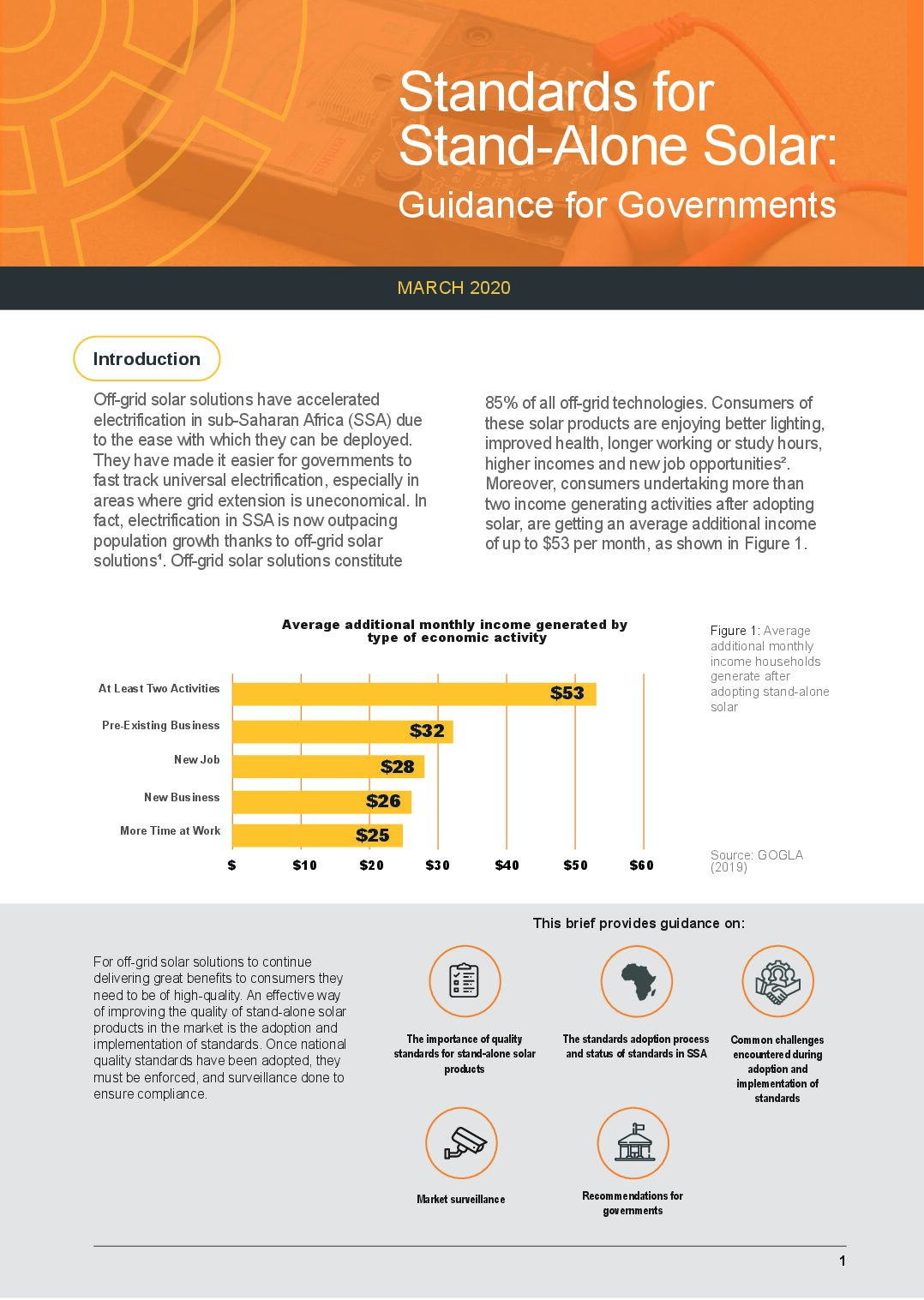
This policy brief provides guidance on the importance of quality standards for stand-alone solar products; how to develop and adopt standards, and the current status in Africa; common challenges encountered in this process; and market surveillance; as well as recommendations for governments.

This publication shares the learnings from eight EU-funded research projects on energy behaviour and modelling, and presents their implications for policy design.
This webpage provides an introduction to smart grids, an overview of recent progress and recommendations for governments and utilities.
Identifying Factors Associated with Consumers’ Adoption of e-Mobility—A Systematic Literature Review
This article investigates the following questions: 1) What are the associated factors that affect the consumer’s intention to purchase EVs? (2) What is the impact of sociodemographic variables on the adoption of EVs? (3) What are the main obstacles to and motivators for introducing EVs and the expected recommendations for manufacturers, politicians, governments, and scientists?
This publication provides templates to support any city authority, business, institution or charity that wishes to effect a positive change in mobility behaviour.

This report explores the critical intersections of AI development, gender equality and energy transitions, emphasizing how AI applications can advance a sustainable, equitable and just energy transition.
This page explores the best practice regulatory, fiscal and economic instruments available today to encourage a more efficient/electric vehicle stock.
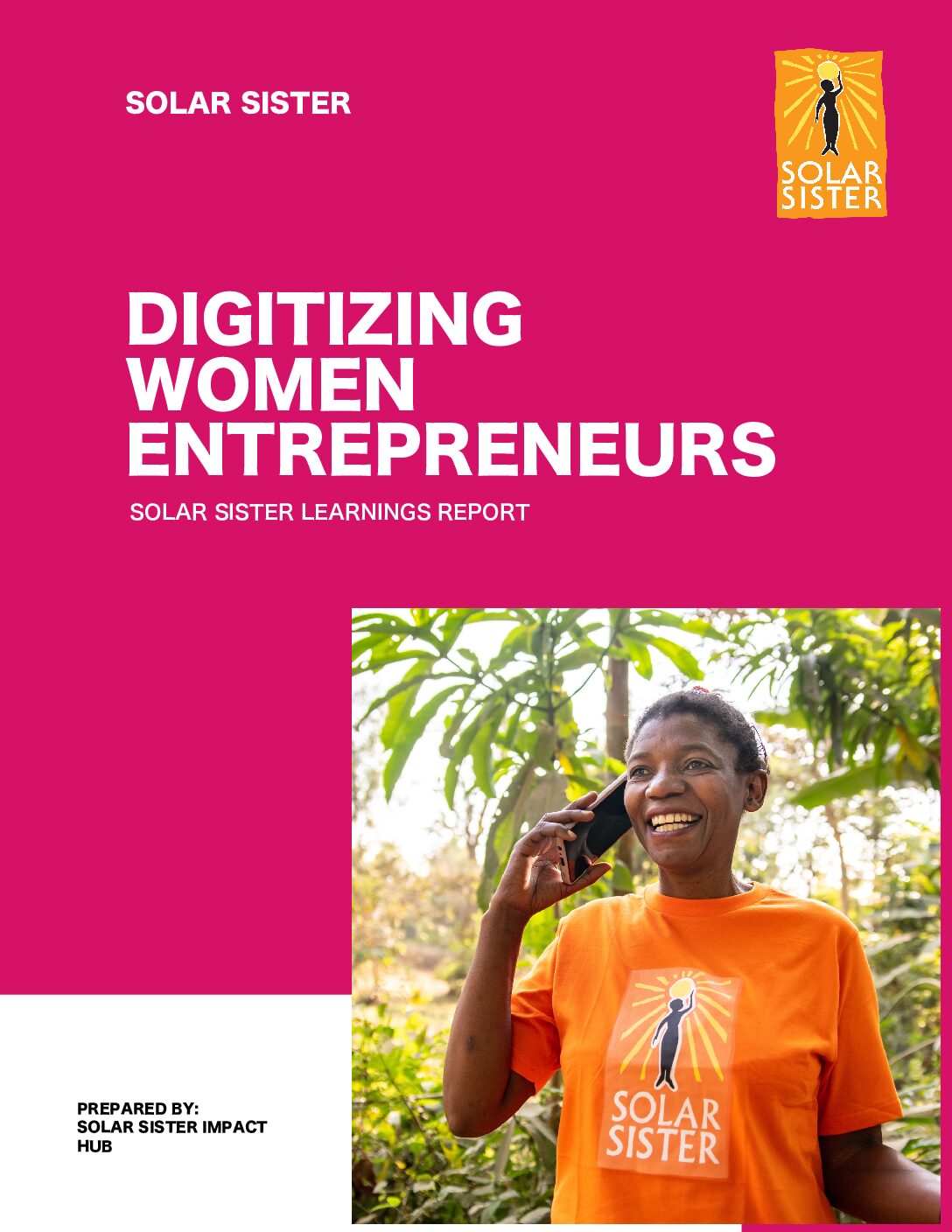
This report provides an outline of Solar Sister’s efforts to empower women energy entrepreneurs through digital technology, key learnings from our pilot efforts, and recommendations for the path forward.