
This note describes the results of an effort to create a database of small hydropower projects in the Dominican Republic, and assess their functioning based on hydrological data and power output.

This report describes the context and potential for hydropower development in Madagascar.
This report provides an extensive overview of the hydropower sector in Cameroon, including technologies, project management, and socio-economic and environmental context, and offers an assessment of the feasibility of a specific micro-hydro project in Yaoundé.
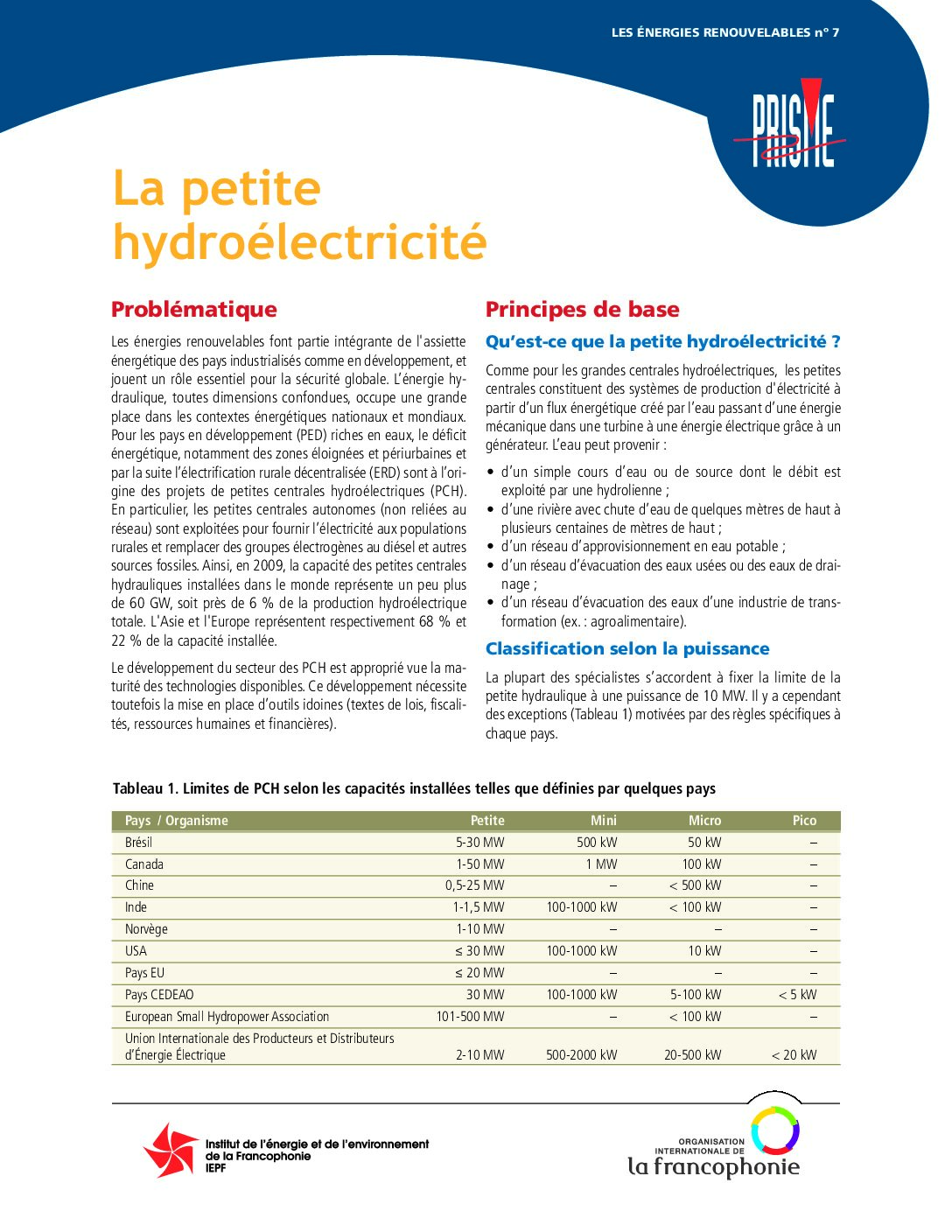
This brief provides an introduction to small hydropower generation, with information on potentials, technologies, system sizing and project design, project steps and investment needs.
This report delves into the challenges, opportunities, and innovations shaping the future of the steel industry as the global transition to a low-carbon economy accelerates.
The Breakthrough Agenda Report 2023 is an annual collaboration between the International Energy Agency (IEA), the International Renewable Energy Agency (IRENA) and the United Nations Climate Change High-Level Champions. It takes stock of emissions reductions in key energy subsectors and focuses on supporting stronger international collaboration to drive faster reductions in global greenhouse gas emissions.
This paper explains how minimum energy performance standards for buildings can be implemented effectively while remaining socially just, using a differentiated approach that carefully follows a series of design principles.
The Green Steel Tracker aims to support decision makers in policy and industry, academia as well as civil society, by tracking public announcements of low-carbon investments in the steel industry and presenting them transparently in one place.
This module aims to help policymakers and regulators understand the potential benefits of and opportunities for improving the efficiency of buildings and give them a background on the key issues to be addressed when developing suitable policies and a framework for implementation.

This guidance note outlines how cities can tap into a wide array of proven technologies, policies, and financing mechanisms to improve energy efficiency and capture cost-effective energy savings in buildings.