
The goal of this market guide is to serve as a reference document for early exploration of the market for energy service companies in Uganda (ESCOs) with a focus on energy and cost savings for agri-food processing companies.
This memo describes the current market for ESCOs in Uganda, barriers to the growth of the sector, and strategies to address these barriers.
This web page describes the concept of a Super ESCO, a facility usually established by governments to play the role of a market catalyzer, kickstarting a market for ESCOs.
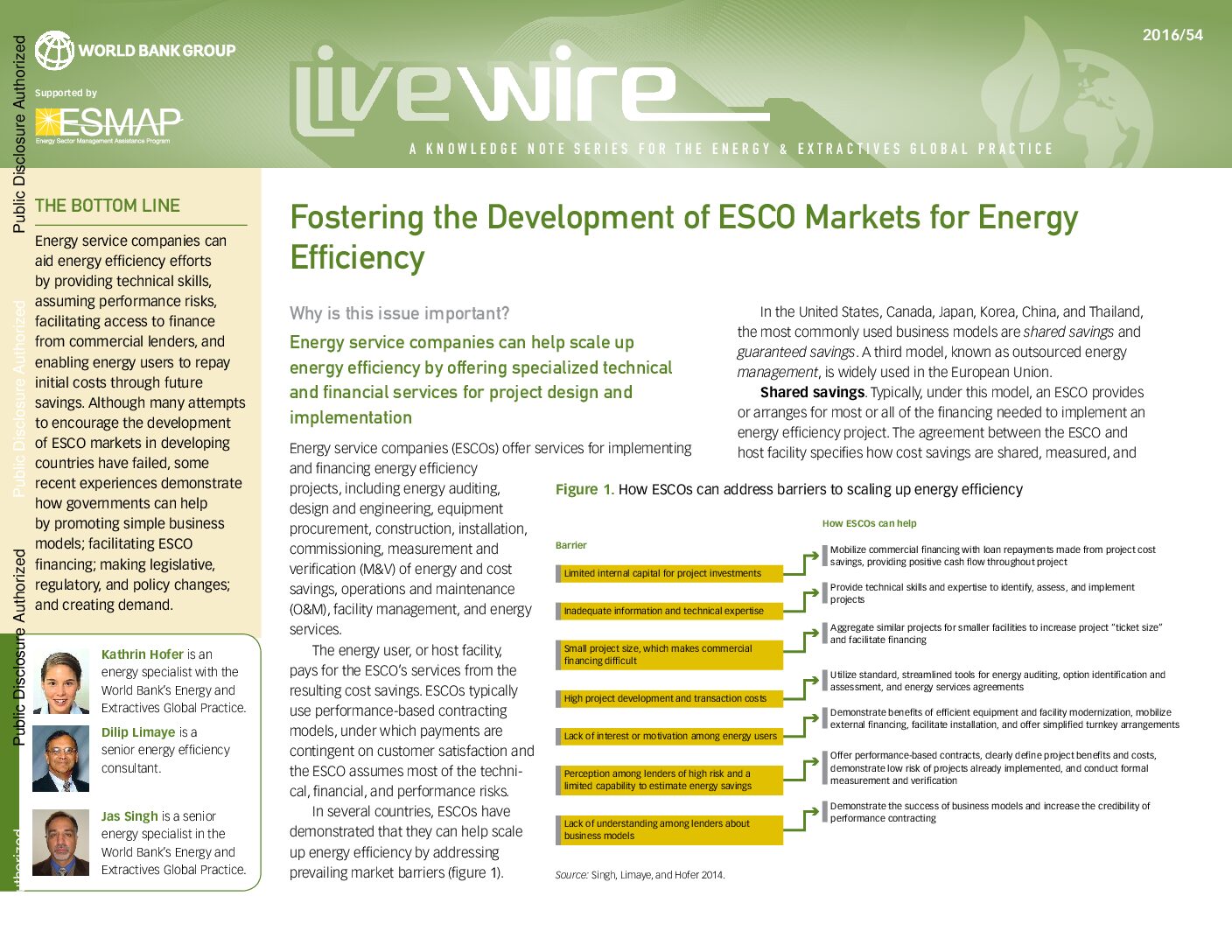
This brief provides advice on kickstarting markets for ESCOs in low- and middle-income countries.
This report explores the critical intersections of AI development, gender equality and energy transitions, emphasizing how AI applications can advance a sustainable, equitable and just energy transition.
This guide explains how cities can develop energy transition roadmaps that can create platforms for collaboration with other stakeholders and attract investment.
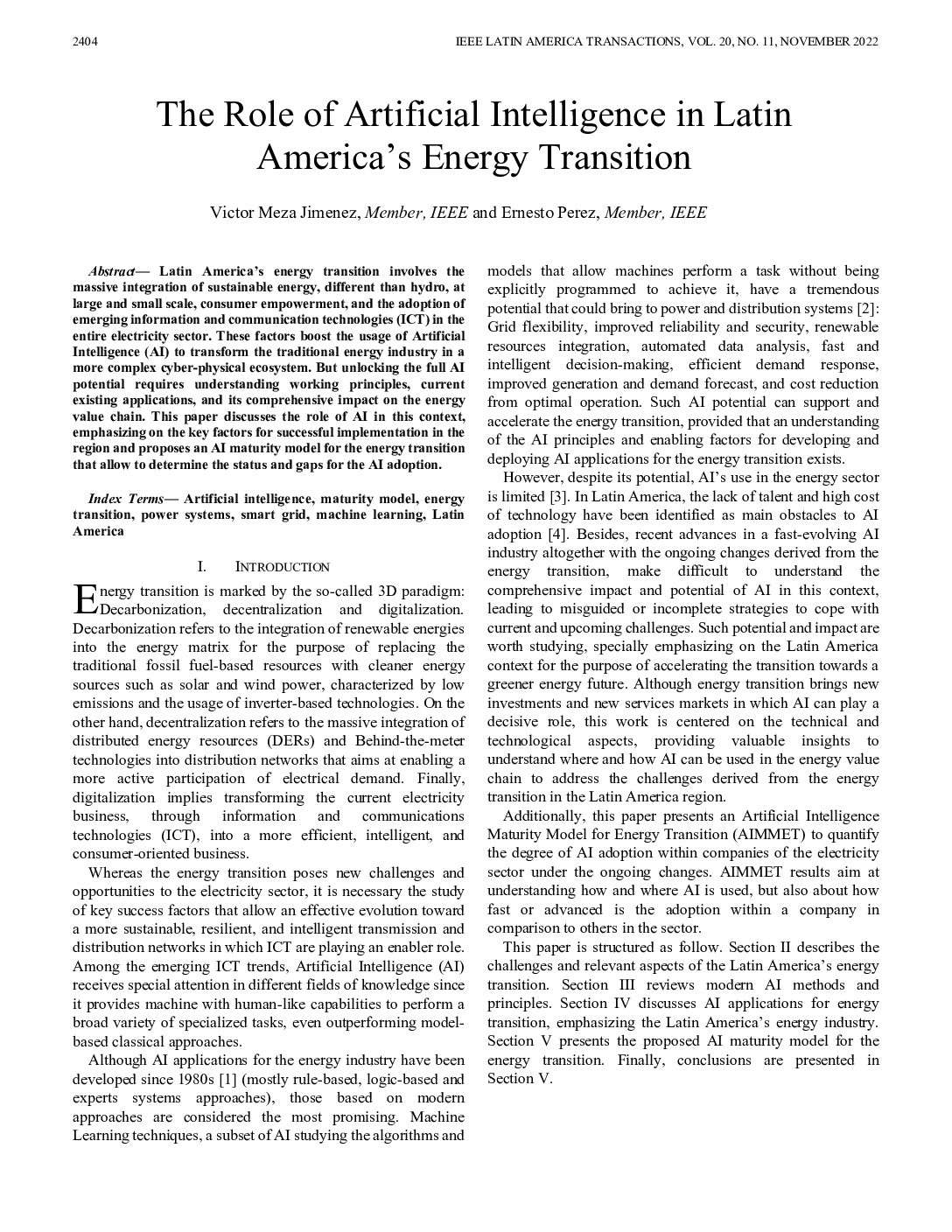
This paper discusses the role of AI in the energy transition in Latin America, identifies key factors for successful implementation in the region and proposes an AI maturity model for the energy transition that allows stakeholders to assess the status and gaps for the AI adoption.
This study examines the integration of AI into energy management processes in industrial facilities and the advantages it provides.
This guidance note outlines how cities can tap into a wide array of proven technologies, policies, and financing mechanisms to improve energy efficiency and capture cost-effective energy savings in buildings.
Water infrastructure is among the biggest users of electricity in many municipalities. This policy brief makes recommendations to government (national, provincial and local) for cleaner energy (renewable energy and energy efficiency) policies related to municipal waterworks and their operations.