
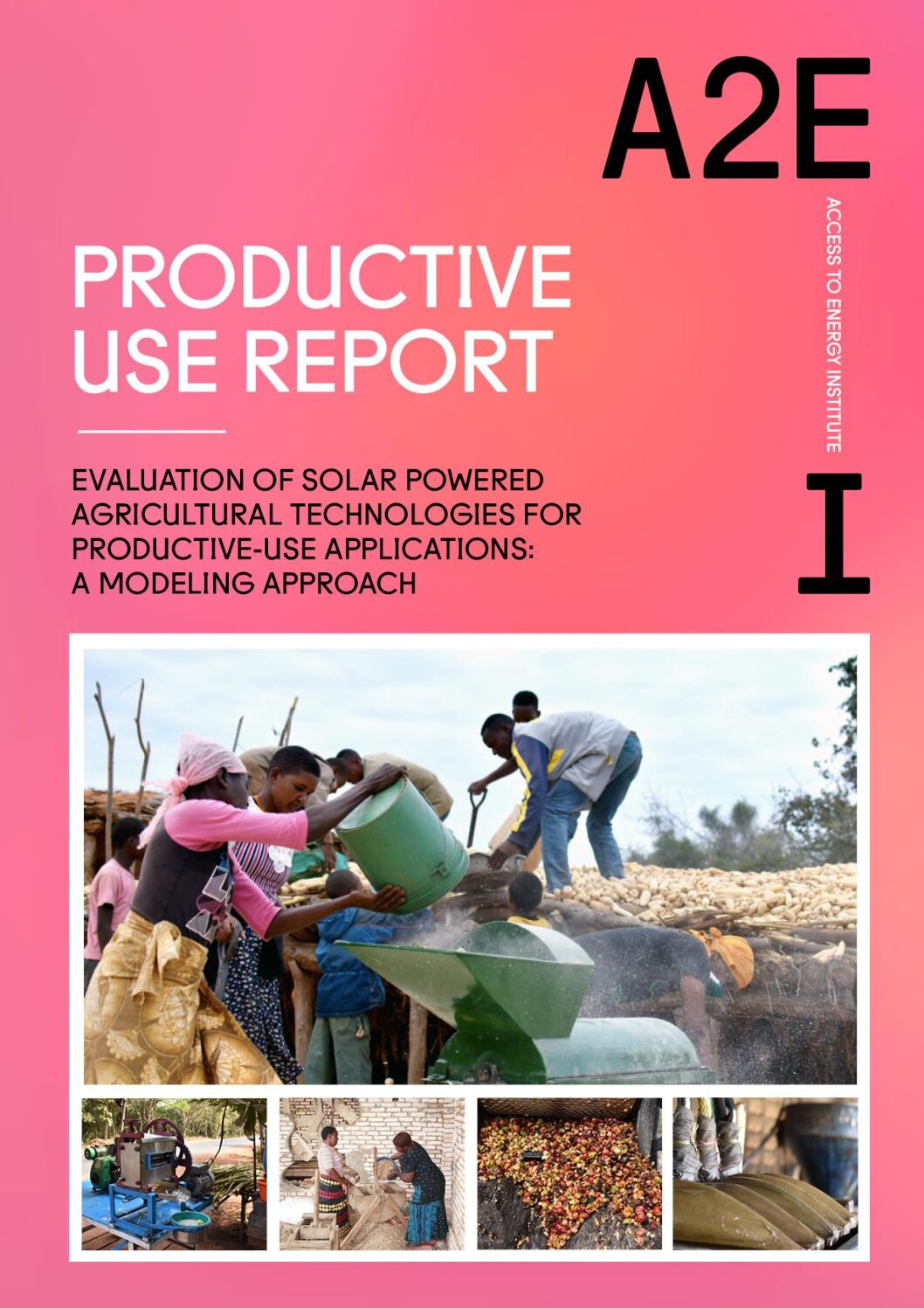
This report uses economic modelling to investigate the viability of ten different productive use applications of solar power in agriculture (oil extraction, maize shelling, rice hulling, fruit juice making, sugar cane juicing, fruit drying, flour milling, peanut shelling and coffee pulping). It investigates each technology in detail and then calculates the profits and other benefits … Continue reading “Productive Use Report – Evaluation of solar-powered agricultural technologies for productive-use applications: A modelling approach”
This brief report introduces the concept of the WEF nexus and explains how the FAO has applied the nexus approach in its work, with many case study examples.
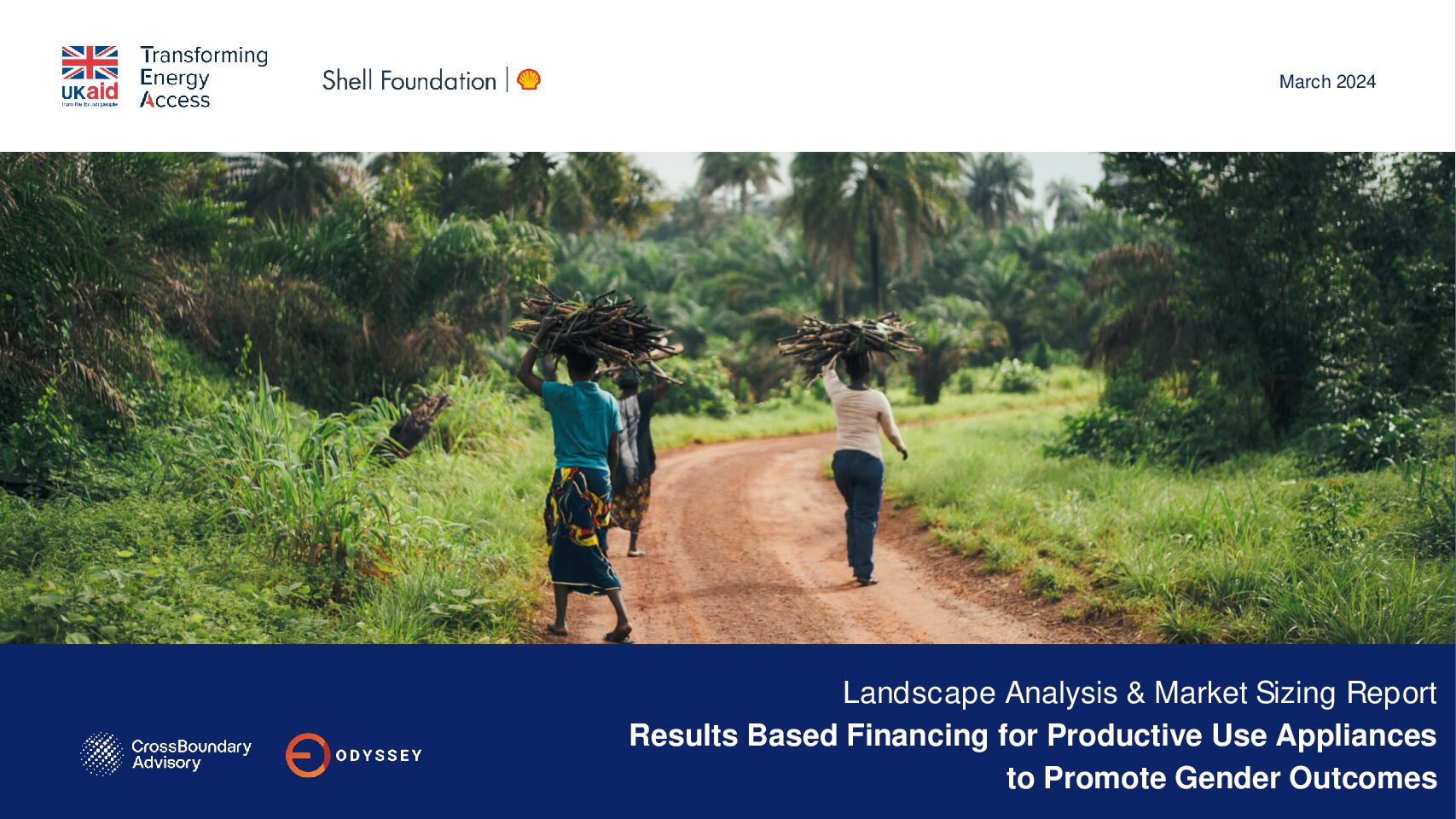
This is a ‘landscape and market sizing report’ developed to inform the design of a gender-responsive results-based financing (RBF) programme for PUE appliances. It investigates the impact of energy access on women, identifies the appliances that generate the greatest benefits for women, summarizes learnings from previous RBF programmes, and estimates the market size for gender-responsive … Continue reading “Results Based Financing for Productive Use Appliances to Promote Gender Outcomes”
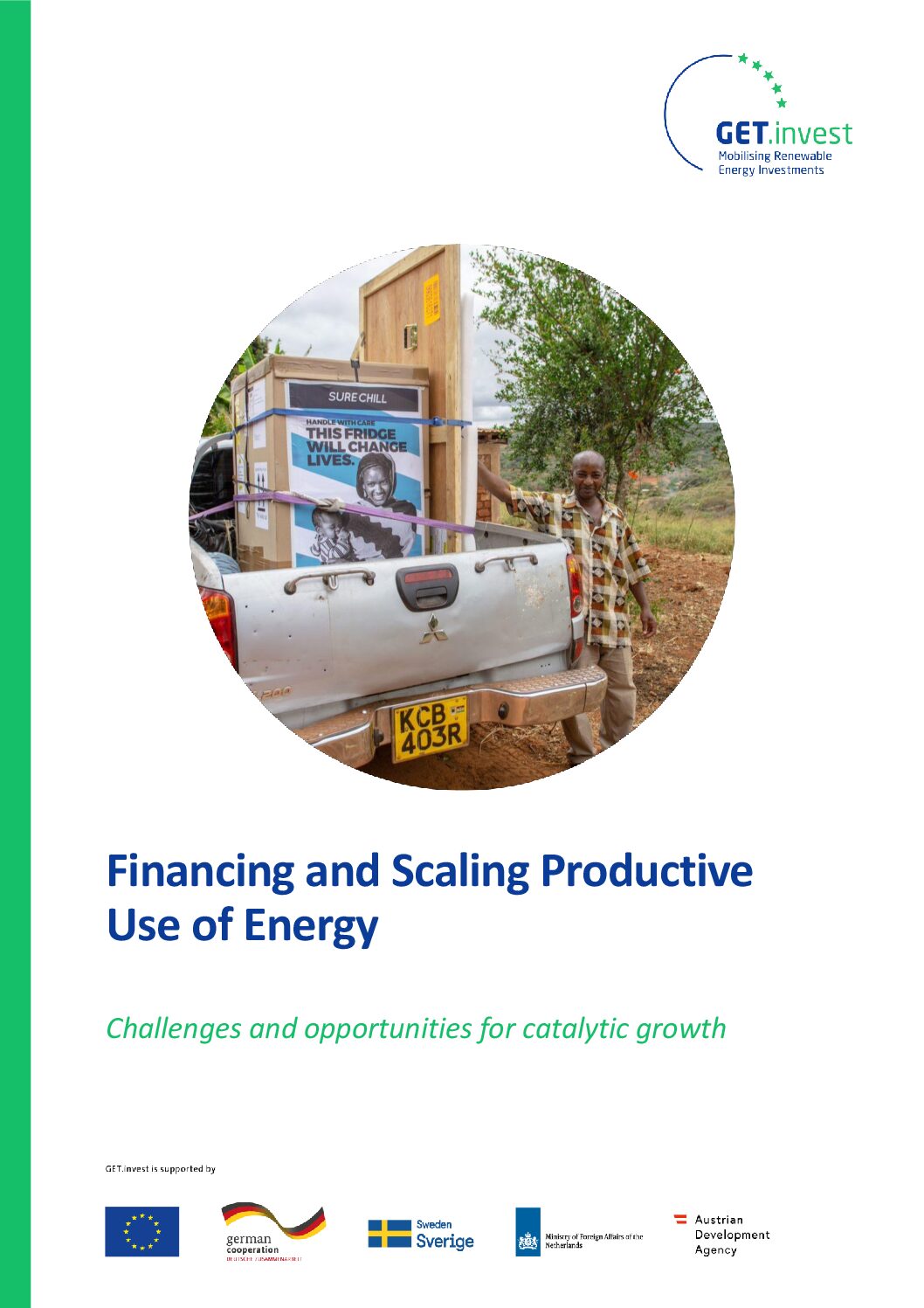
GET.invest is a programme funded by the EU and several of its member states, that mobilises investment in renewable energy in low- and middle-income countries, including by providing coaching to renewable energy companies and linking them with investors. This report assesses the current state of PUE finance, highlights challenges to scaling up investment in PUE, … Continue reading “Financing and Scaling Productive Use of Energy: Challenges and opportunities for catalytic growth”
This report presents the CCA’s Principles for Responsible Carbon Finance in Clean Cooking: Integrity, Transparency, Fairness and Sustainability, and connects each with key actions to be taken by market actors.
This report by the Global Energy Transitions Commission presents a complete picture of global building sector emissions and describes pathways to decarbonisation for both existing buildings and new construction.
This is the IEA’s annual report on global energy efficiency developments, including trends in energy intensity, prices and policies, and sectoral analyses on buildings, appliances, industry and transport.
This report discusses how distributed energy resources can improve energy systems, and how energy systems must change to accommodate them.
This report by the World Bank’s Energy Sector Management Assistance Program (ESMAP) shares opportunities, challenges and good practices related to advancing gender equality in electricity infrastructure projects.
This very recent IEA report explains the need to invest more in grid infrastructure. Read the Executive Summary on pages 7-10 for a brief overview of challenges related to quickly rising demand for transformers and cables, which have led to increased waiting times and higher prices.