
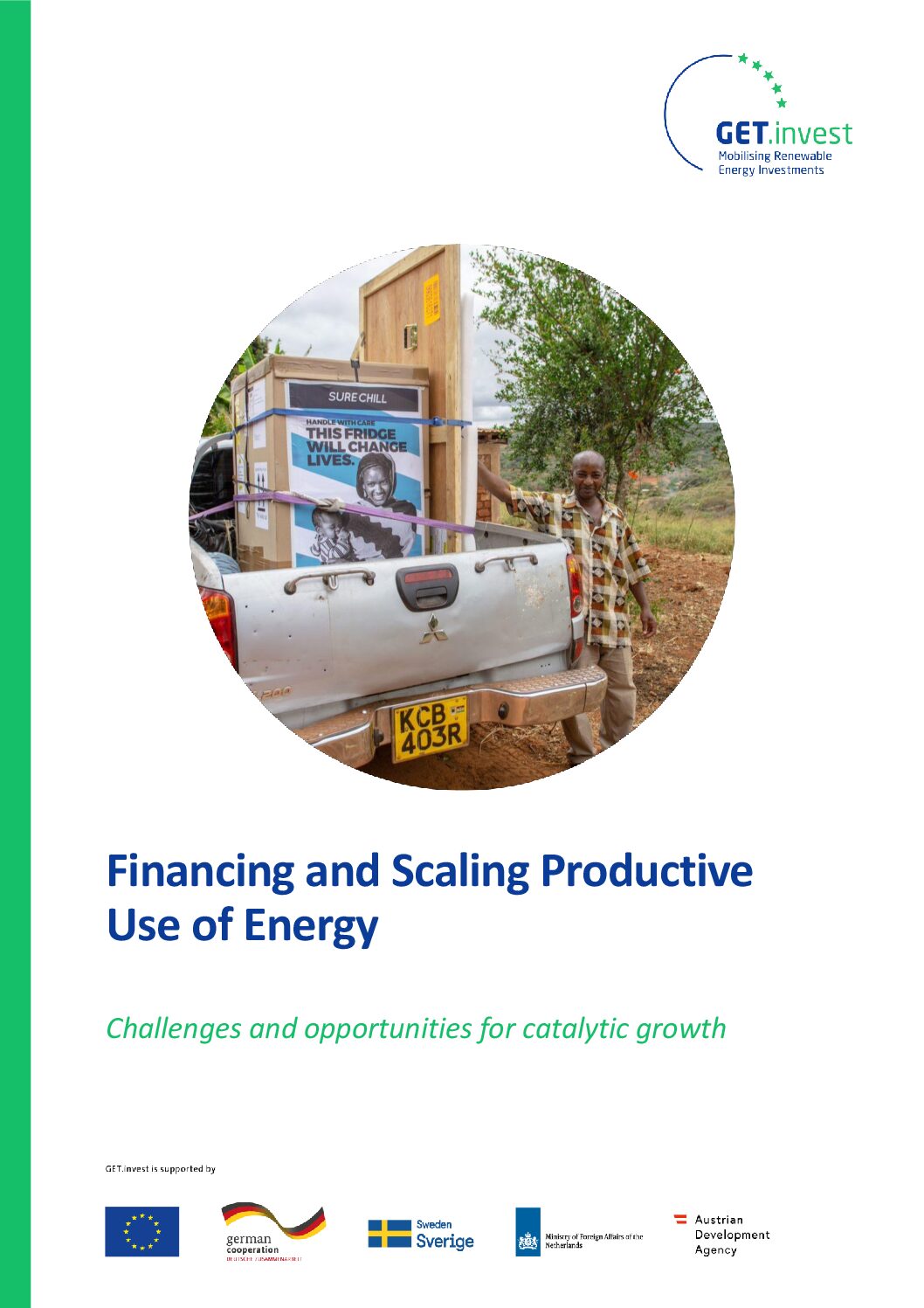
GET.invest is a programme funded by the EU and several of its member states, that mobilises investment in renewable energy in low- and middle-income countries, including by providing coaching to renewable energy companies and linking them with investors. This report assesses the current state of PUE finance, highlights challenges to scaling up investment in PUE, … Continue reading “Financing and Scaling Productive Use of Energy: Challenges and opportunities for catalytic growth”
This Energypedia article explains how to undertake a PUE assessment as part of a mini-grid development project, to evaluate the potential and feasibility of different types of PUE to support community income generation and mini-grid viability.
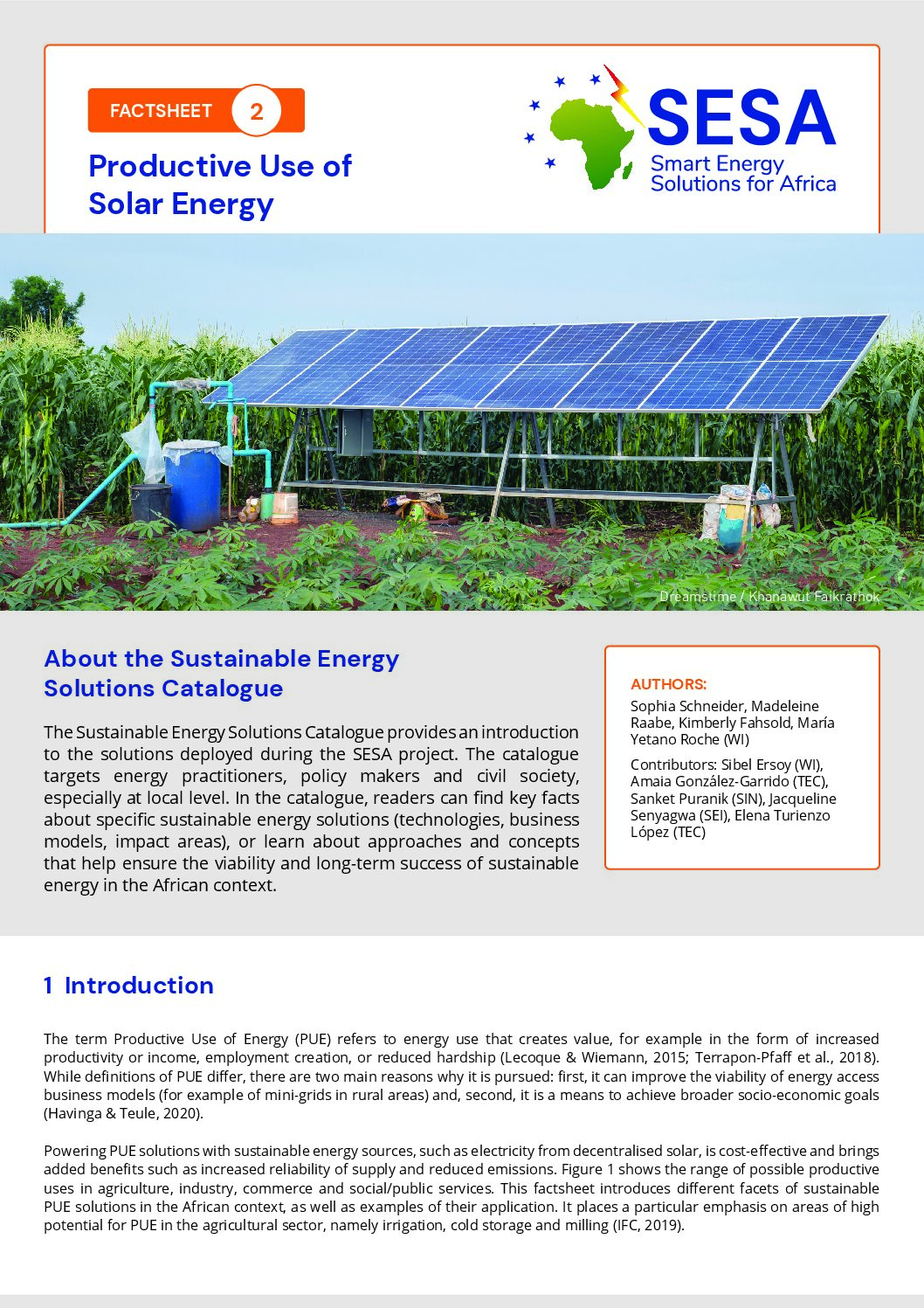
This fact sheet provides a quick overview of different PUE technologies and business and financing models, as well as their socio-economic and sustainability impacts, and their upscaling potential.
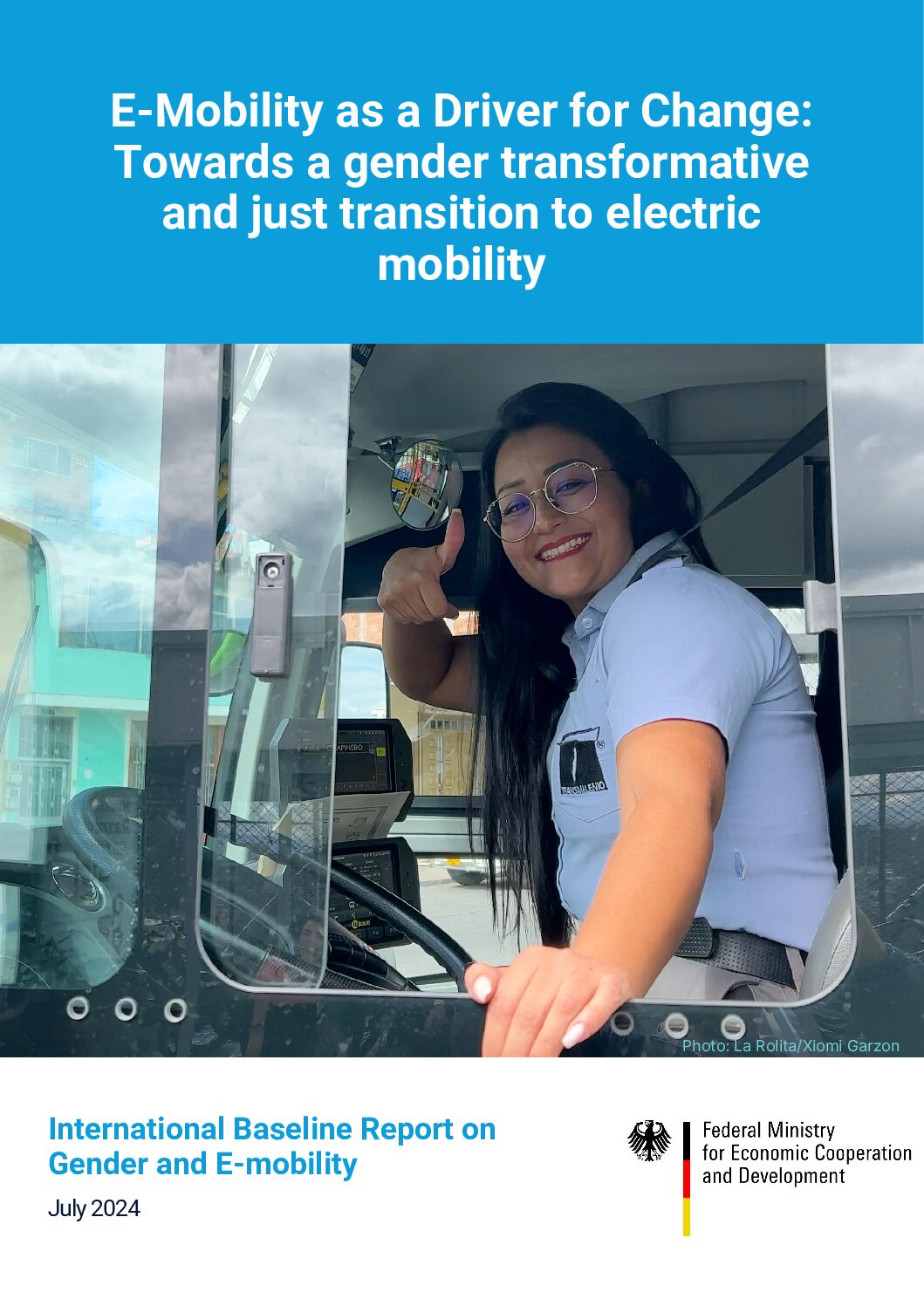
This international baseline study sets out the current state-of-the-art on the introduction of EMobility and identifies potential entry points for women to benefit and become more involved in this transition.
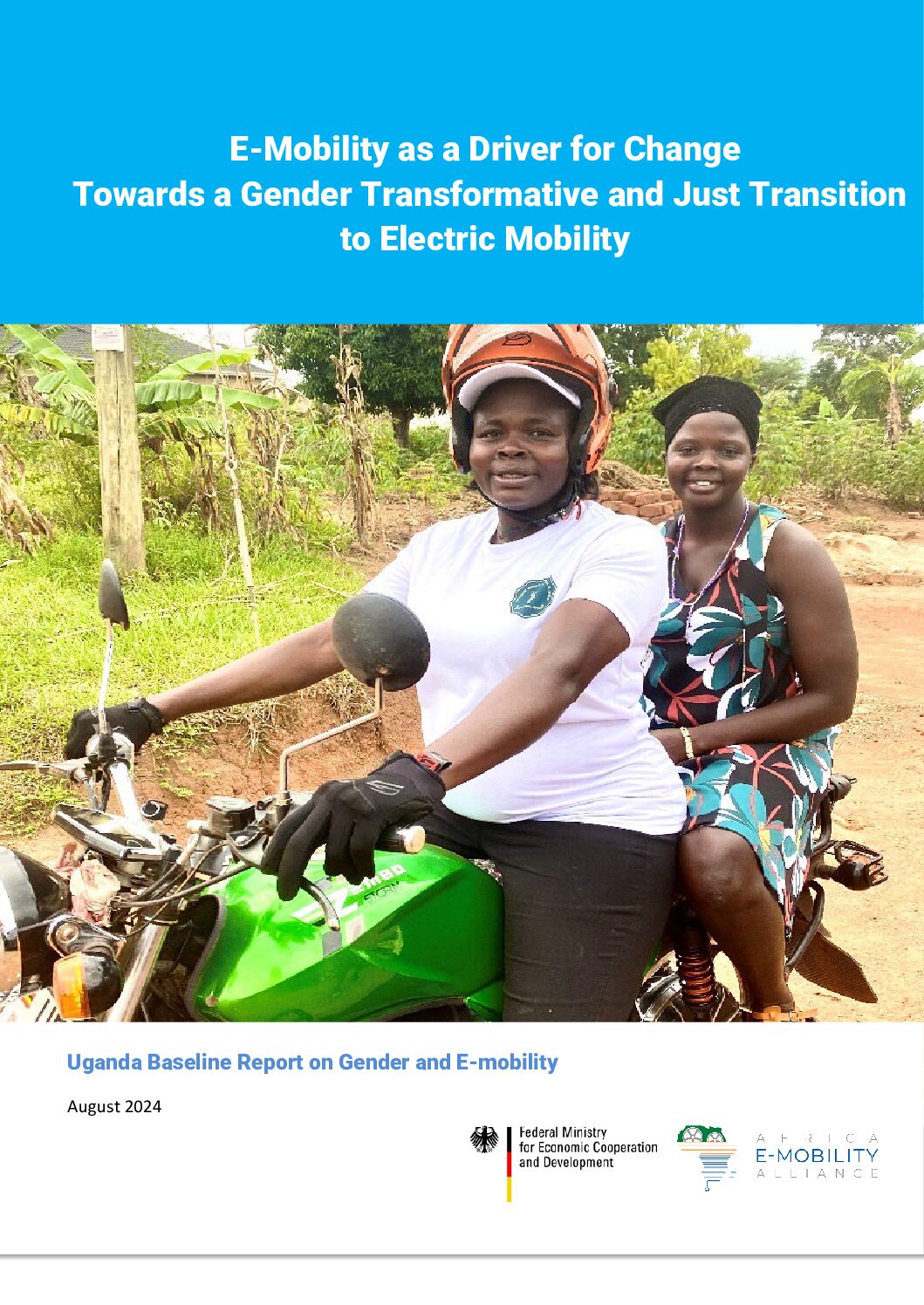
This baseline study outlines the current status of gender equality in the transport sector in Uganda, and identifies potential for the advancement of gender equality in transport while also advancing the e-mobility transition.
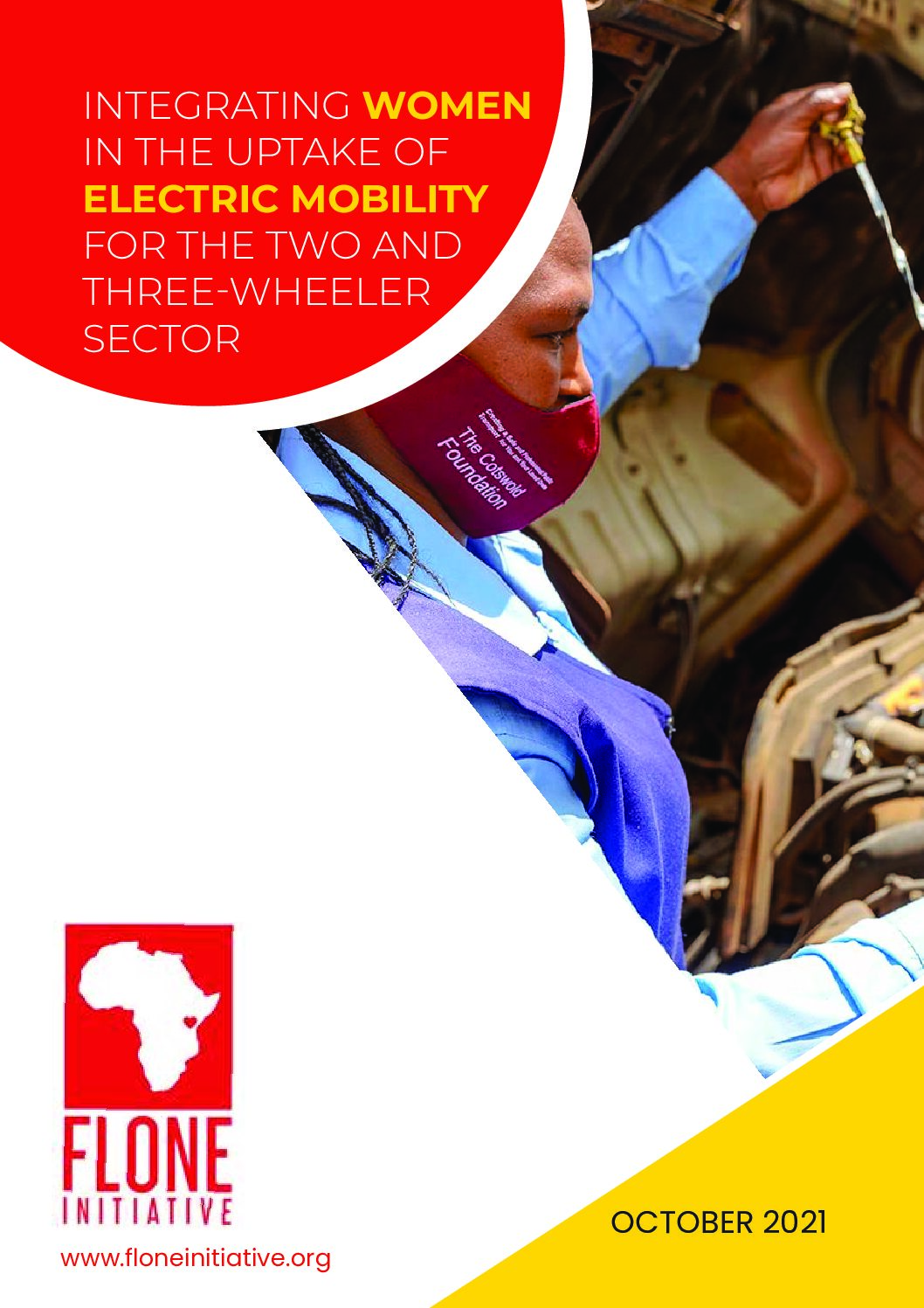
The study examines gender dimensions in the uptake of electric 2/3 wheelers in Kenya, and identifies policy gaps and available opportunities for advancing gender mainstreaming in electric mobility.
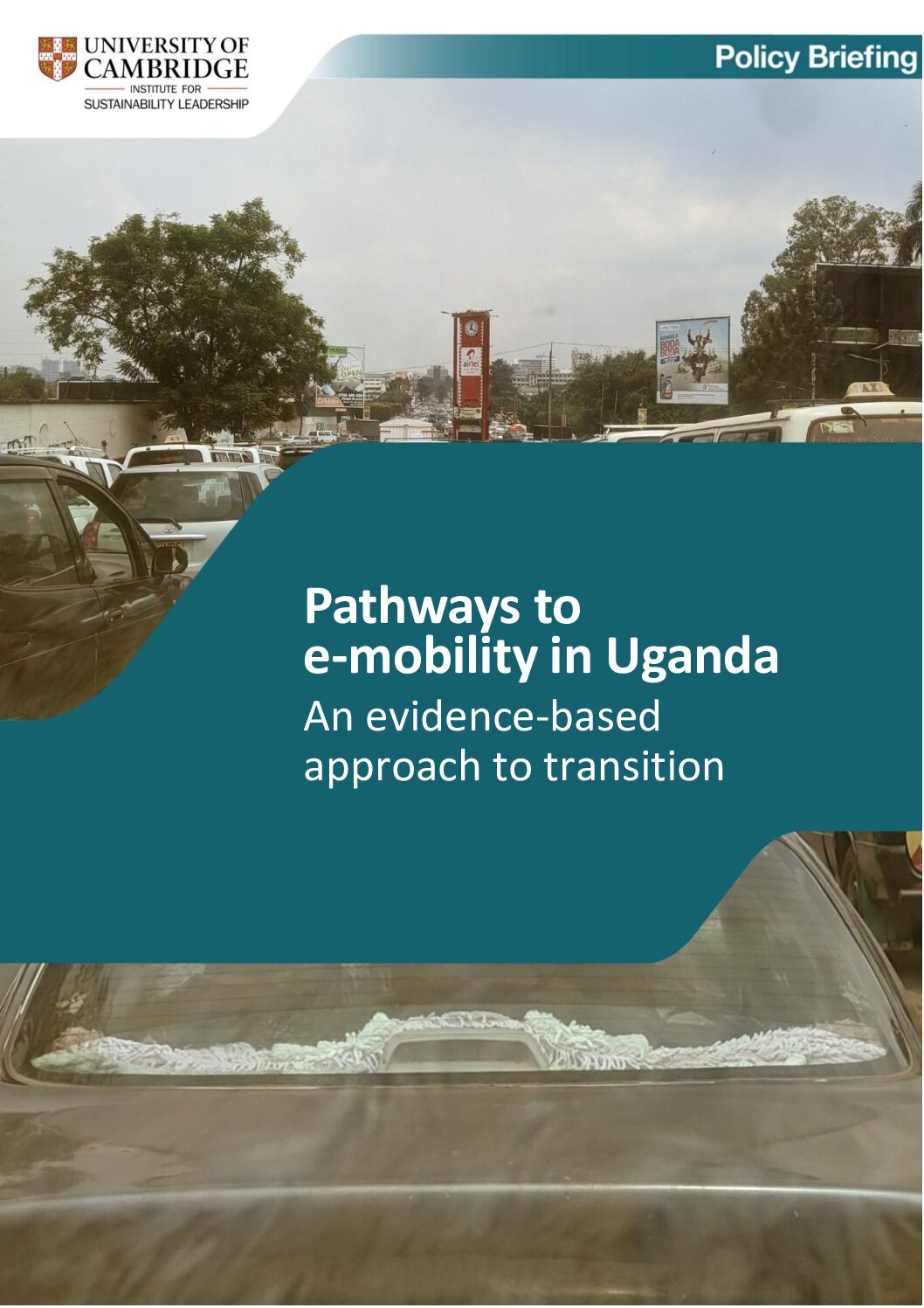
This policy briefing aimsto improve understanding of the state of e-mobility in Uganda and how best to achieve the transition to low-pollution, low carbon and jobs-rich transportation.
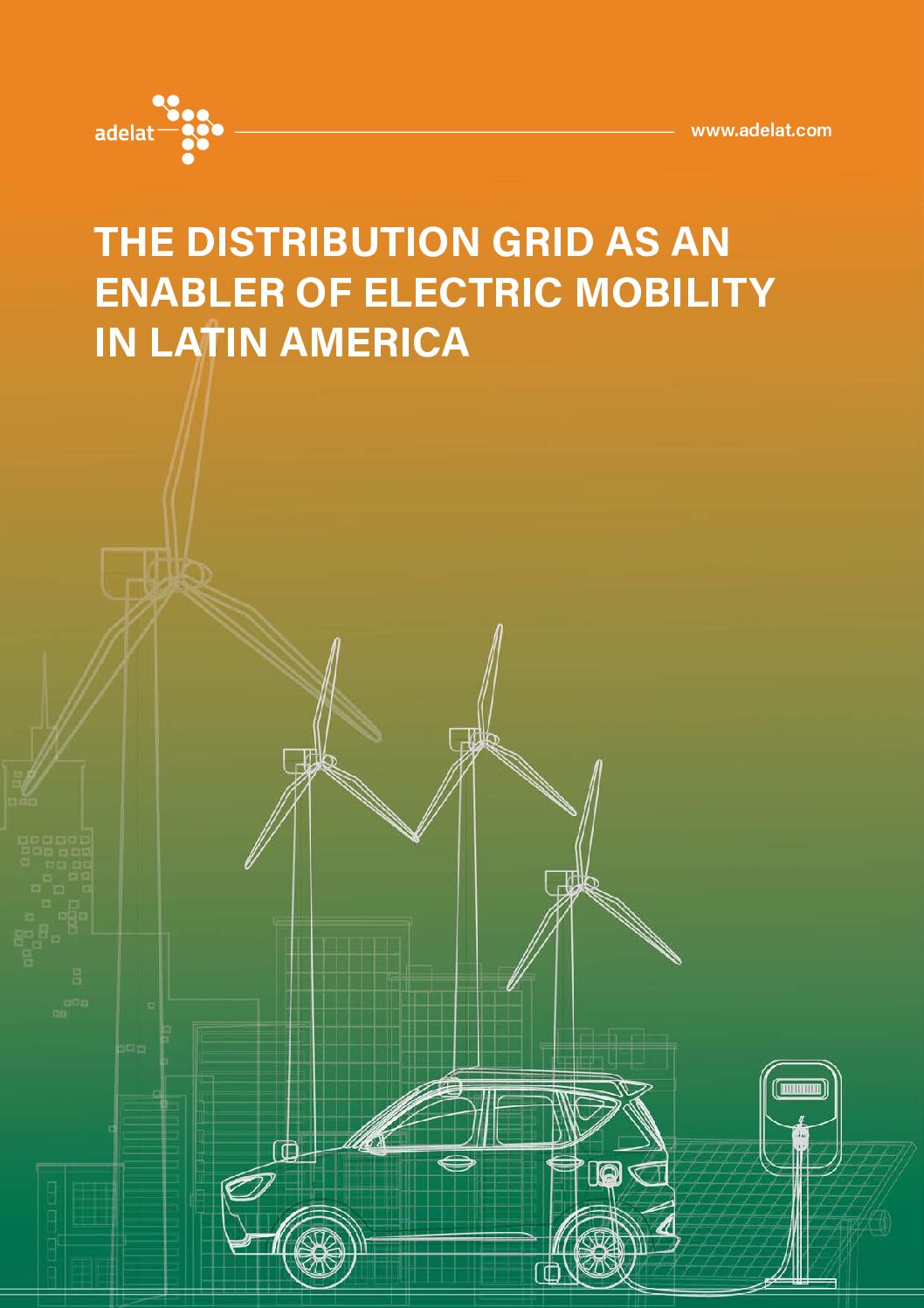
This report offers a comprehensive view of the advantages and challenges of electric mobility development jointly with the development of electrical infrastructure for the Latin American context, emphasizing the importance of synchronizing these developments to facilitate the energy transition and leverage underlying new technologies.
This report provides answers to three critical questions: Why should developing countries pursue e-mobility? When does an accelerated transition to electric vehicles (EVs) make sense for developing countries? How can governments make this transition happen?
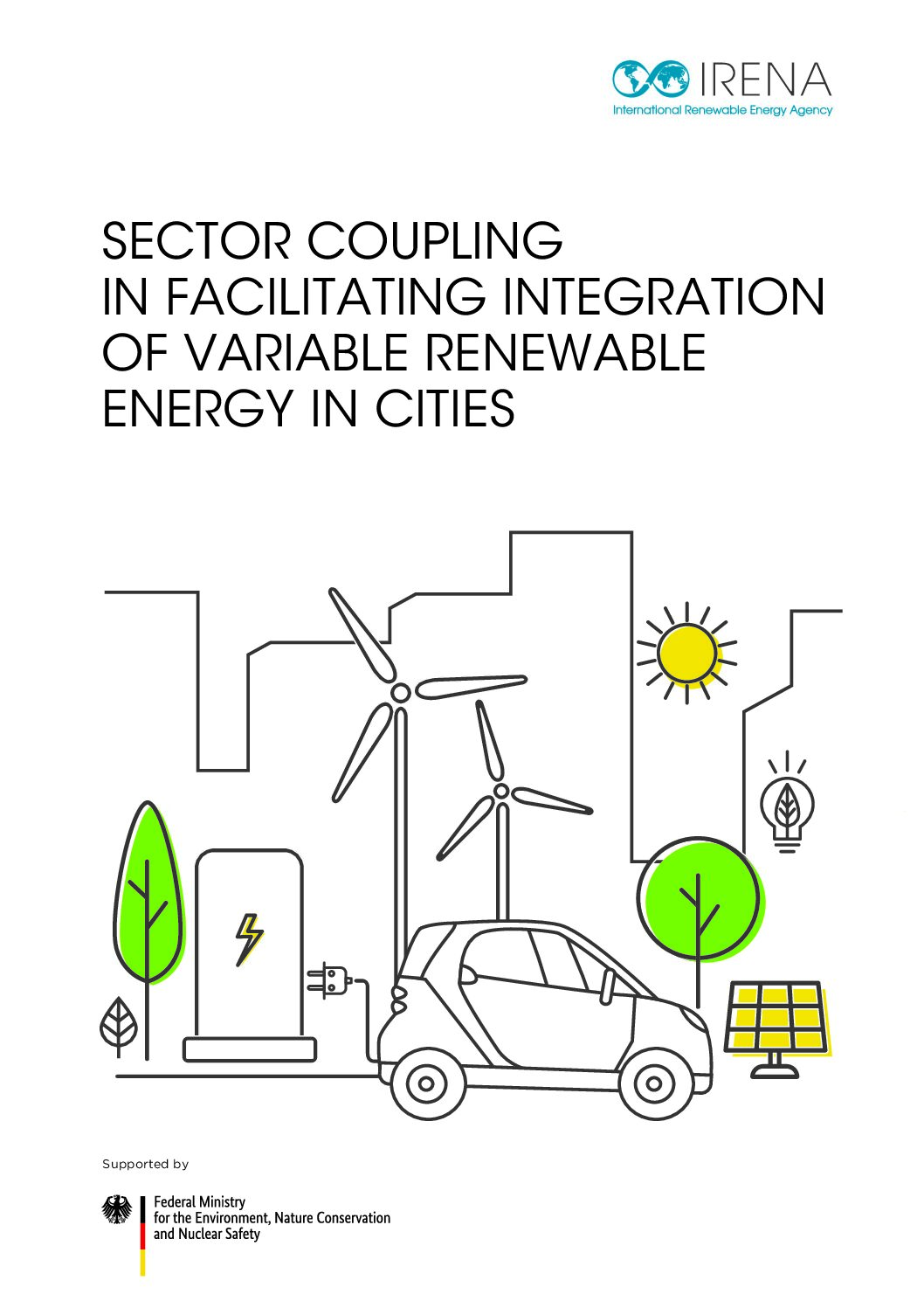
This report highlights the importance of sector coupling as a key source of flexibility that cities can explore to stabilise power grid operations when integrating high shares of variable renewable energy sources. It presents a range of sector coupling opportunities available for use in cities, including self-consumption of variable RE sources, the role of thermal … Continue reading “Sector Coupling in Facilitating Integration of Variable Renewable Energy in Cities”