
These two blogs (available in English and Spanish) explain why you should undertake stakeholder mapping, how to go about it, and how to engage the stakeholders you have identified.
This guide leverages FAO’s extensive experience of developing and delivering e-learning solutions to offer practical advice and guidance to trainers and instructional designers who wish to develop effective capacity building initiatives.
This report presents the Latinamerican Gender and Mobility Observatory and shares good practices in gender mainstreaming in transport from different Latin-American countries, including Bolivia and Guatemala.
This page presents studies and policies related to electric mobility in Bolivia.
This report presents a baseline study on e-mobility in Ecuador, future scenarios and a roadmap to 2030.
This toolkit presents a glossary and a list of useful resources on the water-energy-food nexus.
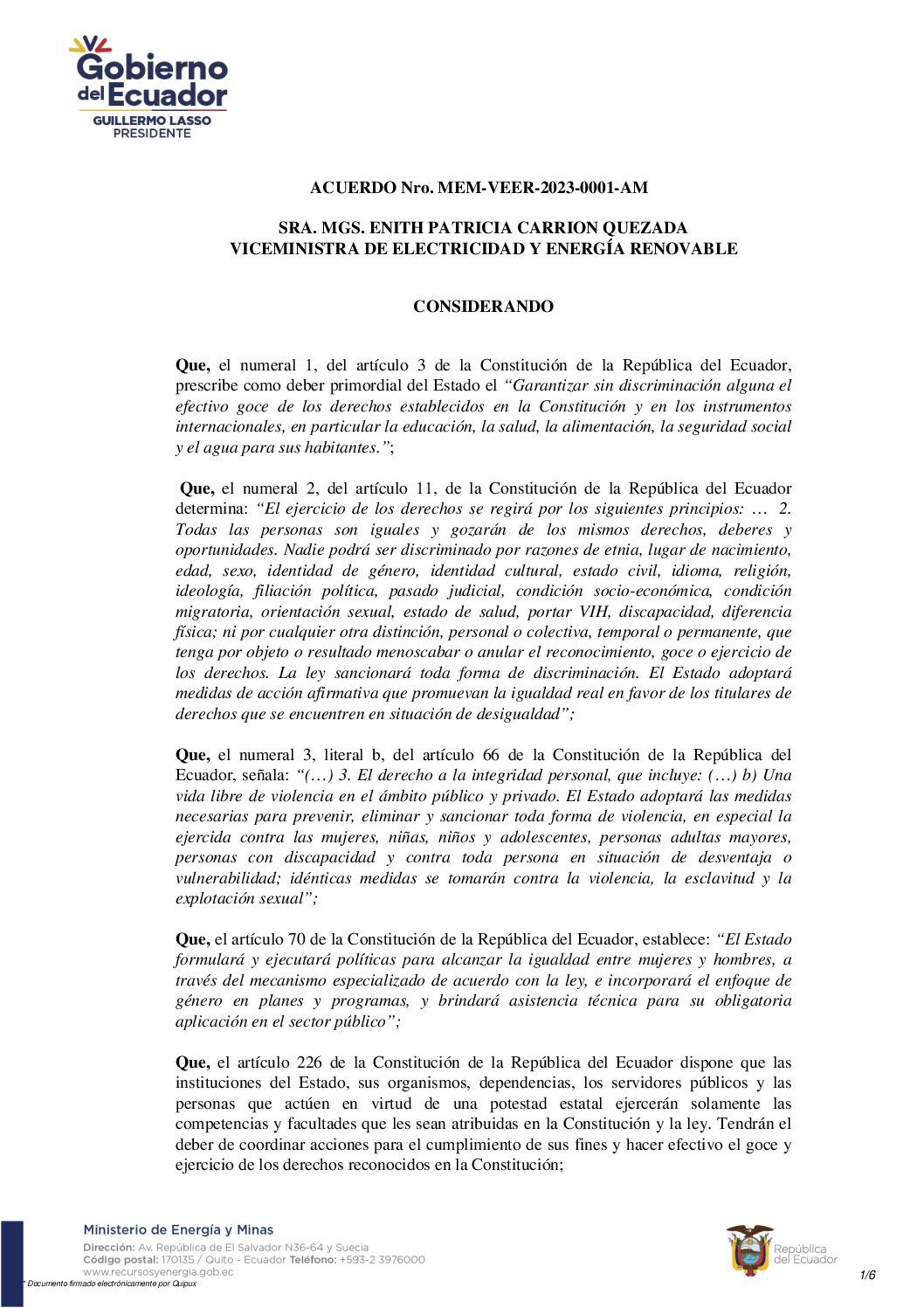
This is a good practice example of a ministerial agreement to promote the design and implementation of gender-inclusive strategies in the Ecuadorian energy sector.
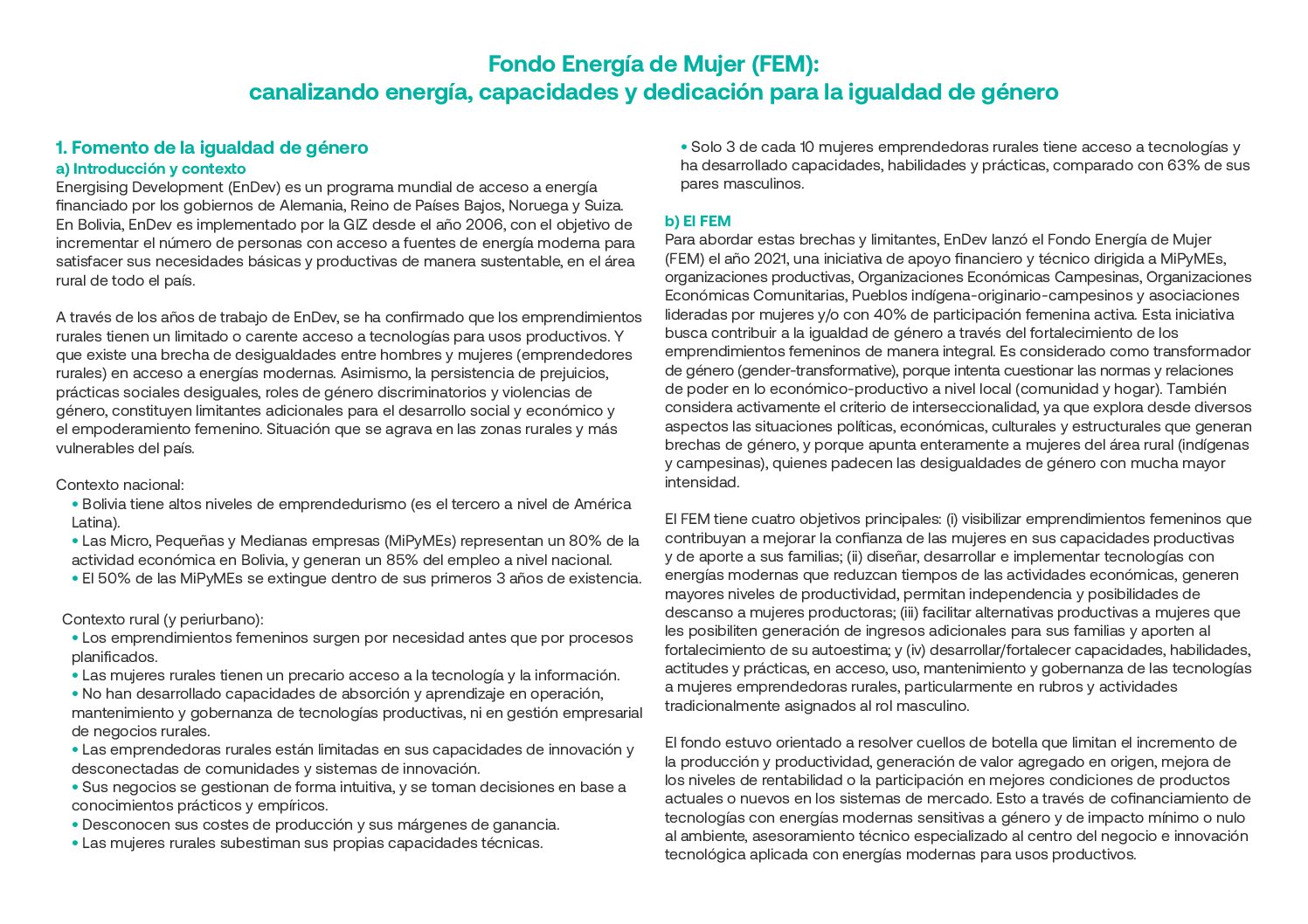
This is an impact report about a fund in Bolivia that supports women-owned businesses to access the energy technology they need.
This article analyses the potential for solar energy in Ecuador and the efforts of the government to promote renewable energy.
This toolkit provides advice on how to assess capacity needs for the implementation of the Paris Agreement, and provides good practice examples and further resources.