
This second edition from 2025 provides an update to the landmark report from 2019, based on a new survey of 1192 individuals working in the sector, and 233 companies and organizations. The headline finding was that despite widespread efforts, the share of women in renewable energy has not grown over the past six years: it … Continue reading “Renewable energy: A gender perspective (Second edition)”
This article announces the adoption of harmonised minimum energy performance standards for air conditioners and refrigerators in the 16 member countries of the Southern African Development Community (SADC). It also explains the process by which these harmonised standards were developed and adopted.
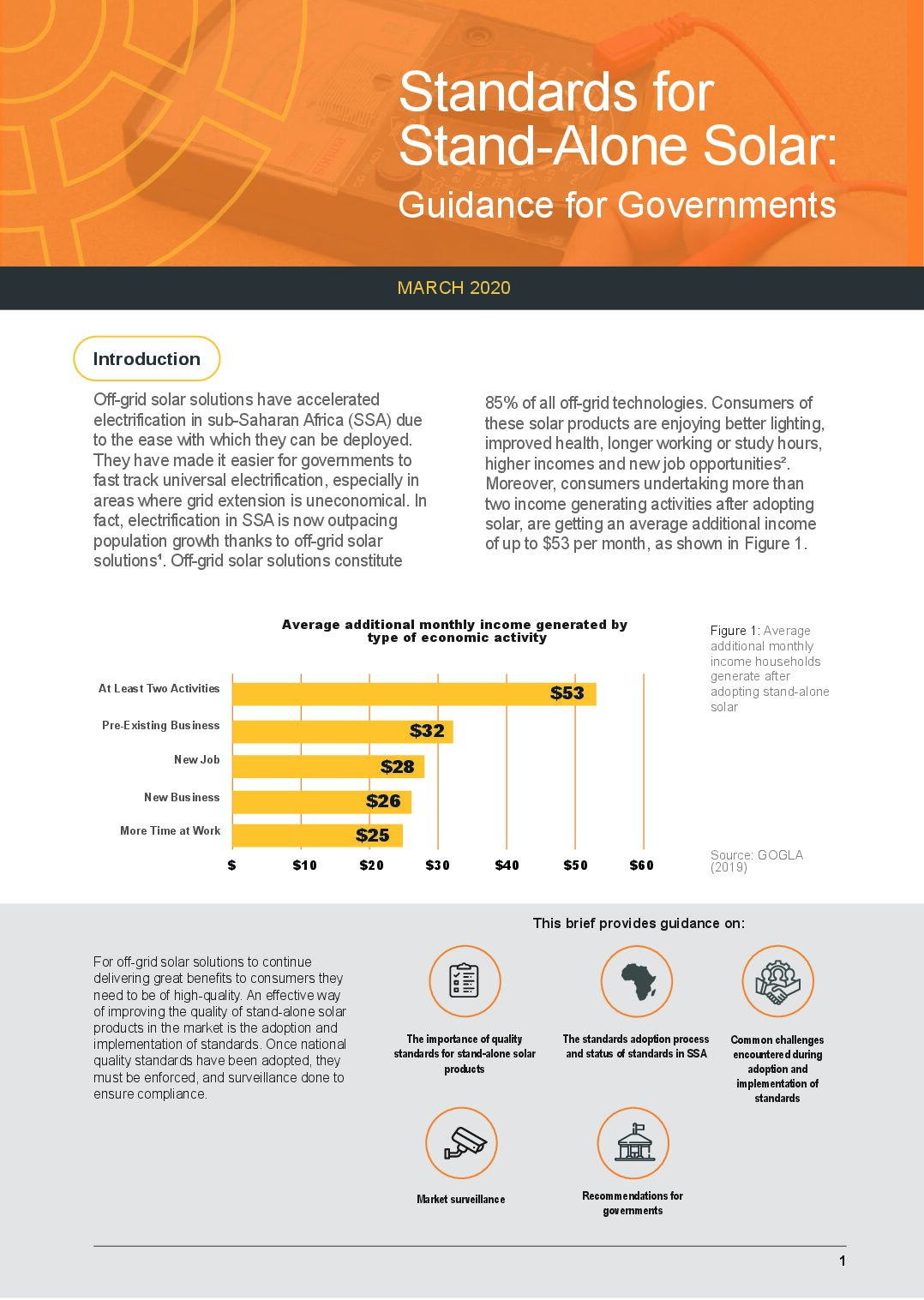
This policy brief provides guidance on the importance of quality standards for stand-alone solar products; how to develop and adopt standards, and the current status in Africa; common challenges encountered in this process; and market surveillance; as well as recommendations for governments.
This guide leverages FAO’s extensive experience of developing and delivering e-learning solutions to offer practical advice and guidance to trainers and instructional designers who wish to develop effective capacity building initiatives.
This article provides some practical tips for increasing engagement in training sessions in order to strengthen knowledge retention and application of learned skills. SessionLab also provides a useful library of facilitation techniques.
This page presents various methods that can be used to make trainings and workshops more interactive and engaging.
This guidance note provides practical tools and strategies for training providers to design and deliver gender-responsive learning programs, especially within technical and business education contexts. It highlights how gender dynamics, norms, and barriers influence learning outcomes and participation—especially for women and marginalized groups.
This guide helps practitioners design, implement and evaluate training programmes in a way that enables equal access and provides equal benefits to women and men. It provides tips and approaches based on international good practice and lessons learned from programmes implemented by IFC, the World Bank and other organisations.
This report shares insights and tools to support more inclusive and effective entrepreneurship education and training, especially for people from underrepresented and marginalized groups. It includes a list of assessment criteria to evaluate whether a programme is gender-smart.
This article by ILO’s International Training Centre explains the importance of learning objectives, introduces the competencies framework, and provides a practical guide for writing effective learning objectives.