
This article announces the adoption of harmonised minimum energy performance standards for air conditioners and refrigerators in the 16 member countries of the Southern African Development Community (SADC). It also explains the process by which these harmonised standards were developed and adopted.
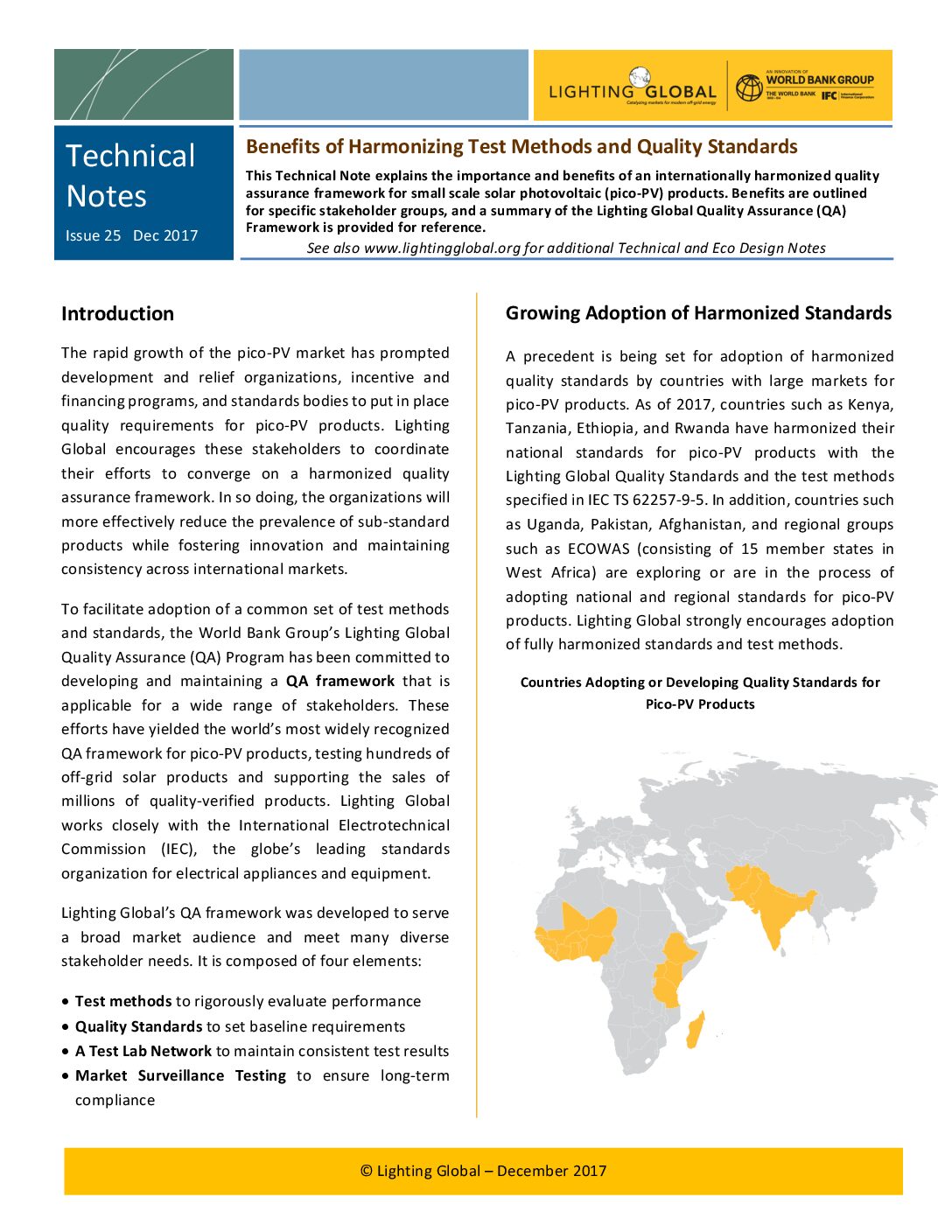
This brief explains the importance and benefits of an internationally harmonized quality assurance framework for small scale solar photovoltaic (pico-PV) products. Benefits are outlined for specific stakeholder groups, and a summary of the Lighting Global Quality Assurance (QA) Framework is provided for reference.
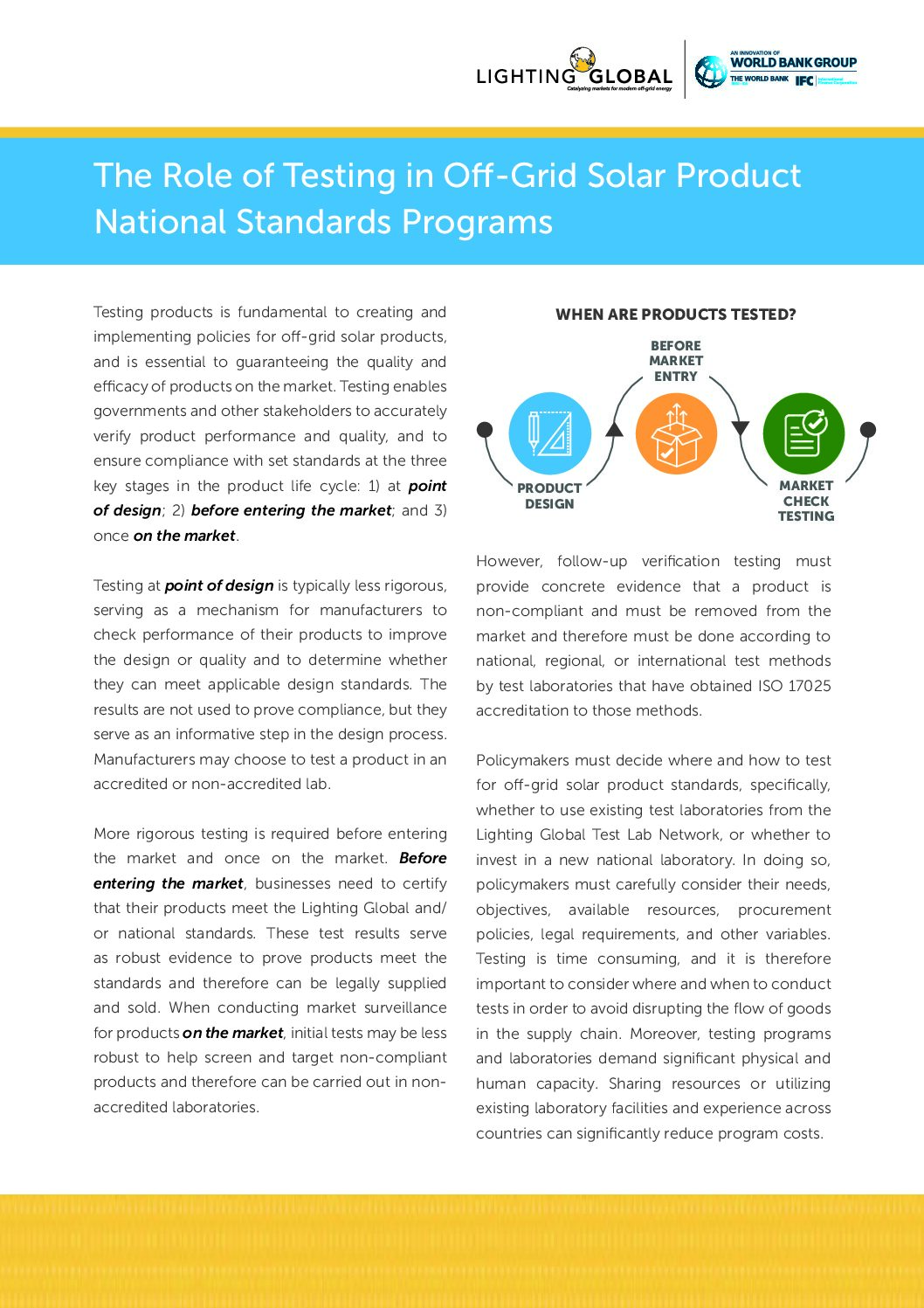
This brief explains the role of product testing in standard-setting for off-grid solar products. It provides recommendations based on good practices and explains how the Lighting Global Quality Assurance Program can help governments implement and enforce standards.
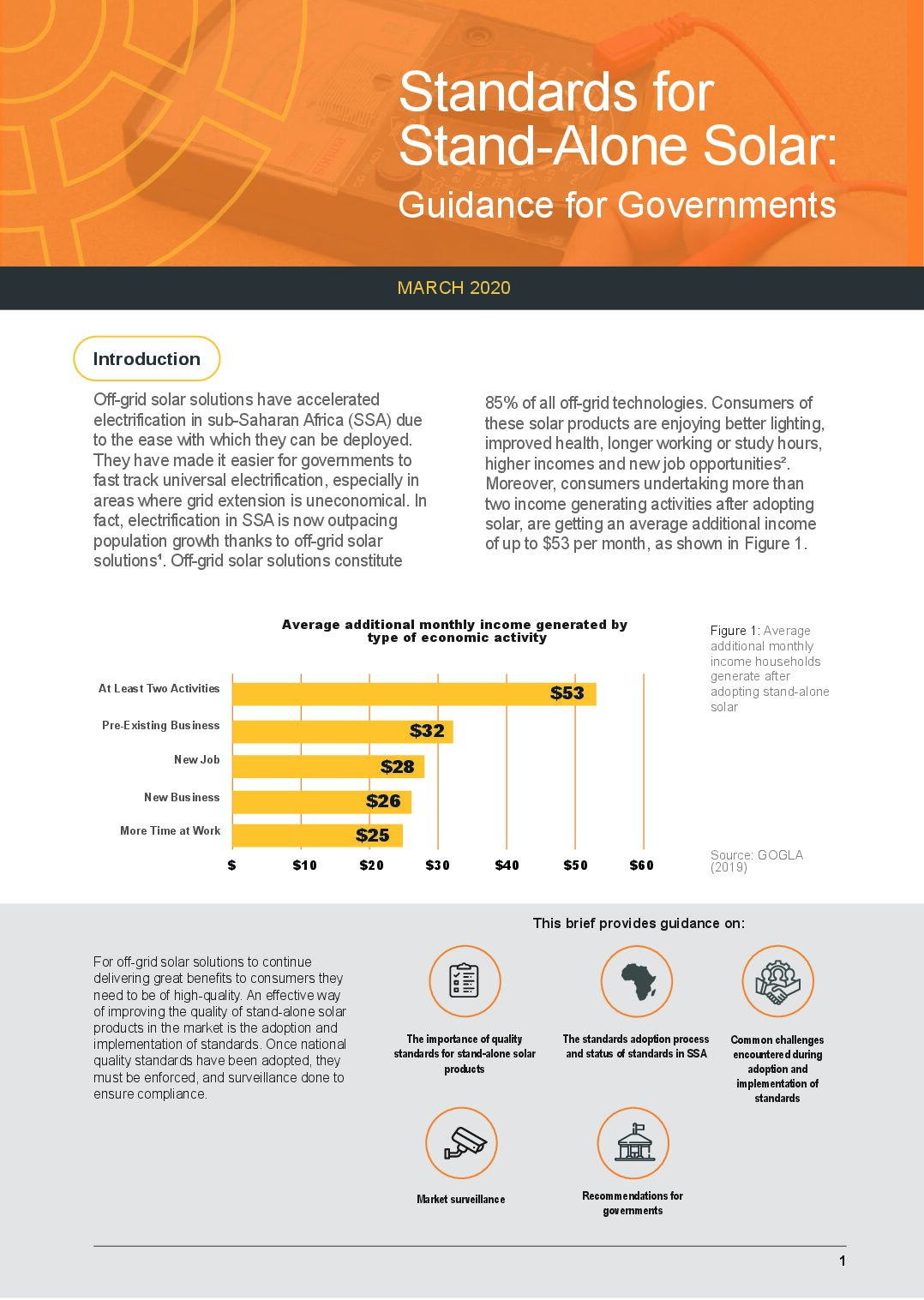
This policy brief provides guidance on the importance of quality standards for stand-alone solar products; how to develop and adopt standards, and the current status in Africa; common challenges encountered in this process; and market surveillance; as well as recommendations for governments.
This page provides an introduction to energy transition challenges in the industrial sector. It also tracks progress, presents data and lists seven key recommendations to policymakers and businesses.
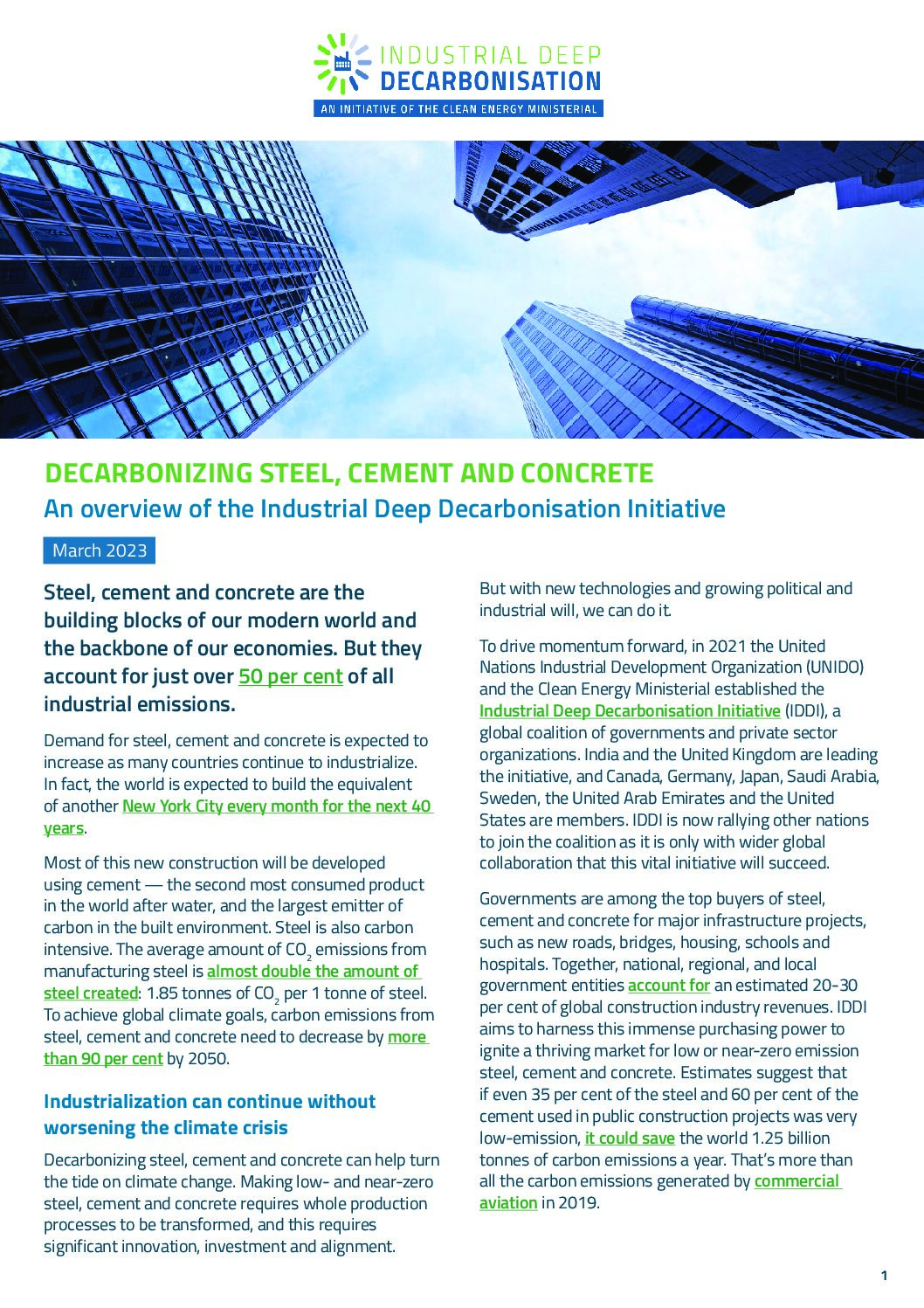
The Industrial Deep Decarbonisation Initiative, established by the UN Industrial Development Organization (UNIDO) and the Clean Energy Ministerial, is a coalition of governments and companies. Among its goals, it seeks to motivate governments, which are major buyers of steel, cement and concrete for infrastructure projects, to apply sustainable procurement principles and prioritise the buying of … Continue reading “Decarbonizing steel, cement and concrete: An overview of the Industrial Deep Decarbonisation Initiative”
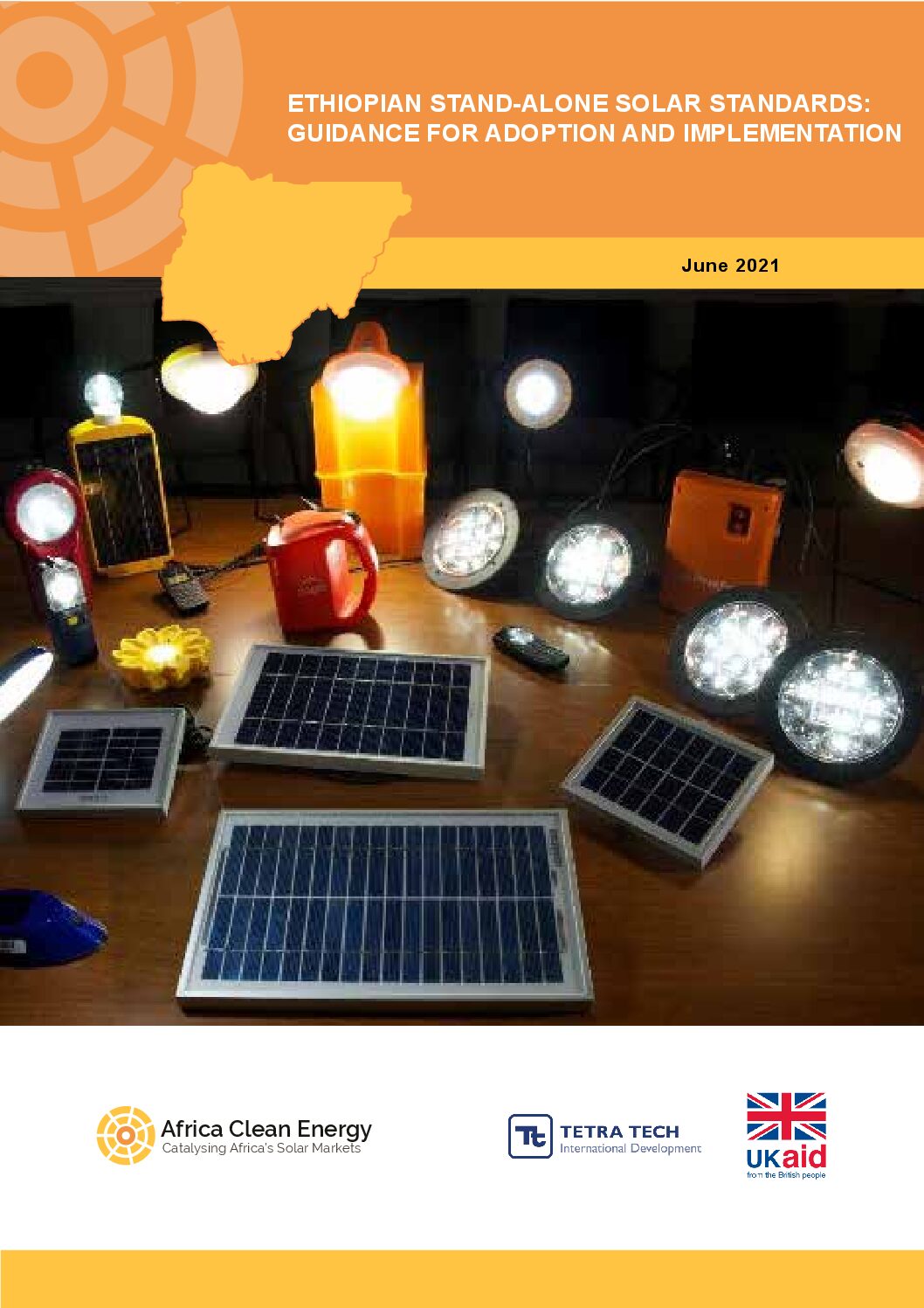
This document provides recommendations to guide relevant stakeholders in the development and implementation of a quality assurance (QA) framework for stand-alone solar (SAS) products in Ethiopia.
This brief discusses how African LDCs can develop industrial policies that prioritise infrastructure, clean technologies and youth employment.
This strategy provides an overview of energy production and consumption in Zambia, and sets objectives for efficiency improvements in the residential, industrial and transport sectors.
The Green Cement Technology Tracker aims to support decision-makers and experts in policy and industry, academia as well as civil society, by tracking public announcements of investments in low-carbon cement technologies and presenting them transparently in one place.