
This page provides an introduction to energy transition challenges in the industrial sector. It also tracks progress, presents data and lists seven key recommendations to policymakers and businesses.
The Industrial Deep Decarbonisation Initiative, established by the UN Industrial Development Organization (UNIDO) and the Clean Energy Ministerial, is a coalition of governments and companies. Among its goals, it seeks to motivate governments, which are major buyers of steel, cement and concrete for infrastructure projects, to apply sustainable procurement principles and prioritise the buying of … Continue reading “Decarbonizing steel, cement and concrete: An overview of the Industrial Deep Decarbonisation Initiative”
This report assesses the effectiveness of women in energy networks worldwide and offers best practices and recommendations for networks under development or those aiming to enhance their impact.
This report considers the challenges faced by developers implementing renewable energy projects in the SADC region, analyzes existing prefeasibility or early-stage project preparation funds in the region and globally to assess if they effectively support project developers, and provides recommendations on how to improve and scale up these facilities.
This handbook examines financing mechanisms suitable for the renewable energy access sector in Madagascar, and provides advice on preparing financing applications.
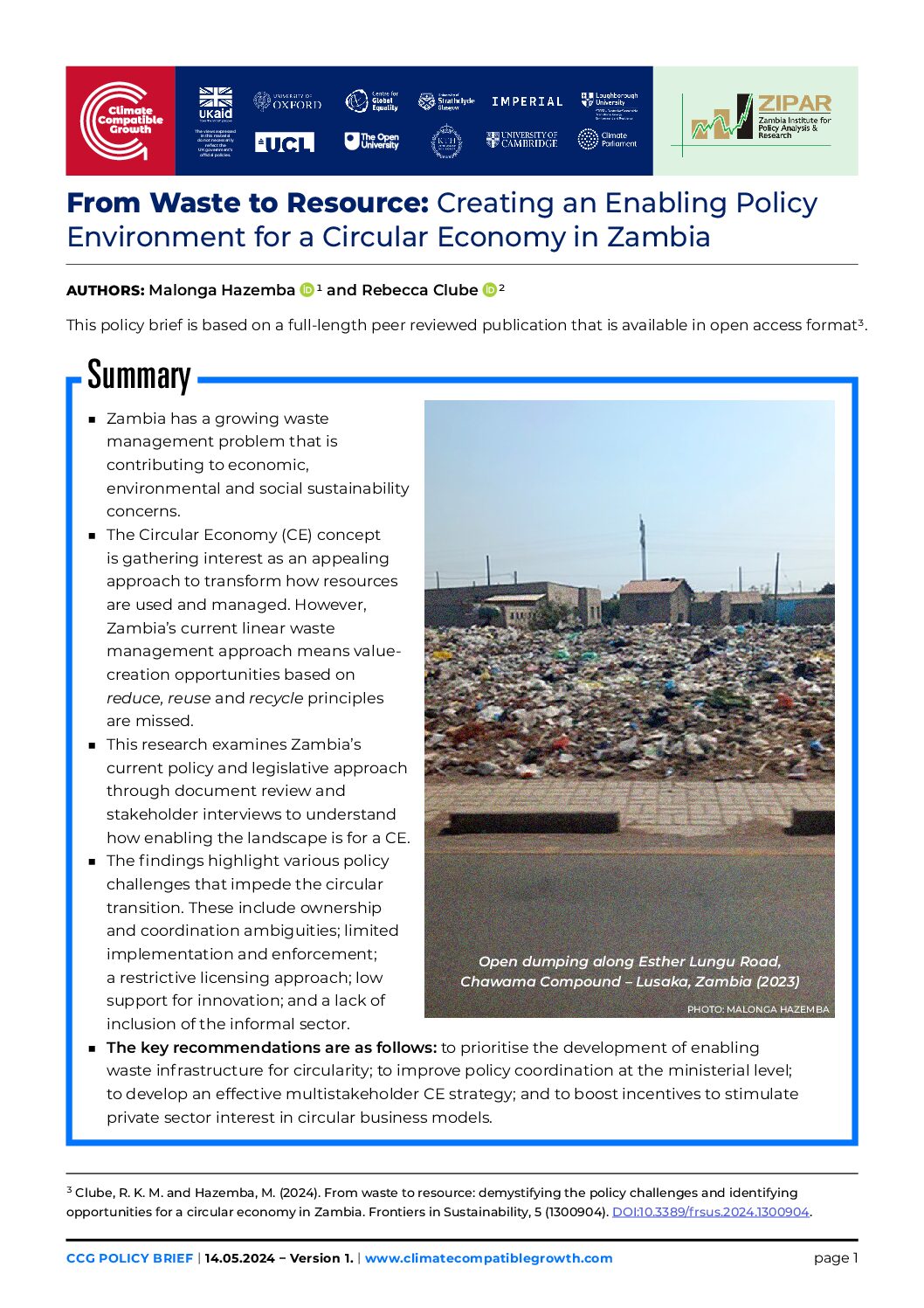
This policy brief investigates Zambia’s policy and legislative framework for energy generation from waste, and provides recommendations for improvements.
This paper presents the results of a techno-economic study of a potential waste-to-energy plant in Kampala, Uganda, including modeling to project energy generation potential and the payback period for the initial investment.
This brief presents the regulatory framework and country context for waste-to-energy projects in Côte d’Ivoire.
This feasibility study describes the institutional framework for waste management in Côte d’Ivoire, presents a baseline on compost and biogas value chains, and provides a feasibility assessment based on economic models.
This study aims to determine the viability of electricity generation from municipal solid waste in Ndola, Zambia, and finds that the most suitable technology is biomethanation.