
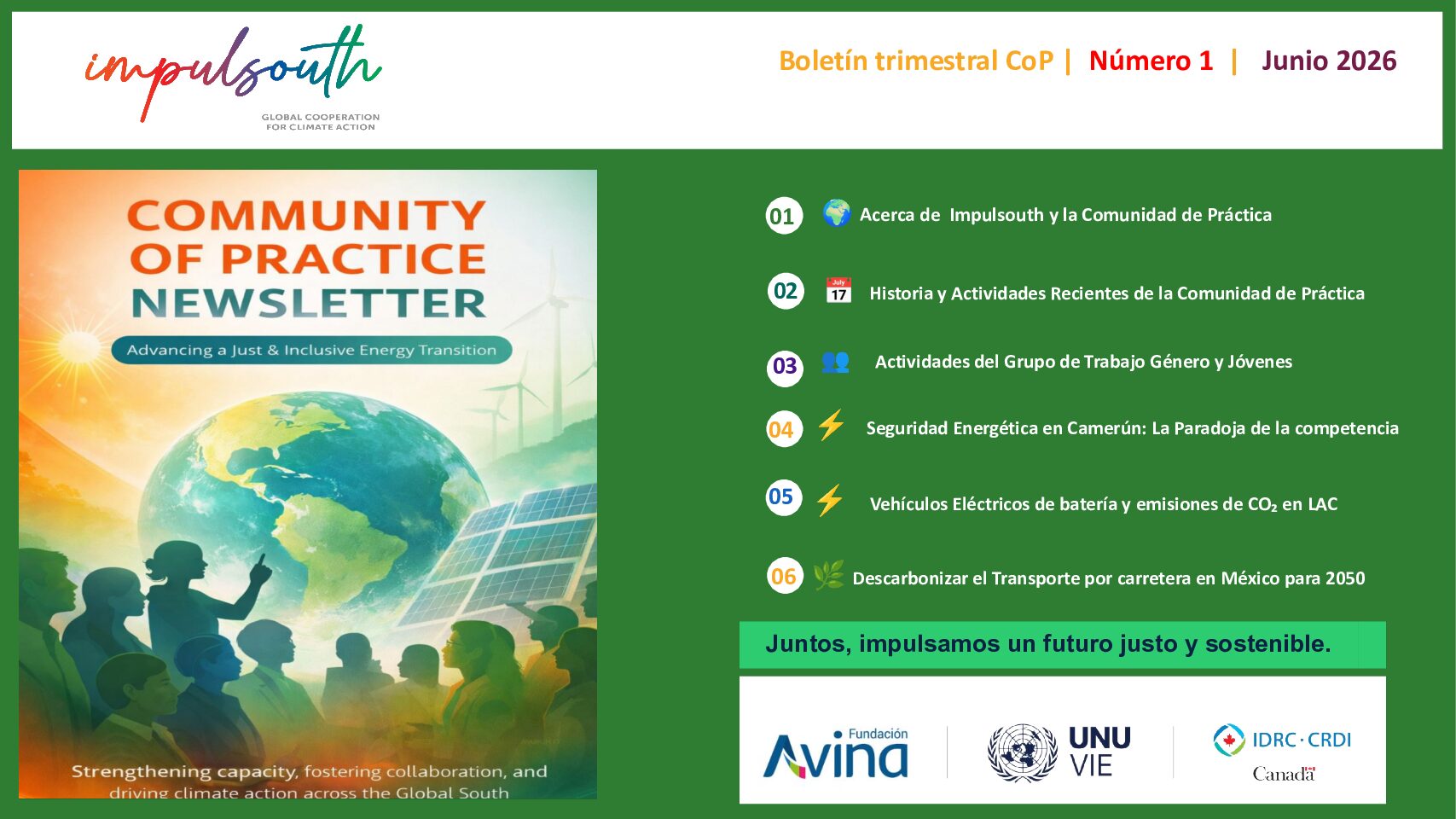
Este es el boletín de la Comunidad de Práctica (CoP) Impulsouth. La CoP es una plataforma colaborativa que fortalece las capacidades dentro del sector energético, apoyando una transición energética justa e inclusiva con un enfoque en la igualdad de género. Al reunir a diversos actores, la CoP promueve el intercambio de conocimientos, fortalece la capacidad … Continue reading “Boletín trimestral de la CoP – Número 1 – junio de 2026”
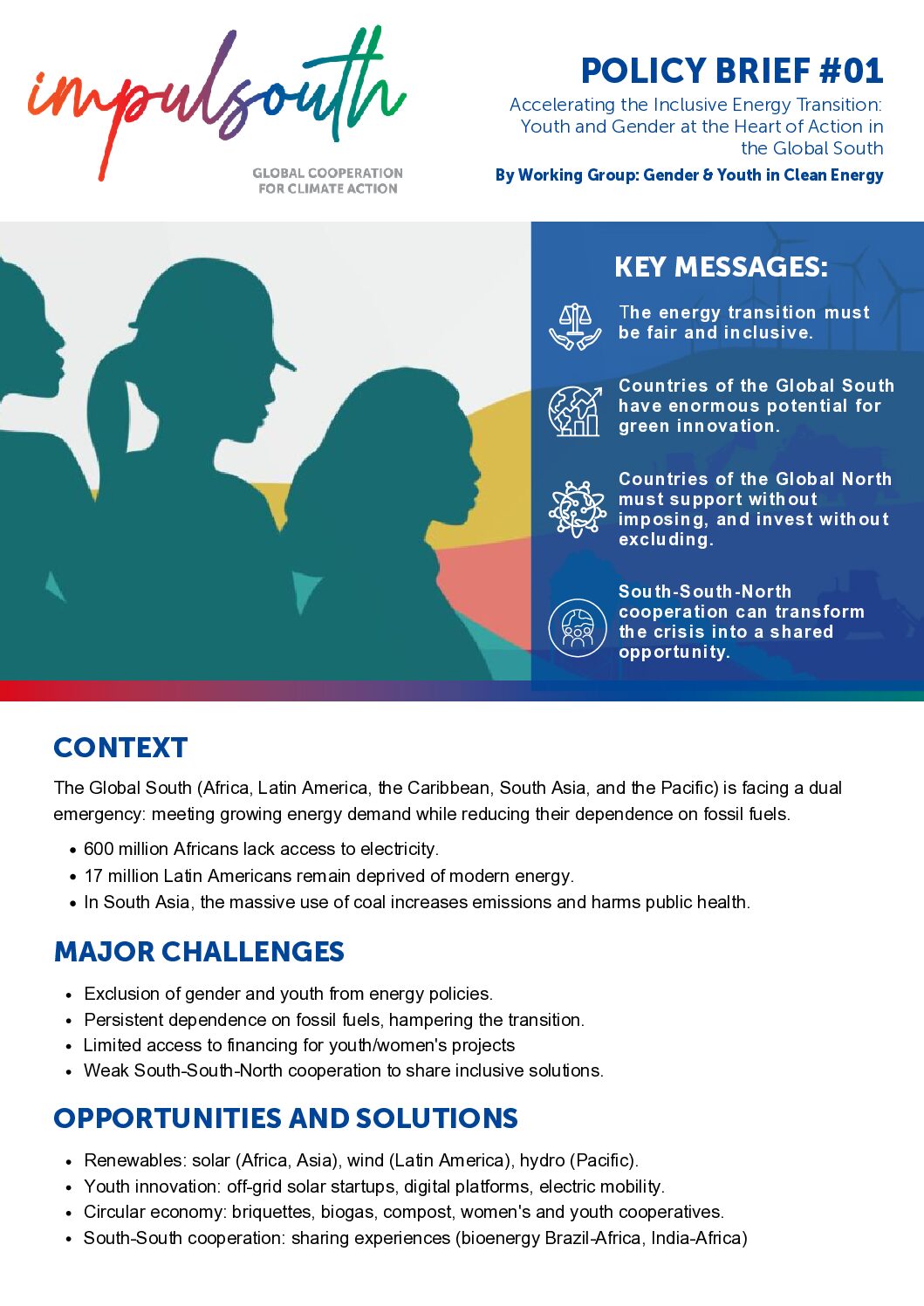
This resource was developed by members of the Working Group on Gender & Youth in Clean Energy, within Impulsouth’s Community of Practice.
This report identifies opportunities for and barriers to renewable energy component manufacturing in African countries, and proposes interventions to accelerate investment in the space.
This report identifies opportunities for Latin American and Caribbean countries in global renewable energy value chains. It focuses particularly on countries with significant mineral reserves, including Bolivia and Ecuador.
This executive summary gives a brief overview of global solar PV supply chains, with a lot of data and interesting visuals.
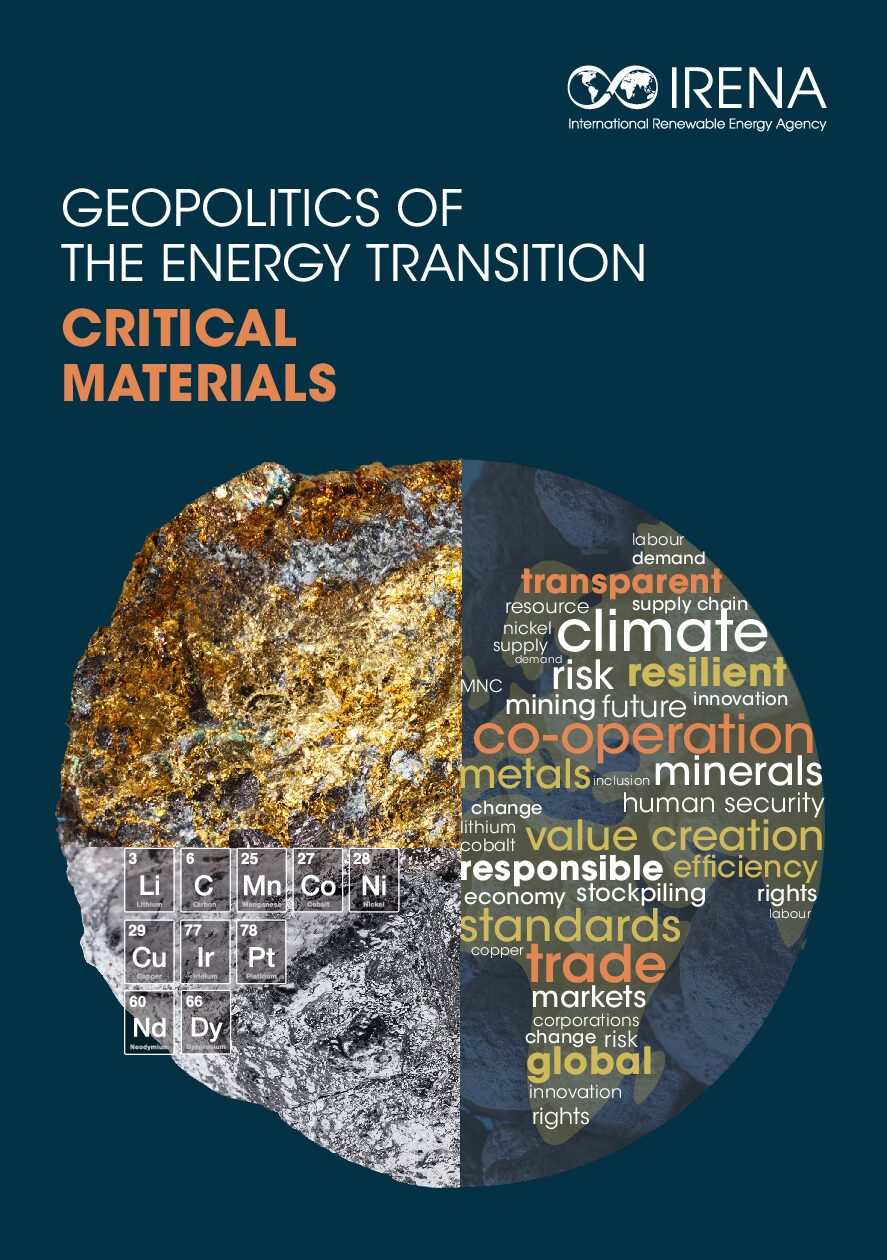
This report dispels myths about geopolitical issues around the need for critical materials for the energy transition, and concerns about dependency.
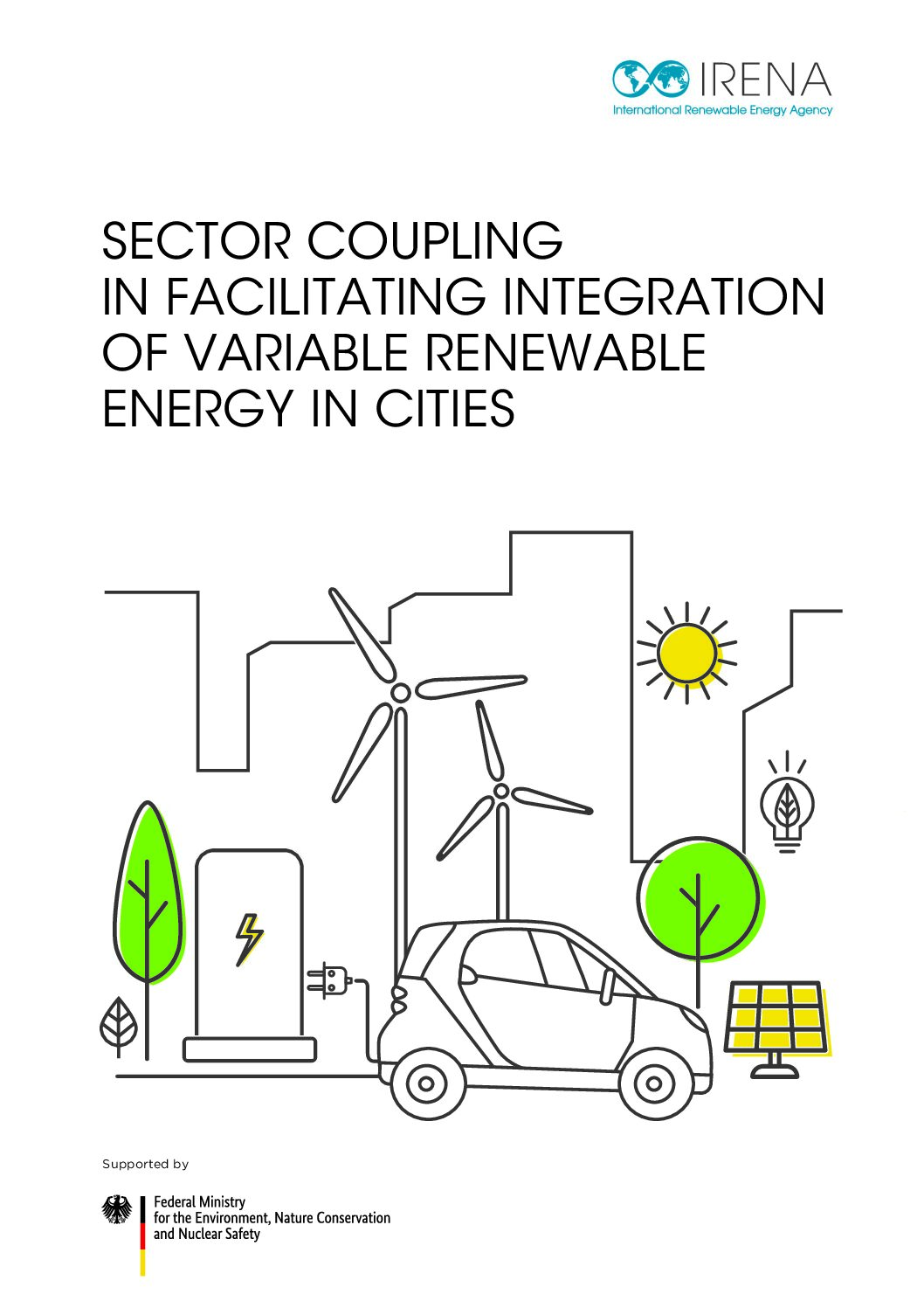
This report highlights the importance of sector coupling as a key source of flexibility that cities can explore to stabilise power grid operations when integrating high shares of variable renewable energy sources. It presents a range of sector coupling opportunities available for use in cities, including self-consumption of variable RE sources, the role of thermal … Continue reading “Sector Coupling in Facilitating Integration of Variable Renewable Energy in Cities”
This paper underscores the need for sustainable utilities to deliver the energy transition in lower- and middle-income countries, and provides recommendations to governments and other stakeholders.
This article explores how system planning, and in particular assessments of system adequacy, will need to innovate and evolve to allow power systems to keep delivering secure and affordable electricity supply during energy transitions.
This paper presents a value chain approach to identify priority areas for developing national hydrogen strategies, focussing on emerging and developing economies.