
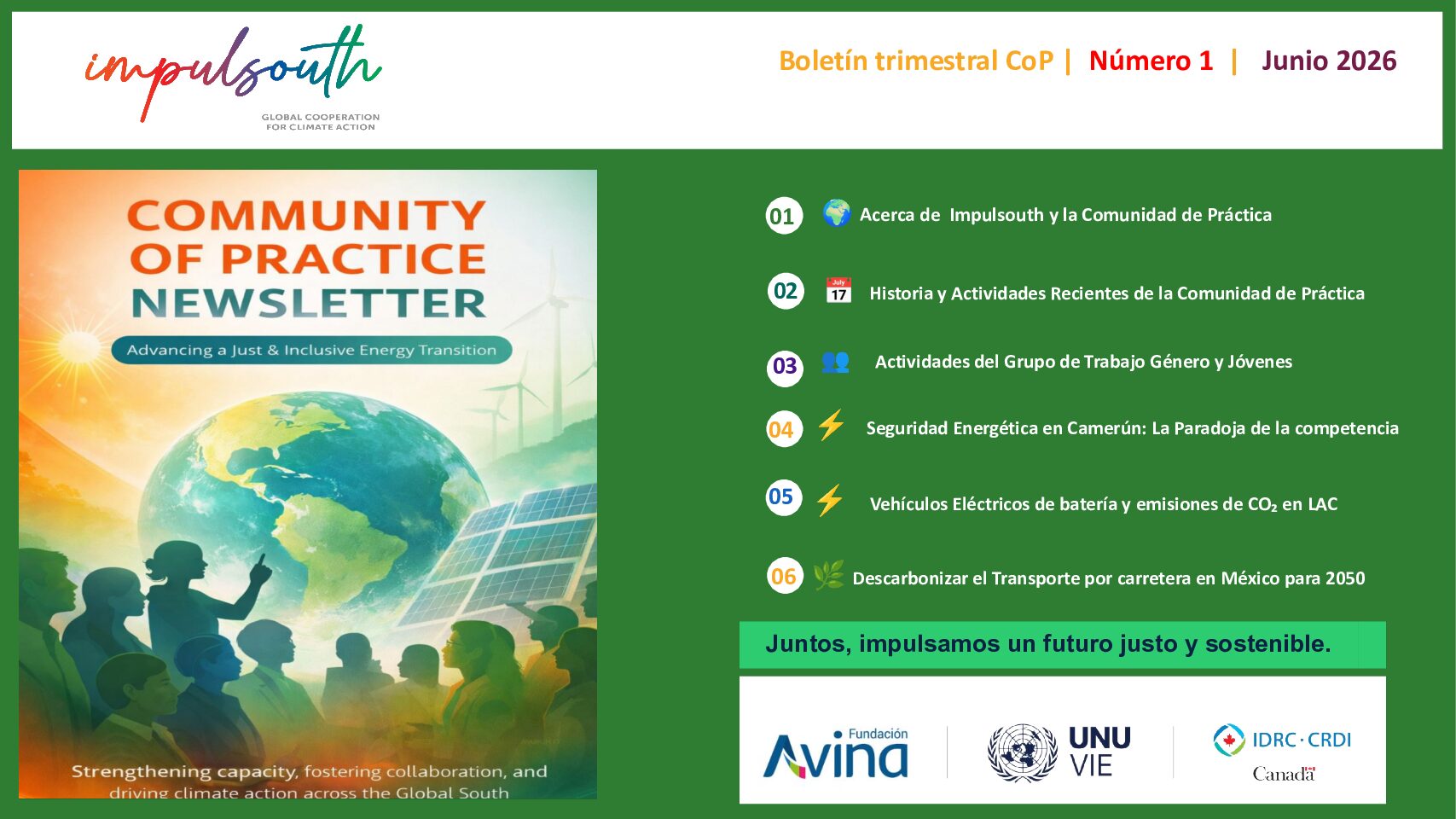
Este es el boletín de la Comunidad de Práctica (CoP) Impulsouth. La CoP es una plataforma colaborativa que fortalece las capacidades dentro del sector energético, apoyando una transición energética justa e inclusiva con un enfoque en la igualdad de género. Al reunir a diversos actores, la CoP promueve el intercambio de conocimientos, fortalece la capacidad … Continue reading “Boletín trimestral de la CoP – Número 1 – junio de 2026”
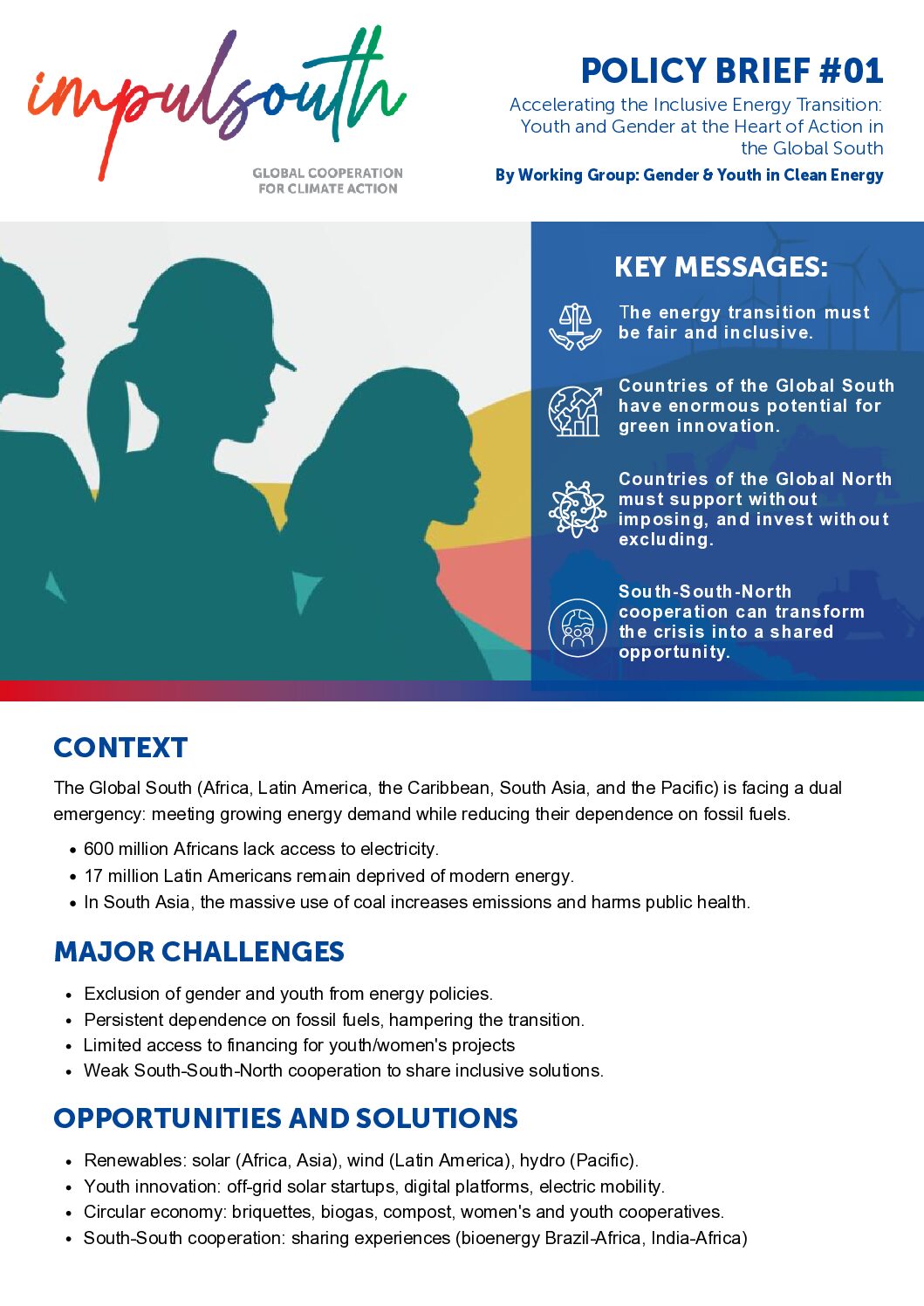
This resource was developed by members of the Working Group on Gender & Youth in Clean Energy, within Impulsouth’s Community of Practice.
This slide deck, part of an online course, gives a brief but thorough overview of business models for off-grid solar energy, looking in particular at pay-as-you-go models, and presents insights into the investment landscape for off-grid solar companies.
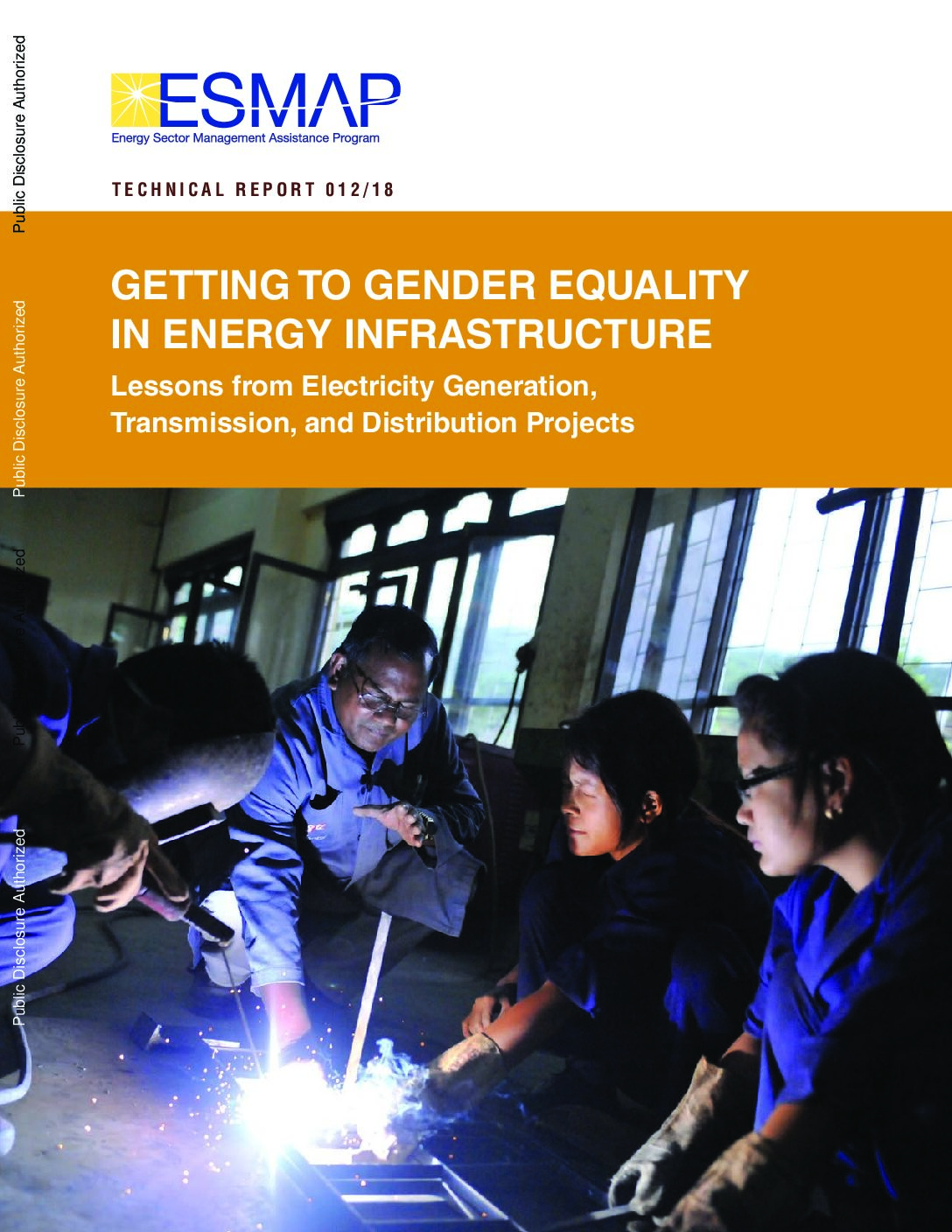
This report by the World Bank’s Energy Sector Management Assistance Program (ESMAP) shares opportunities, challenges and good practices related to advancing gender equality in electricity infrastructure projects.
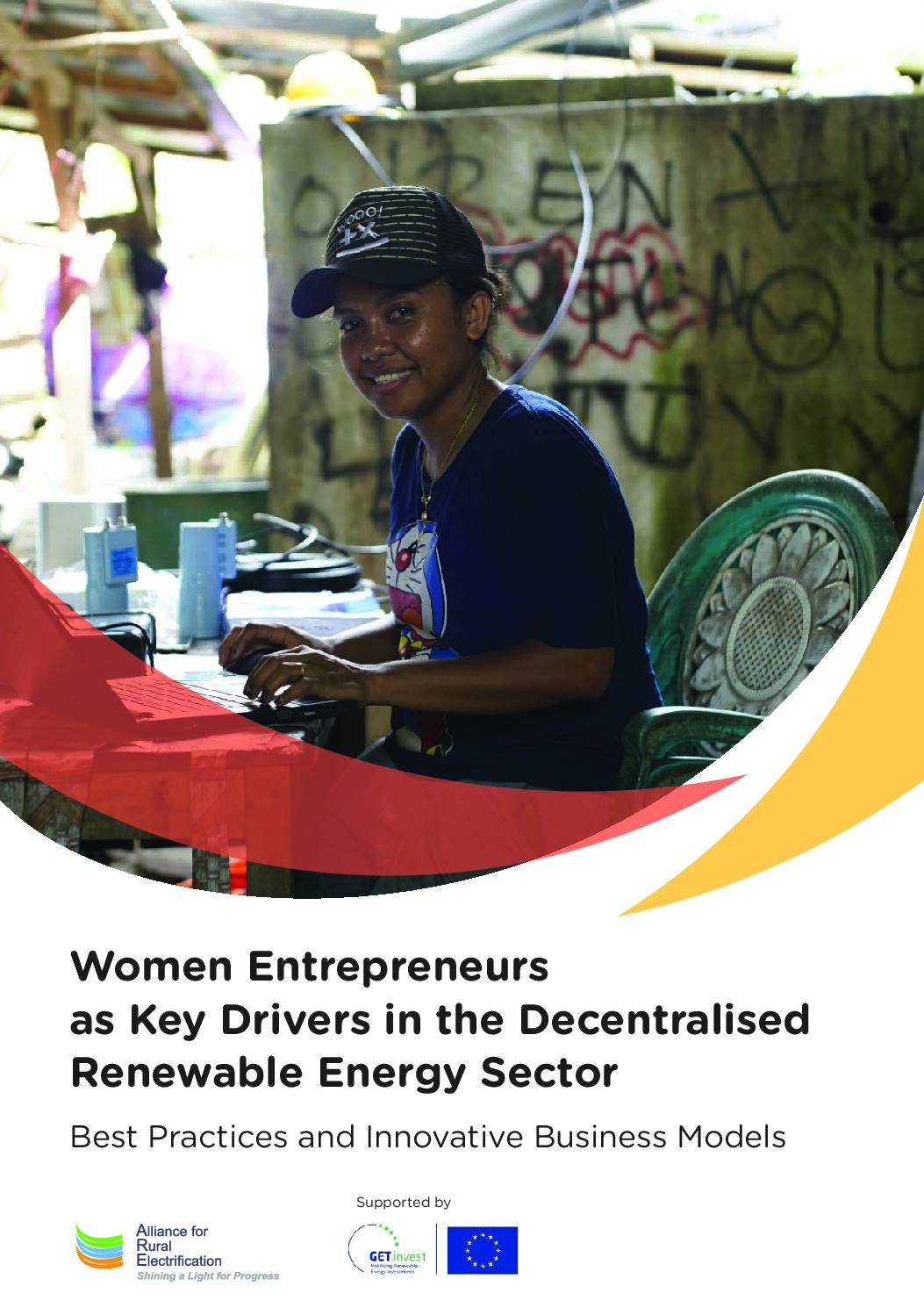
This report by the Alliance for Rural Electrification explores the role of women in advancing electrification and socio-economic development in rural communities and gives examples of ways to integrate gender equality throughout the off-grid energy supply chain.
This guidebook helps project developers and investors to prepare bankable business plans for RE projects, particularly for power generation.
This guide addresses the challenges faced by rural energy enterprises in developing countries, and sets out solutions such as business models offering cooking energy as a service.
This action plan, developed with support from ECREEE, lays out the bioenergy strategy of Côte d’Ivoire for 2021-2030. It includes an extensive background and context section, as well as strategic priorities and measures to promote these.
This brief presents the regulatory framework and country context for waste-to-energy projects in Côte d’Ivoire.
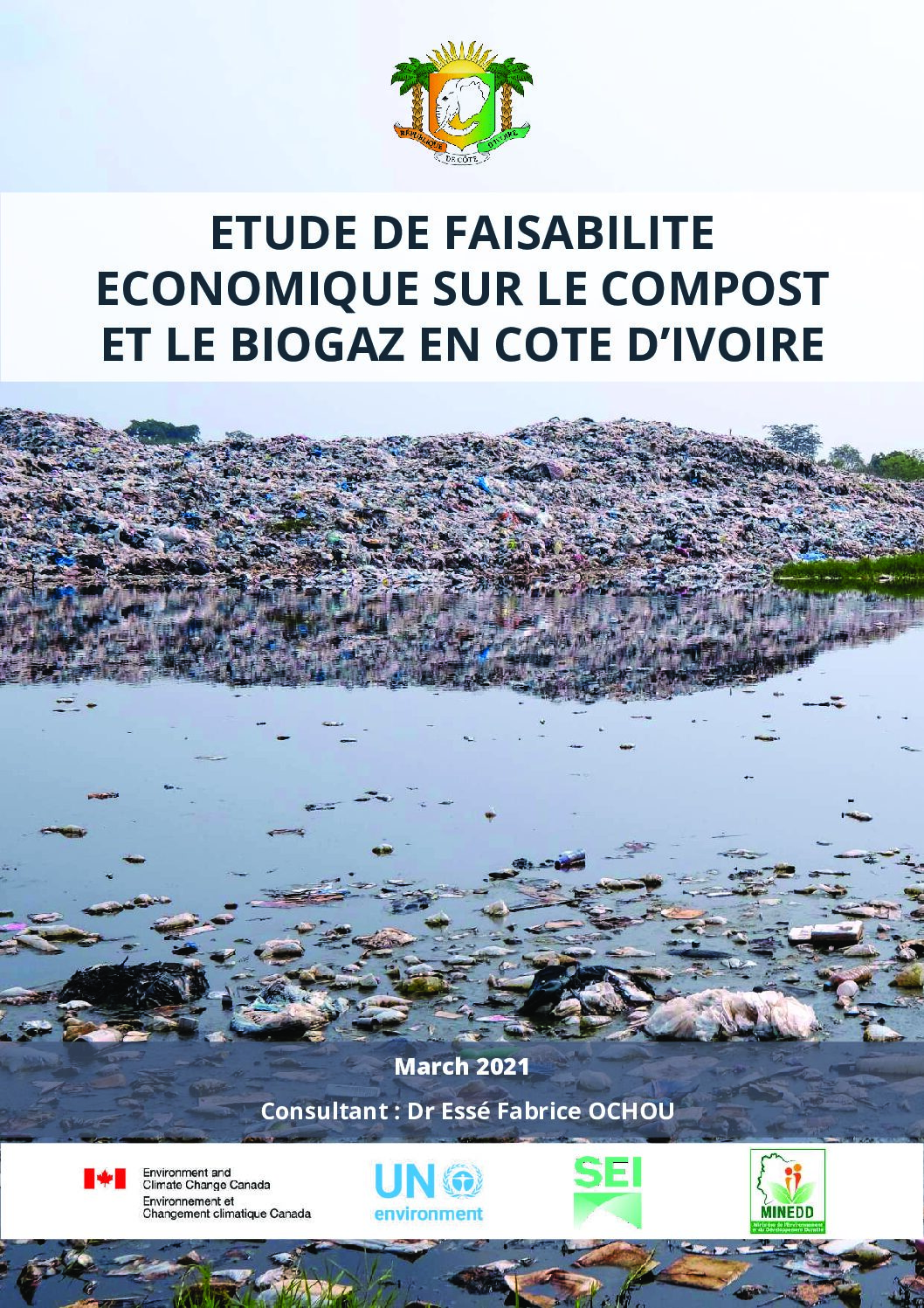
This feasibility study describes the institutional framework for waste management in Côte d’Ivoire, presents a baseline on compost and biogas value chains, and provides a feasibility assessment based on economic models.