
Este es el boletín de la Comunidad de Práctica (CoP) Impulsouth. La CoP es una plataforma colaborativa que fortalece las capacidades dentro del sector energético, apoyando una transición energética justa e inclusiva con un enfoque en la igualdad de género. Al reunir a diversos actores, la CoP promueve el intercambio de conocimientos, fortalece la capacidad … Continue reading “Boletín trimestral de la CoP – Número 1 – junio de 2026”
Voici le bulletin d’information de la Communauté de Pratique (CoP) d’Impulsouth. La CoP est une plateforme collaborative qui renforce les capacités dans le secteur de l’énergie, en soutenant une transition énergétique juste et inclusive, avec un fort accent sur l’égalité de genre. Réunissant diverses parties prenantes, la CoP favorise le partage de connaissances, renforce les … Continue reading “Bulletin trimestriel de la Communauté de Pratique (CoP) d’Impulsouth – Numéro 1 – Juin 2026”
This is the Impulsouth Community of Practice (CoP) newsletter. The CoP is a collaborative platform that strengthens capacities within the energy sector, supporting a just and inclusive energy transition with a strong focus on gender equality. Bringing together diverse stakeholders, the CoP fosters knowledge exchange, strengthens institutional capacity, and promotes effective South-South cooperation across nine … Continue reading “CoP Quarterly Newsletter – Issue 1 – June 2026”
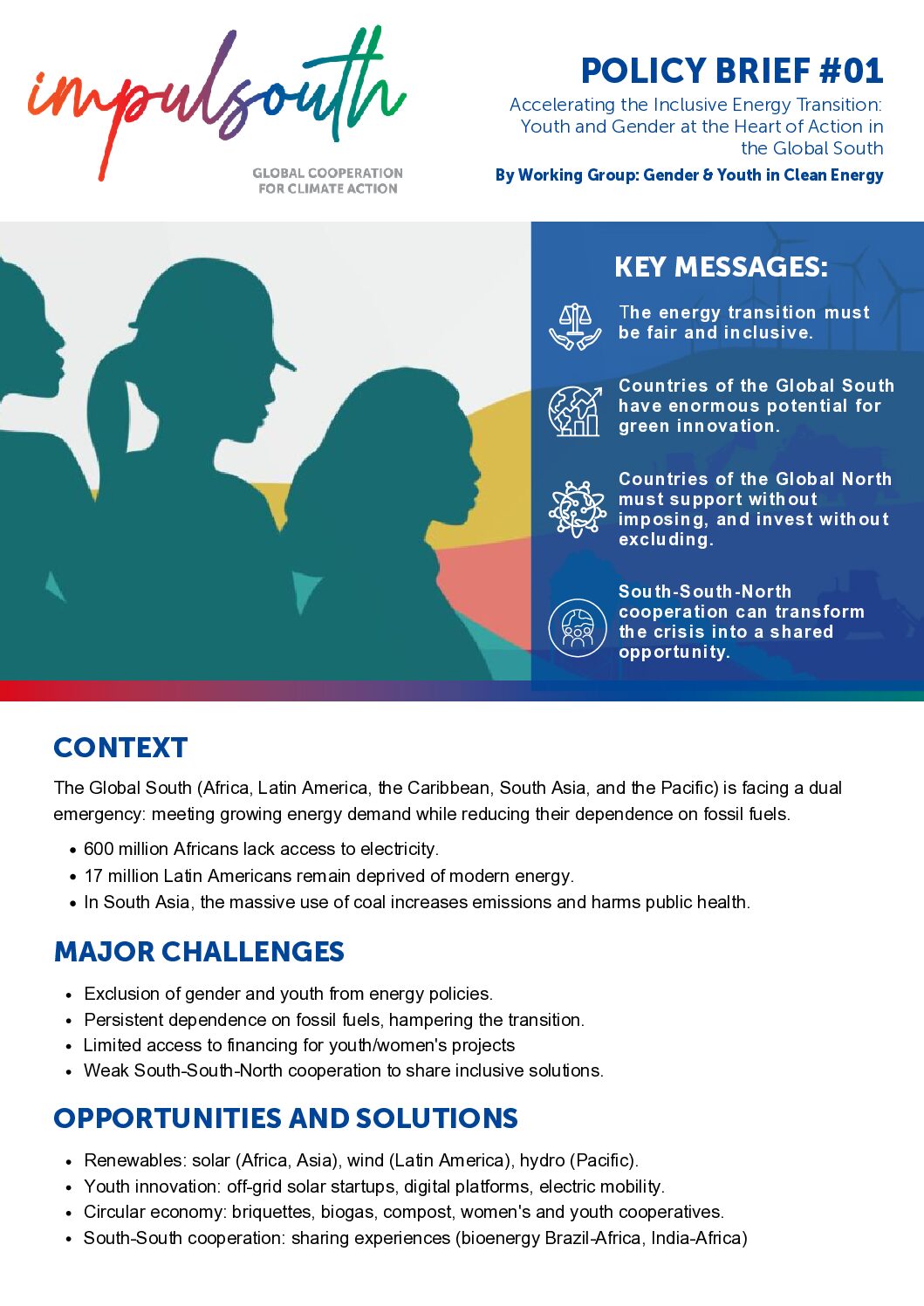
This resource was developed by members of the Working Group on Gender & Youth in Clean Energy, within Impulsouth’s Community of Practice.
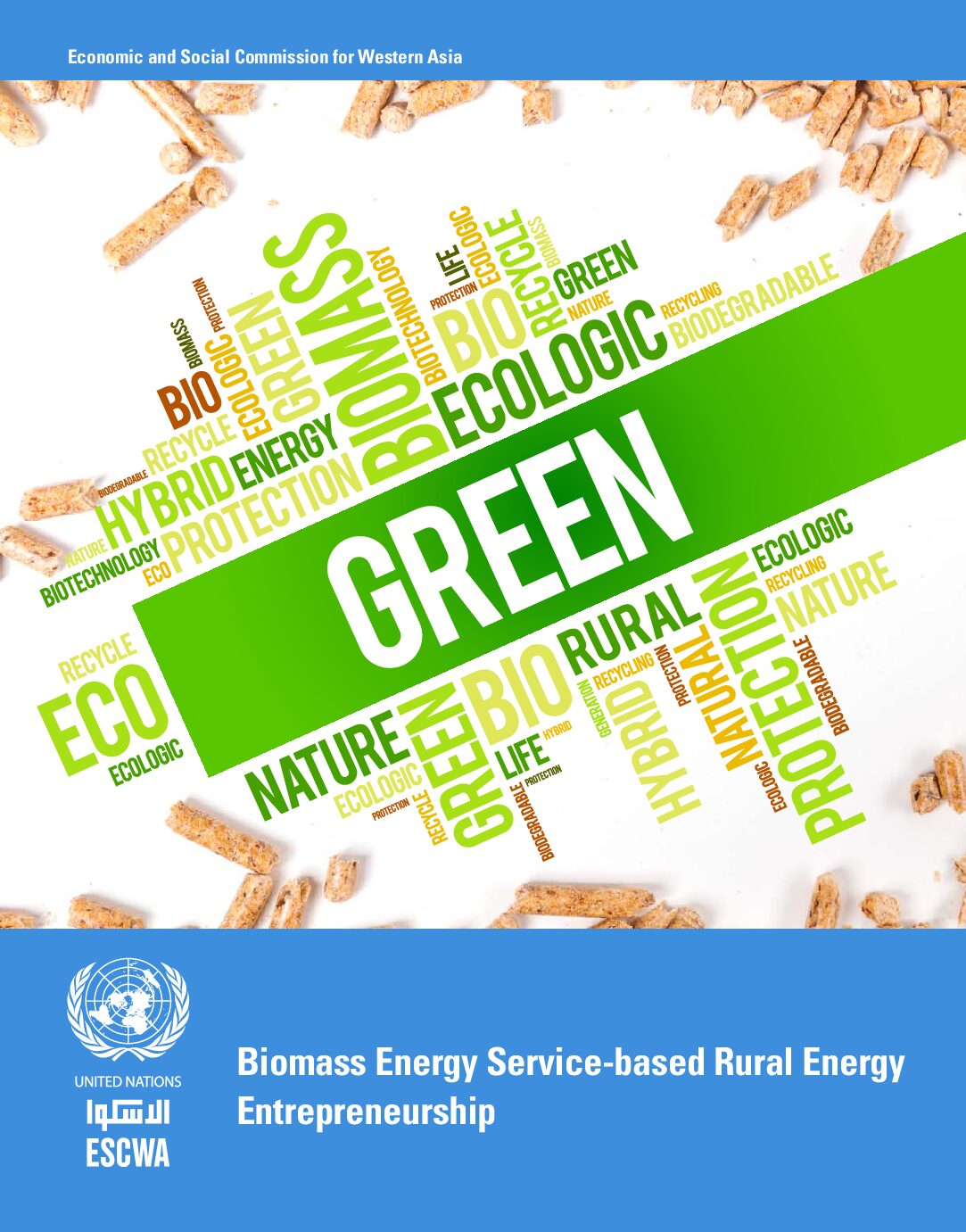
This guide addresses the challenges faced by rural energy enterprises in developing countries, and sets out solutions such as business models offering cooking energy as a service.
This action plan, developed with support from ECREEE, lays out the bioenergy strategy of Côte d’Ivoire for 2021-2030. It includes an extensive background and context section, as well as strategic priorities and measures to promote these.
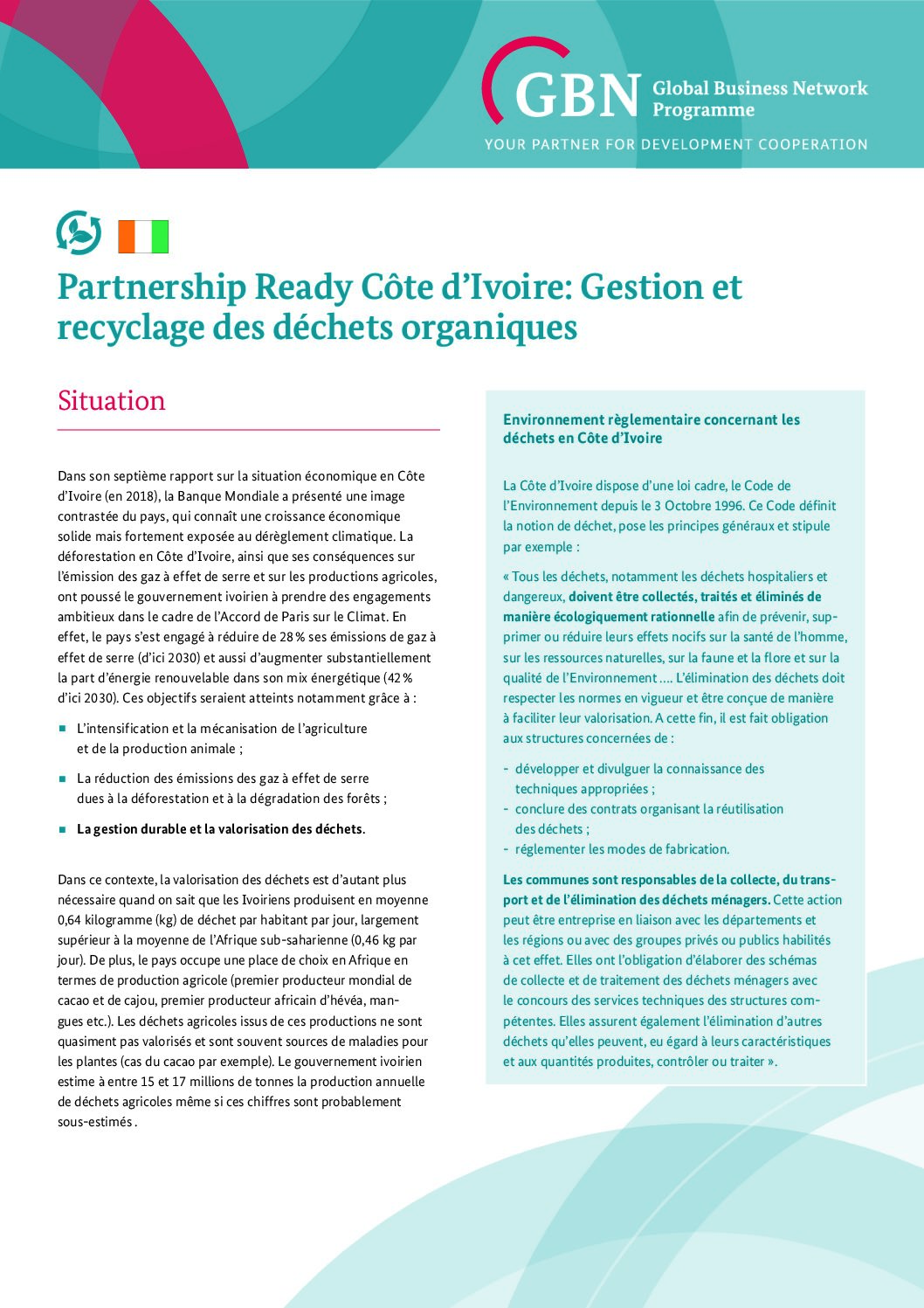
This brief presents the regulatory framework and country context for waste-to-energy projects in Côte d’Ivoire.
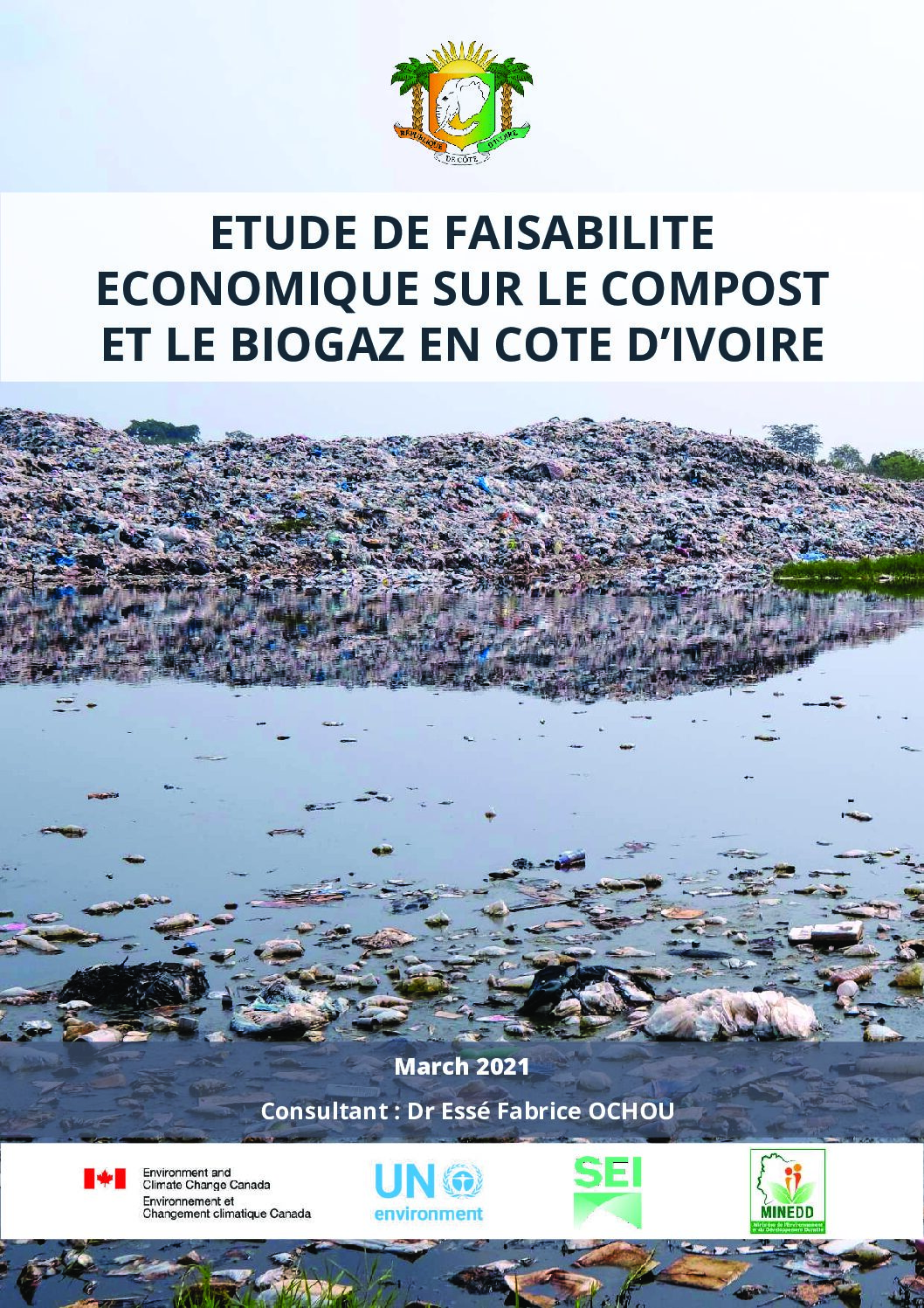
This feasibility study describes the institutional framework for waste management in Côte d’Ivoire, presents a baseline on compost and biogas value chains, and provides a feasibility assessment based on economic models.
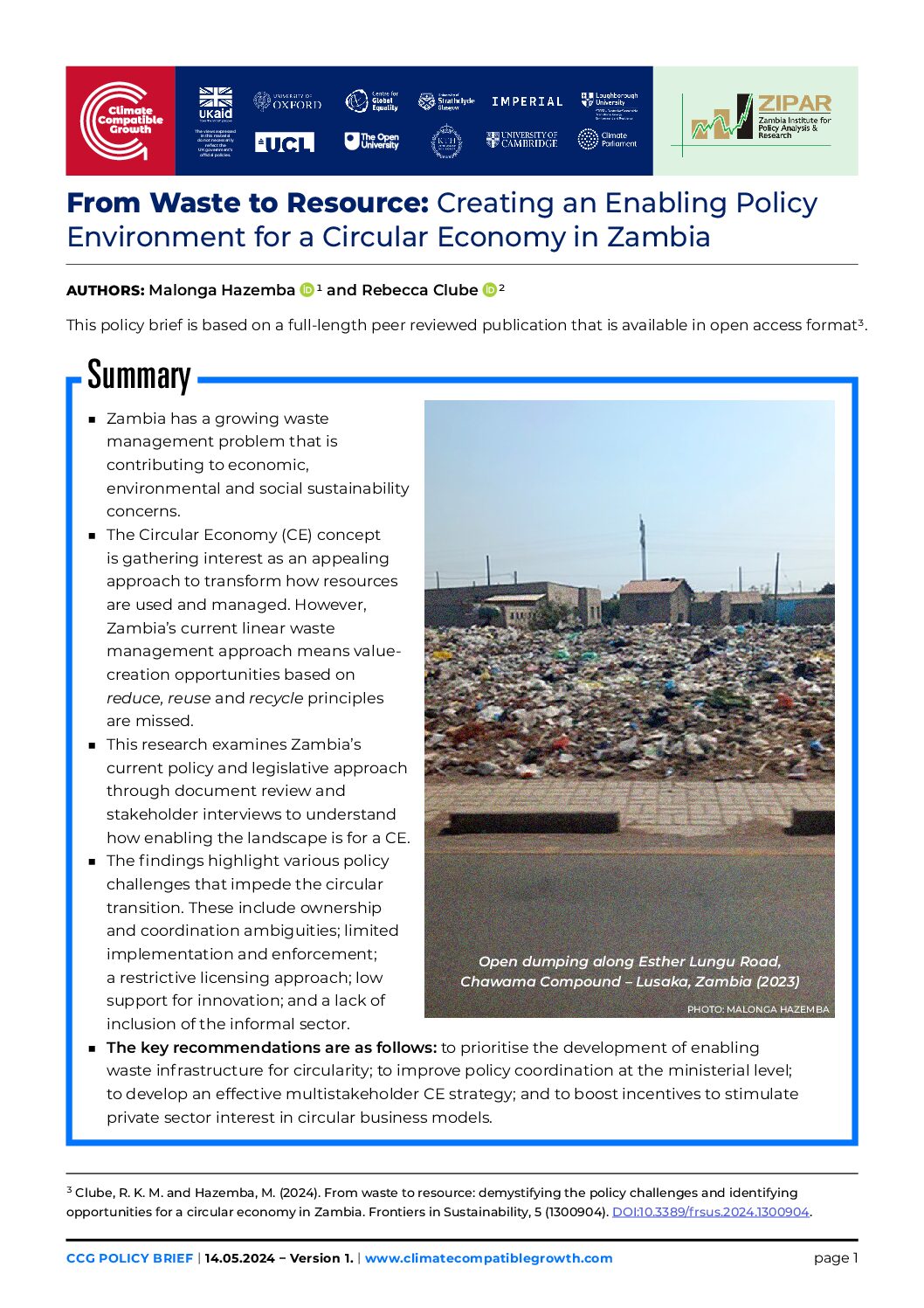
This policy brief investigates Zambia’s policy and legislative framework for energy generation from waste, and provides recommendations for improvements.
This paper presents the results of a techno-economic study of a potential waste-to-energy plant in Kampala, Uganda, including modeling to project energy generation potential and the payback period for the initial investment.