
The Global Innovation Hub aims to promote transformative innovations for a low-emission and climate-resilient future.
This guidebook helps project developers and investors to prepare bankable business plans for RE projects, particularly for power generation.
This guide addresses the challenges faced by rural energy enterprises in developing countries, and sets out solutions such as business models offering cooking energy as a service.
This study offers insights on how well-designed carbon pricing instruments can play a role in accelerating efforts toward energy transition and decarbonization.
This article explores how system planning, and in particular assessments of system adequacy, will need to innovate and evolve to allow power systems to keep delivering secure and affordable electricity supply during energy transitions.
This database presents the current status, policy barriers, and key innovations for electrification of mobility, heating and cooling, and hydrogen production.
This is an interactive database of nearly 600 individual technology designs and components across the whole energy system that contribute to achieving the goal of net-zero emissions
This database provides different dashboards presenting data on the latest investment and operational trends in clean cooking, including carbon market data and customer perceptions of clean cooking companies’ products and services.
This page presents the Principles for Responsible Carbon Finance in Clean Cooking, developed by the CCA.
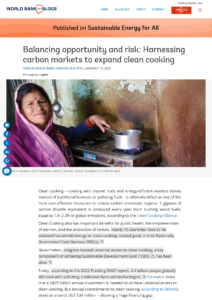
This blog assesses the opportunities of carbon finance to fill financing gaps for clean cooking, and highlights the integrity, reputational and regulatory risks associated with the sale of carbon credits.