
The Global Innovation Hub aims to promote transformative innovations for a low-emission and climate-resilient future.
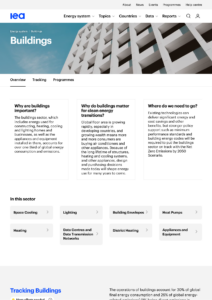
This web page highlights the role of buildings in the energy transition (heating, cooling, lighting, etc), and presents data and recommendations.
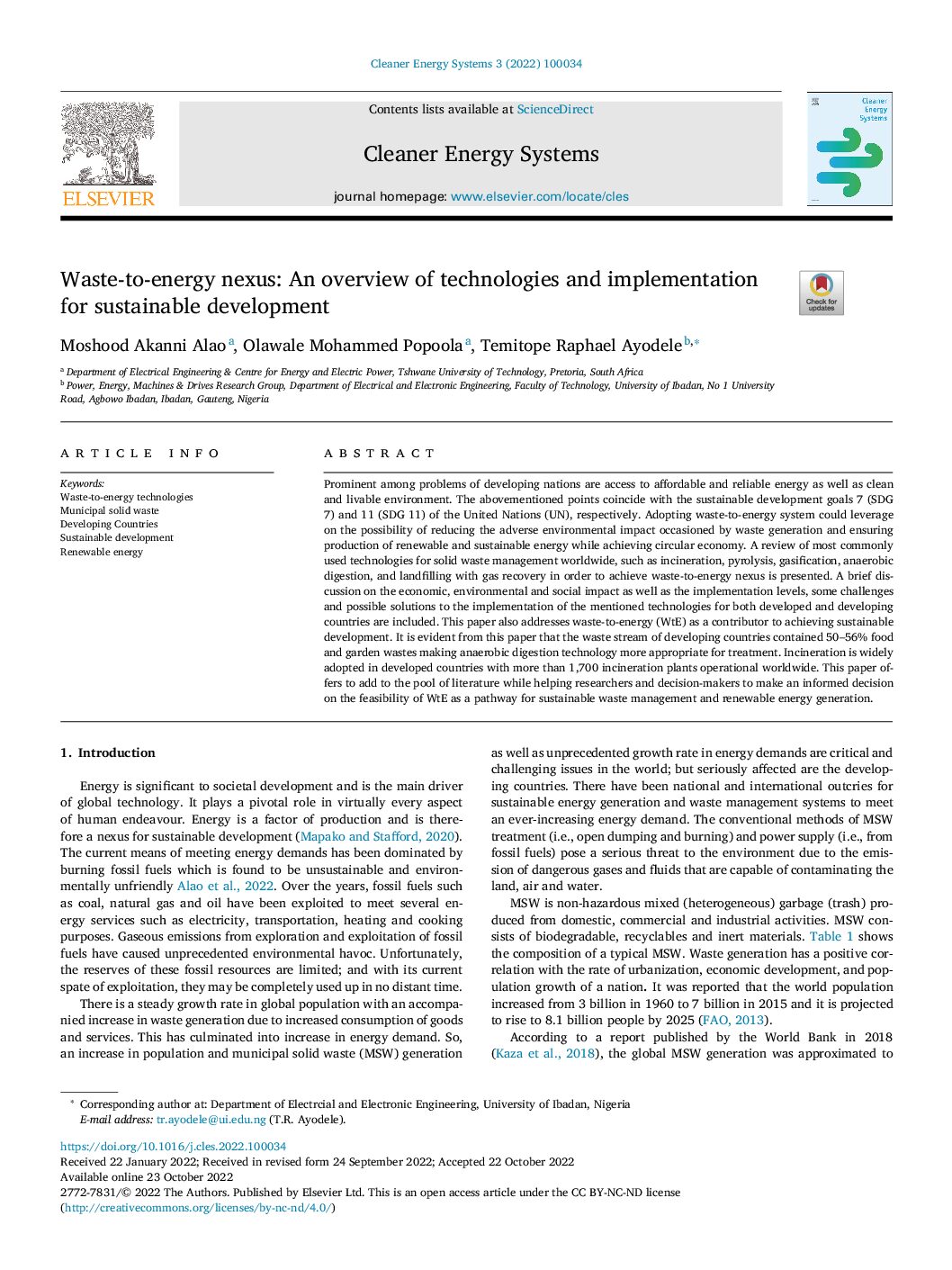
This paper gives an overview of waste to energy technologies, discusses barriers to its wider adoption in developing countries, and helps researchers and decision-makers to make informed decisions on the feasibility of WtE as a pathway for sustainable waste management and renewable energy generation.
This paper provides general guidelines for conducting Environmental Impact Assessments for waste-to-energy projects.
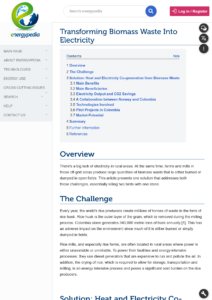
This article discusses the potential of heat and electricity co-generation from biomass waste to both expand energy access and improve waste management in rural areas.
This article explores how system planning, and in particular assessments of system adequacy, will need to innovate and evolve to allow power systems to keep delivering secure and affordable electricity supply during energy transitions.
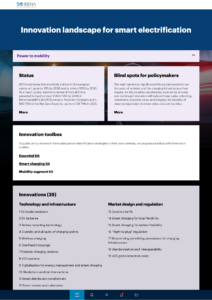
This database presents the current status, policy barriers, and key innovations for electrification of mobility, heating and cooling, and hydrogen production.
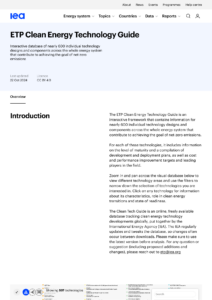
This is an interactive database of nearly 600 individual technology designs and components across the whole energy system that contribute to achieving the goal of net-zero emissions
This paper explains how minimum energy performance standards for buildings can be implemented effectively while remaining socially just, using a differentiated approach that carefully follows a series of design principles.
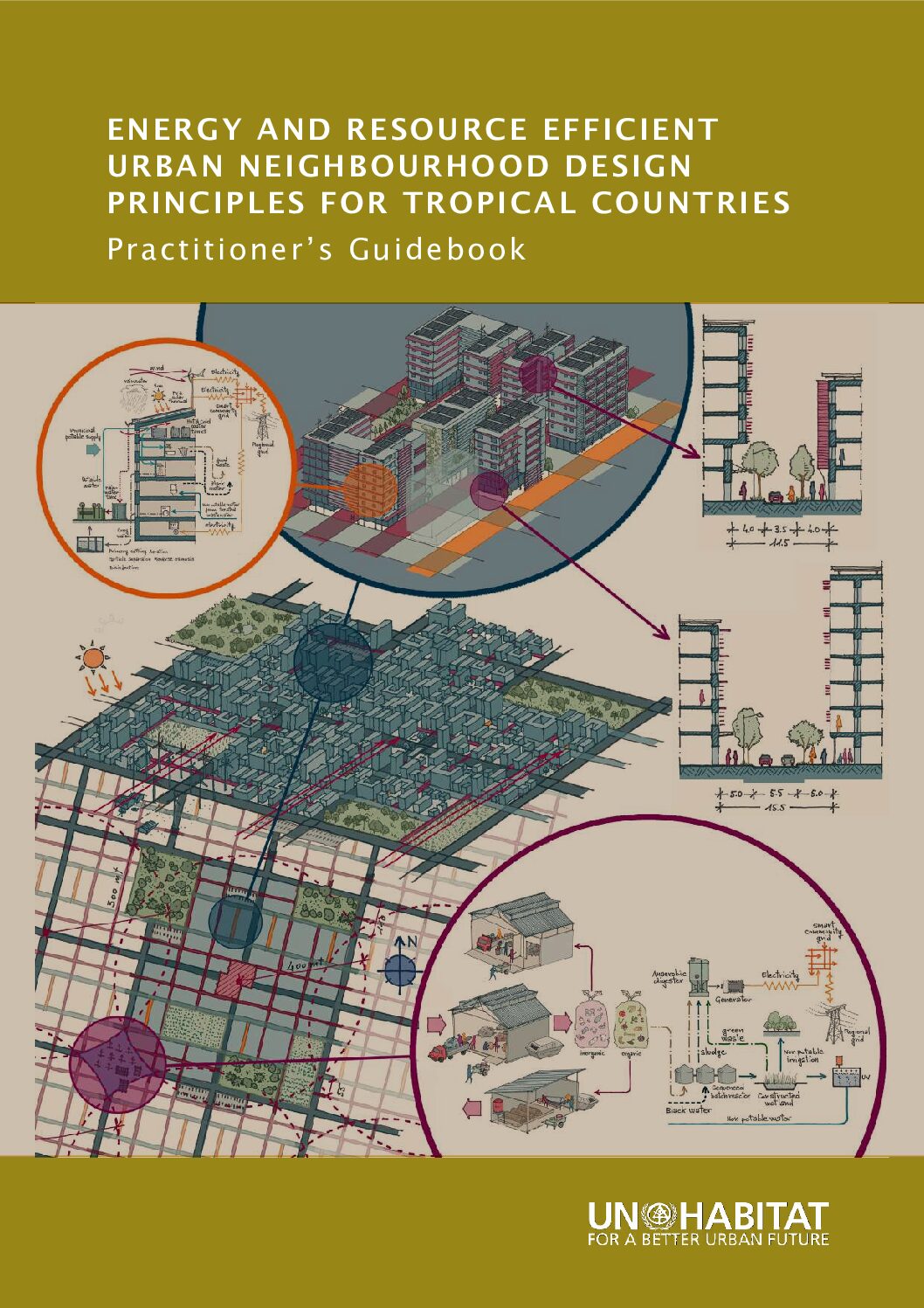
This guidebook helps practitioners adopt a holistic approach to sustainable neighbourhood design, integrating the design of efficient energy, water, wastewater and solid waste systems, and low energy mobility.