
The average lifespan of a building is 50 years, so the design of buildings that are constructed now will have an effect on energy consumption in our cities until well into the 2070s. This article presents the most effective options for cities to set mandatory minimum energy performance standards for buildings, to prevent locking in … Continue reading “How to set energy efficiency requirements for new buildings”

This publication shares the learnings from eight EU-funded research projects on energy behaviour and modelling, and presents their implications for policy design.
This brief provides an overview and a lot of data and visuals on skills gaps and challenges for Africa’s e-mobility transition. It also suggests possible solutions with respective advantages and disadvantages.
This policy brief discusses why PUE projects should adopt a gender-responsive approach to enhance their effectiveness, as gender blind PUE initiatives are more likely to benefit men than women. It explains how gender-responsive approaches benefit both men and women, and provides policy recommendations for maximizing those benefits.
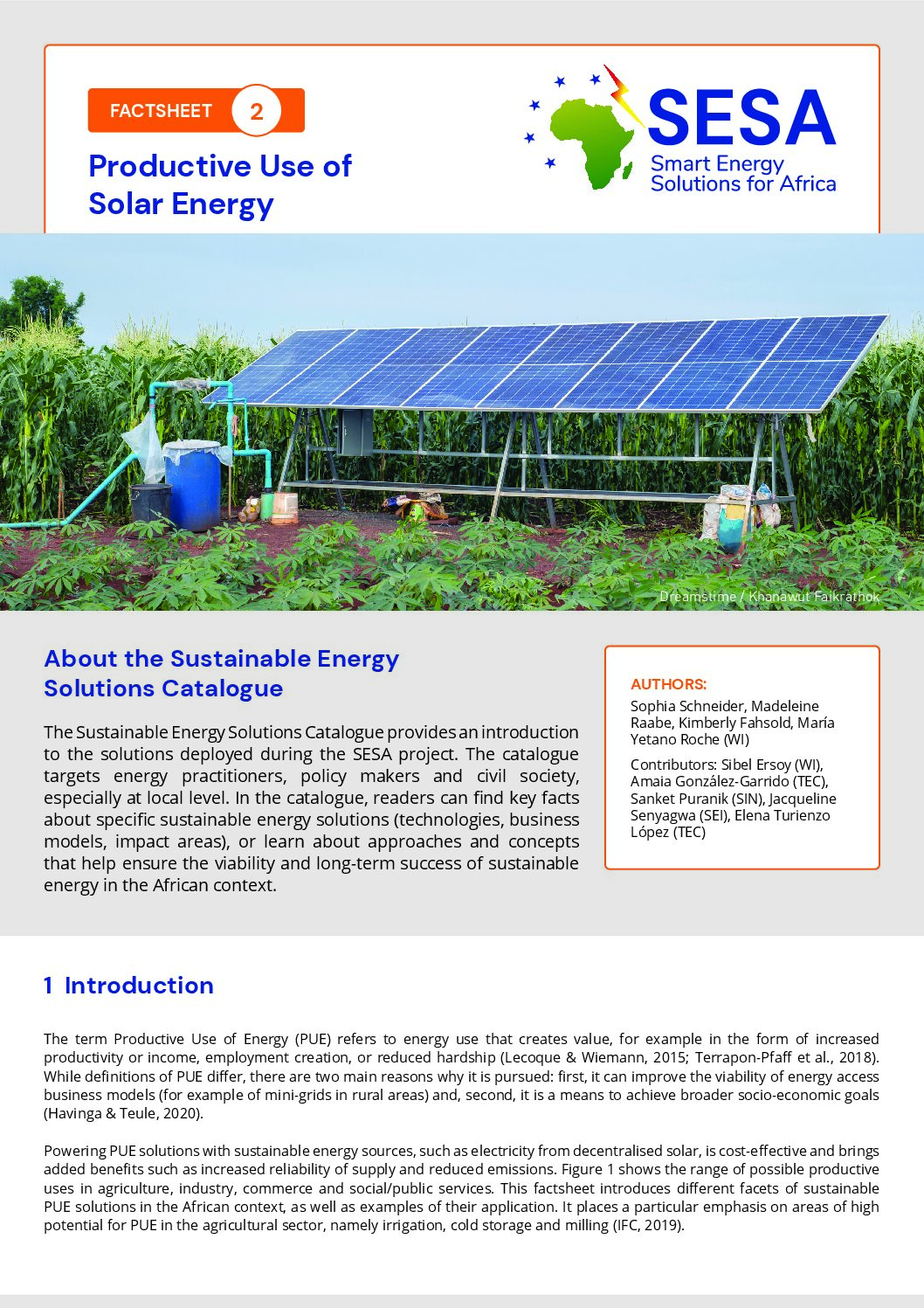
This fact sheet provides a quick overview of different PUE technologies and business and financing models, as well as their socio-economic and sustainability impacts, and their upscaling potential.
This article announces the approval in March 2025 by the Integrity Council for the Voluntary Carbon Market (ICVCM) of a new cookstove methodology by Verra, which administers the Verified Carbon Standard. This sets a new benchmark for high-quality, trusted carbon credits for clean cooking. The article also provides data on the development of the clean … Continue reading “Verra’s Cookstove Credits Get ICVCM Green Light – Boosting Carbon Market Trust”
This article tells a story of trial and error in the development of a clean cookstove business model in Zambia, highlighting the many factors that come into play and the occasional unpredictability of the market.
The Industrial Deep Decarbonisation Initiative, established by the UN Industrial Development Organization (UNIDO) and the Clean Energy Ministerial, is a coalition of governments and companies. Among its goals, it seeks to motivate governments, which are major buyers of steel, cement and concrete for infrastructure projects, to apply sustainable procurement principles and prioritise the buying of … Continue reading “Decarbonizing steel, cement and concrete: An overview of the Industrial Deep Decarbonisation Initiative”
This executive summary gives a brief overview of global solar PV supply chains, with a lot of data and interesting visuals.
This executive summary of a larger report provides a quick overview of the growth of battery demand since the early 1990s. It shows that the reduction in battery costs and the increase in efficiency has led to a domino effect, as batteries become viable alternatives to other energy sources for ever more applications.