
This guide aims to help energy statisticians understand the various elements and processes involved in renewable energy data collection and management, and identify capacity gaps. It covers seven requirements for effective data management: 1. Legal and institutional frameworks; 2. Well-defined data requirements; 3. Sufficient skilled personnel; 4. Clear methodologies and processes; 5. Appropriate data collection … Continue reading “Capacity needs assessment for renewable energy statistics”
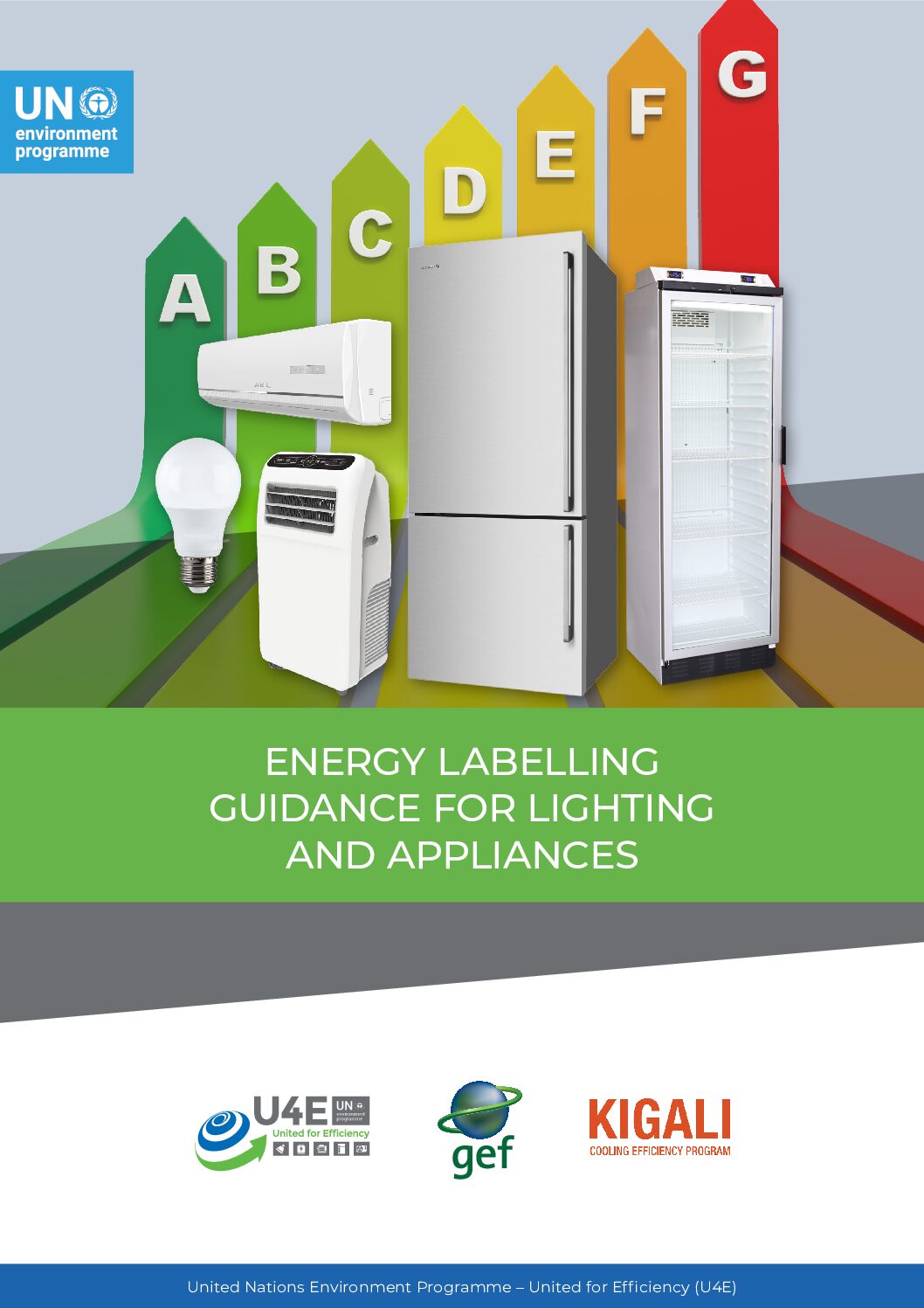
This is a guide to the development of energy efficiency labelling schemes for equipment and appliances, based on lessons learned in more than 120 countires.
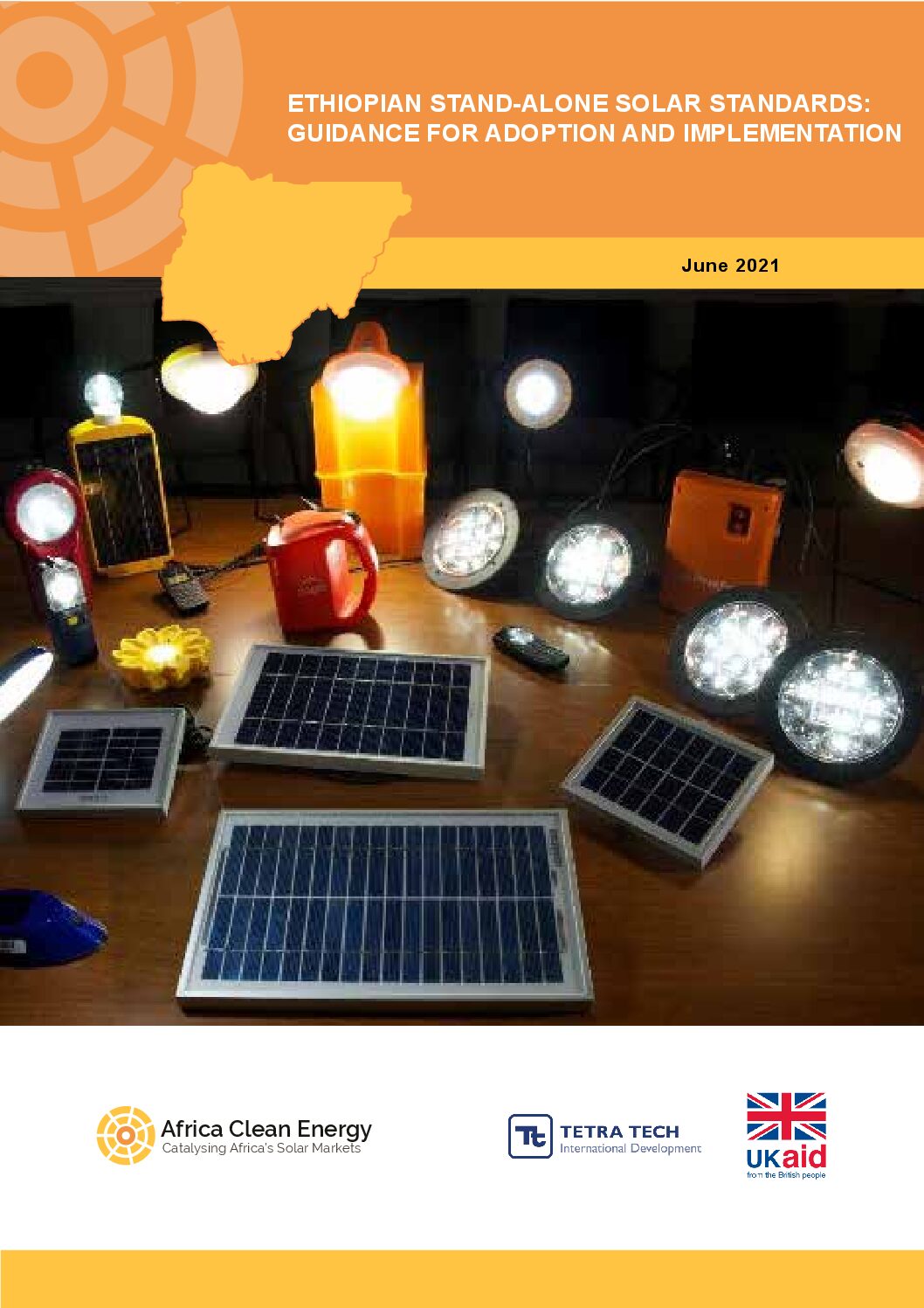
This document provides recommendations to guide relevant stakeholders in the development and implementation of a quality assurance (QA) framework for stand-alone solar (SAS) products in Ethiopia.
These guidelines provide advice on the development of green hydrogen clusters, which are industrial clusters that share green hydrogen and renewable energy for various purposes and can significantly contribute to industrial decarbonisation.
This handbook focuses on the following supply chain challenges in clean cooking: reorienting business model priorities, modeling available supply, prioritizing new markets, and assessing value chain sustainability.
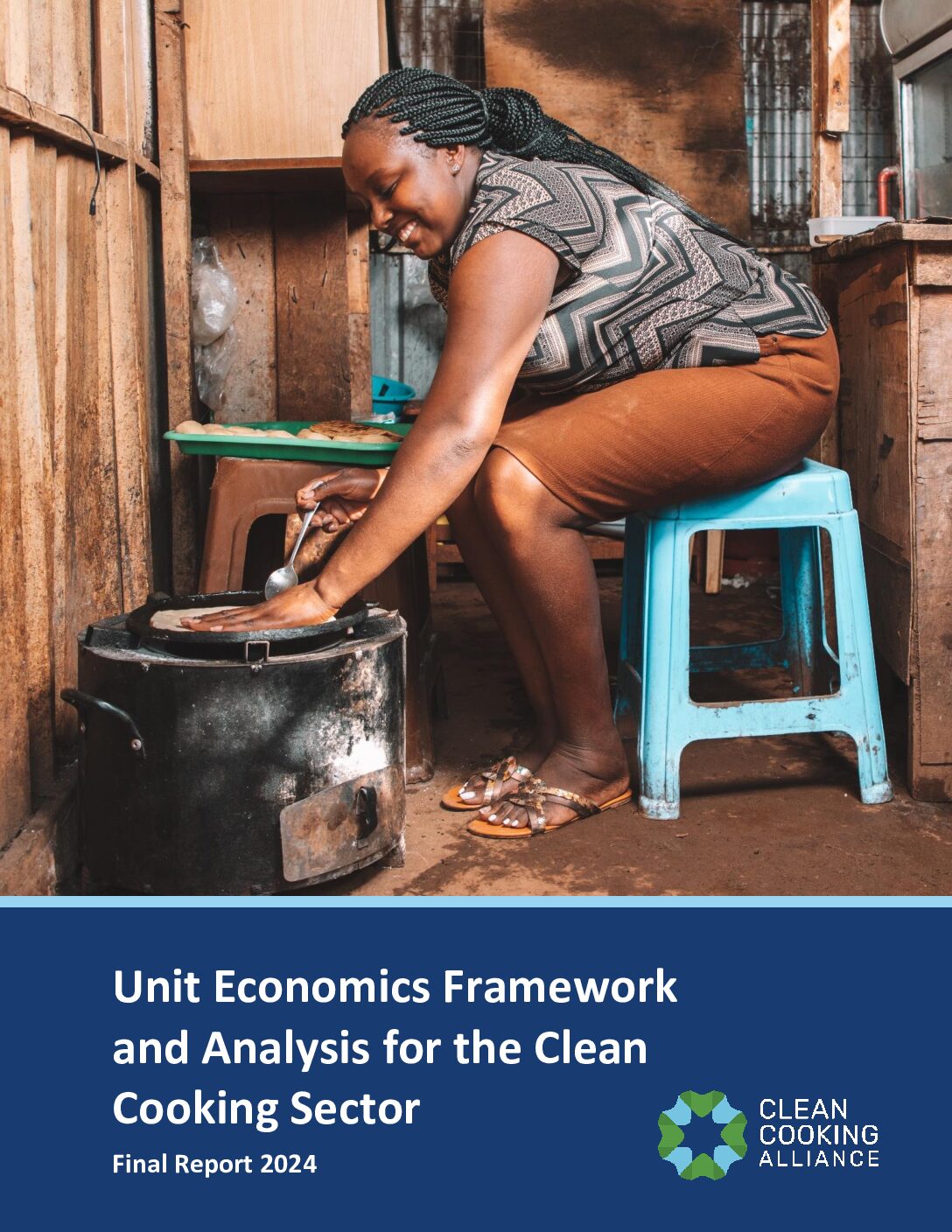
This report highlights evdience on key unit economics drivers for clean cooking, with the aim to better articulate the value of clean cooking, reduce transaction costs, support actors across the ecosystem to capitalize on commercial and impact opportunities, and ultimately unlock more investment capital for the sector.