
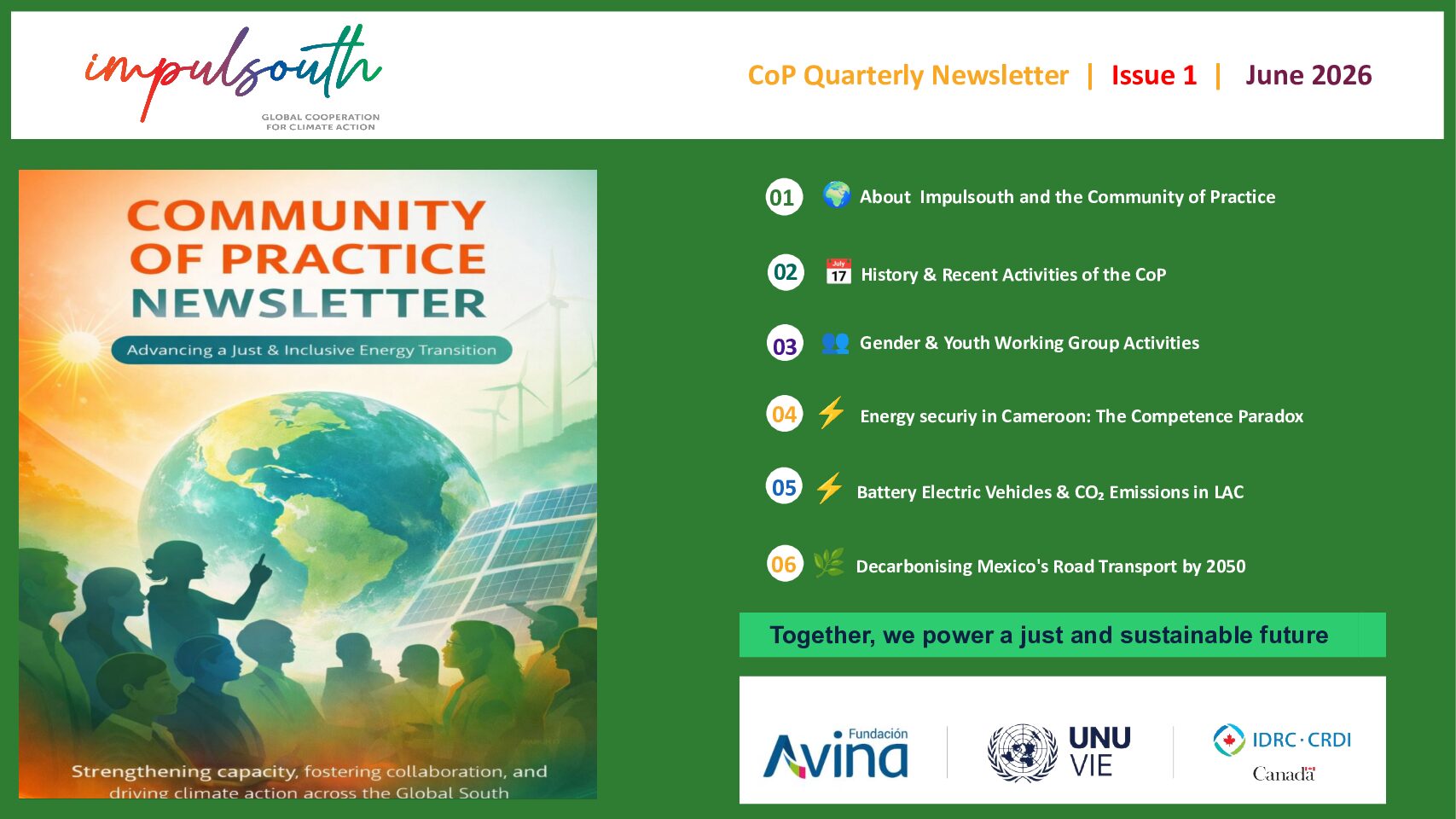
This is the Impulsouth Community of Practice (CoP) newsletter. The CoP is a collaborative platform that strengthens capacities within the energy sector, supporting a just and inclusive energy transition with a strong focus on gender equality. Bringing together diverse stakeholders, the CoP fosters knowledge exchange, strengthens institutional capacity, and promotes effective South-South cooperation across nine … Continue reading “CoP Quarterly Newsletter – Issue 1 – June 2026”
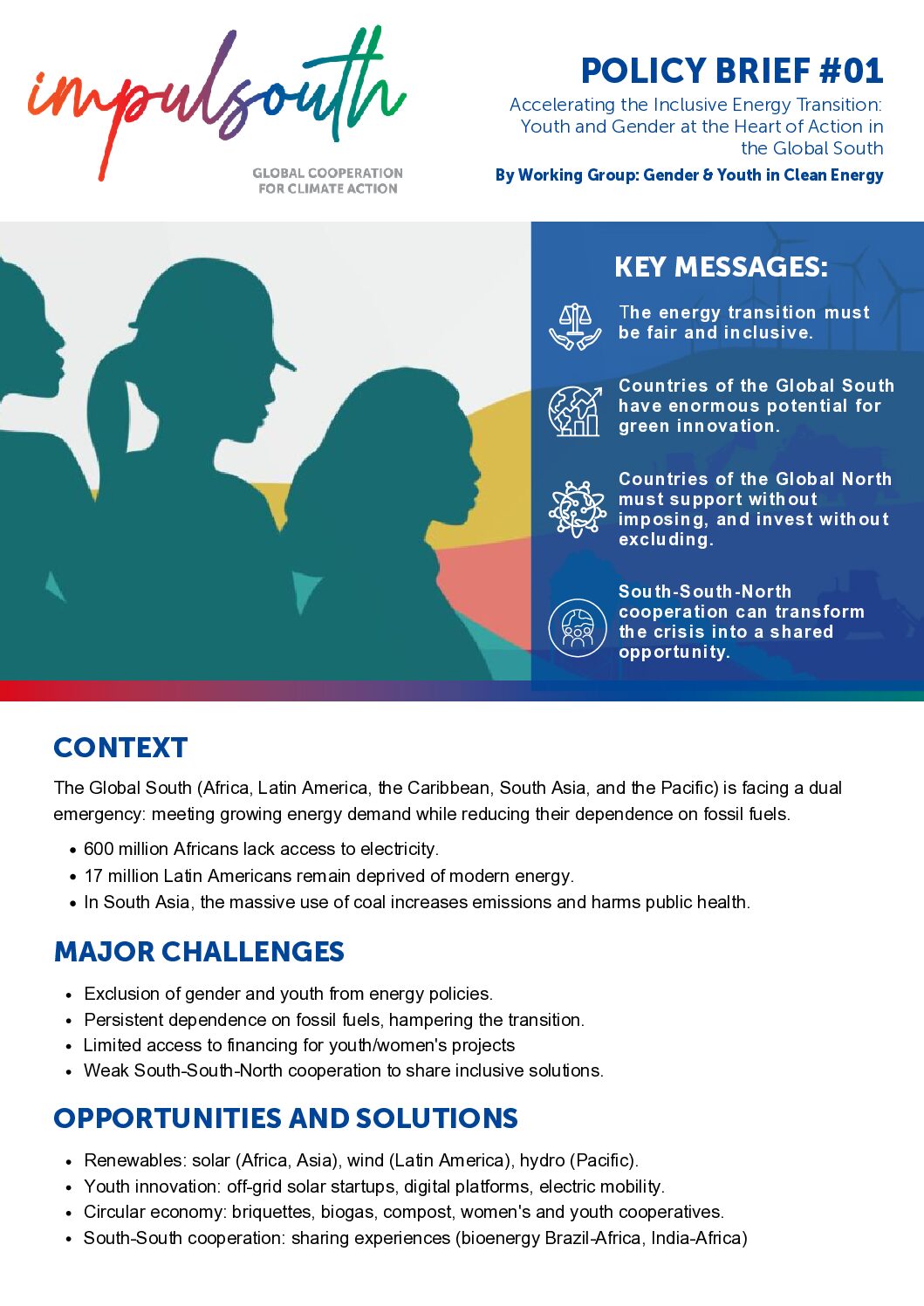
This resource was developed by members of the Working Group on Gender & Youth in Clean Energy, within Impulsouth’s Community of Practice.
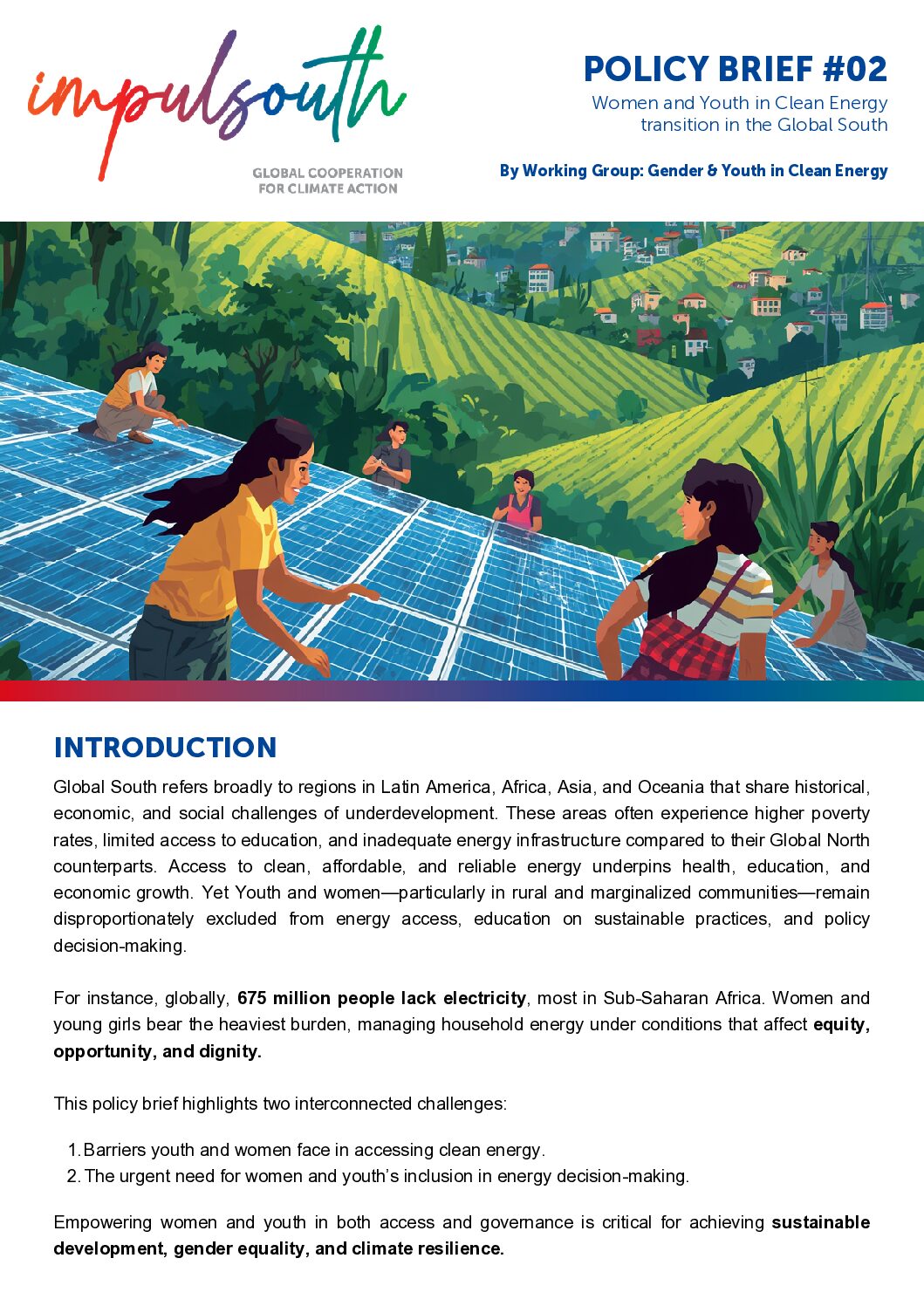
This resource was developed by members of the Working Group on Gender & Youth in Clean Energy, within Impulsouth’s Community of Practice.
This guide helps businesses in the establishment of energy management systems. An updated version is currently under development and is due to be published soon.
This video by UNIDO’s Industrial Decarbonization Accelerator provides a quick introduction to the benefits of energy management systems, as well as tips on how to implement one.
This report identifies and analyses key risks and barriers to private-sector investment in interconnected mini-grids in Nigeria, and evaluates policy and financial instruments designed to address them.
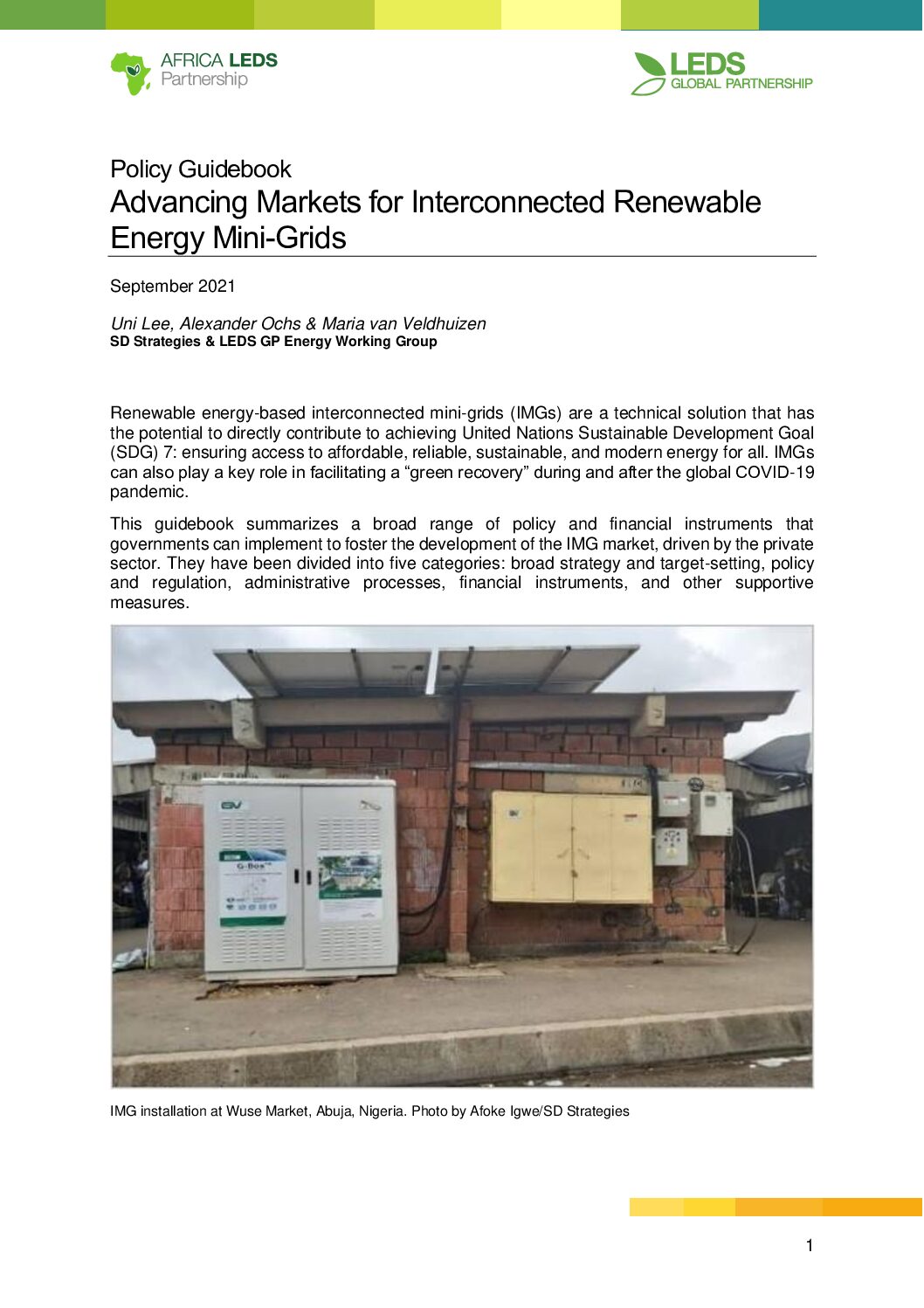
This guidebook summarizes a broad range of policy and financial instruments that governments can implement to foster the development of the interconnected mini-grid market, driven by the private sector.
This publication database provides a range of materials about the ESCO business model, on the following topics: Accounting; Business Models, Contracts & Project Development; Certification & Quality Assurance; Investment, Finance & Risk Management; Market Overview, including Cases studies; Measurement & Verification; Policies & legal and regulatory frameworks; Procurement; Super ESCOs; and Technologies
The ESCO Model Contract Library provides a list of ESCO contracts and supporting documents provided by a variety of countries and organisations. In some cases, the resources also provide a wider set of documents related to public procurement of ESCO services.
This report describes regulatory barriers reported by 25 ESCO associations, and offers advice to policymakers to address these barriers.