
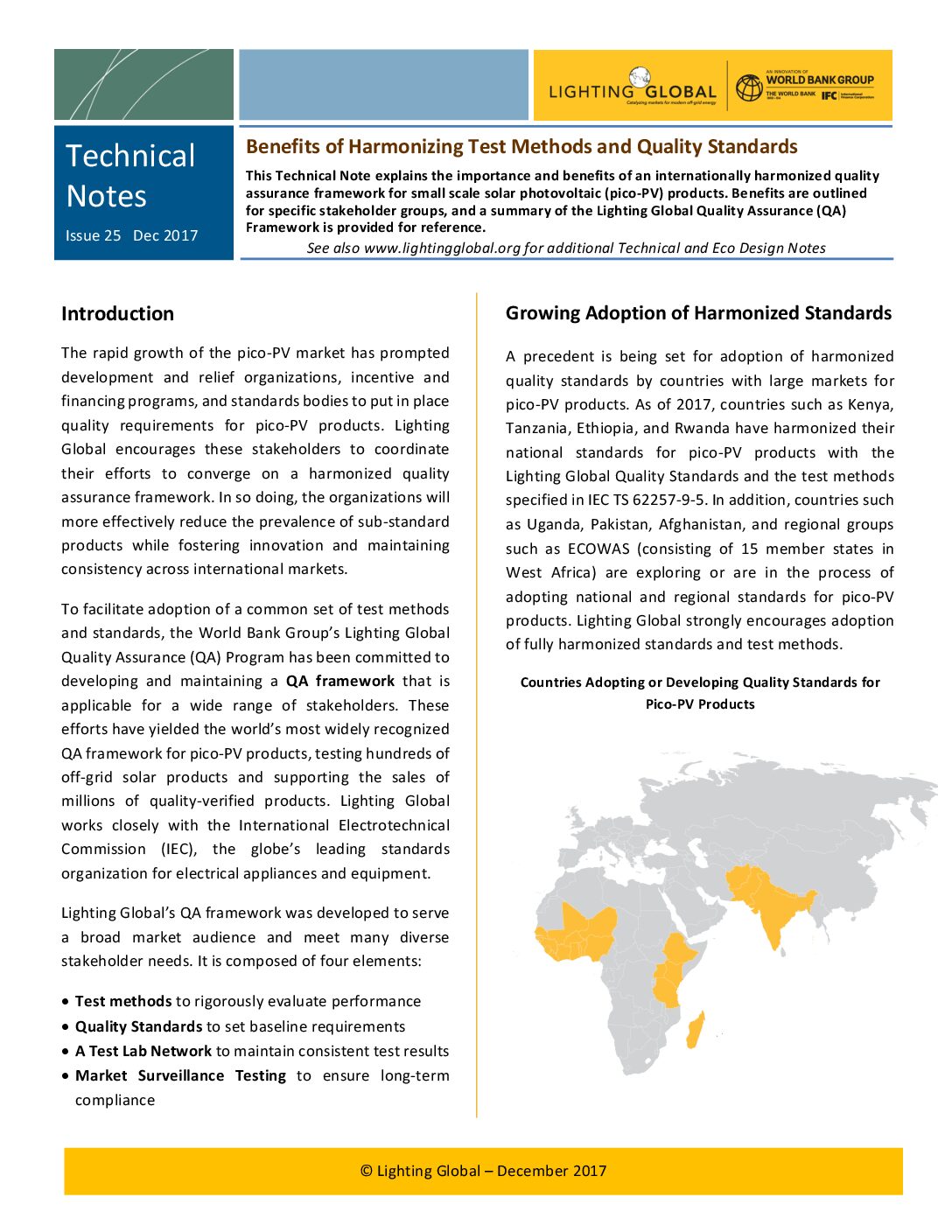
This brief explains the importance and benefits of an internationally harmonized quality assurance framework for small scale solar photovoltaic (pico-PV) products. Benefits are outlined for specific stakeholder groups, and a summary of the Lighting Global Quality Assurance (QA) Framework is provided for reference.
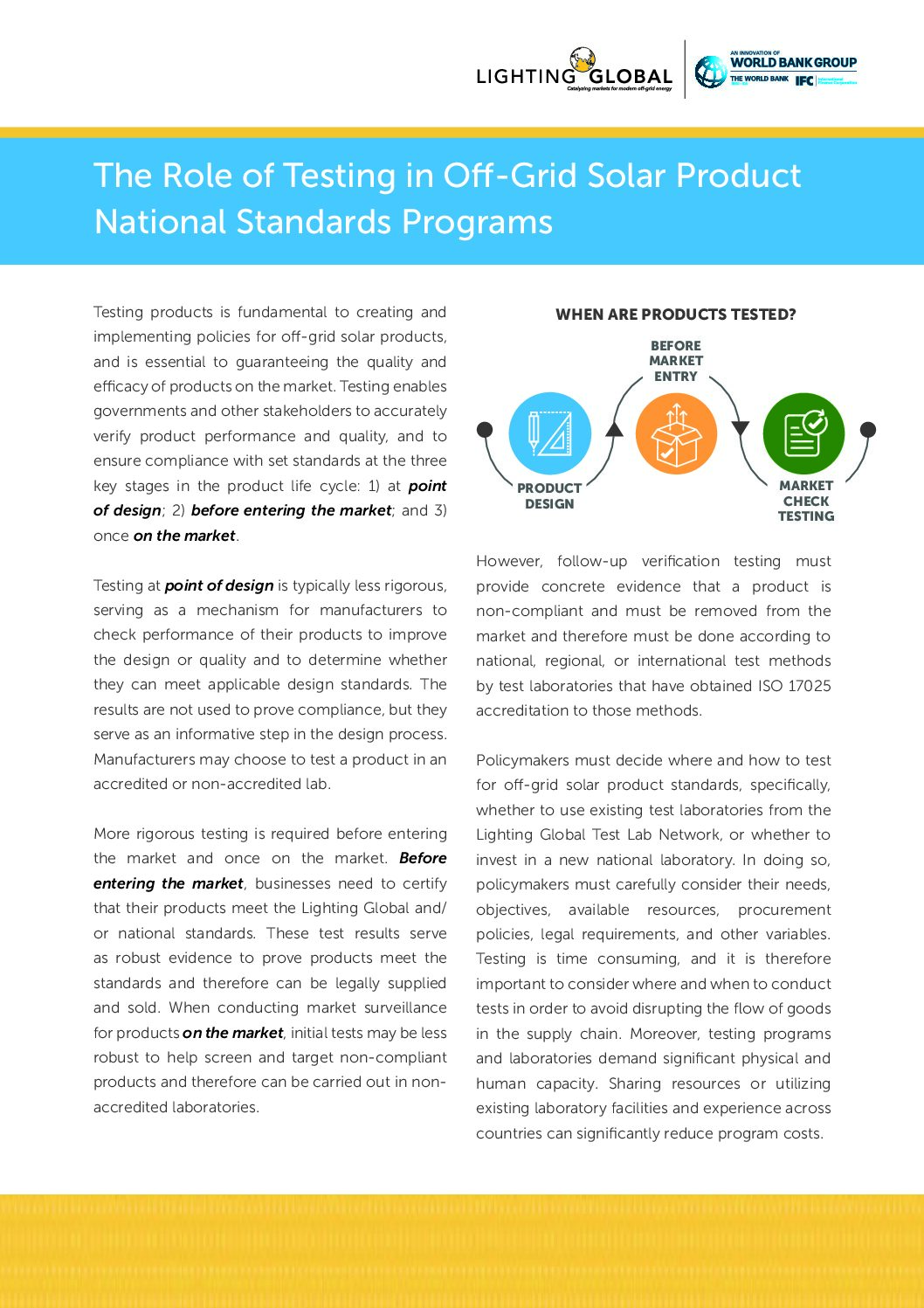
This brief explains the role of product testing in standard-setting for off-grid solar products. It provides recommendations based on good practices and explains how the Lighting Global Quality Assurance Program can help governments implement and enforce standards.
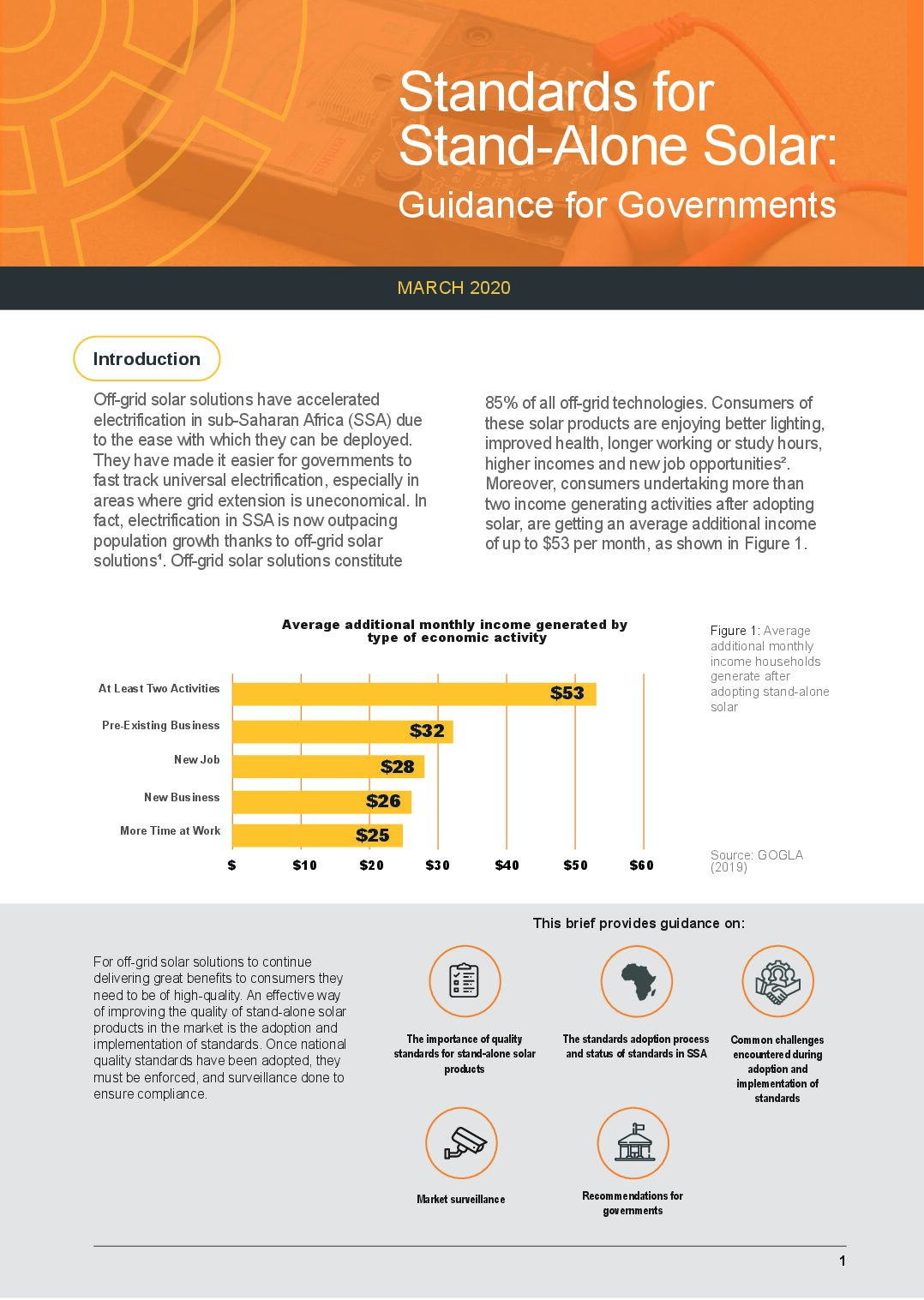
This policy brief provides guidance on the importance of quality standards for stand-alone solar products; how to develop and adopt standards, and the current status in Africa; common challenges encountered in this process; and market surveillance; as well as recommendations for governments.
This paper gives an overview of waste to energy technologies, discusses barriers to its wider adoption in developing countries, and helps researchers and decision-makers to make informed decisions on the feasibility of WtE as a pathway for sustainable waste management and renewable energy generation.
This paper provides general guidelines for conducting Environmental Impact Assessments for waste-to-energy projects.
This article discusses the potential of heat and electricity co-generation from biomass waste to both expand energy access and improve waste management in rural areas.
This paper presents the results of a techno-economic study of a potential waste-to-energy plant in Kampala, Uganda, including modeling to project energy generation potential and the payback period for the initial investment.
This page explores the best practice regulatory, fiscal and economic instruments available today to encourage a more efficient/electric vehicle stock.
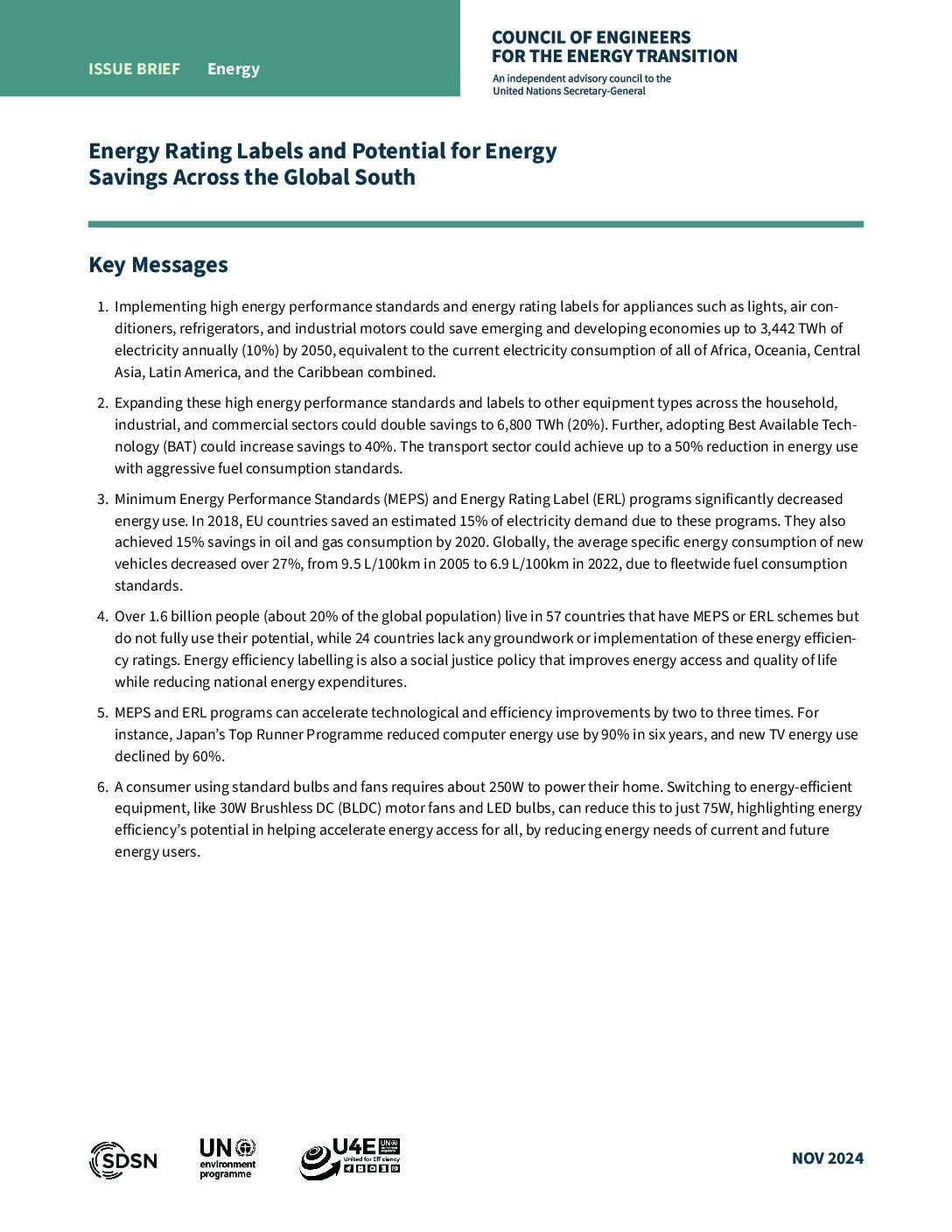
This brief explains the potential of energy performance standards and appliance labels to advance energy efficiency in the Global South.
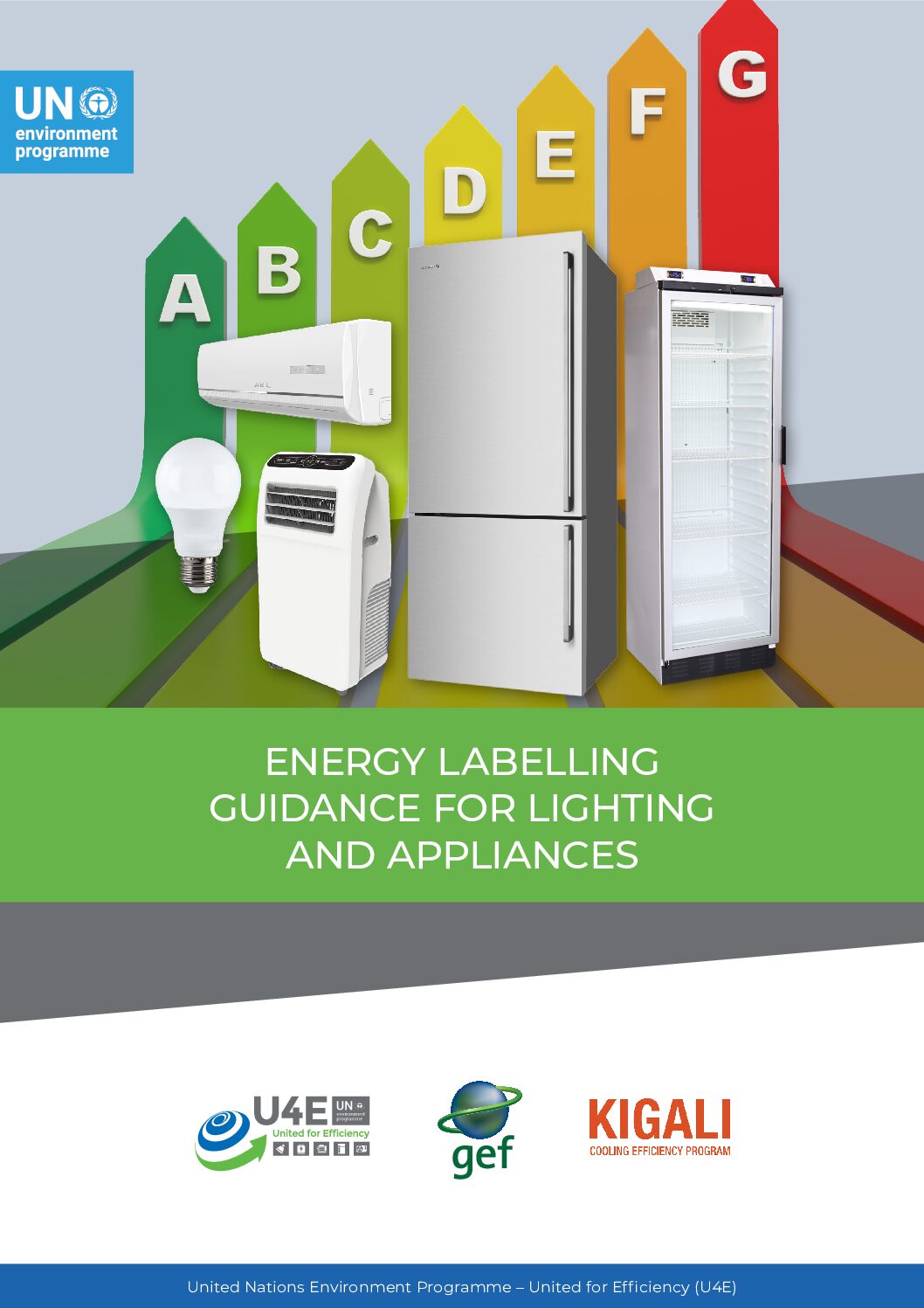
This is a guide to the development of energy efficiency labelling schemes for equipment and appliances, based on lessons learned in more than 120 countires.