
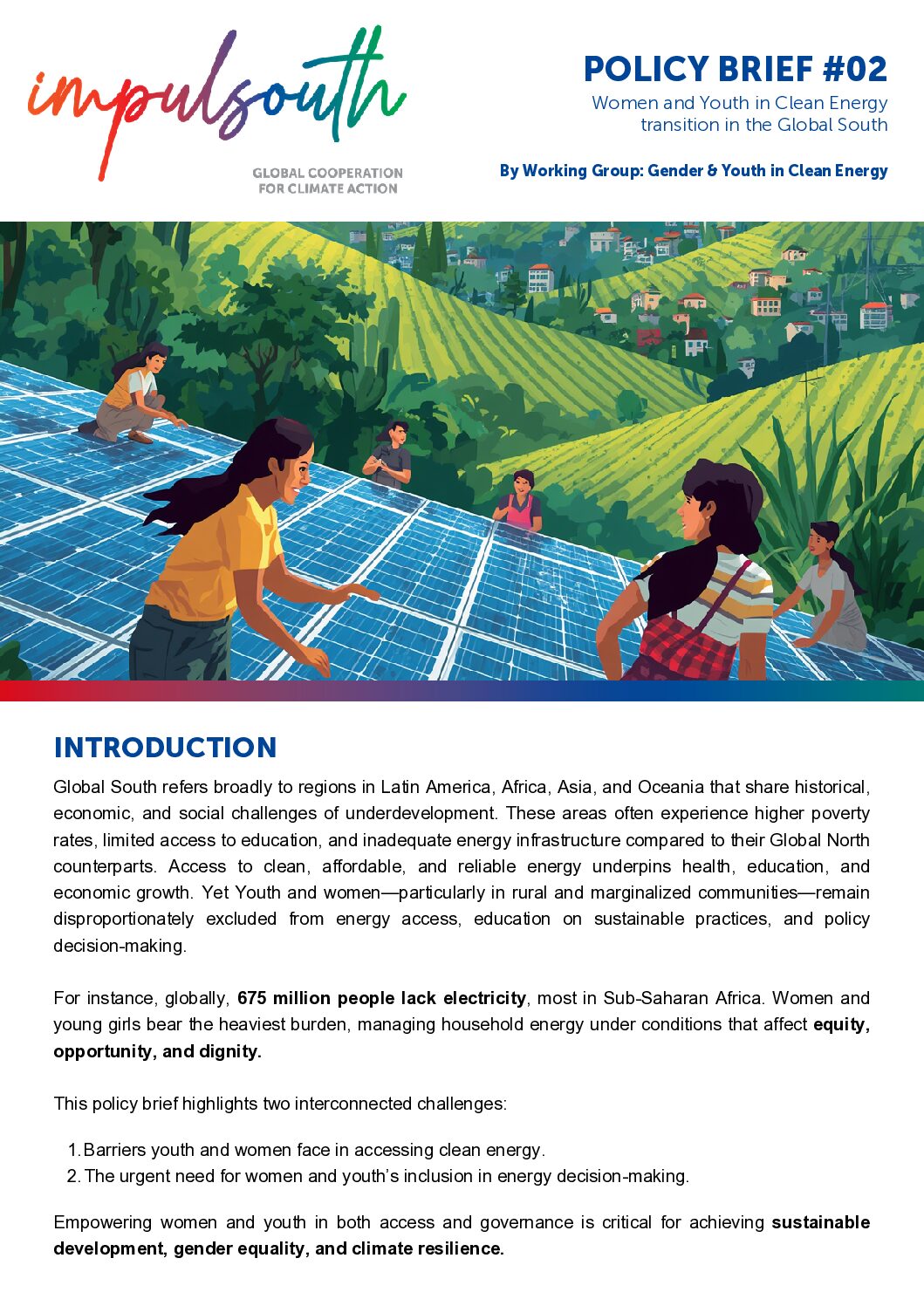
This resource was developed by members of the Working Group on Gender & Youth in Clean Energy, within Impulsouth’s Community of Practice.
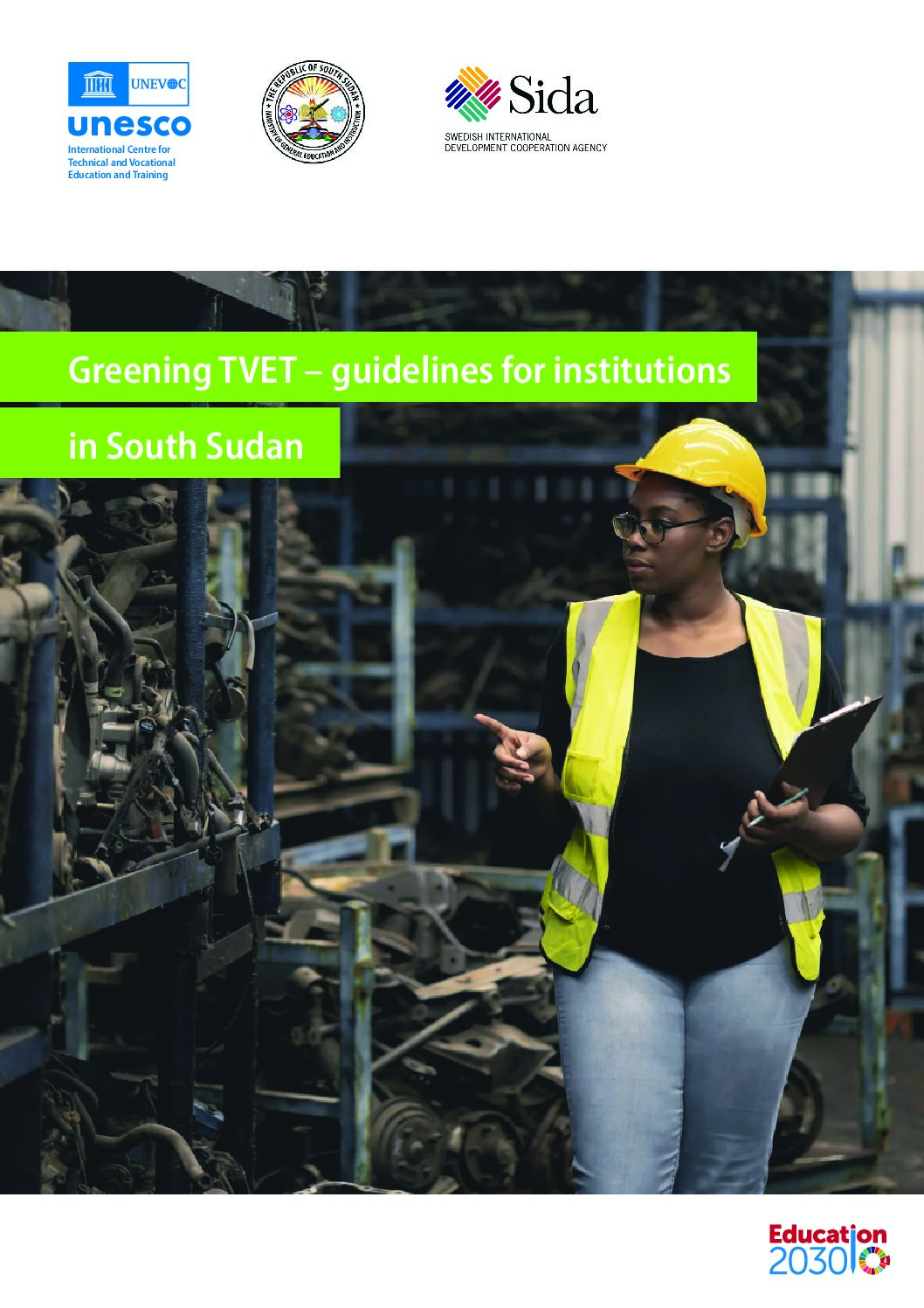
These Greening TVET guidelines provide a comprehensive framework to promote sustainable development within TVET institutions. By showing how to embed environmental sustainability and gender equity into institutional practices, the guidelines aim to equip TVET institutions with the tools needed to foster a green economy.
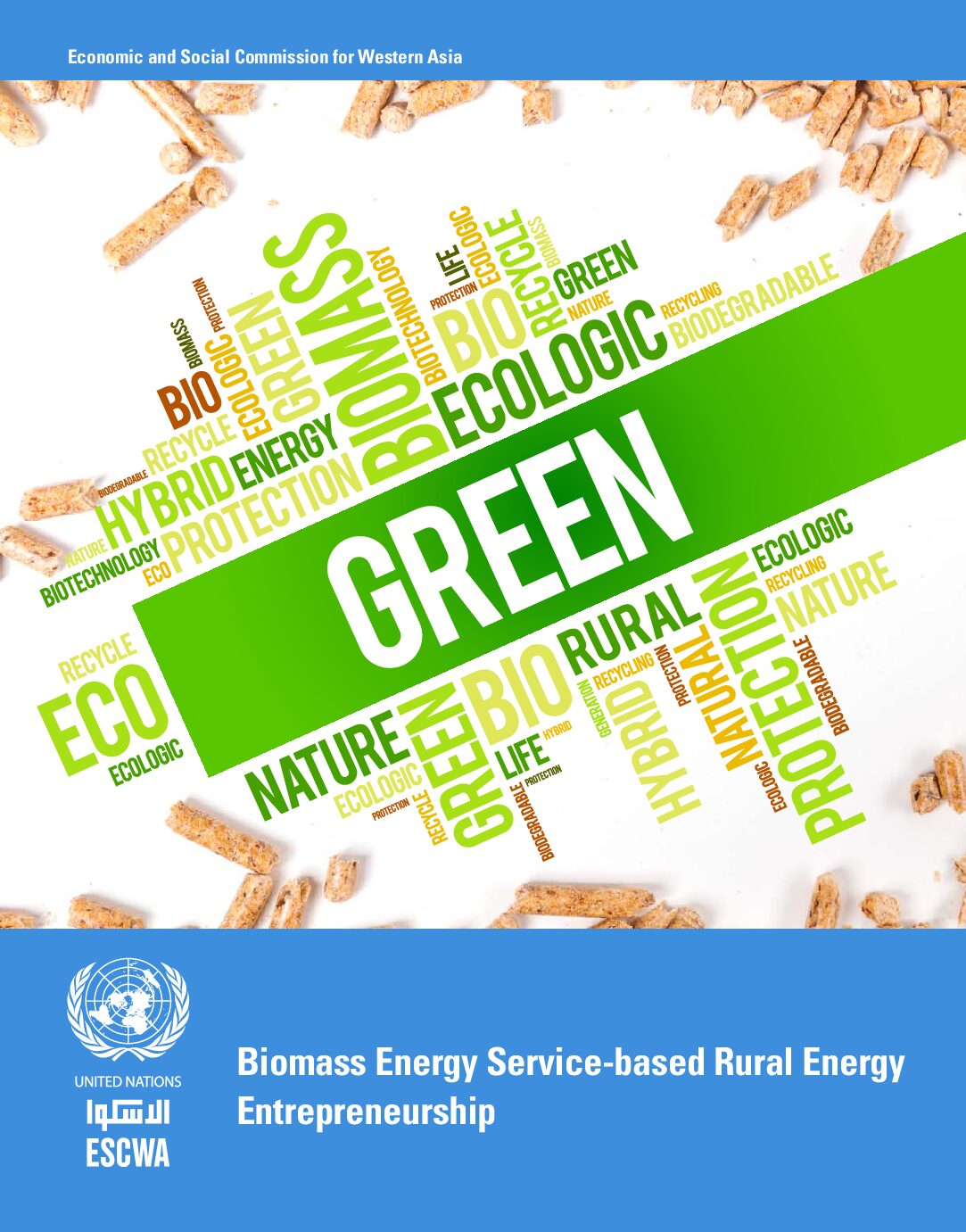
This guide addresses the challenges faced by rural energy enterprises in developing countries, and sets out solutions such as business models offering cooking energy as a service.
This paper presents the results of a techno-economic study of a potential waste-to-energy plant in Kampala, Uganda, including modeling to project energy generation potential and the payback period for the initial investment.
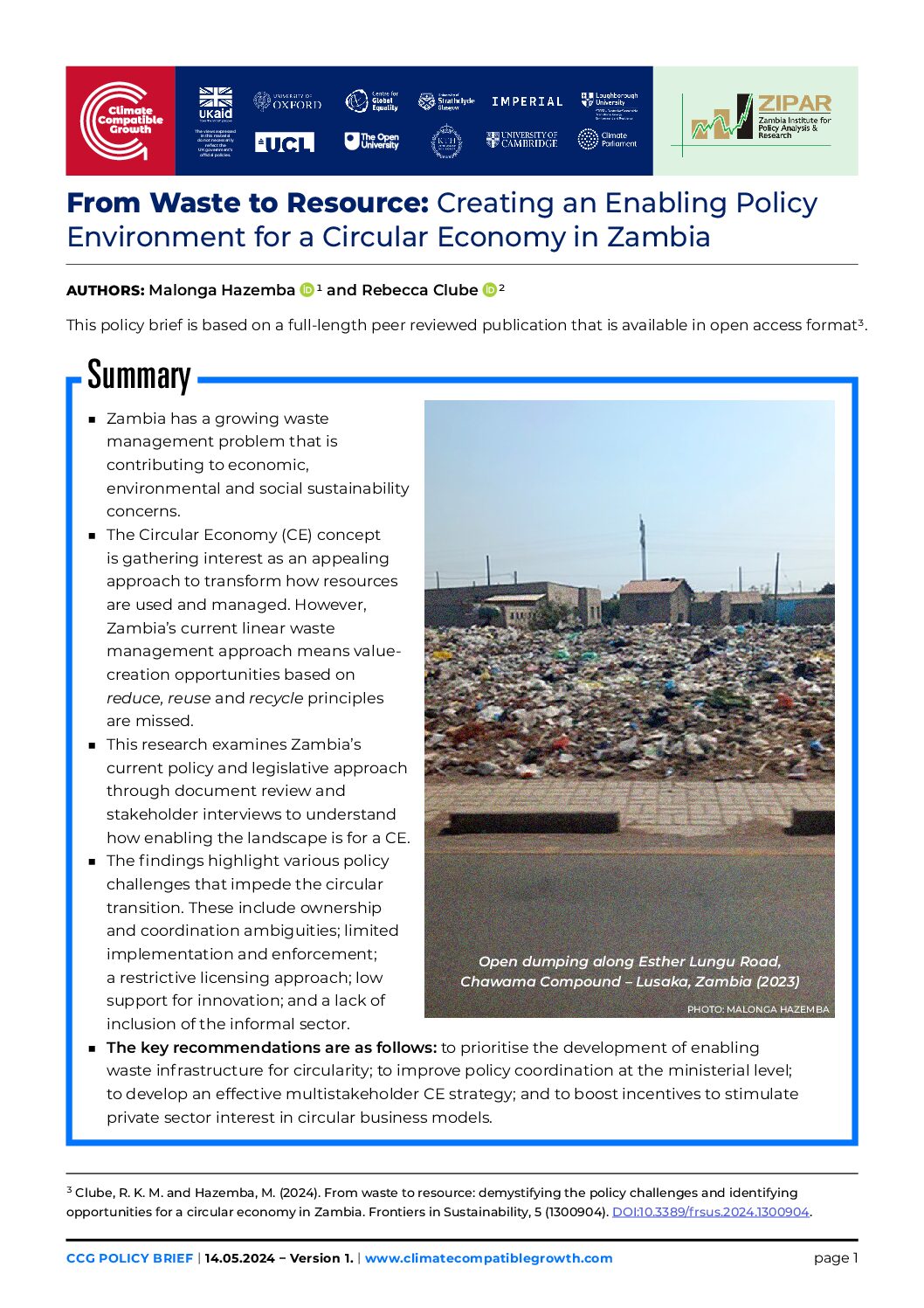
This policy brief investigates Zambia’s policy and legislative framework for energy generation from waste, and provides recommendations for improvements.
This study aims to determine the viability of electricity generation from municipal solid waste in Ndola, Zambia, and finds that the most suitable technology is biomethanation.
This paper reviews the potential for the generation of modern energy from organic waste in Madagascar, and provides recommendations to accelerate progress.
This study critically assesses the policy and regulatory frameworks for the digitalisation of energy systems in support of energy transitions in Nigeria and South Africa.
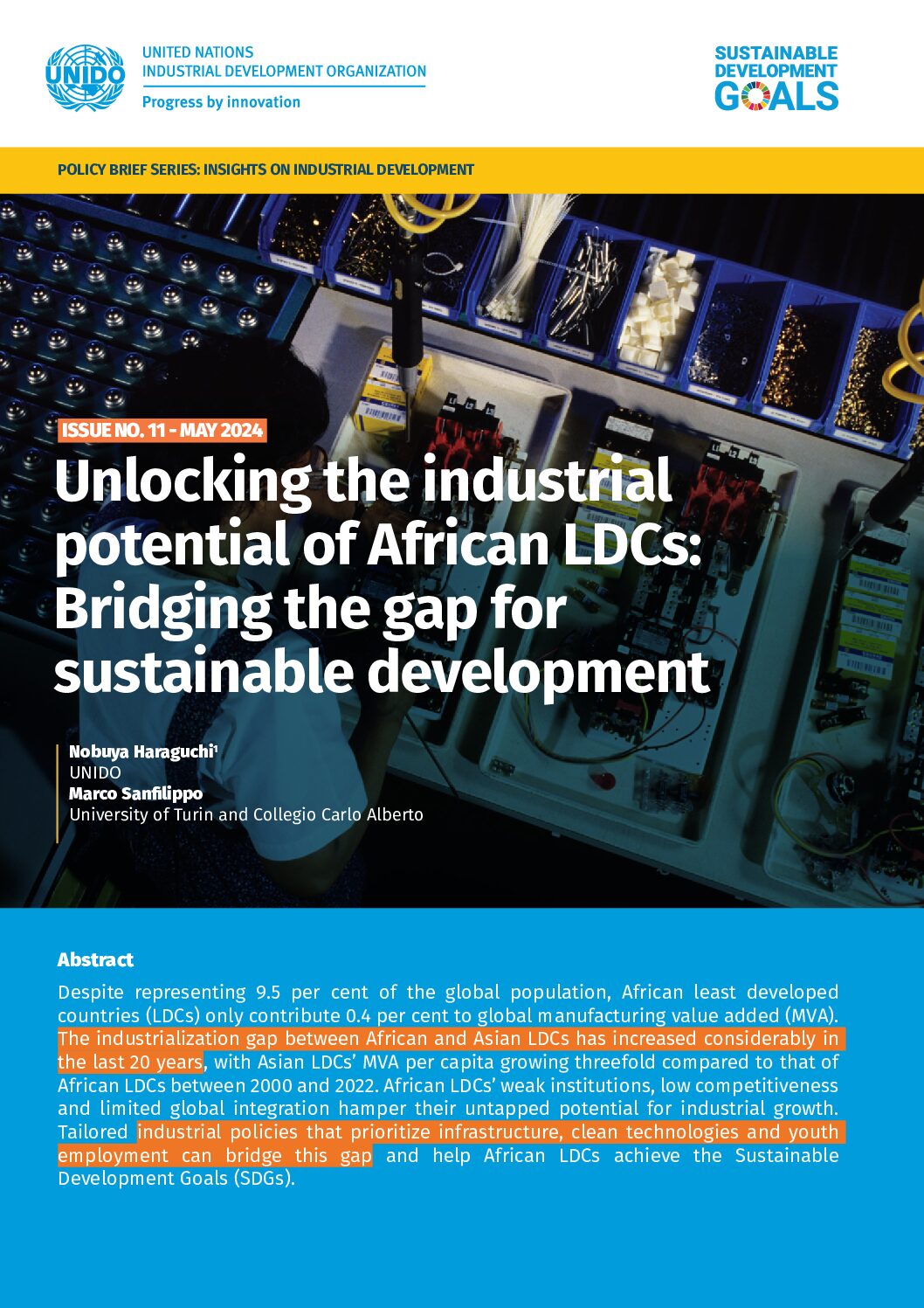
This brief discusses how African LDCs can develop industrial policies that prioritise infrastructure, clean technologies and youth employment.
This strategy provides an overview of energy production and consumption in Zambia, and sets objectives for efficiency improvements in the residential, industrial and transport sectors.