
This article announces the adoption of harmonised minimum energy performance standards for air conditioners and refrigerators in the 16 member countries of the Southern African Development Community (SADC). It also explains the process by which these harmonised standards were developed and adopted.
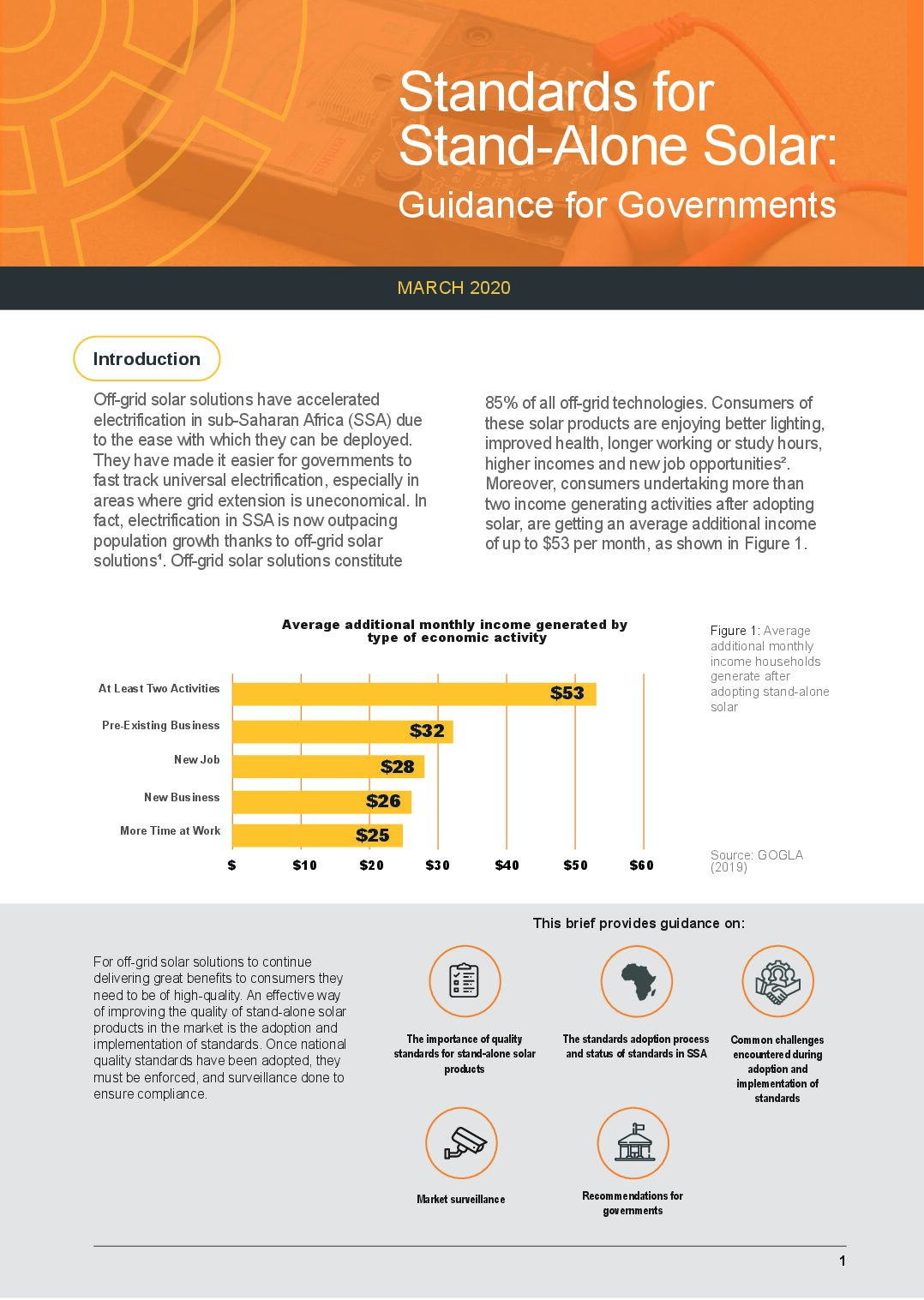
This policy brief provides guidance on the importance of quality standards for stand-alone solar products; how to develop and adopt standards, and the current status in Africa; common challenges encountered in this process; and market surveillance; as well as recommendations for governments.
Africa has installed wind capacity of just 9 GW – less than 1% of the global total. However, there is increasing recognition of both the benefits of wind energy and Africa’s enormous potential, and the Global Wind Energy Council expects this capacity to grow by 900% in the coming years. This presentation by the International … Continue reading “Exploring Africa’s Untapped Wind Potential”
This report provides baseline data on women’s employment in wind energy, as well as information on barriers to gender equality and recommendations to close gender gaps.
This guide addresses the challenges faced by rural energy enterprises in developing countries, and sets out solutions such as business models offering cooking energy as a service.
This web portal provides an extensive introduction into bioenergy technology, policy, financing and more.
This paper presents the results of a techno-economic study of a potential waste-to-energy plant in Kampala, Uganda, including modeling to project energy generation potential and the payback period for the initial investment.
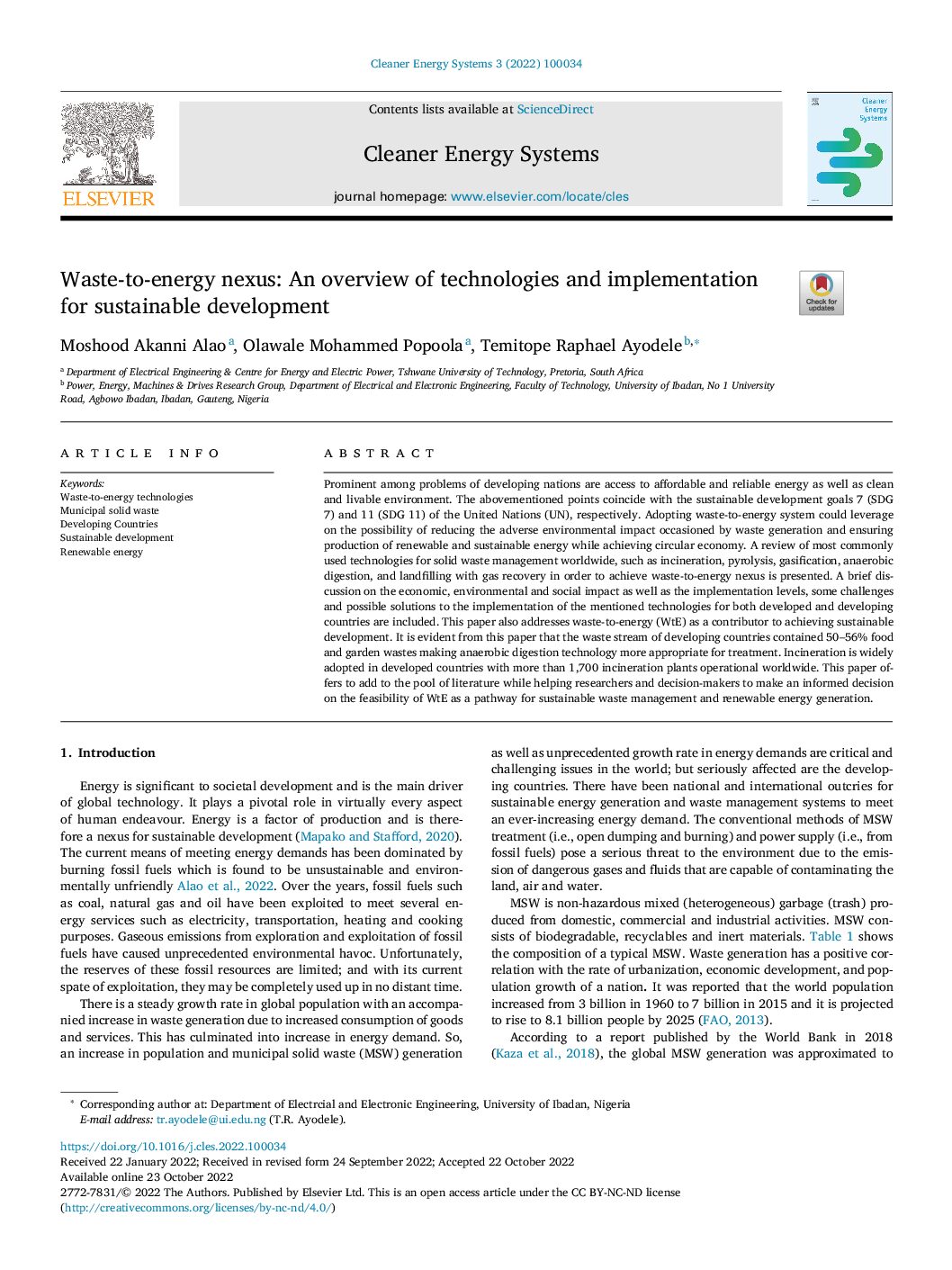
This paper gives an overview of waste to energy technologies, discusses barriers to its wider adoption in developing countries, and helps researchers and decision-makers to make informed decisions on the feasibility of WtE as a pathway for sustainable waste management and renewable energy generation.
This paper provides general guidelines for conducting Environmental Impact Assessments for waste-to-energy projects.
This article discusses the potential of heat and electricity co-generation from biomass waste to both expand energy access and improve waste management in rural areas.