
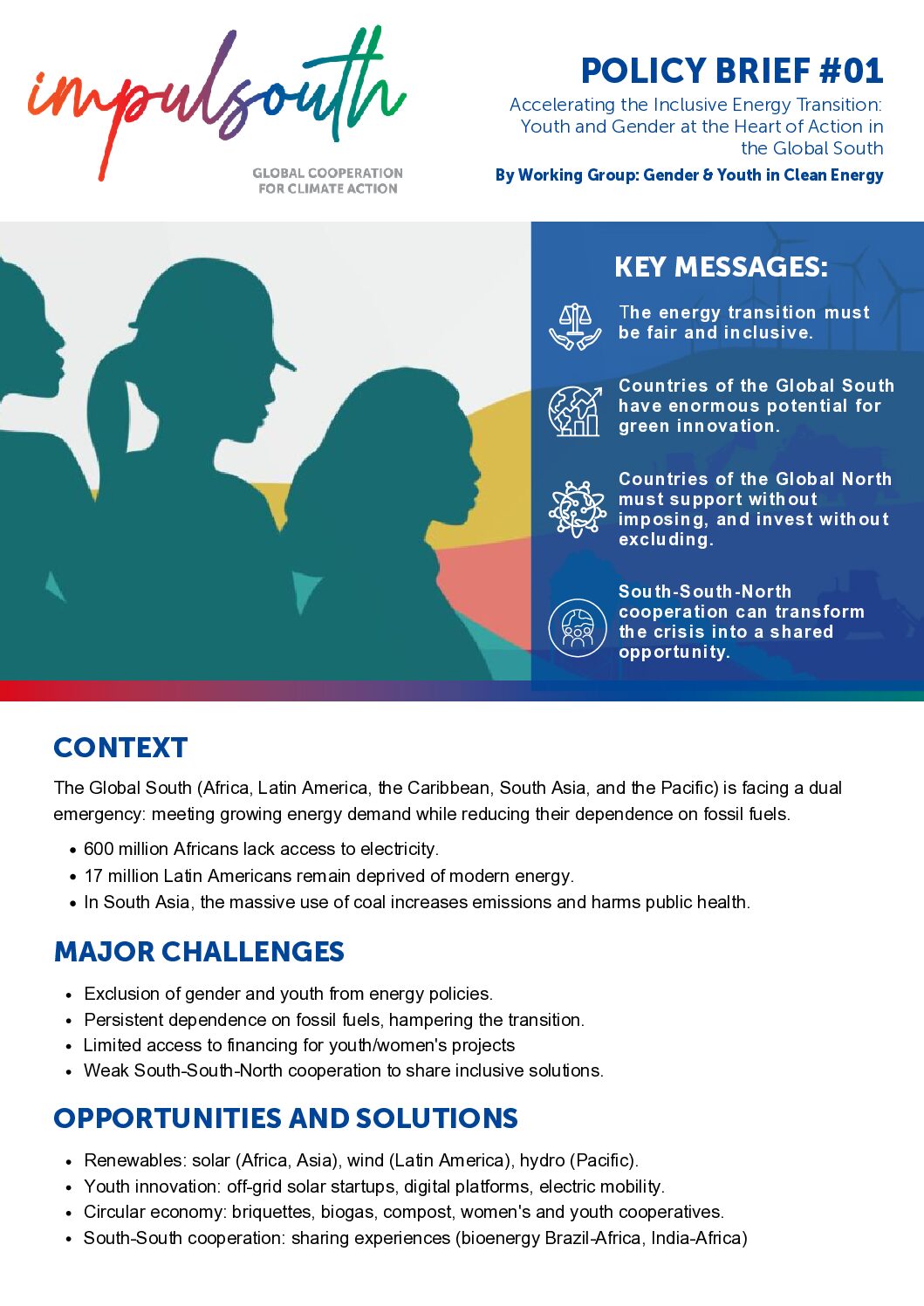
This resource was developed by members of the Working Group on Gender & Youth in Clean Energy, within Impulsouth’s Community of Practice.
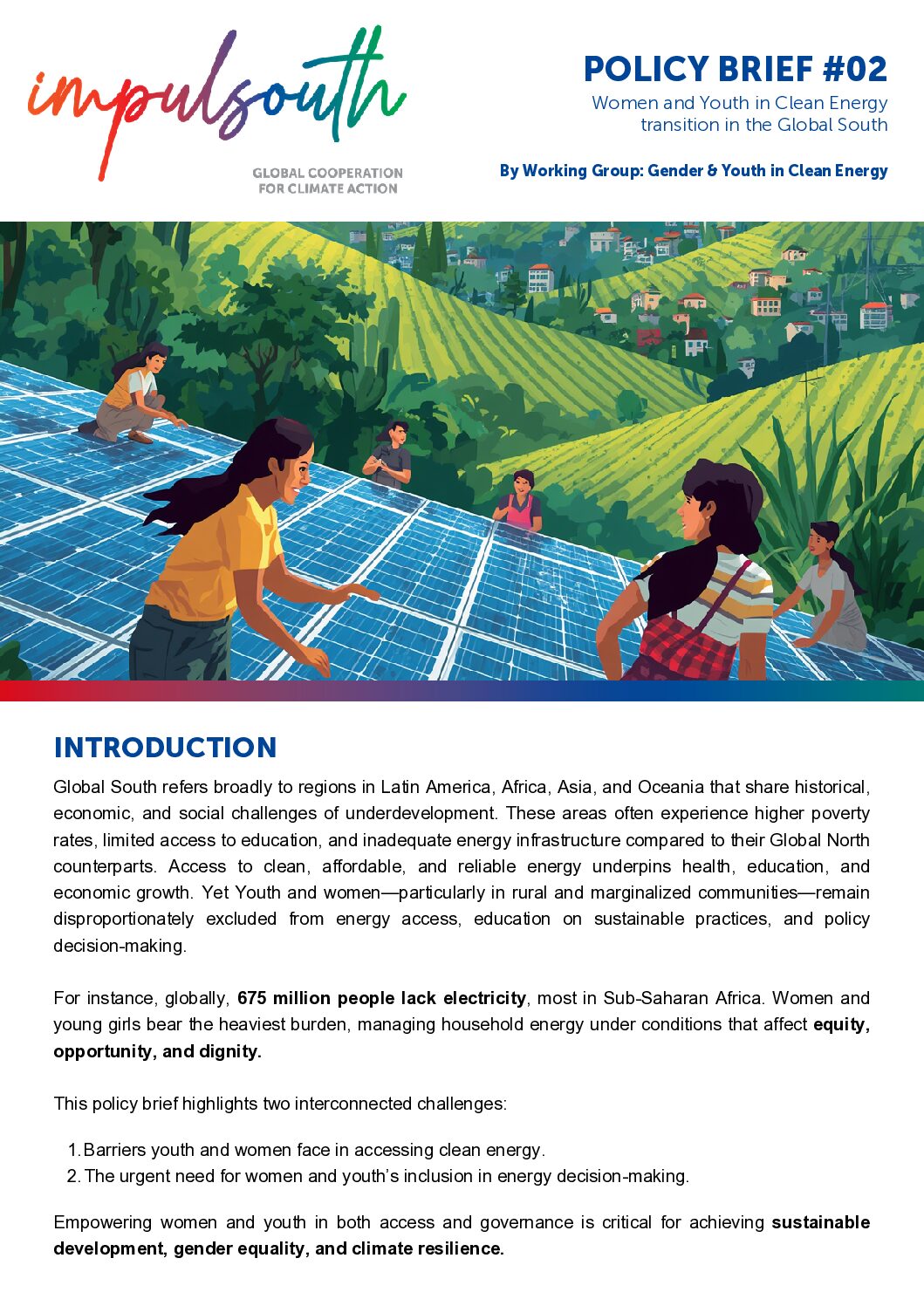
This resource was developed by members of the Working Group on Gender & Youth in Clean Energy, within Impulsouth’s Community of Practice.
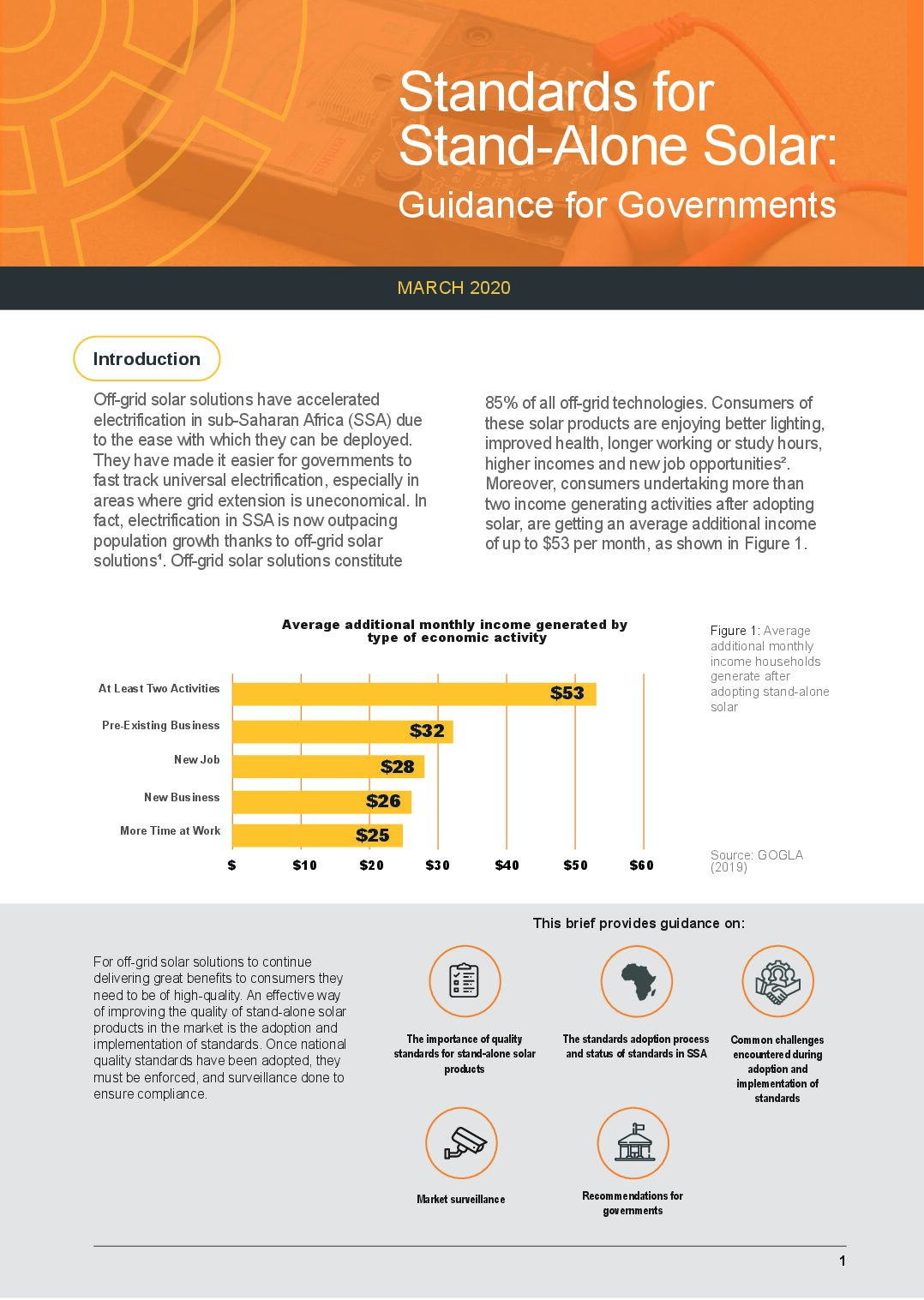
This policy brief provides guidance on the importance of quality standards for stand-alone solar products; how to develop and adopt standards, and the current status in Africa; common challenges encountered in this process; and market surveillance; as well as recommendations for governments.
This article investigates the benefits to women of electricity access, beyond just economic benefits.
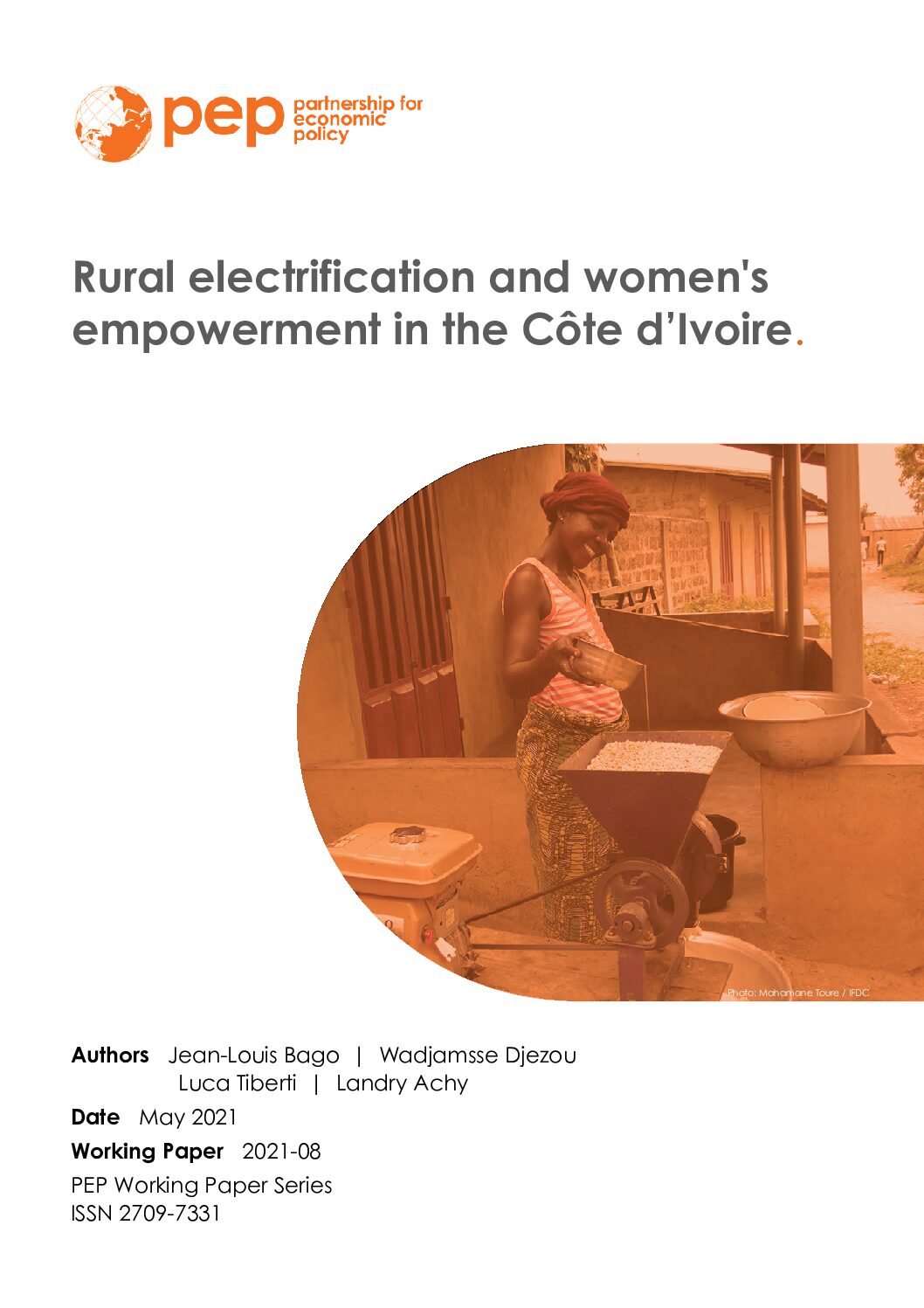
This report assesses the impact of the Ivorian National Rural Electrification Programme on the lives and empowerment of rural women.
This guide addresses the challenges faced by rural energy enterprises in developing countries, and sets out solutions such as business models offering cooking energy as a service.
This report examines the role of climate finance in Madagascar’s energy transition, and the impact that different financial instruments have on the delivery of the electrification schemes.
This blog and inforgraphic present the results of a World Bank study on the decision-making journey towards adopting and using clean cooking solutions in Rwanda, Madagascar and Ghana.
This study investigated (1) What marketing messages are effective at increasing willingness to pay for a more efficient stove in rural Uganda; (2) What sales offers (e.g., free trial and time payments) increases willingness to pay and uptake; (3) What effects does ownership of an efficient stove have on the use of old and new … Continue reading “Uptake and Usage of Fuel-efficient Improved Cookstoves in Rural Uganda”
This is a cam[paign strategy to engender behavioural change and the increased uptake of clean cooking solutions in Kenya.