
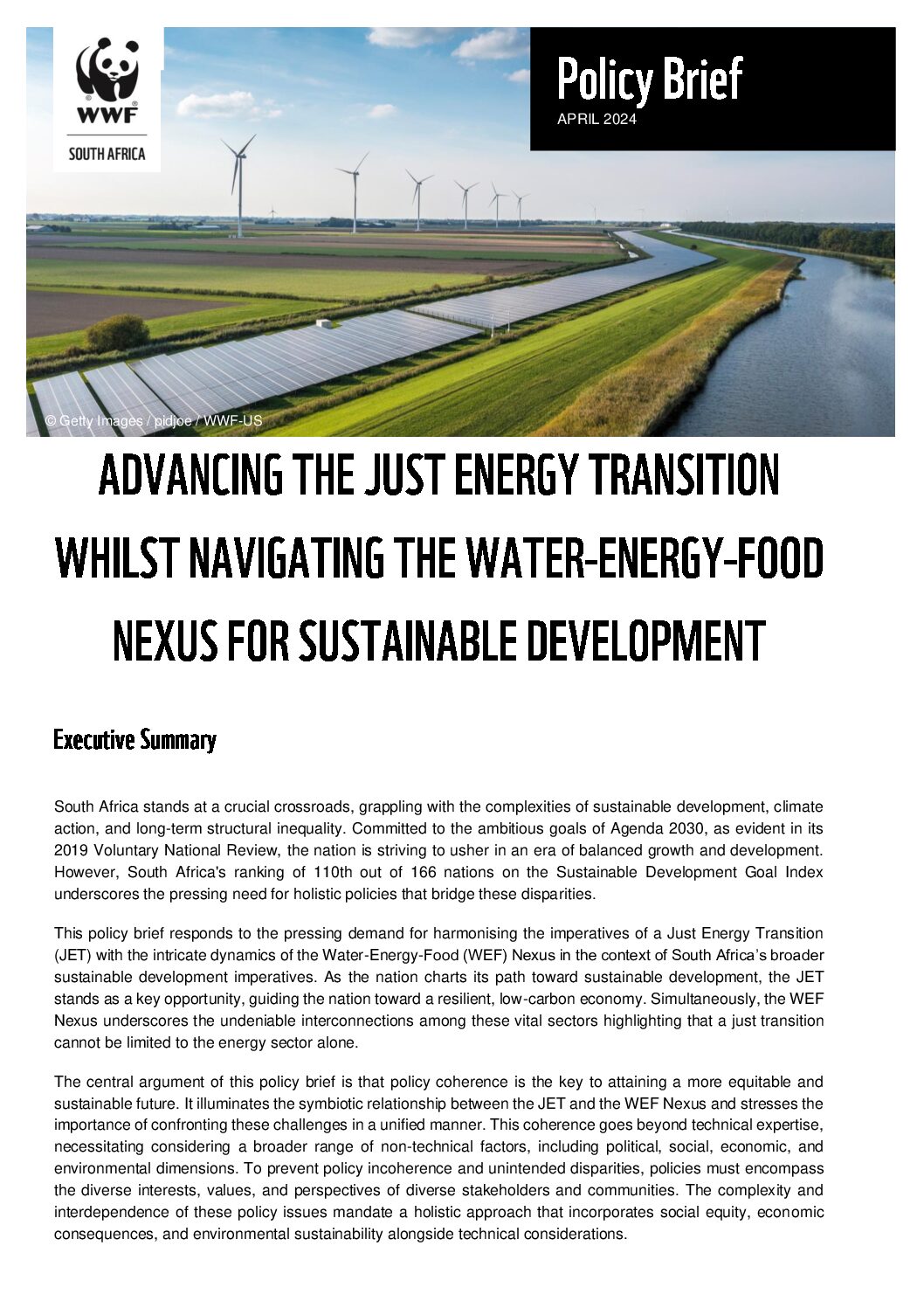
This policy brief responds to the pressing demand for harmonising the imperatives of a Just Energy Transition (JET) with the intricate dynamics of the Water-Energy-Food (WEF) Nexus in the context of South Africa’s broader sustainable development imperatives.
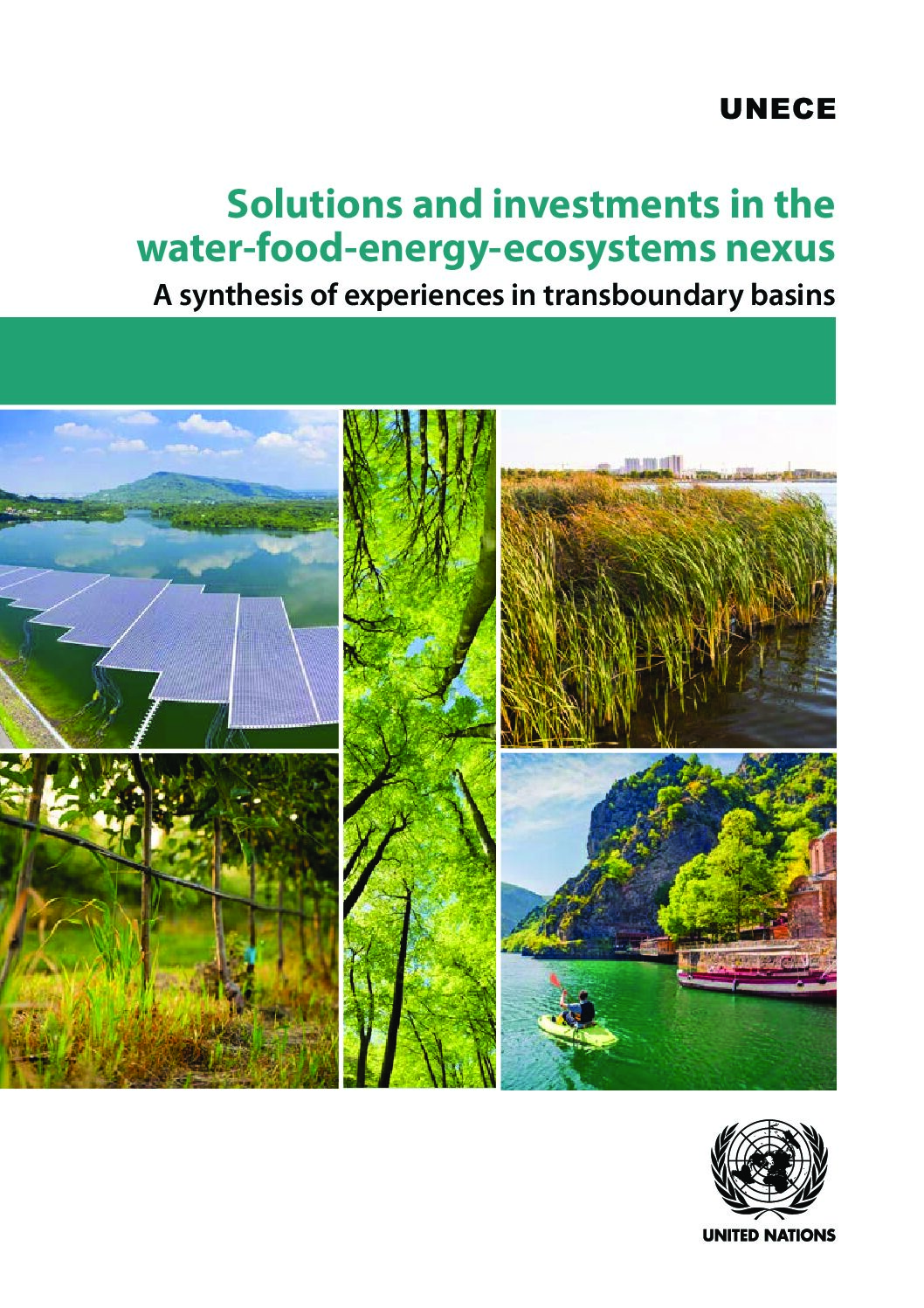
This report analyses linkages in the water-energy-food-ecosystem nexus – essentially resource management trade-offs and synergies — in transboundary river basin settings. It draws on 36 nexus case studies from transboundary river basins in Europe, Asia, Africa and the Americas, providing lessons for transboundary management and cooperation.
This paper undertakes a comprehensive assessment of mobility patterns and accessibility needs in Freetown, Sierra Leone, and presents evidence of the significance of accessibility-centred information to inform policy priorities.
This article looks at travel patterns around universities in Africa and MENA and proposes a framework to engage universities to expand their sustainable mobility impact.
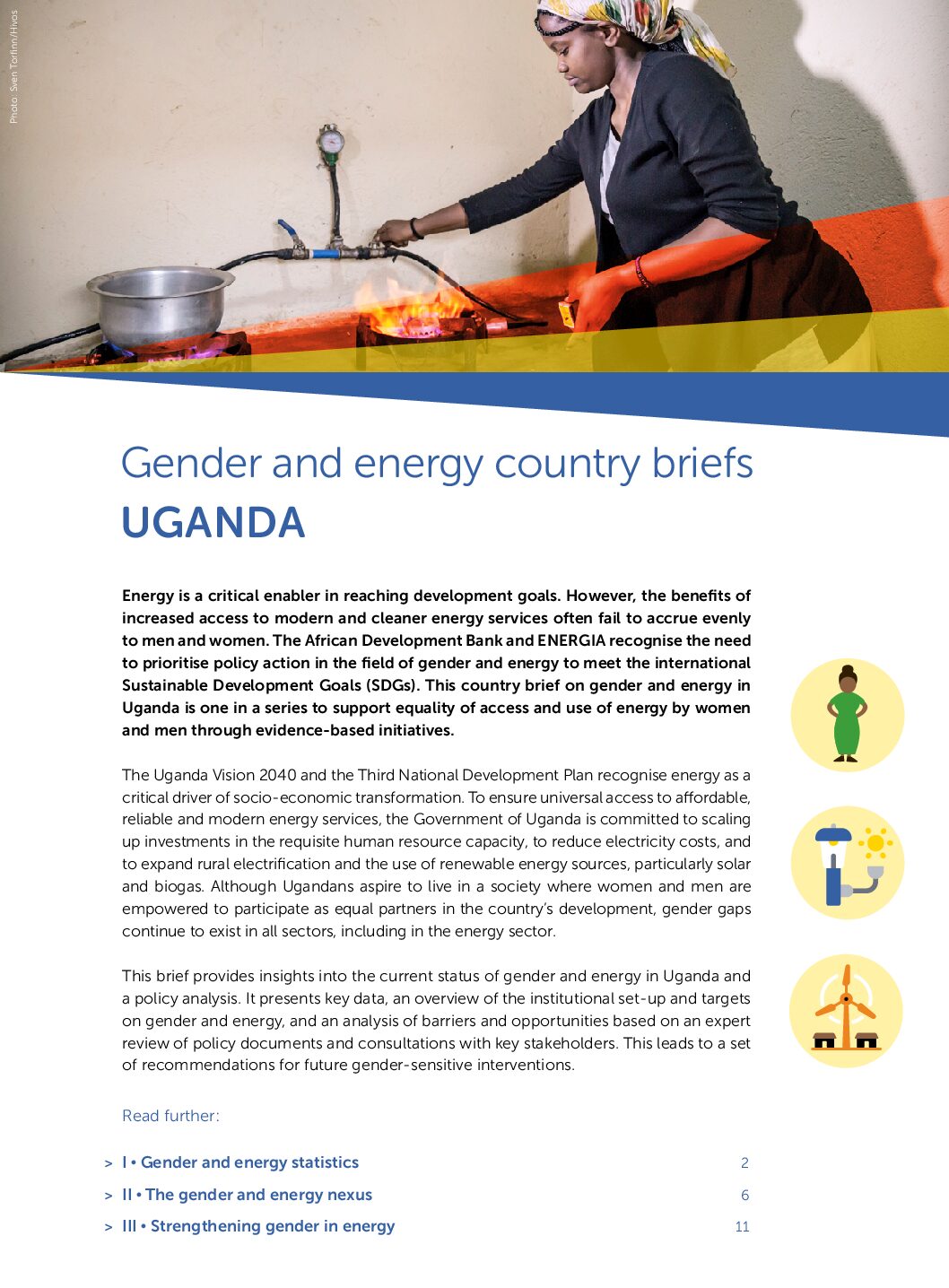
This brief provides statistics about gender and energy in Uganda, as well as an analysis of relevant policies and recommendations to further close gender gaps.
This article investigates the benefits to women of electricity access, beyond just economic benefits.
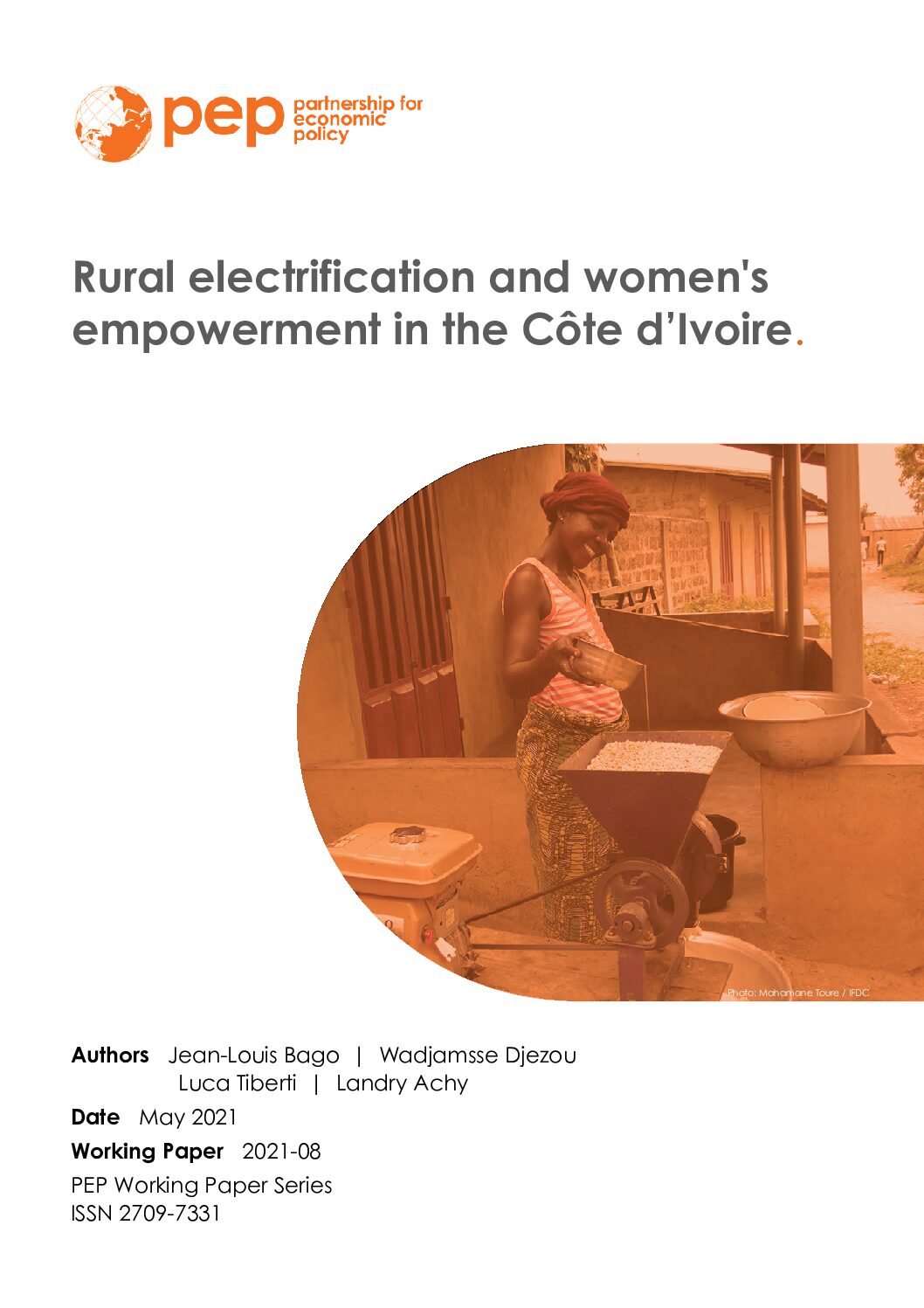
This report assesses the impact of the Ivorian National Rural Electrification Programme on the lives and empowerment of rural women.
This report provides an extensive analysis of the Ivorian energy sector and the links with gender equality.
This is a good practice example of a regional policy that mainstreams gender equality concerns in energy access policies and programmes.
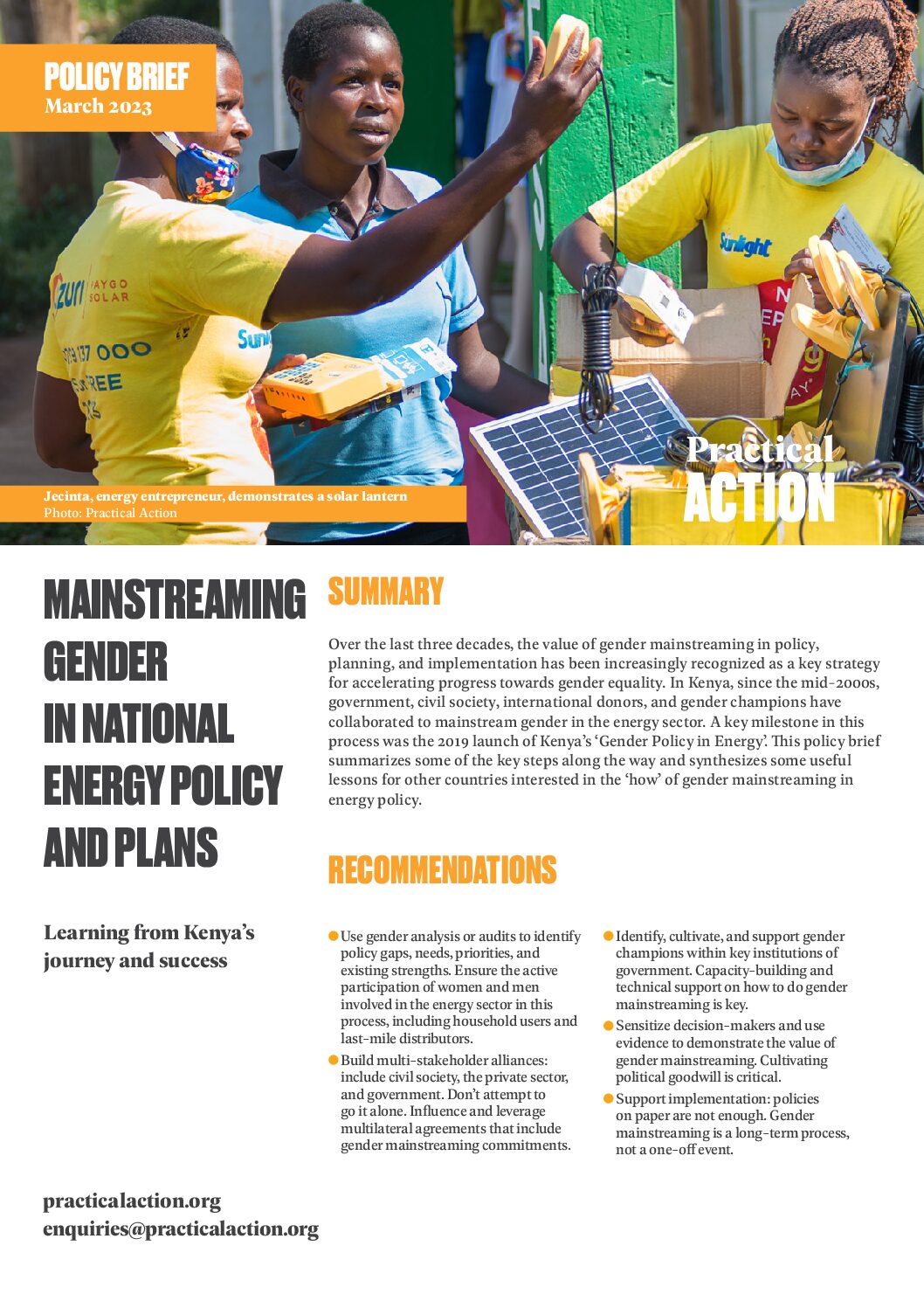
This brief shares learnings about mainstreaming gender in energy policies, based on the process through which the Government of Kenya developed its Gender Policy in Energy.