
This report identifies and analyses key risks and barriers to private-sector investment in interconnected mini-grids in Nigeria, and evaluates policy and financial instruments designed to address them.
This note aims to provide a high-level analysis of the preconditions for stimulating green investments with a focus on financial sector supervisory framework needed to address climate risks (physical and transition), current landscape of green finance in Zambia, and the demand-side opportunities for green investments in key sectors.
Sustainable Energy Transitions in Uganda: Influential Determinants of the Renewable Energy Landscape
This article provides an overview of the renewable energy landscape of Uganda, discussing the interplay between policy, technology, financing and societal awareness. It provides recommendations to advance the energy transition.
This report presents the results of a modeling exercise projecting the effects of different energy transition scenarios on Uganda’s economy.
Uganda’s Energy Transition Plan sets goals for different sectors and discusses enablers for implementation, including financing.
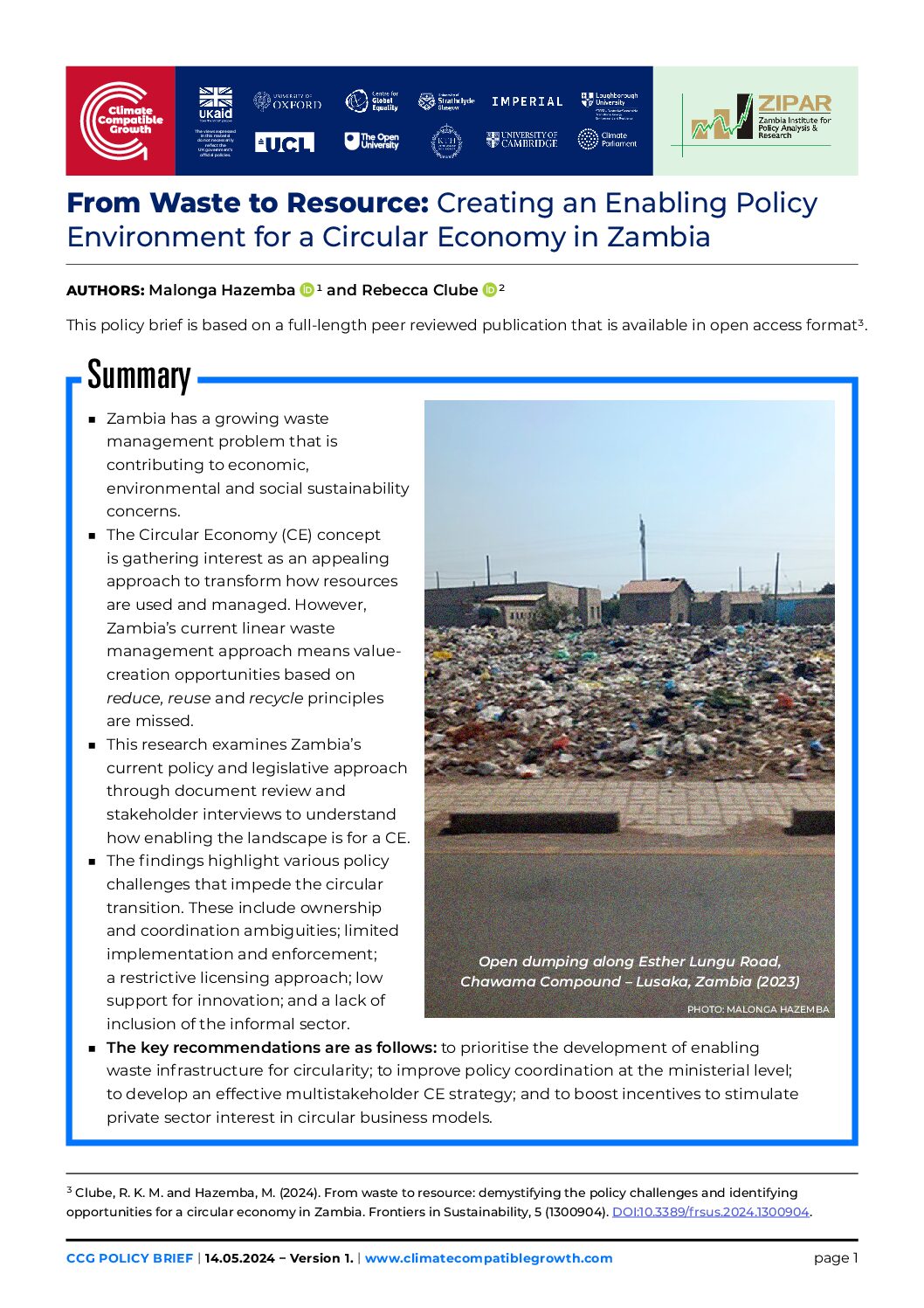
This policy brief investigates Zambia’s policy and legislative framework for energy generation from waste, and provides recommendations for improvements.
This study recommends opportunities, such as a suitable share of technologies, administrative reforms, and required adjustments in NDCs, that the government could exploit to advance the energy transition.
This plan provides a comprehensive, forward-looking least-cost plan for the development of the country’s power sector, including both on-grid and off-grid.
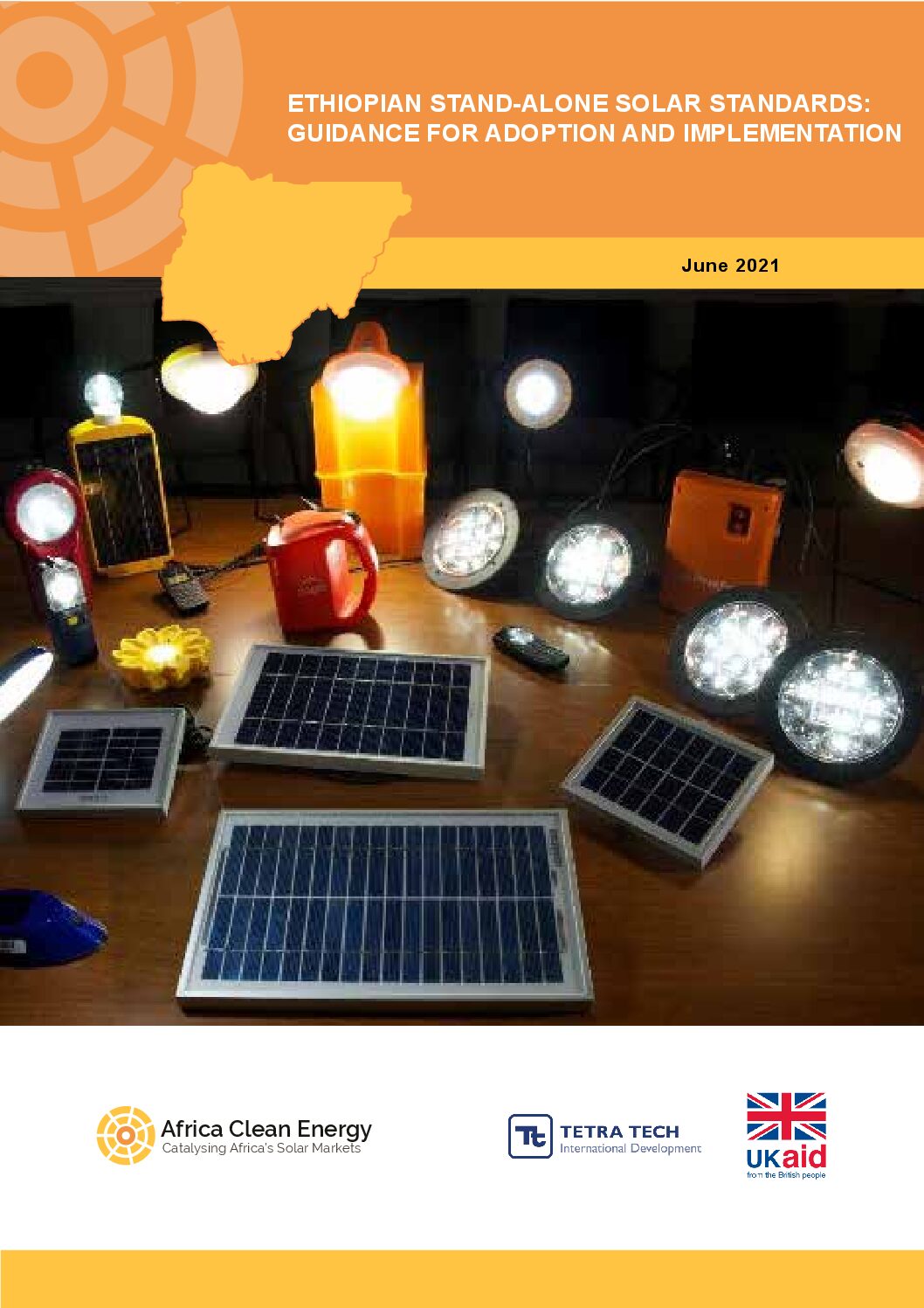
This document provides recommendations to guide relevant stakeholders in the development and implementation of a quality assurance (QA) framework for stand-alone solar (SAS) products in Ethiopia.
This study critically assesses the policy and regulatory frameworks for the digitalisation of energy systems in support of energy transitions in Nigeria and South Africa.