
This feasibility study describes the institutional framework for waste management in Côte d’Ivoire, presents a baseline on compost and biogas value chains, and provides a feasibility assessment based on economic models.
This study quantifies the potential of producing biogas based on organic waste in two municipalities in Bolivia.
This database presents the current status, policy barriers, and key innovations for electrification of mobility, heating and cooling, and hydrogen production.
This report presents the results of a survey undertaken to investigate the current status of gender equality in the biogas sector, and compares these with a baseline survey conducted in 2012.
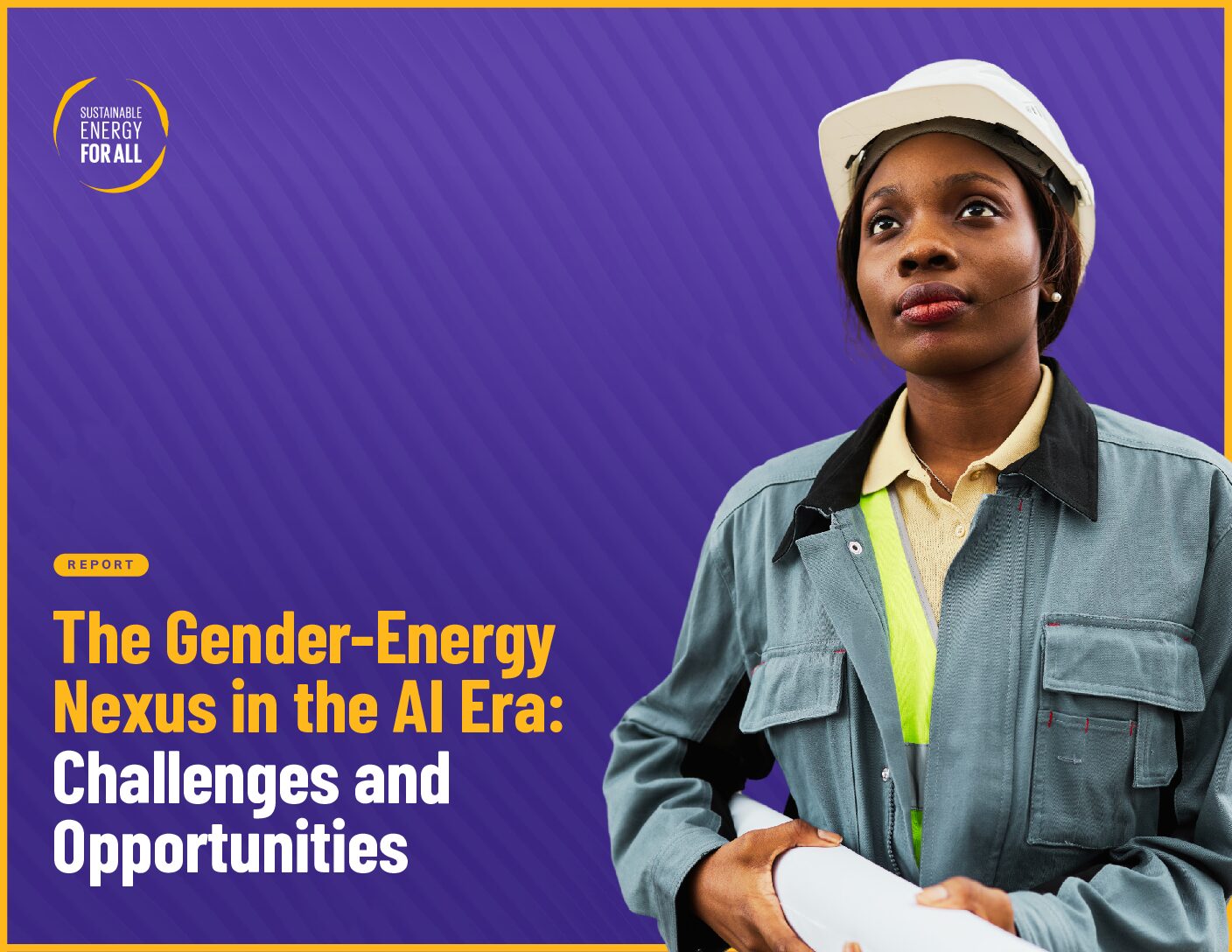
This report explores the critical intersections of AI development, gender equality and energy transitions, emphasizing how AI applications can advance a sustainable, equitable and just energy transition.
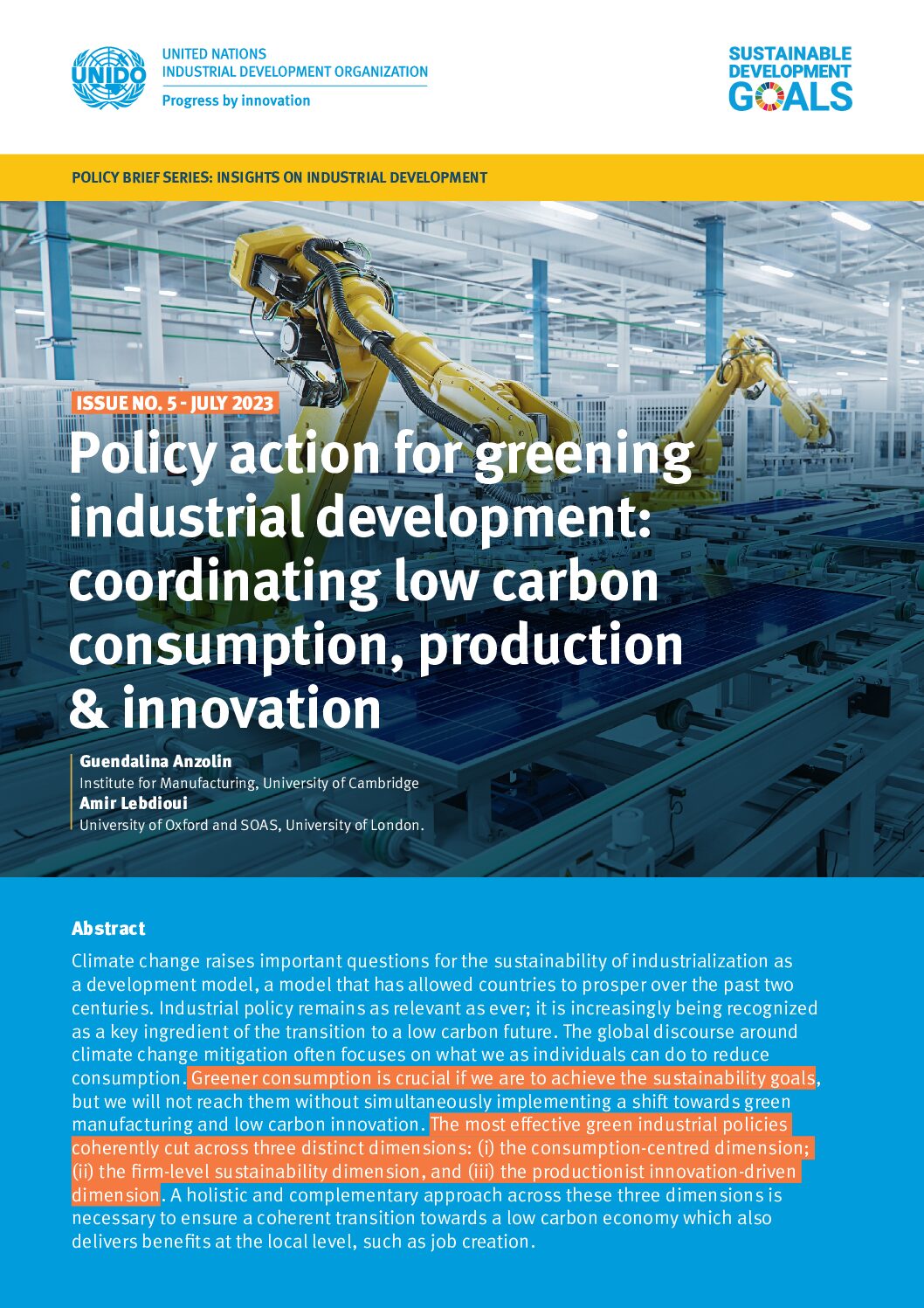
This brief describes the balance required in effective green industrial policies across three dimensions: consumption-centred, production-centred, and innovation.
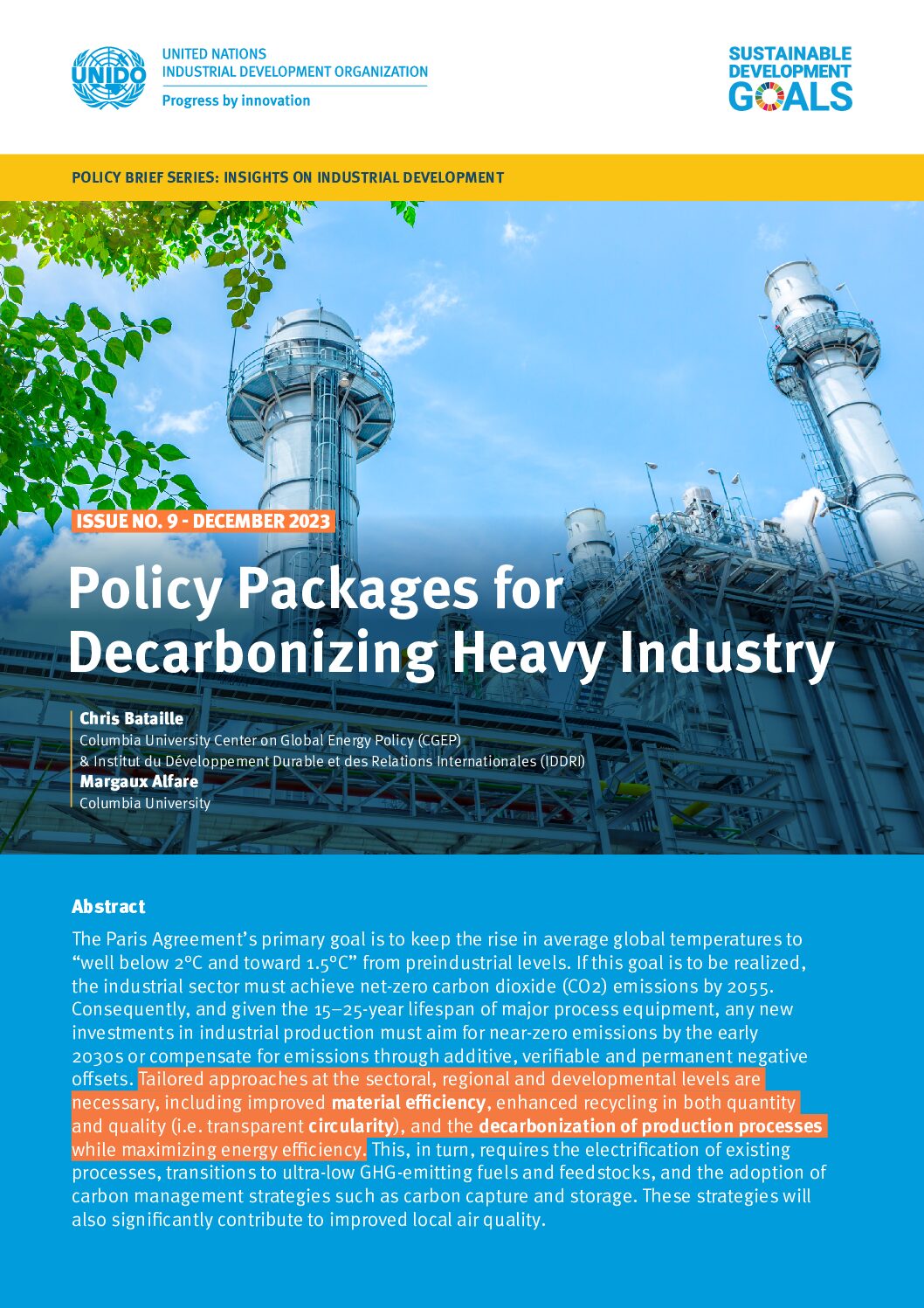
This brief describes policy options for the decarbonisation of heavy industry, both for improved material efficiency and for electrification.
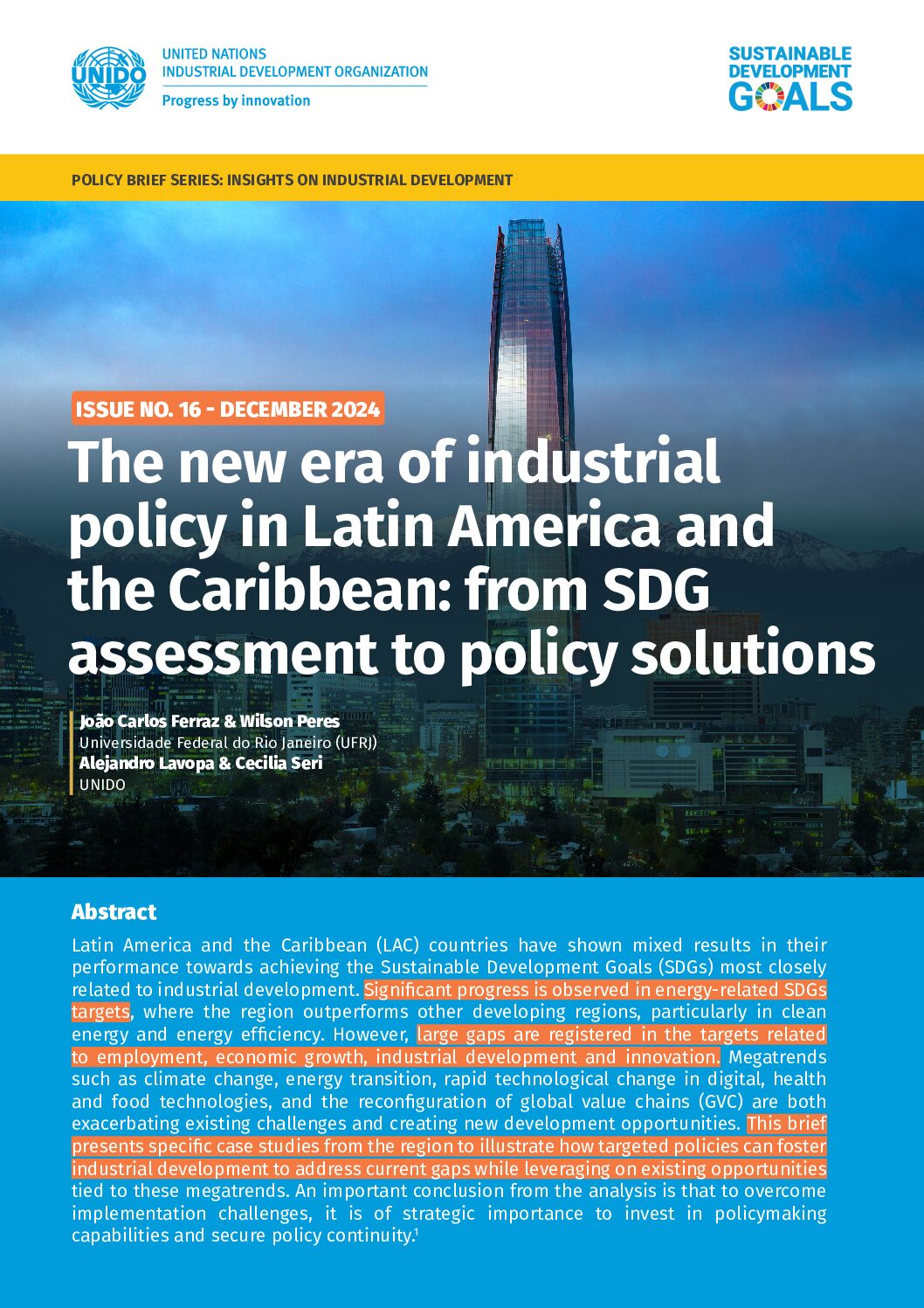
This brief presents case studies from Latin America and the Caribbean of policies that foster industrial development that supports the SDGs.
This brief discusses how African LDCs can develop industrial policies that prioritise infrastructure, clean technologies and youth employment.
This paper discusses the role of AI in the energy transition in Latin America, identifies key factors for successful implementation in the region and proposes an AI maturity model for the energy transition that allows stakeholders to assess the status and gaps for the AI adoption.