
This report focuses on the material resources required for the energy transition and demonstrates that there are plentiful resources available to support a prosperous net-zero global economy.
This study assesses the landscape of standards for renewable energy technologies and identifies gaps, with a focus on international standardisation.
This platform lets users explore and compare real-time data on electricity demand, generation and spot prices, trade, and CO2 emissions from more than 50 sources.
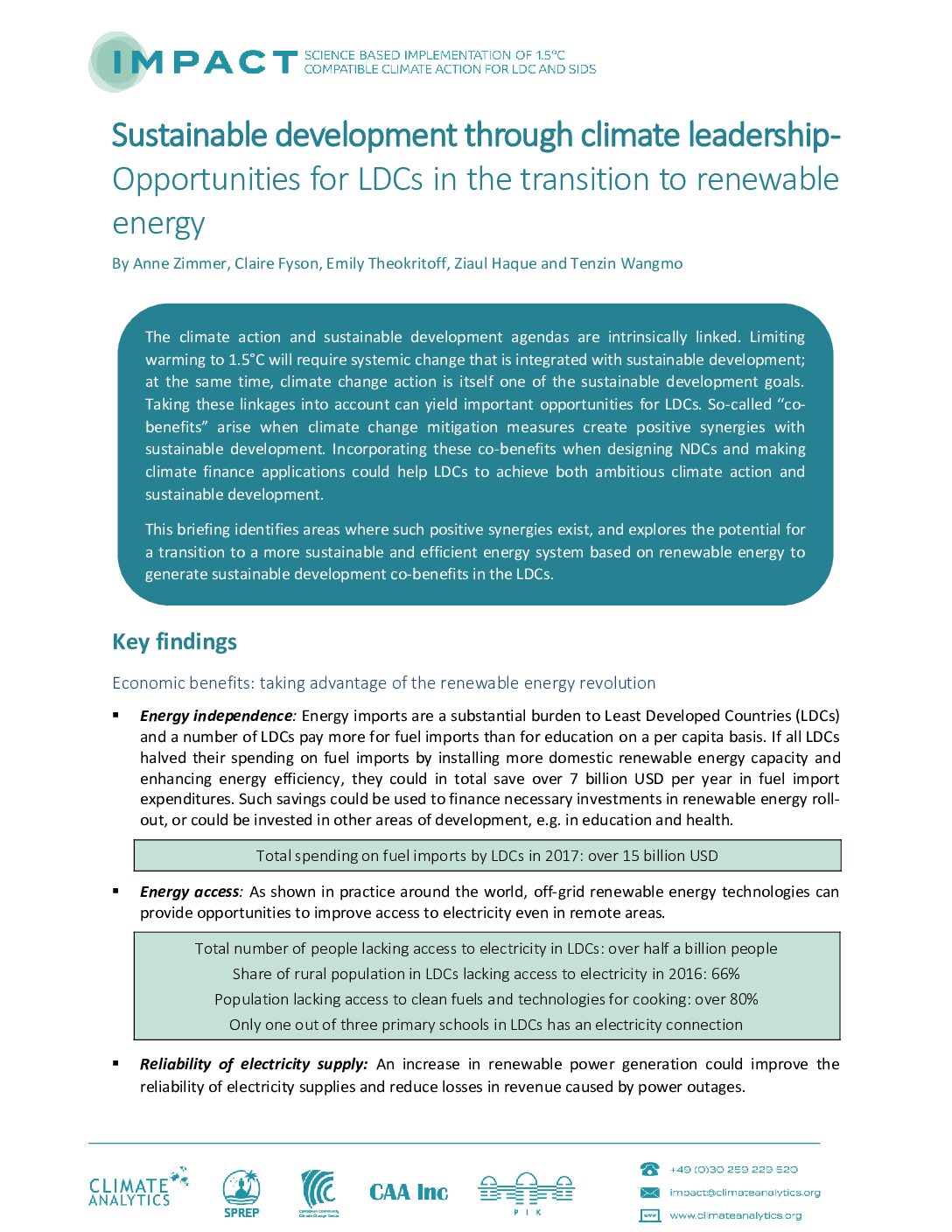
This briefing identifies sustainable development co-benefits that LDCs can unlock by adopting a leadership position in international climate action.
This scoping report can be used for advice and inspiration for the development of MEL frameworks for just transitions.
This database contains information on solar home systems, pico-PV products and efficient appliances that have been tested and certified by Lighting Global’s Verasol.
This report examines the trends of renewable energy investment and finance in Sub-Saharan Africa (Chapter 2), driven by regional and national plans, targets and strategies for the sector (Chapter 3), and the policy environment for renewables in the region (Chapter 4).
This report sketches three potentially feasible scenarios for systems based on 100% renewable energy, identifies challenges and opportunities, and provides policy recommendations.
This guide explains how cities can develop energy transition roadmaps that can create platforms for collaboration with other stakeholders and attract investment.
This report presents a global energy roadmap to meet climate goals by 2050, examining technology pathways and policy implications to ensure a sustainable energy future.