
This brief report introduces the concept of the WEF nexus and explains how the FAO has applied the nexus approach in its work, with many case study examples.
This is a ‘landscape and market sizing report’ developed to inform the design of a gender-responsive results-based financing (RBF) programme for PUE appliances. It investigates the impact of energy access on women, identifies the appliances that generate the greatest benefits for women, summarizes learnings from previous RBF programmes, and estimates the market size for gender-responsive … Continue reading “Results Based Financing for Productive Use Appliances to Promote Gender Outcomes”
This policy brief discusses why PUE projects should adopt a gender-responsive approach to enhance their effectiveness, as gender blind PUE initiatives are more likely to benefit men than women. It explains how gender-responsive approaches benefit both men and women, and provides policy recommendations for maximizing those benefits.
GET.invest is a programme funded by the EU and several of its member states, that mobilises investment in renewable energy in low- and middle-income countries, including by providing coaching to renewable energy companies and linking them with investors. This report assesses the current state of PUE finance, highlights challenges to scaling up investment in PUE, … Continue reading “Financing and Scaling Productive Use of Energy: Challenges and opportunities for catalytic growth”
This Energypedia article explains how to undertake a PUE assessment as part of a mini-grid development project, to evaluate the potential and feasibility of different types of PUE to support community income generation and mini-grid viability.
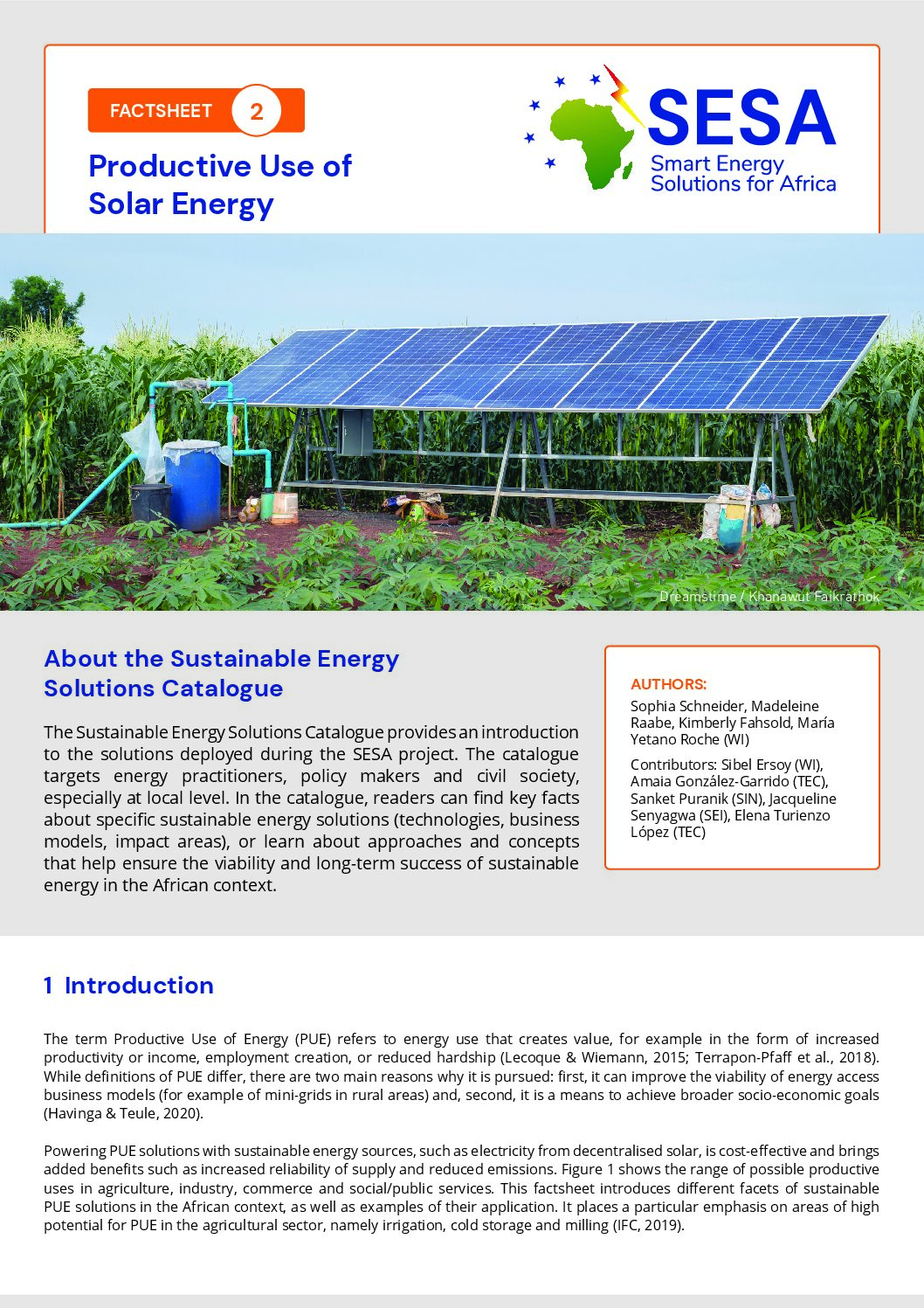
This fact sheet provides a quick overview of different PUE technologies and business and financing models, as well as their socio-economic and sustainability impacts, and their upscaling potential.
This is an article by a company that offers solutions to offset the emissions generated by online shopping. It provides a quick and basic guide for companies on how to start generating and selling carbon credits.
This article announces the approval in March 2025 by the Integrity Council for the Voluntary Carbon Market (ICVCM) of a new cookstove methodology by Verra, which administers the Verified Carbon Standard. This sets a new benchmark for high-quality, trusted carbon credits for clean cooking. The article also provides data on the development of the clean … Continue reading “Verra’s Cookstove Credits Get ICVCM Green Light – Boosting Carbon Market Trust”
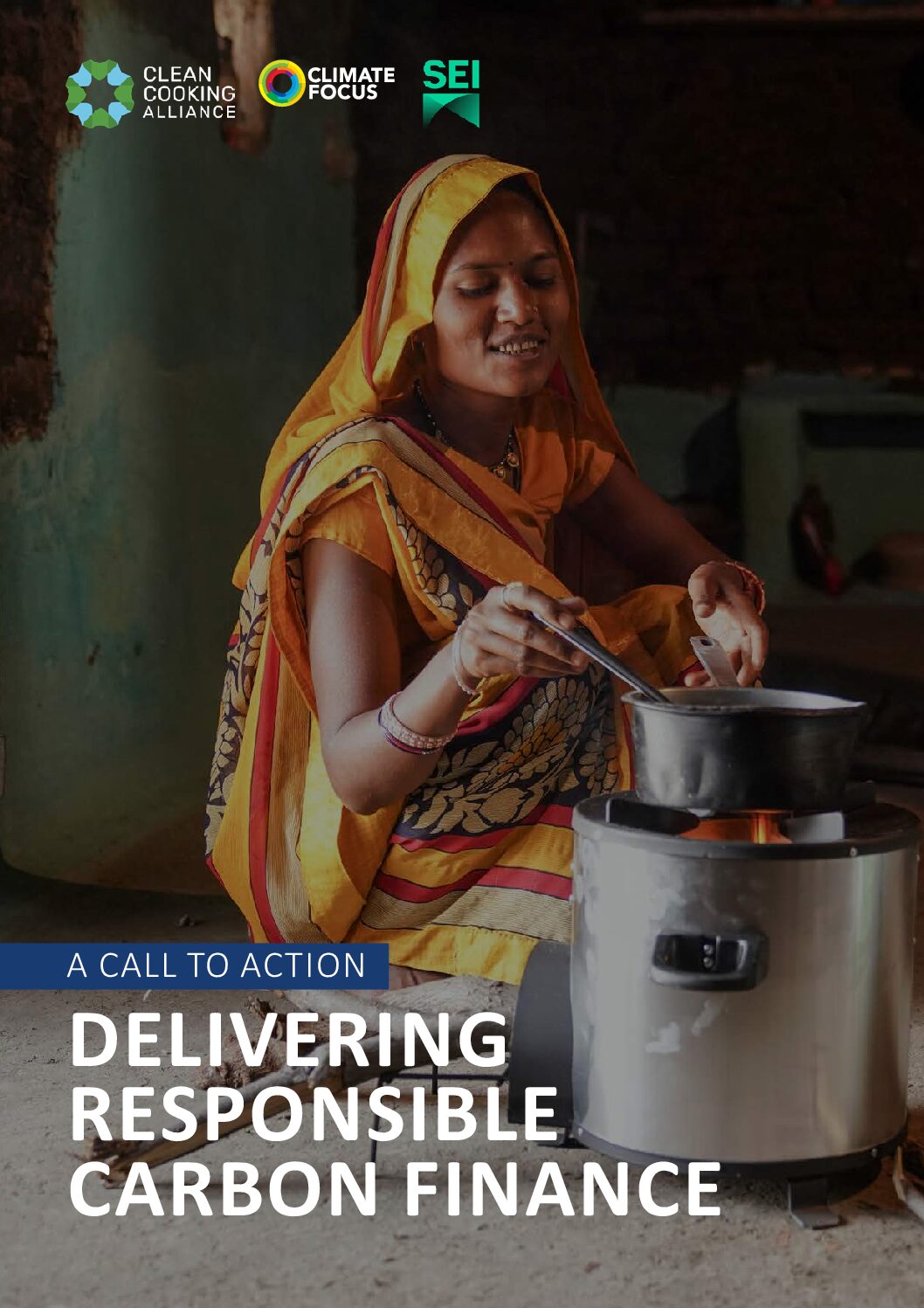
This report presents the CCA’s Principles for Responsible Carbon Finance in Clean Cooking: Integrity, Transparency, Fairness and Sustainability, and connects each with key actions to be taken by market actors.
This article tells a story of trial and error in the development of a clean cookstove business model in Zambia, highlighting the many factors that come into play and the occasional unpredictability of the market.