
This second edition from 2025 provides an update to the landmark report from 2019, based on a new survey of 1192 individuals working in the sector, and 233 companies and organizations. The headline finding was that despite widespread efforts, the share of women in renewable energy has not grown over the past six years: it … Continue reading “Renewable energy: A gender perspective (Second edition)”
These Greening TVET guidelines provide a comprehensive framework to promote sustainable development within TVET institutions. By showing how to embed environmental sustainability and gender equity into institutional practices, the guidelines aim to equip TVET institutions with the tools needed to foster a green economy.
This report provides comprehensive analysis of the global energy workforce, including estimates of its size and distribution across regions, sectors, and technologies. It also assesses how energy labour requirements evolve to 2035 across all IEA scenarios.
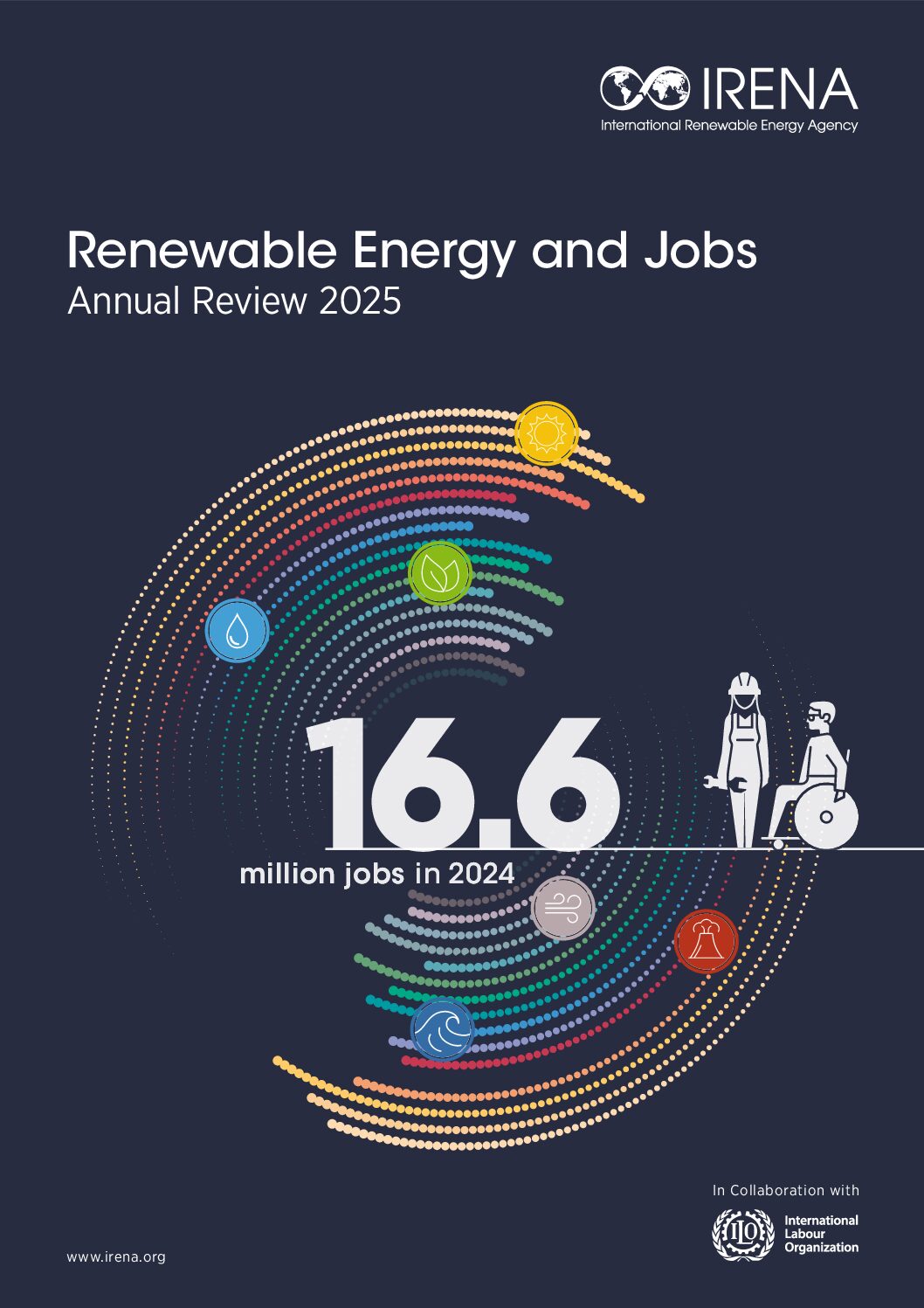
This resource provides the latest data and insights on global renewable energy employment, highlighting trends in renewable energy deployment and supply chains as well as the influence of geopolitical and geoeconomic factors. The resource serves as a valuable tool for stakeholders aiming to understand and address the employment implications of the global shift towards renewable … Continue reading “Renewable energy and jobs: Annual review 2025”
This slide deck, part of an online course, gives a brief but thorough overview of business models for off-grid solar energy, looking in particular at pay-as-you-go models, and presents insights into the investment landscape for off-grid solar companies.
This report investigates how different governments have structured their frameworks for Green Public Procurement, and presents lessons learned for practitioners interested in designing and implementing GPP reforms. It includes many country examples, including from the Dominican Republic and Ecuador.
This report by the Network of Central Banks and Supervisors for Greening the Financial System investigates the main barriers to the scaling up of blended finance for climate action in the Global South, and provides recommendations for how to address these.
This toolkit serves as a one-stop-shop to support local and regional governments to identify, design and implement renewable energy projects in public-private partnerships. It provides practical advice on: 1) the decision-making process that leads to establishment of a PPP 2) division of tasks, goals and risk management between the partners engaged in the PPP, as … Continue reading “Unlocking Public-Private Partnerships: A Toolkit for Local Governments”
The Climate Policy Initiative undertakes an annual mapping exercise of climate finance, investigating the sources, types and destinations of climate finance.
This report by the Energy Transitions Commission estimates the global financing needs for the energy transition and provides a roadmap for how sufficient financing can be raised. It explains how to develop economic policies to unlock investment, recommends actions by the financial sector, and discusses what additional actions will be needed in the Global South.