
This policy brief explains the links between energy access and gender equality, and provides policy considerations.
This report assesses the impact of the Ivorian National Rural Electrification Programme on the lives and empowerment of rural women.
This brief shares learnings about mainstreaming gender in energy policies, based on the process through which the Government of Kenya developed its Gender Policy in Energy.
This is a good practice example of a gender policy for a national energy ministry.
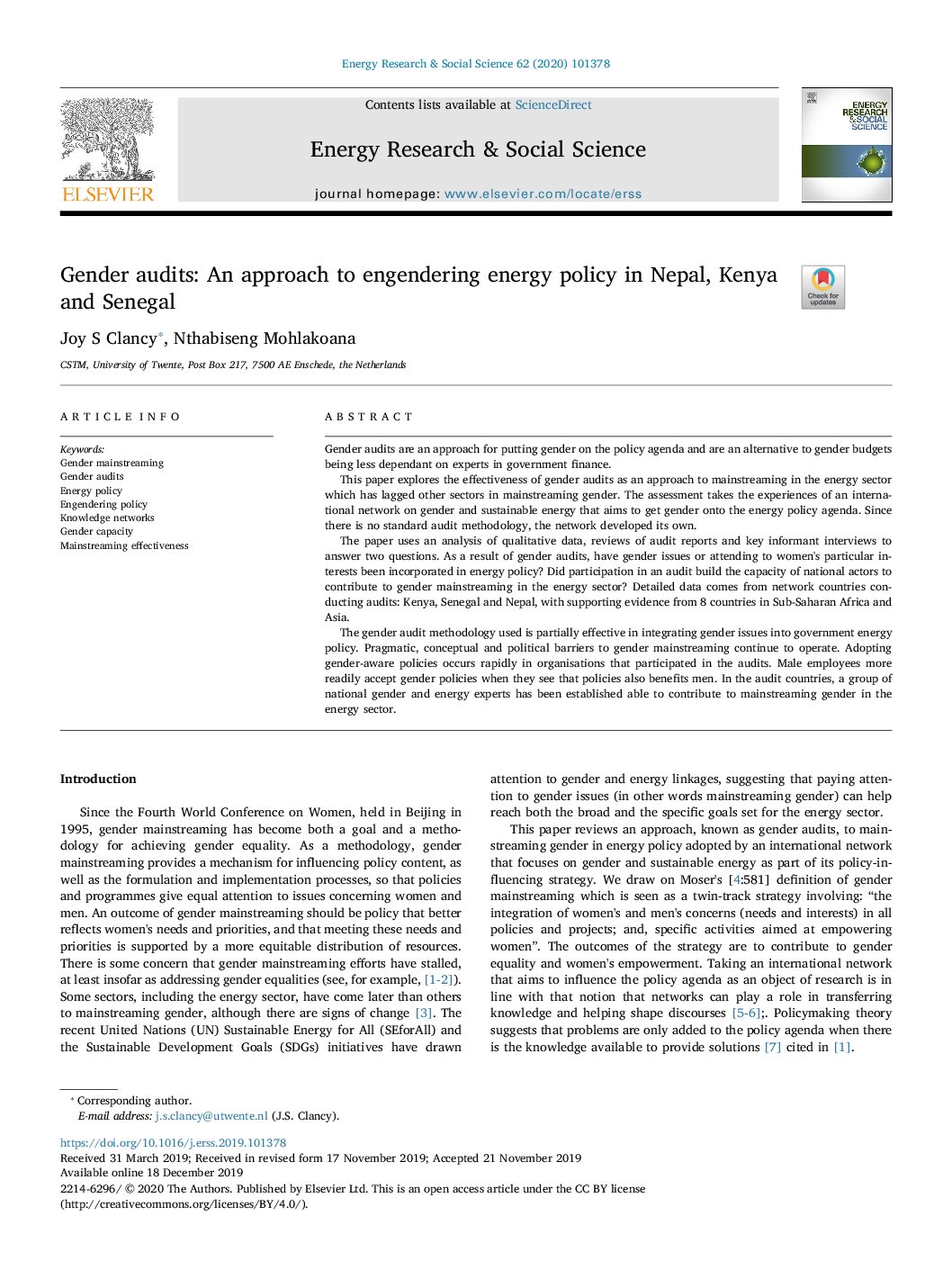
This article assesses the effectiveness of gender audits to mainstream gender in energy policy.
This report provides concrete instructions on how to develop a gender-sensitive energy policy.
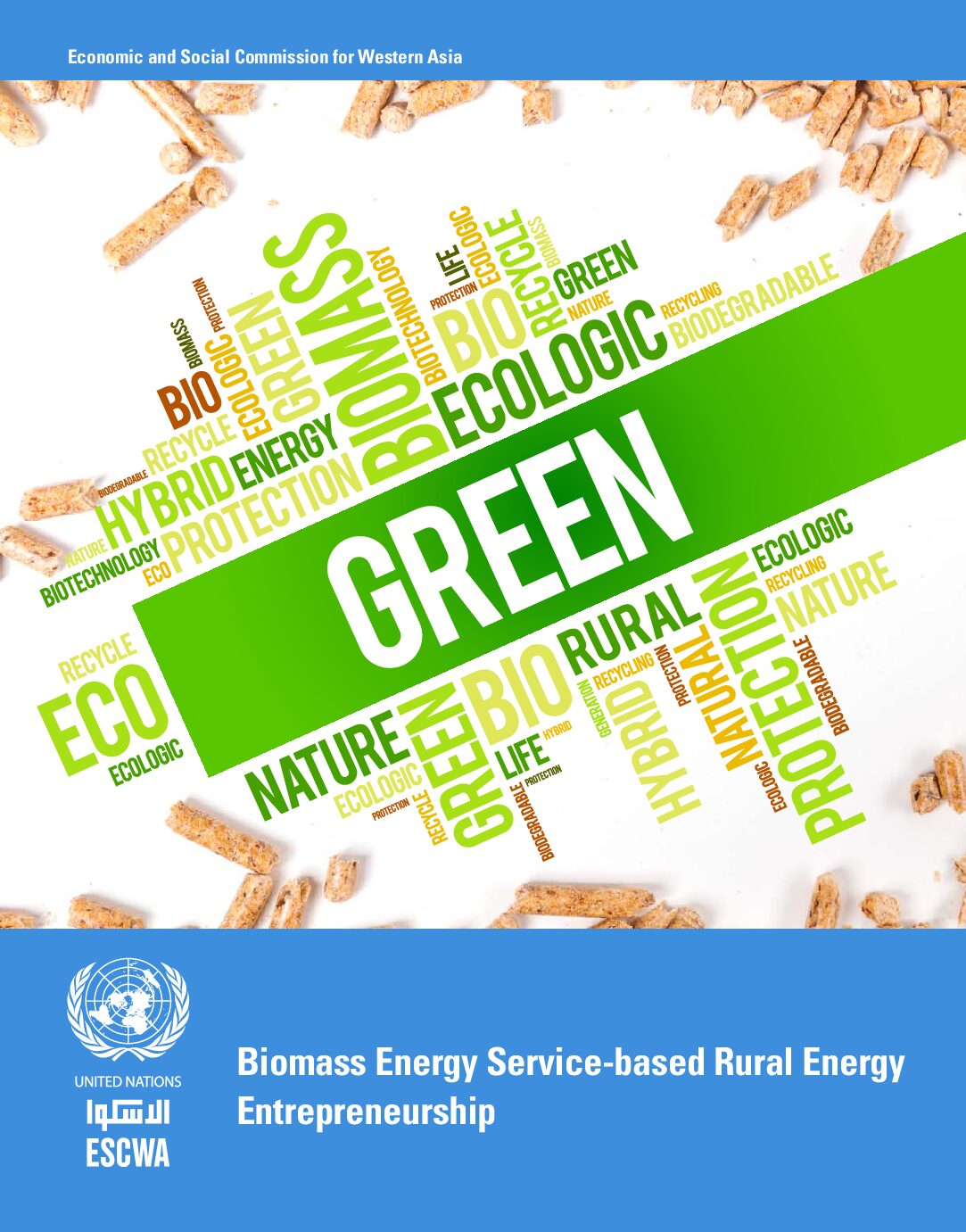
This guide addresses the challenges faced by rural energy enterprises in developing countries, and sets out solutions such as business models offering cooking energy as a service.
This action plan, developed with support from SEforALL and ECREEE, lays out the energy access strategy of Côte d’Ivoire for 2016-2020/2030. It includes extensive background and context as well as information on strategic priorities and measures to promote these.
This website contains a range of learning resources on Integrated Resource Planning (a methodology for least-cost planning by public utilities), including load forecasting, tariff policies, amd demand side management. It also includes exercises and case studies.
This report explores ways to identify and mitigate energy transition investment risks in the low- and middle-income countries, pointing out 1) that better energy planning can attract greater investment in renewable energy, 2) that sustainable fuels will play an important role in delivering the energy transition, and 3) that the social dimensions of the transition … Continue reading “A Just and Inclusive Energy Transition in Emerging Markets and Developing Economies: Energy Planning, Financing, Sustainable Fuels and Social Dimensions”