
This report provides concrete instructions on how to develop a gender-sensitive energy policy.
Institutions all over the world are setting up microcredentials in responses to calls from governments and industry: short courses, usually offered online by accredited institutions, with an emphasis on the needs of the workplace. They are also often used for retraining and upskilling. This book explains how to start offering microcredentials as an academic institution.
This guide aims to accelerate the flexibility and responsiveness of learning systems by providing guidance on the design, issue and recognition of micro-credentials.
This report shares successful industrial efficiency practices from the Republic of Korea.
This report investigates efforts to enhance investment in energy efficienct appliances in Zambia, and provides recommendations to enhance the effectiveness of these efforts
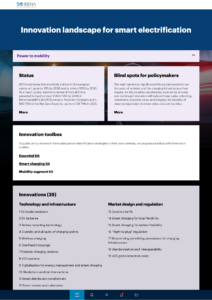
This database presents the current status, policy barriers, and key innovations for electrification of mobility, heating and cooling, and hydrogen production.
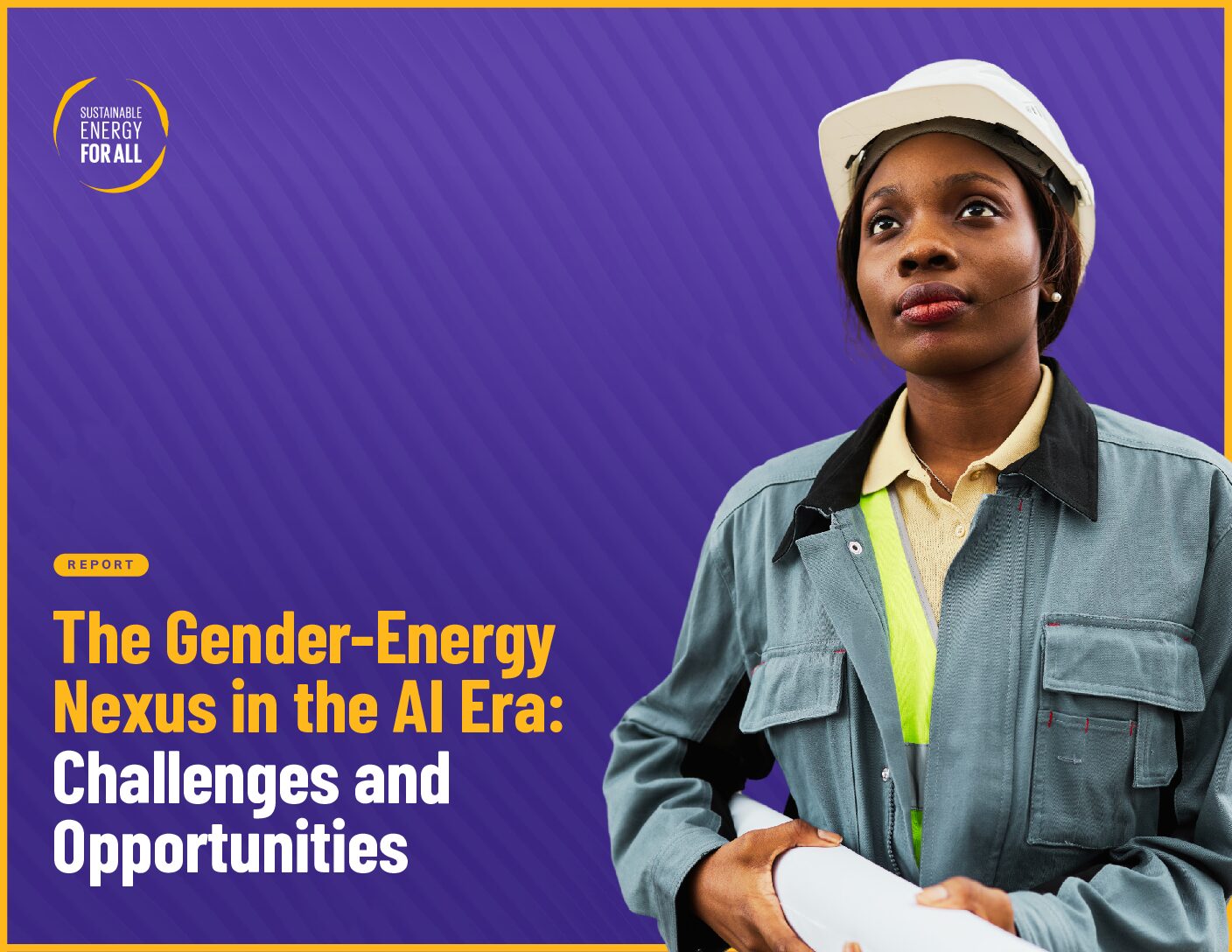
This report explores the critical intersections of AI development, gender equality and energy transitions, emphasizing how AI applications can advance a sustainable, equitable and just energy transition.
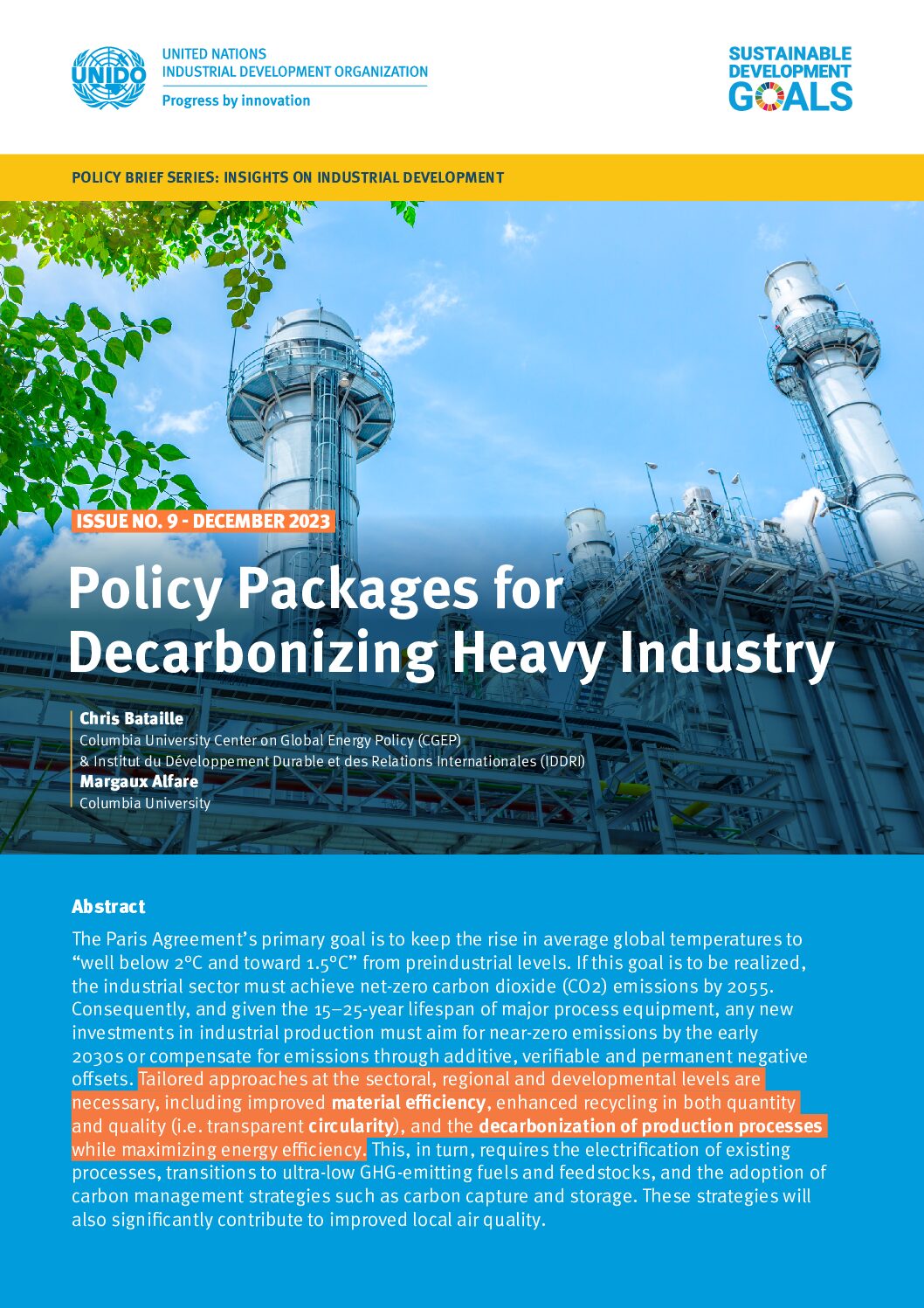
This brief describes policy options for the decarbonisation of heavy industry, both for improved material efficiency and for electrification.
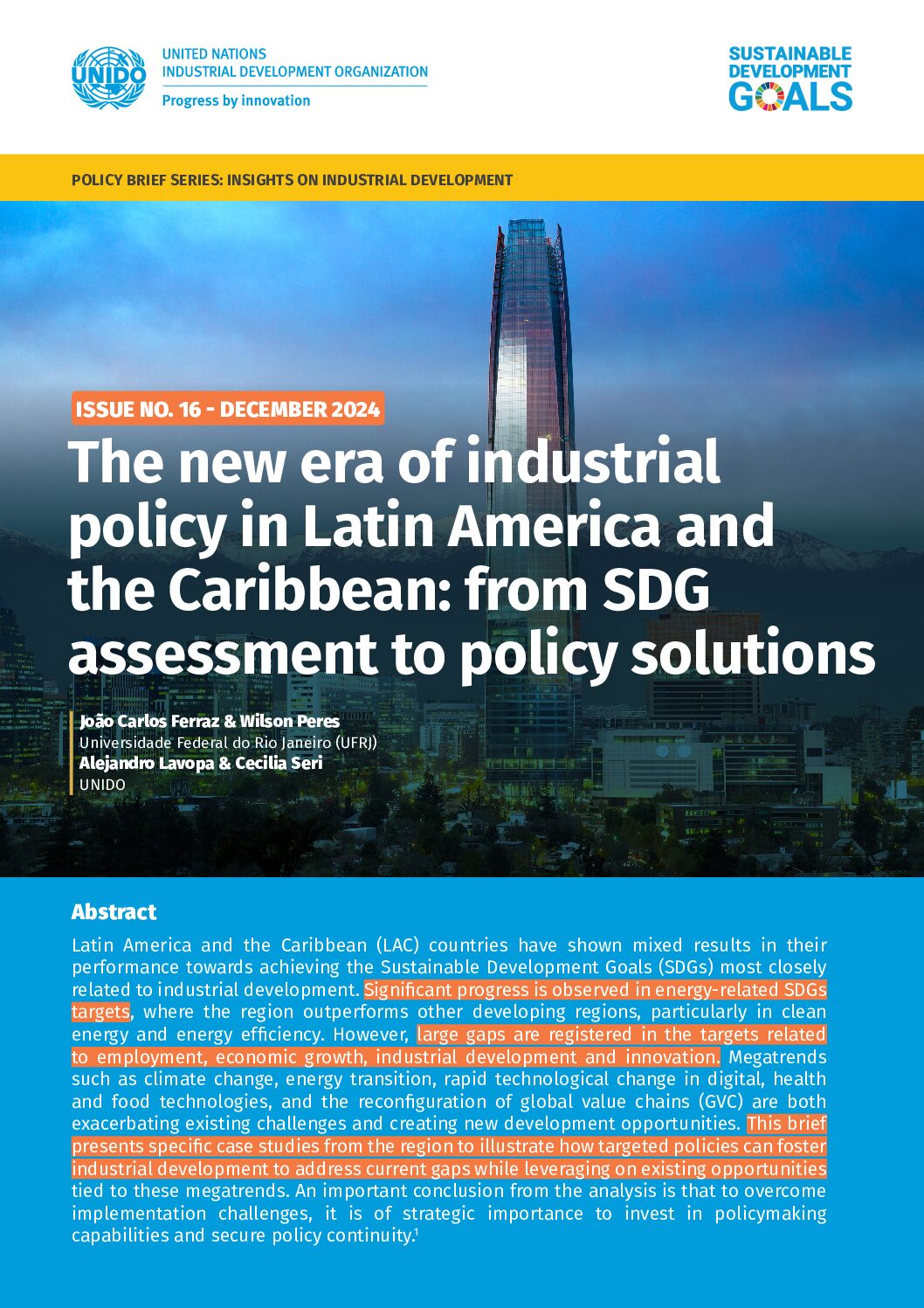
This brief presents case studies from Latin America and the Caribbean of policies that foster industrial development that supports the SDGs.
This brief discusses how African LDCs can develop industrial policies that prioritise infrastructure, clean technologies and youth employment.