
This resource offers a comparative analysis of existing green skills frameworks to support sustainable development through TVET. It includes two detailed matrices—one mapping green frameworks chronologically, and another summarizing empirical research on green skills relevant to green industries. The study highlights key concepts, models, and collaborations needed between TVET institutions and green sectors to develop … Continue reading “Comparative analysis on Green Skills framework for sustainable development”
This report provides baseline data on women’s employment in renewable energy, as well as information on barriers to gender equality and recommendations to close gender gaps.
This report provides baseline data on women’s employment in wind energy, as well as information on barriers to gender equality and recommendations to close gender gaps.
This report provides baseline data on women’s employment in solar energy, as well as information on barriers to gender equality and recommendations to close gender gaps.
This report provides baseline data on women’s employment in hydropower, as well as information on barriers to gender equality and recommendations to close gender gaps.
This report provides extensive data and analysis on men and women’s views on gender equality in 32 countries around the world, including Uganda and Bolivia.
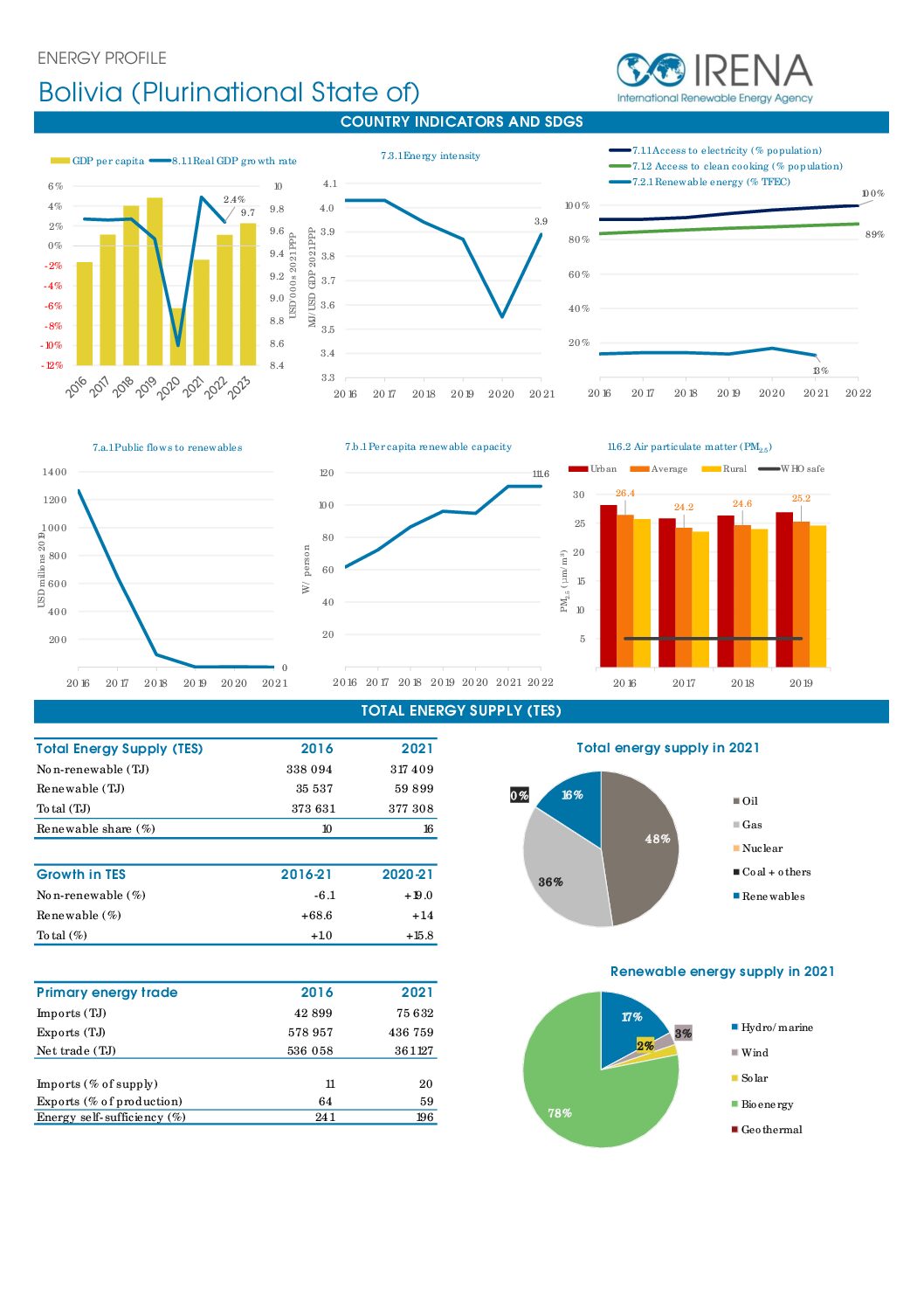
This energy profile provides recent data on the energy sector of Bolivia, including generation mix,total generation, renewable energy potential and more.
This web page provides an overview of the energy sector of Bolivia, including data on the energy mix, energy use and emissions; and a policy overview.
This toolkit provides advice on how to assess capacity needs for the implementation of the Paris Agreement, and provides good practice examples and further resources.
The CaDRE methodology helps policy makers, organisations and capacity development/renewable energy practitioners shape an environment conducive to the development of renewable energy.