
This resource guides trainers in conducting activities on greening TVET. It compiles content from various sources and offers practical strategies tailored for TVET leaders, managers, and instructors. The manual provides a step-by-step approach to help trainers, administrators, and academics lead TVET toward sustainability.
Desisining A CurriculUM or DACUM is a methodology used to analyse jobs and develop training programmes. This training-of-trainers resource guides trainers in planning, preparing, and implementing DACUM Facilitator Training sessions. It supports those involved in occupational analysis and curriculum development, aiming to standardize DACUM practices internationally and help participants become experts in the DACUM process.
This resource guides trainers in planning and delivering programmes on occupational analysis and curriculum development. It focuses on integrating green skills, greening TVET, entrepreneurship, IR 4.0, and 21st-century skills into TVET.
This resource offers a comparative analysis of existing green skills frameworks to support sustainable development through TVET. It includes two detailed matrices—one mapping green frameworks chronologically, and another summarizing empirical research on green skills relevant to green industries. The study highlights key concepts, models, and collaborations needed between TVET institutions and green sectors to develop … Continue reading “Comparative analysis on Green Skills framework for sustainable development”
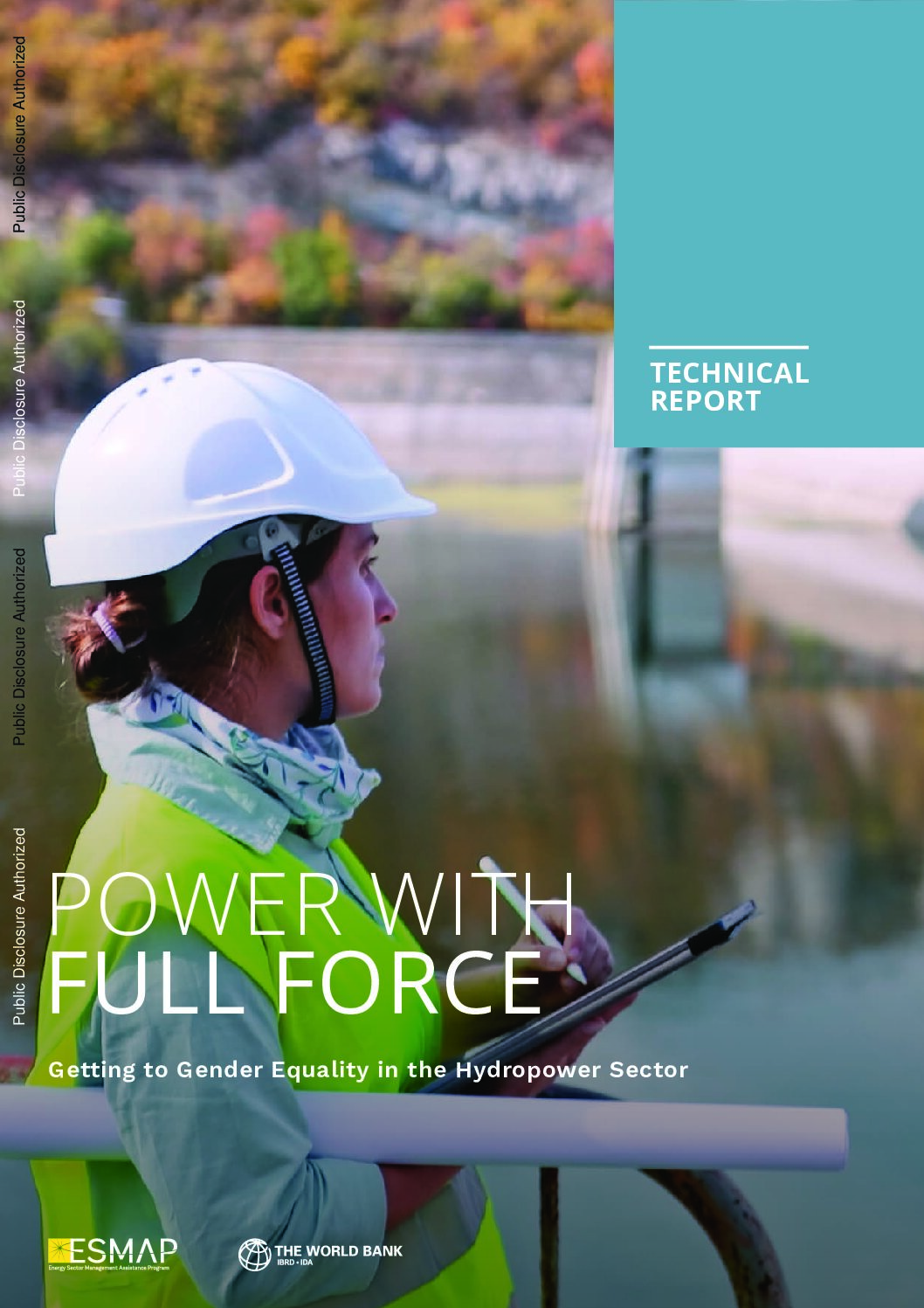
This report provides baseline data on women’s employment in hydropower, as well as information on barriers to gender equality and recommendations to close gender gaps.
This report provides baseline data on women’s employment in renewable energy, as well as information on barriers to gender equality and recommendations to close gender gaps.
This report provides baseline data on women’s employment in wind energy, as well as information on barriers to gender equality and recommendations to close gender gaps.
This report provides baseline data on women’s employment in solar energy, as well as information on barriers to gender equality and recommendations to close gender gaps.
This report provides extensive data and analysis on men and women’s views on gender equality in 32 countries around the world, including Uganda and Bolivia.
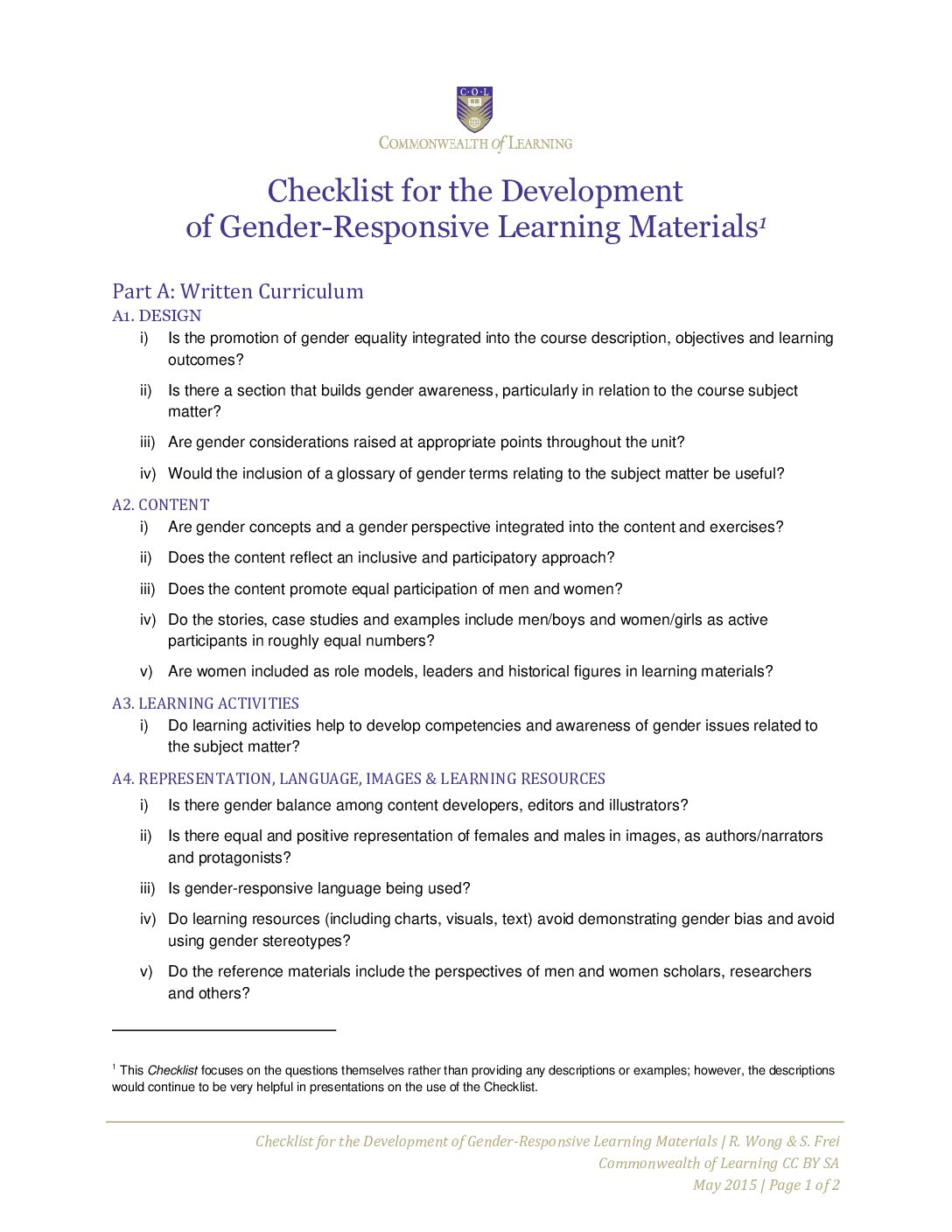
This checklist helps organisations assess whether their written curriculums, delivery of learning, assessments, support services and evaluation frameworks are gender-responsive.