
This is a very interesting report that recommends radical ways to change governance for sustainable development, in response to the chaos caused by the (then ongoing) COVID-19 pandemic. It is a great example of the types of completely new ideas that futures approaches can generate.
This report highlights the problem cost of capital poses for the energy transition in low- and middle-income countries, and highlights promising solutions.

This is the IEA’s annual report assessing recent trends and developments in e-mobility around the world. It looks at the deployment of electric vehicles, the expansion of charging infrastructure, battery demand, investment and policy trends and GHG emissions.
This is the IEA’s annual report on global energy efficiency developments, including trends in energy intensity, prices and policies, and sectoral analyses on buildings, appliances, industry and transport.
This report sketches scenarios to reach peak demand for mined minerals for batteries in the mid-2030s, and reach zero mining by 2050, based on technological advancements and recycling.
REN21’s annual flagship publication is the Renewables Global Status Report, a collaborative effort among hundreds of experts that provides an update on the status of and trends in the expansion of renewable energy worldwide.

This second edition from 2025 provides an update to the landmark report from 2019, based on a new survey of 1192 individuals working in the sector, and 233 companies and organizations. The headline finding was that despite widespread efforts, the share of women in renewable energy has not grown over the past six years: it … Continue reading “Renewable energy: A gender perspective (Second edition)”
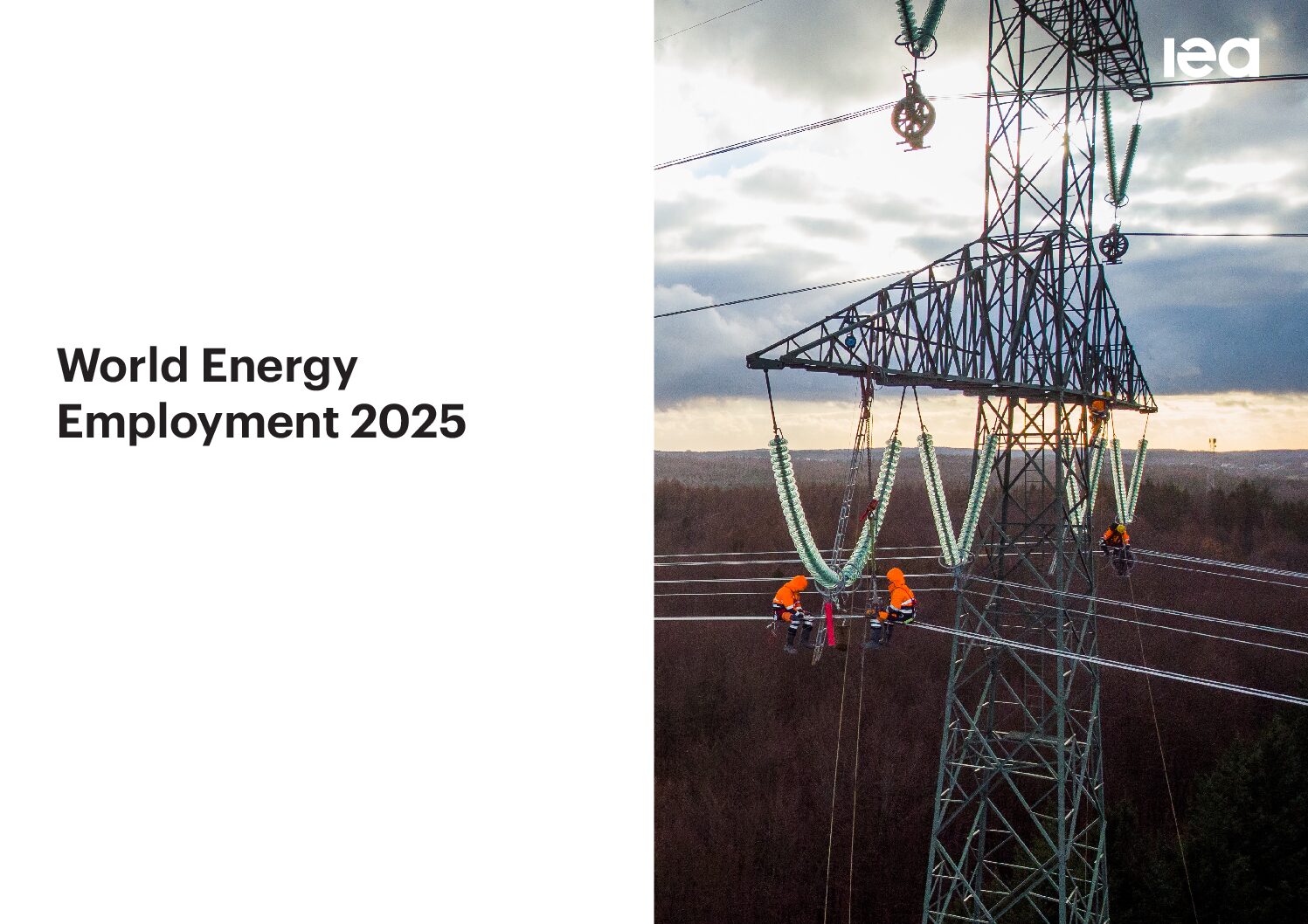
This report provides comprehensive analysis of the global energy workforce, including estimates of its size and distribution across regions, sectors, and technologies. It also assesses how energy labour requirements evolve to 2035 across all IEA scenarios.