
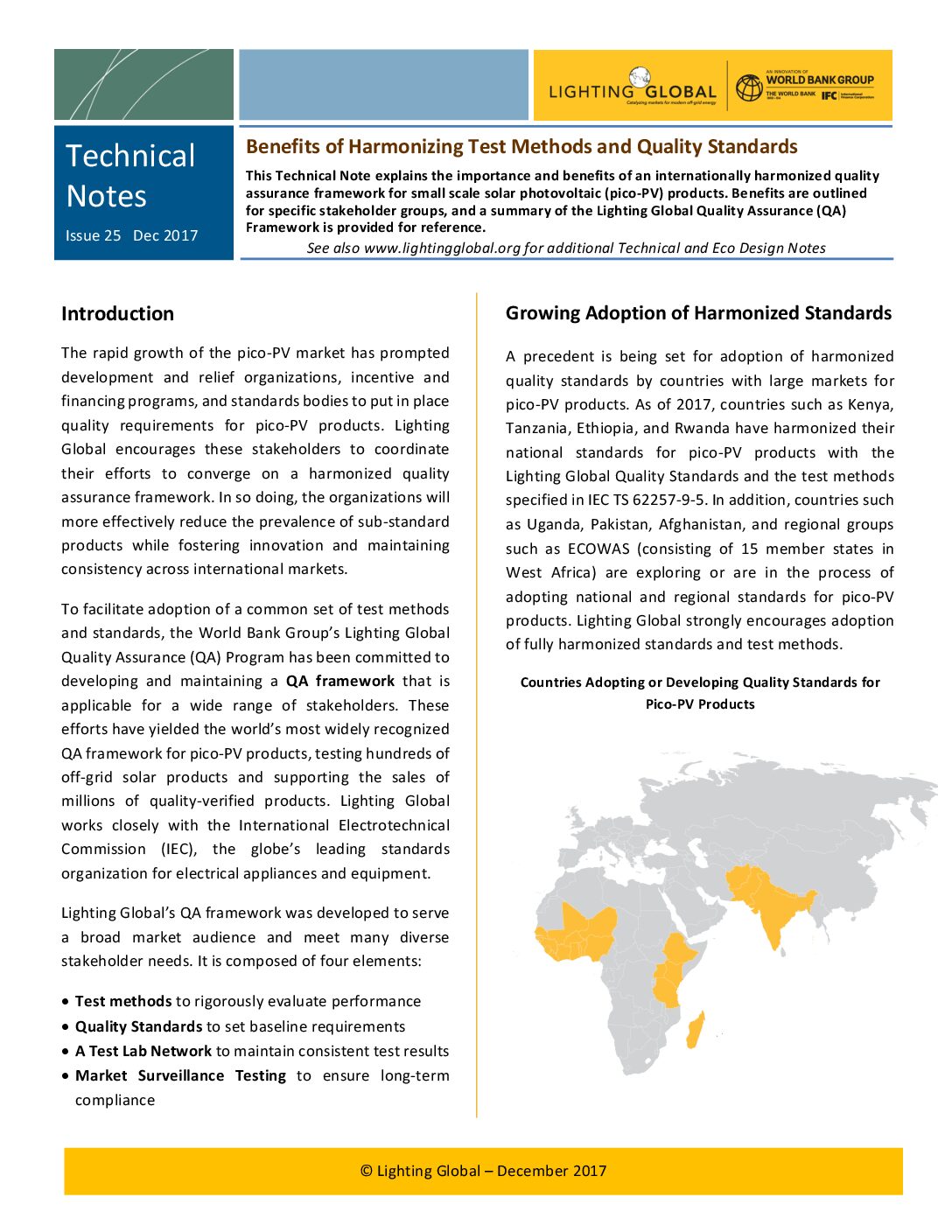
This brief explains the importance and benefits of an internationally harmonized quality assurance framework for small scale solar photovoltaic (pico-PV) products. Benefits are outlined for specific stakeholder groups, and a summary of the Lighting Global Quality Assurance (QA) Framework is provided for reference.
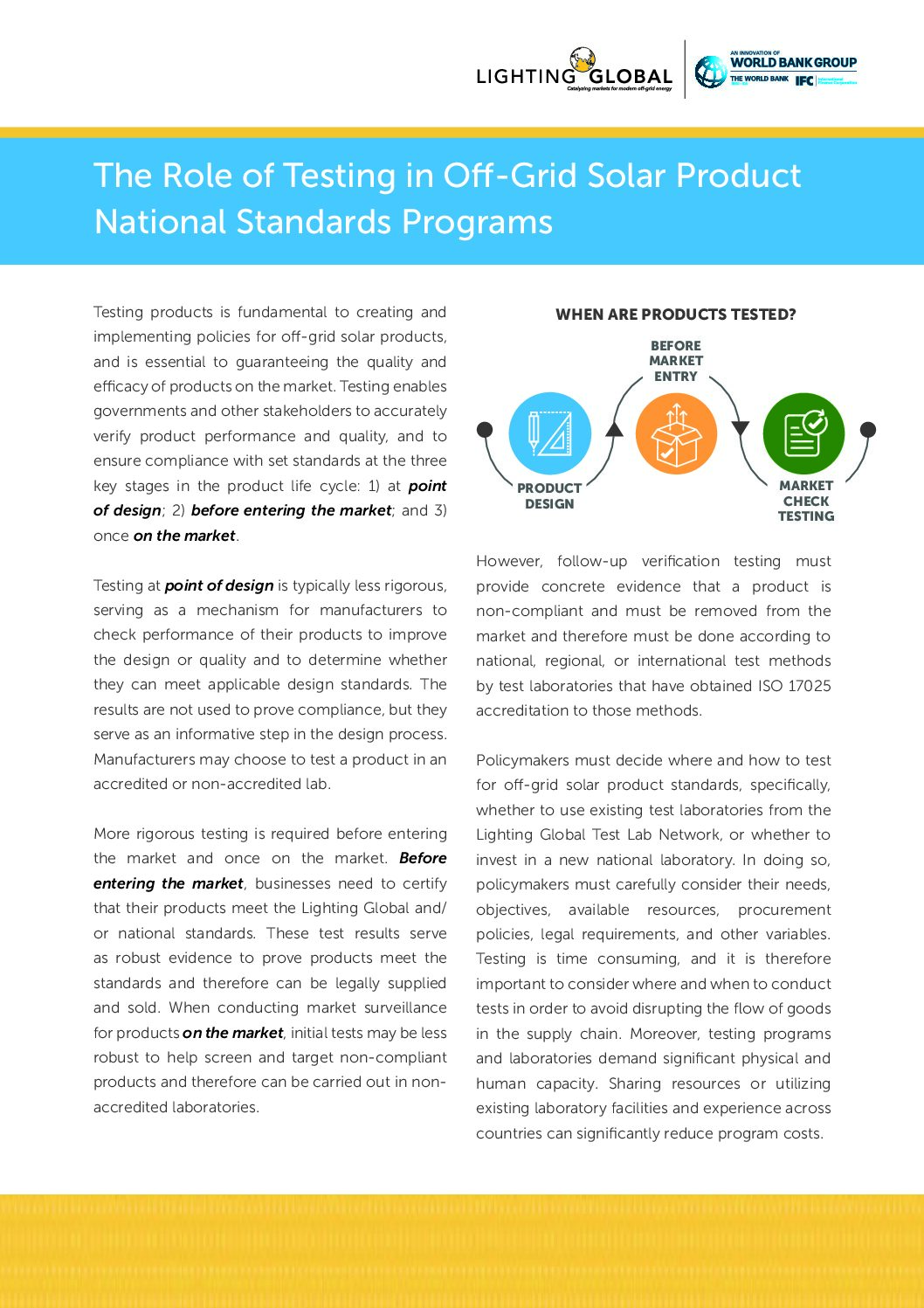
This brief explains the role of product testing in standard-setting for off-grid solar products. It provides recommendations based on good practices and explains how the Lighting Global Quality Assurance Program can help governments implement and enforce standards.
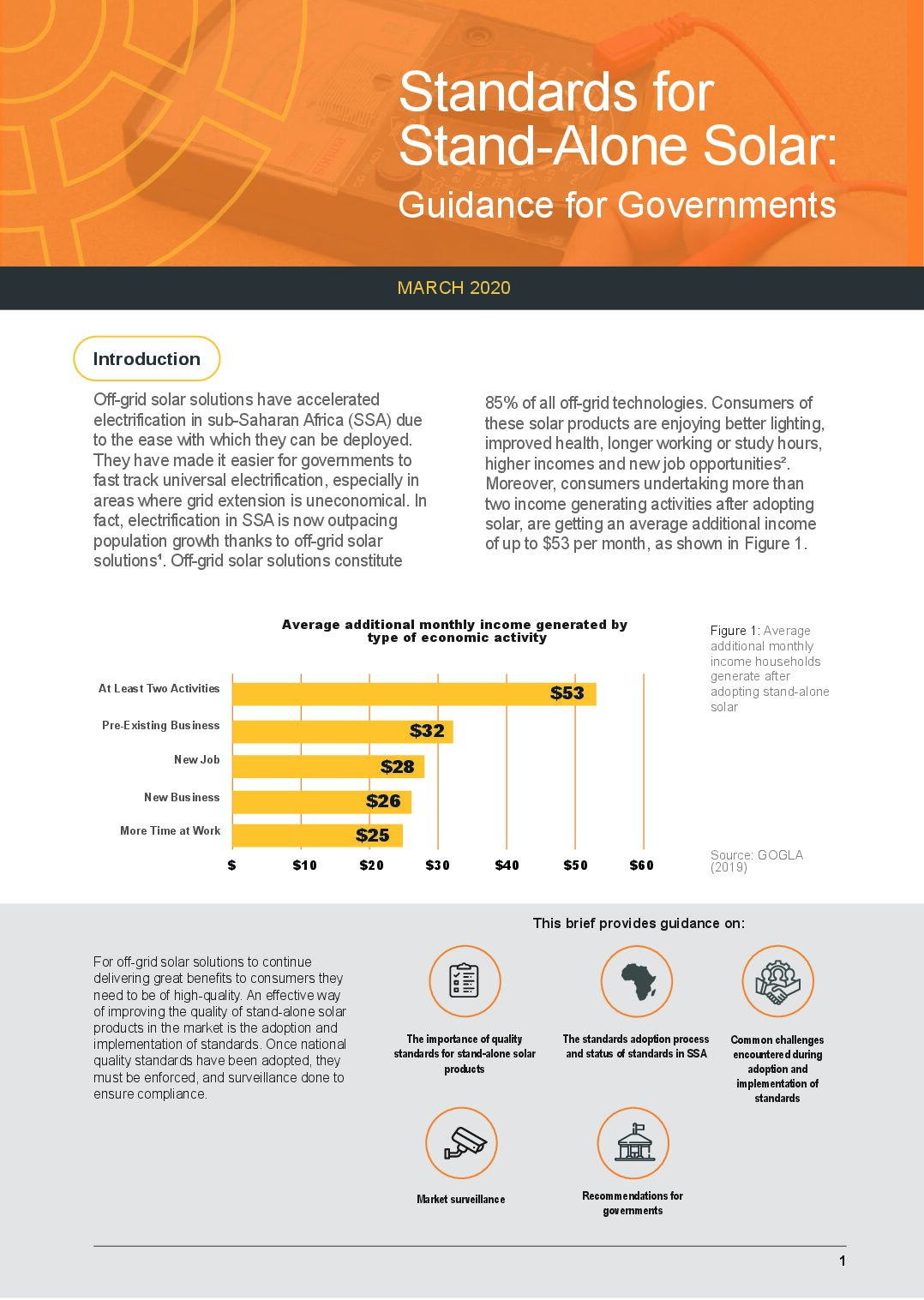
This policy brief provides guidance on the importance of quality standards for stand-alone solar products; how to develop and adopt standards, and the current status in Africa; common challenges encountered in this process; and market surveillance; as well as recommendations for governments.
This report shares successful industrial efficiency practices from the Republic of Korea.
This action plan, developed with support from SEforALL and ECREEE, lays out the energy access strategy of Côte d’Ivoire for 2016-2020/2030. It includes extensive background and context as well as information on strategic priorities and measures to promote these.
This report looks at the mineral demand for a net-zero emissions energy system, focusing on seven critical minerals and discussing the role of technological choices, circular economy strategies, and responsible mining in reducing the environmental impact of the transition.
This report focuses on the material resources required for the energy transition and demonstrates that there are plentiful resources available to support a prosperous net-zero global economy.
This brief describes policy options for the decarbonisation of heavy industry, both for improved material efficiency and for electrification.
This brief presents case studies from Latin America and the Caribbean of policies that foster industrial development that supports the SDGs.
This brief discusses how African LDCs can develop industrial policies that prioritise infrastructure, clean technologies and youth employment.