
This toolkit serves as a one-stop-shop to support local and regional governments to identify, design and implement renewable energy projects in public-private partnerships. It provides practical advice on: 1) the decision-making process that leads to establishment of a PPP 2) division of tasks, goals and risk management between the partners engaged in the PPP, as … Continue reading “Unlocking Public-Private Partnerships: A Toolkit for Local Governments”
This report by the C40 Cities Climate Leadership Group provides an overview of actions city governments can take to develop an enabling environment for the expansion of EV charging infrastructure, including by working with the private sector and attracting outside investment.
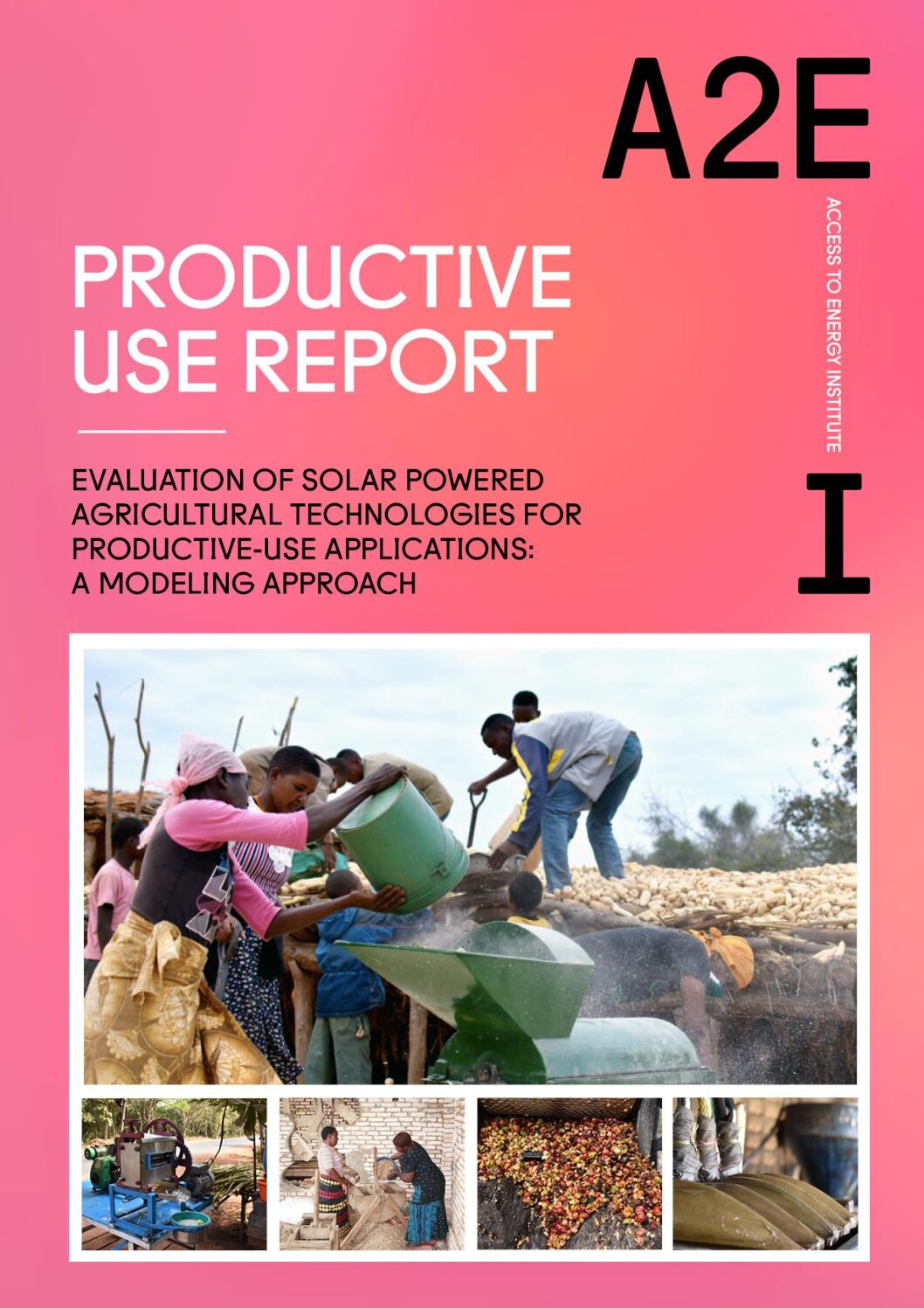
This report uses economic modelling to investigate the viability of ten different productive use applications of solar power in agriculture (oil extraction, maize shelling, rice hulling, fruit juice making, sugar cane juicing, fruit drying, flour milling, peanut shelling and coffee pulping). It investigates each technology in detail and then calculates the profits and other benefits … Continue reading “Productive Use Report – Evaluation of solar-powered agricultural technologies for productive-use applications: A modelling approach”

This brief report introduces the concept of the WEF nexus and explains how the FAO has applied the nexus approach in its work, with many case study examples.
This webpage provides an introduction to smart grids, an overview of recent progress and recommendations for governments and utilities.
This report identifies opportunities for and barriers to renewable energy component manufacturing in African countries, and proposes interventions to accelerate investment in the space.
This report identifies opportunities for Latin American and Caribbean countries in global renewable energy value chains. It focuses particularly on countries with significant mineral reserves, including Bolivia and Ecuador.
This executive summary gives a brief overview of global solar PV supply chains, with a lot of data and interesting visuals.

This report dispels myths about geopolitical issues around the need for critical materials for the energy transition, and concerns about dependency.
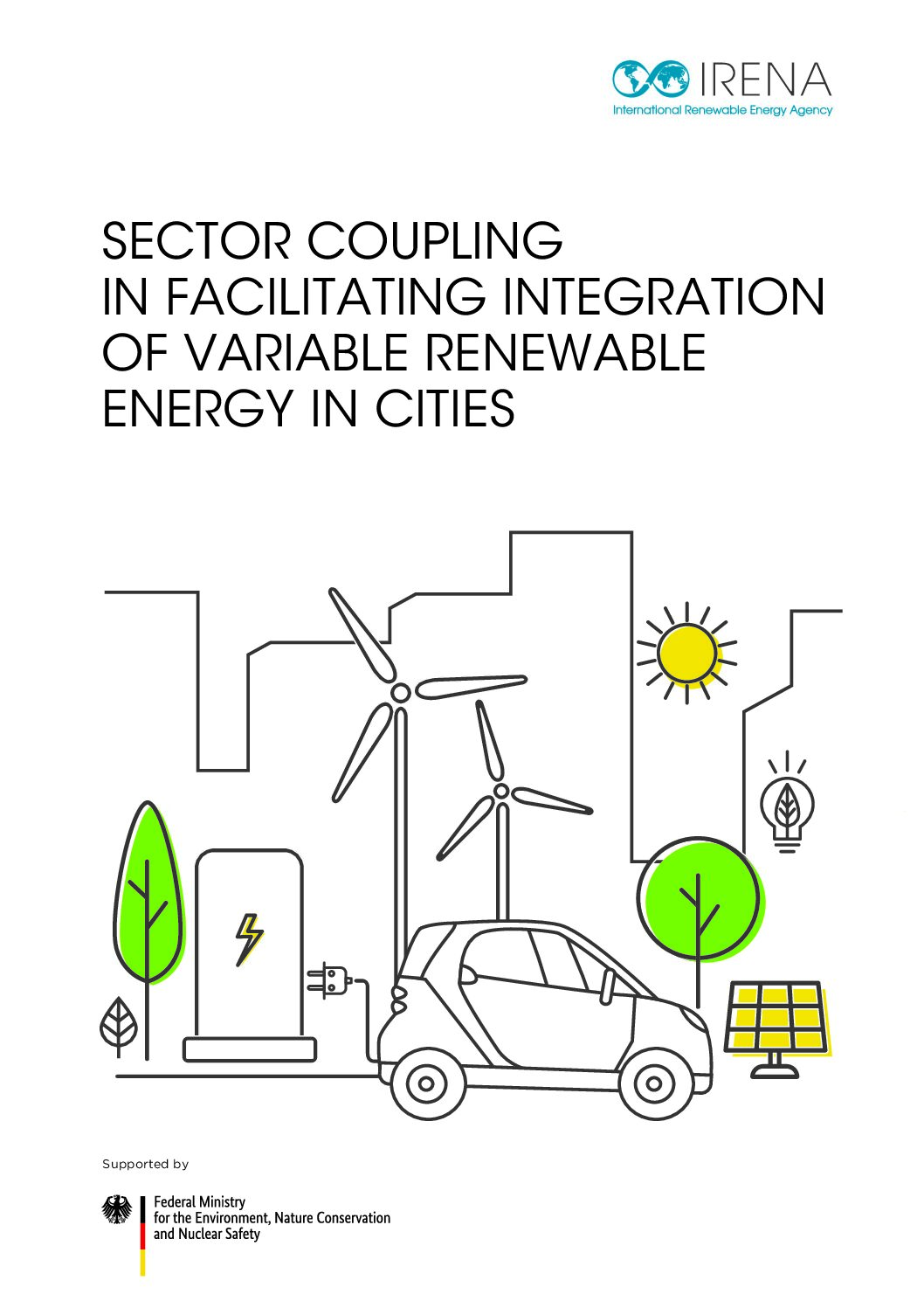
This report highlights the importance of sector coupling as a key source of flexibility that cities can explore to stabilise power grid operations when integrating high shares of variable renewable energy sources. It presents a range of sector coupling opportunities available for use in cities, including self-consumption of variable RE sources, the role of thermal … Continue reading “Sector Coupling in Facilitating Integration of Variable Renewable Energy in Cities”