
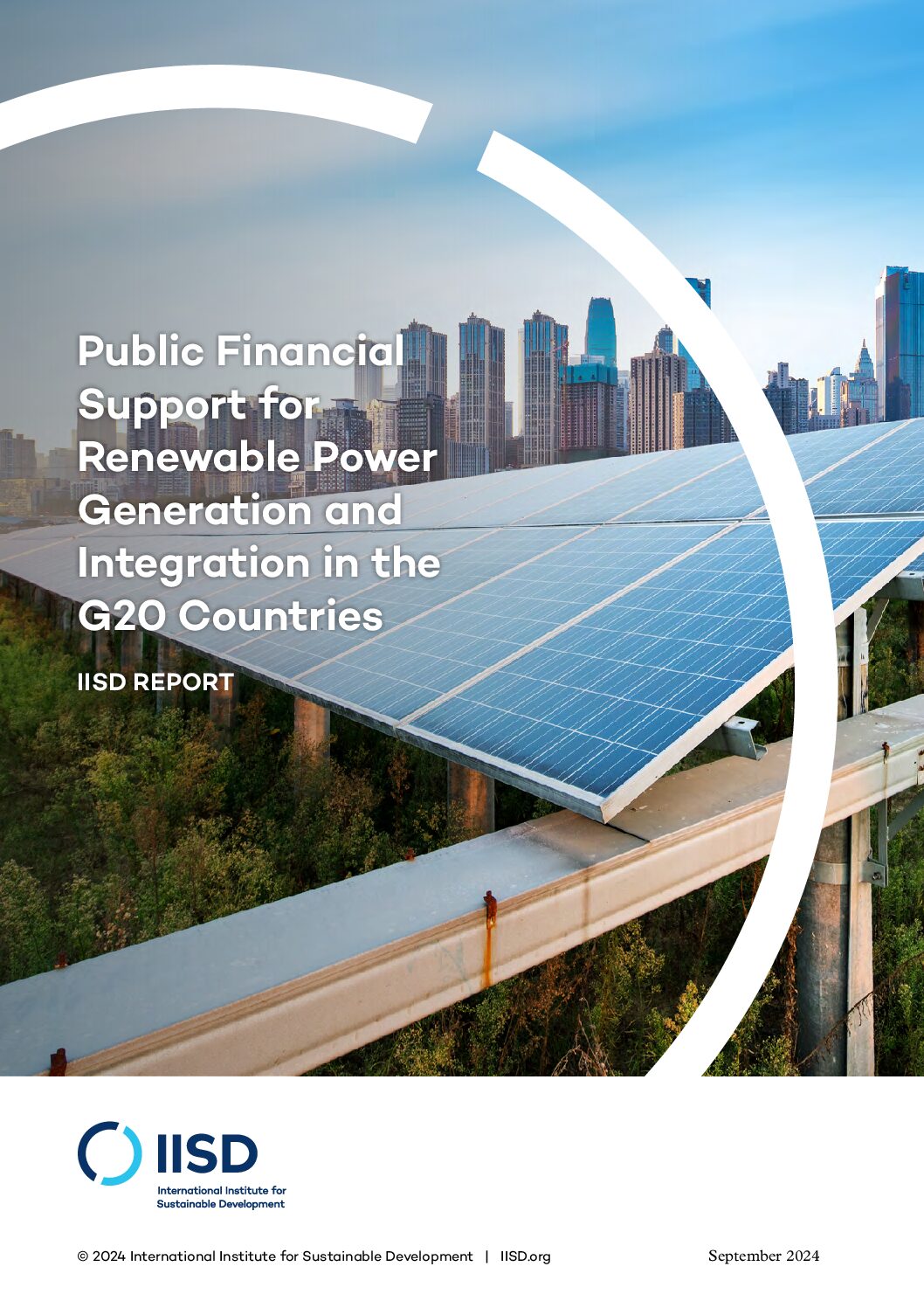
Government spending and other forms of actual support to renewable energy is a blind spot at the international level. To help address the knowledge gap, IISD developed an inventory of public financial support for renewable energy generation and integration by G20 governments. It shows that G20 governments provided over $168 billion in public financial support … Continue reading “Public Financial Support for Renewable Power Generation and Integration in the G20 Countries”
Despite strong calls for energy subsidy reforms, governments around the world still spend billions subsidising fossil fuel consumption each year. This report investigates how reforms can be designed that work in practice, drawing on over a decade of World Bank experience supporting these processes.
This is an article by a company that offers solutions to offset the emissions generated by online shopping. It provides a quick and basic guide for companies on how to start generating and selling carbon credits.
This article announces the approval in March 2025 by the Integrity Council for the Voluntary Carbon Market (ICVCM) of a new cookstove methodology by Verra, which administers the Verified Carbon Standard. This sets a new benchmark for high-quality, trusted carbon credits for clean cooking. The article also provides data on the development of the clean … Continue reading “Verra’s Cookstove Credits Get ICVCM Green Light – Boosting Carbon Market Trust”
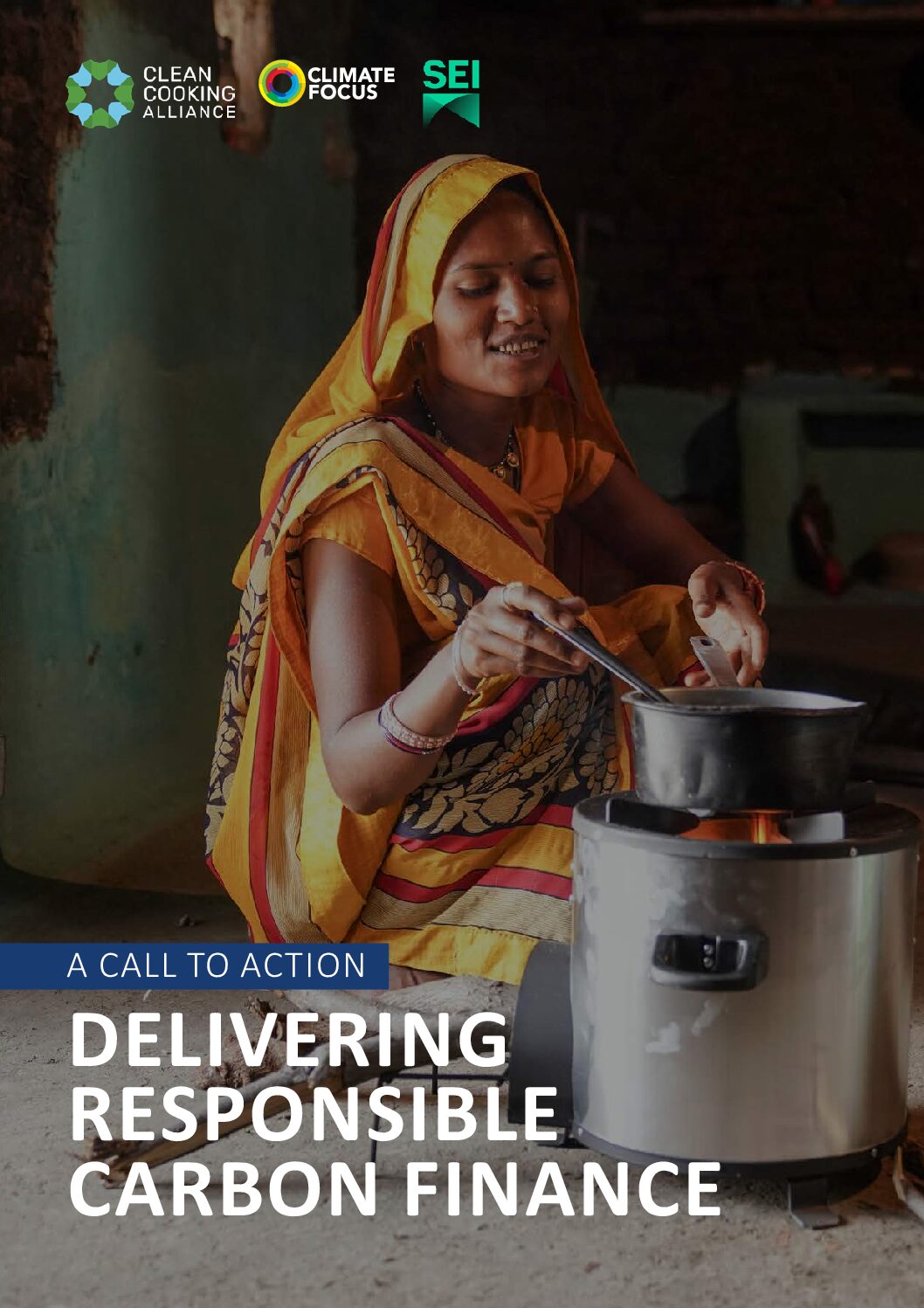
This report presents the CCA’s Principles for Responsible Carbon Finance in Clean Cooking: Integrity, Transparency, Fairness and Sustainability, and connects each with key actions to be taken by market actors.
This article tells a story of trial and error in the development of a clean cookstove business model in Zambia, highlighting the many factors that come into play and the occasional unpredictability of the market.
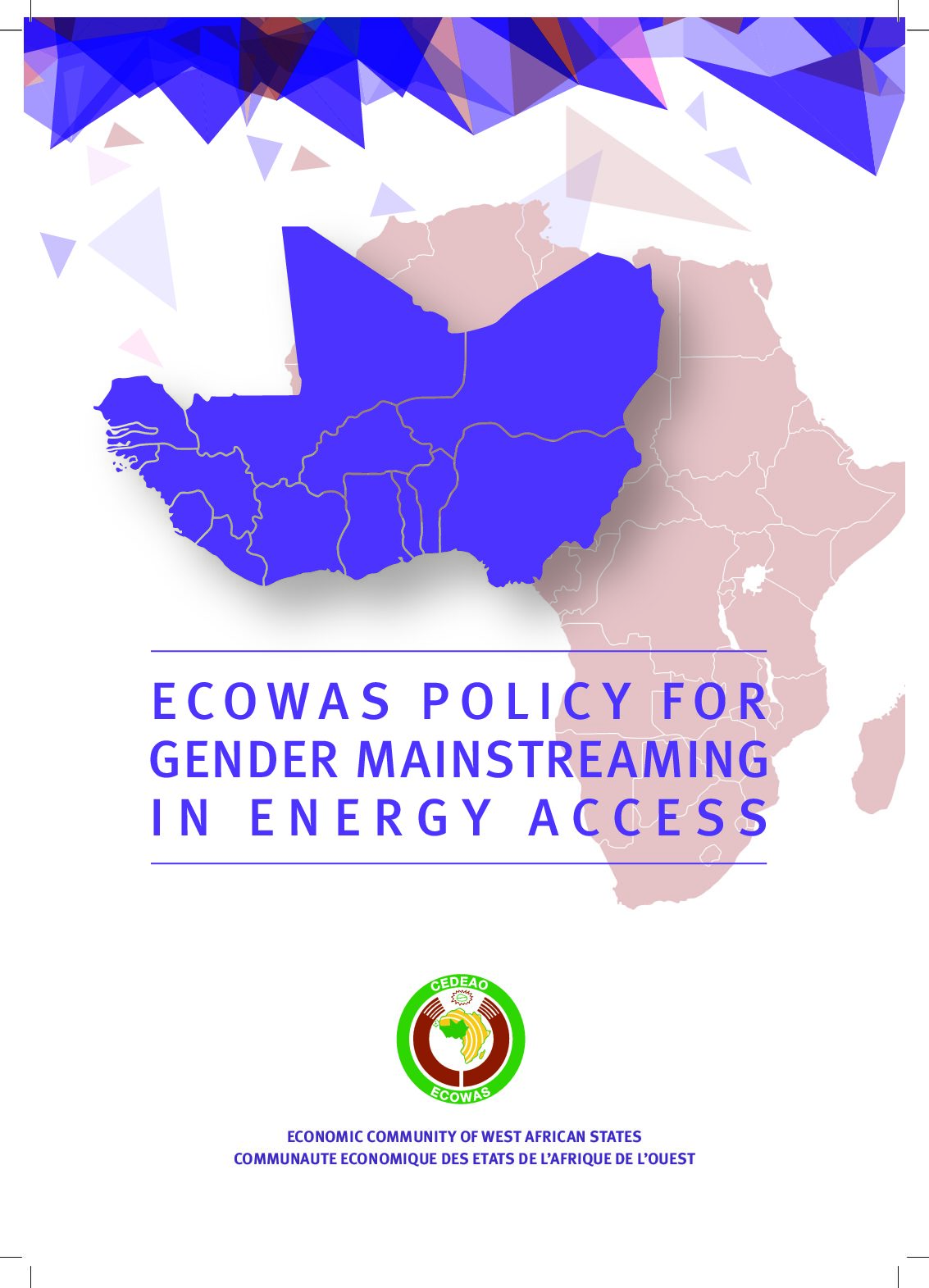
This is a good practice example of a regional policy that mainstreams gender equality concerns in energy access policies and programmes.
This is a good practice example of a ministerial agreement to promote the design and implementation of gender-inclusive strategies in the Ecuadorian energy sector.
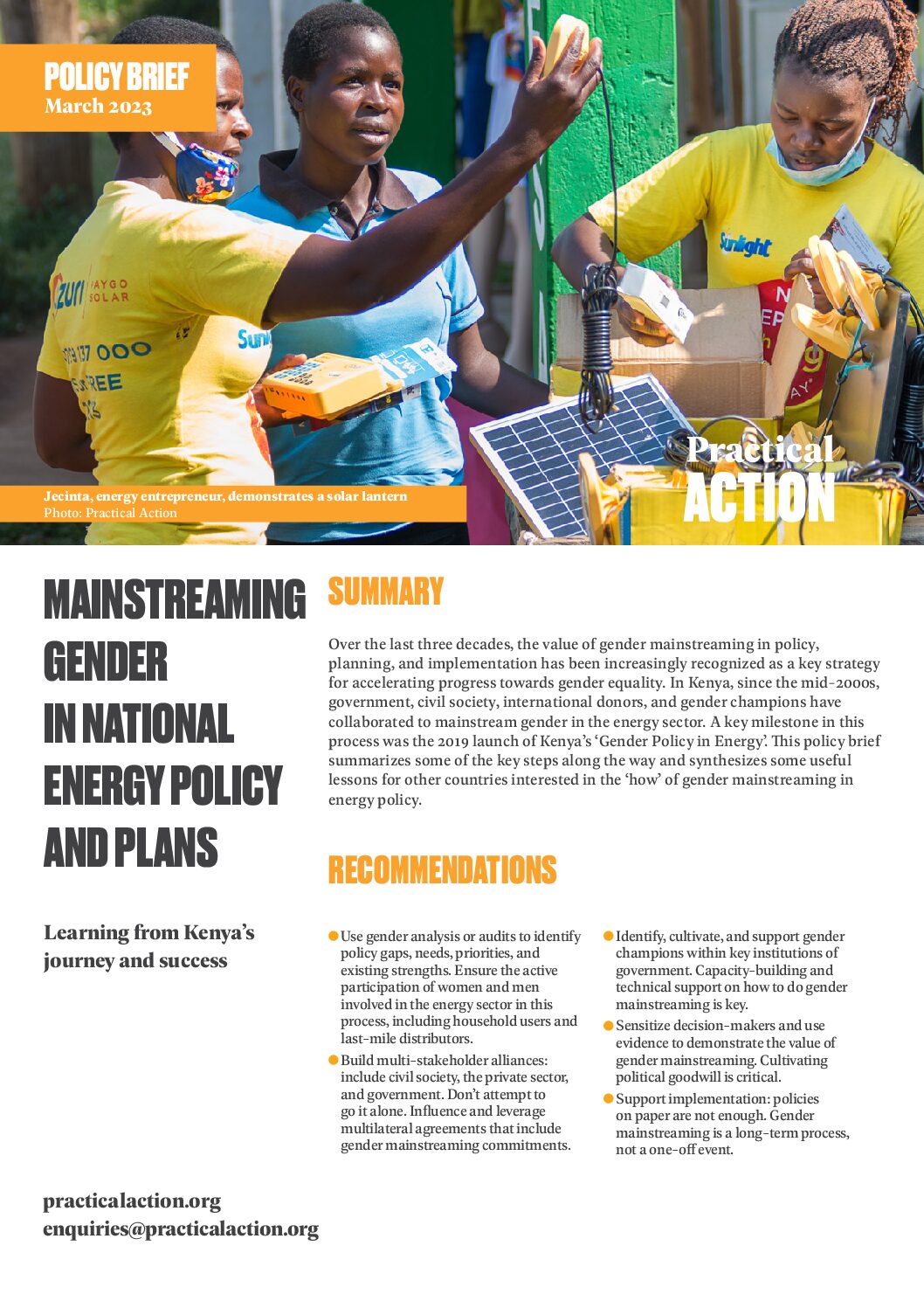
This brief shares learnings about mainstreaming gender in energy policies, based on the process through which the Government of Kenya developed its Gender Policy in Energy.
This is a good practice example of a gender policy for a national energy ministry.