
The average lifespan of a building is 50 years, so the design of buildings that are constructed now will have an effect on energy consumption in our cities until well into the 2070s. This article presents the most effective options for cities to set mandatory minimum energy performance standards for buildings, to prevent locking in […]
This report provides concrete instructions on how to develop a gender-sensitive energy policy.
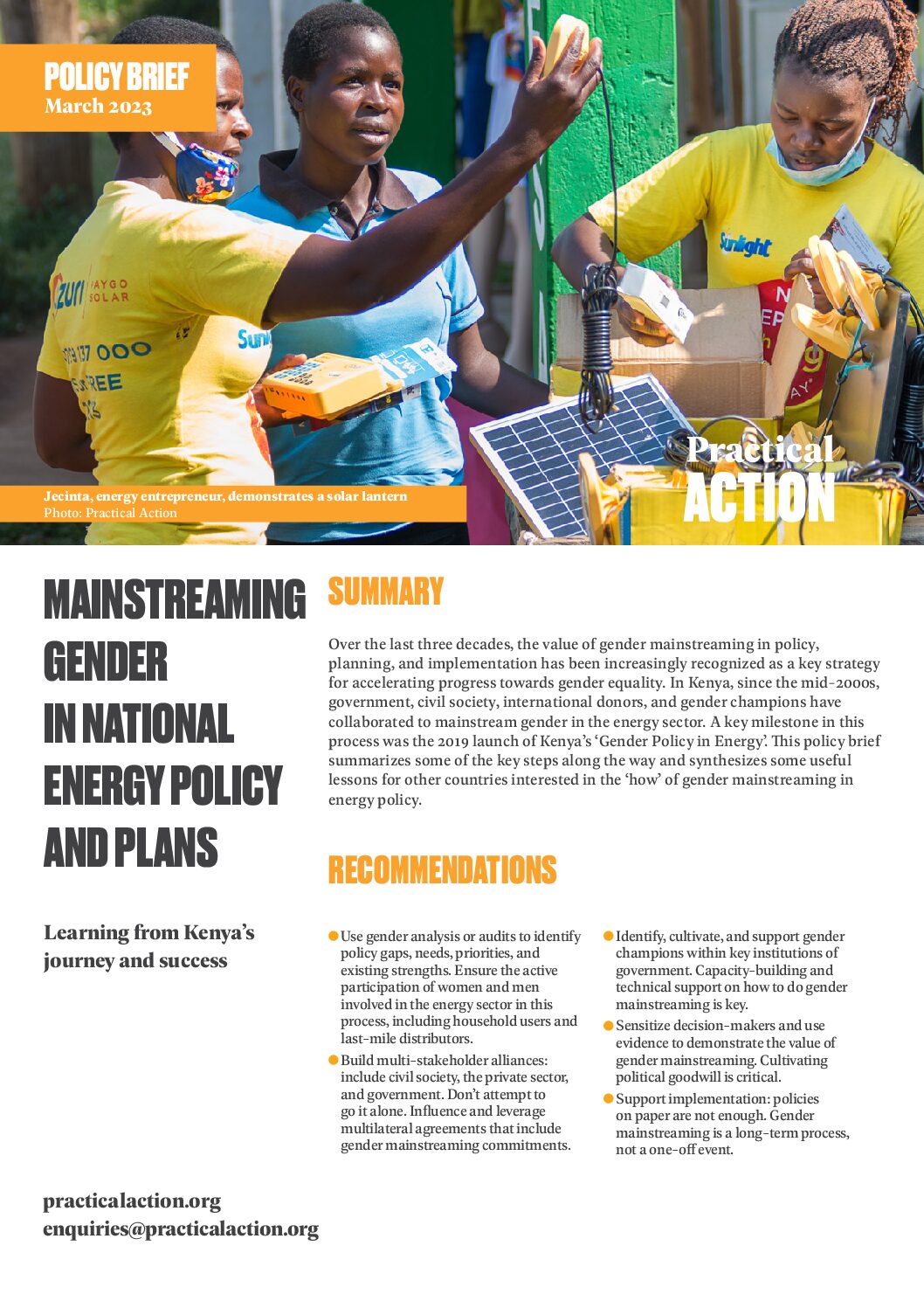
This brief shares learnings about mainstreaming gender in energy policies, based on the process through which the Government of Kenya developed its Gender Policy in Energy.
This is a good practice example of a gender policy for a national energy ministry.
This article assesses the effectiveness of gender audits to mainstream gender in energy policy.
This report presents the results of a modeling exercise projecting the effects of different energy transition scenarios on Uganda’s economy.
This report examines the critical role of modeling for transmission planning for energy transitions.
This plan provides a comprehensive, forward-looking least-cost plan for the development of the country’s power sector, including both on-grid and off-grid.
This report looks at the mineral demand for a net-zero emissions energy system, focusing on seven critical minerals and discussing the role of technological choices, circular economy strategies, and responsible mining in reducing the environmental impact of the transition.
This report focuses on the material resources required for the energy transition and demonstrates that there are plentiful resources available to support a prosperous net-zero global economy.