
This report by the Network of Central Banks and Supervisors for Greening the Financial System investigates the main barriers to the scaling up of blended finance for climate action in the Global South, and provides recommendations for how to address these.

This publication shares the learnings from eight EU-funded research projects on energy behaviour and modelling, and presents their implications for policy design.
This webpage provides an introduction to smart grids, an overview of recent progress and recommendations for governments and utilities.
Identifying Factors Associated with Consumers’ Adoption of e-Mobility—A Systematic Literature Review
This article investigates the following questions: 1) What are the associated factors that affect the consumer’s intention to purchase EVs? (2) What is the impact of sociodemographic variables on the adoption of EVs? (3) What are the main obstacles to and motivators for introducing EVs and the expected recommendations for manufacturers, politicians, governments, and scientists?
This publication provides templates to support any city authority, business, institution or charity that wishes to effect a positive change in mobility behaviour.
This paper underscores the need for sustainable utilities to deliver the energy transition in lower- and middle-income countries, and provides recommendations to governments and other stakeholders.
This paper shares lessons for donors, policymakers in beneficiary governments, and financial institutions on whether and how best to deploy blended finance in the clean energy sector.
This report investigates opportunities to reduce consumption of scarce raw materials by recycling metals and other resources from energy technologies such as wind turbines, solar PV panels and batteries.
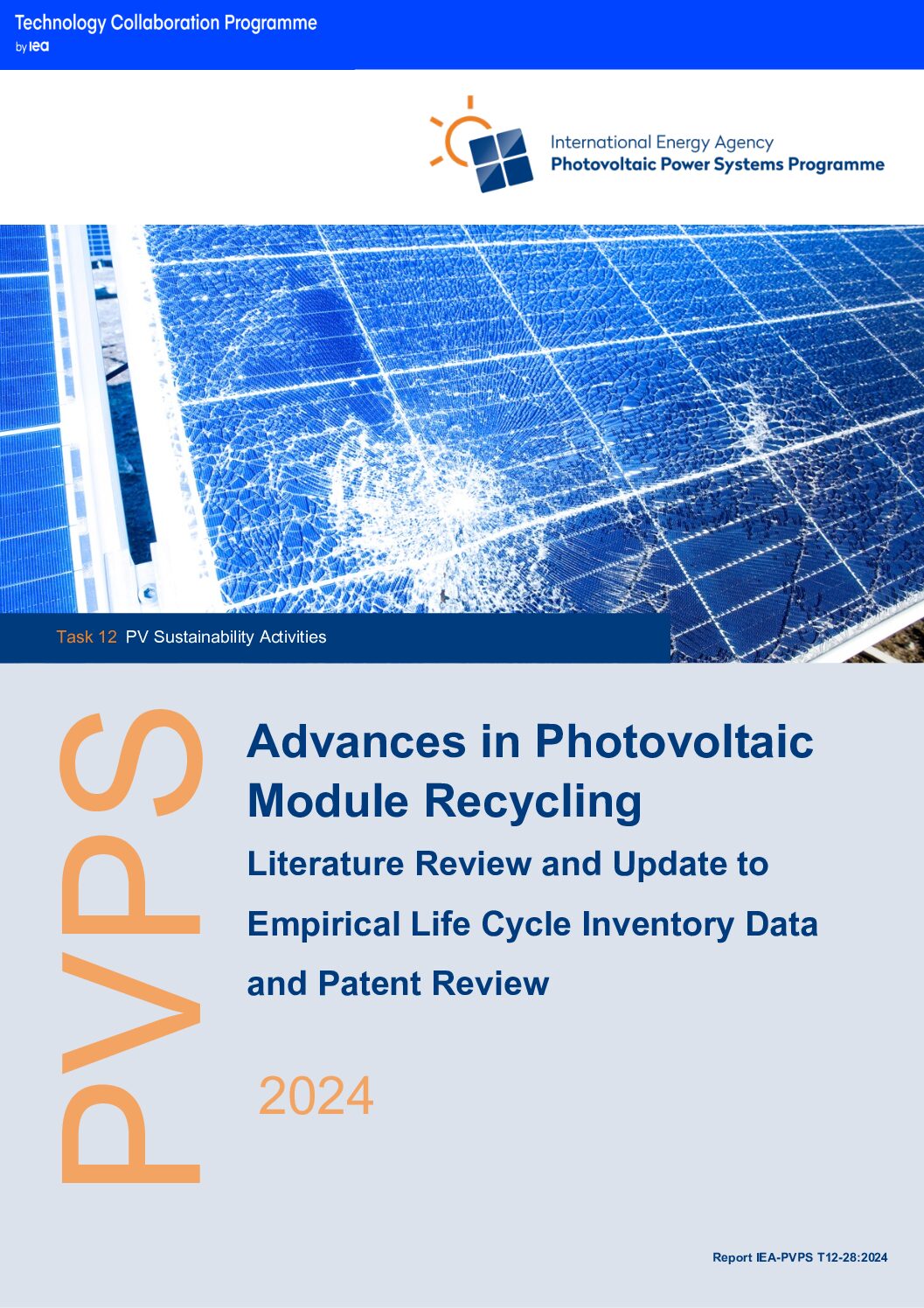
This study identifies advances in PV recycling technology that have the potential to be affordable, technically feasible, and environmentally responsible.
This paper focuses on strategies, policies, and programs that industry and government can develop to ensure that supply chains for EVs and their batteries are secure, circular, and reduce the need for mining virgin minerals, thus reducing adverse impacts on the planet and its people.