
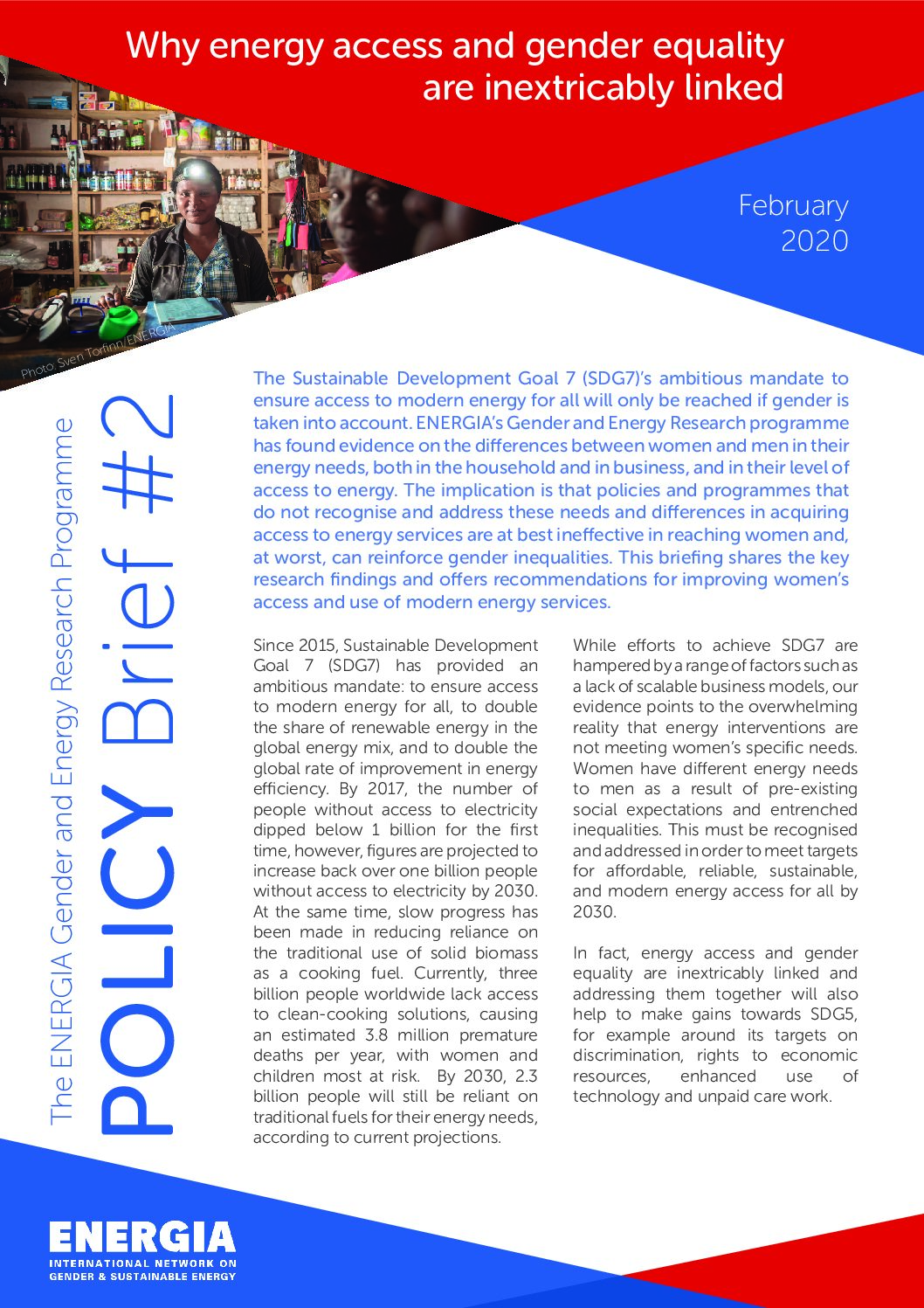
This policy brief explains the links between energy access and gender equality, and provides policy considerations.
The Global Innovation Hub aims to promote transformative innovations for a low-emission and climate-resilient future.
This guide addresses the challenges faced by rural energy enterprises in developing countries, and sets out solutions such as business models offering cooking energy as a service.
This paper underscores the need for sustainable utilities to deliver the energy transition in lower- and middle-income countries, and provides recommendations to governments and other stakeholders.
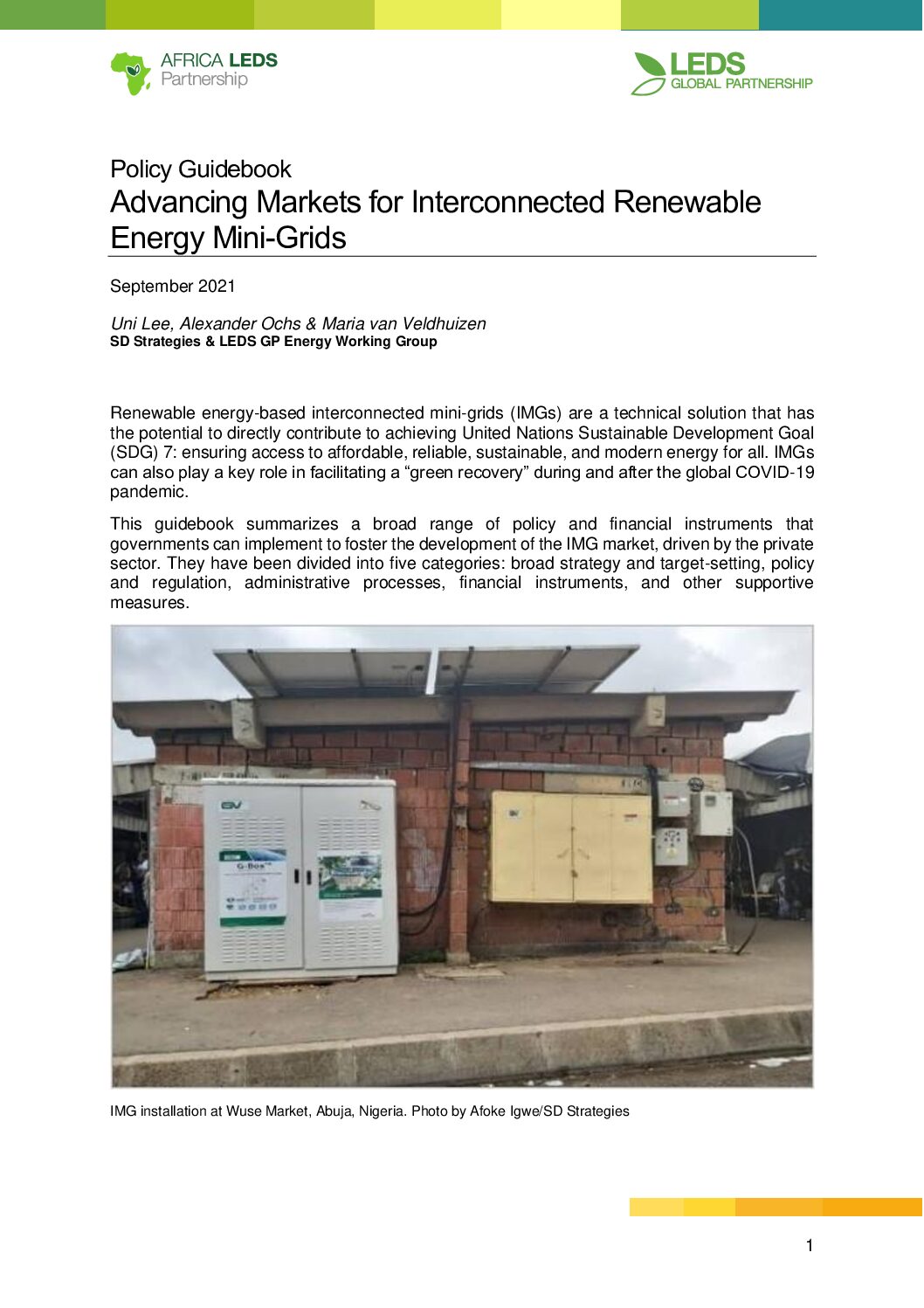
This guidebook summarizes a broad range of policy and financial instruments that governments can implement to foster the development of the interconnected mini-grid market, driven by the private sector.
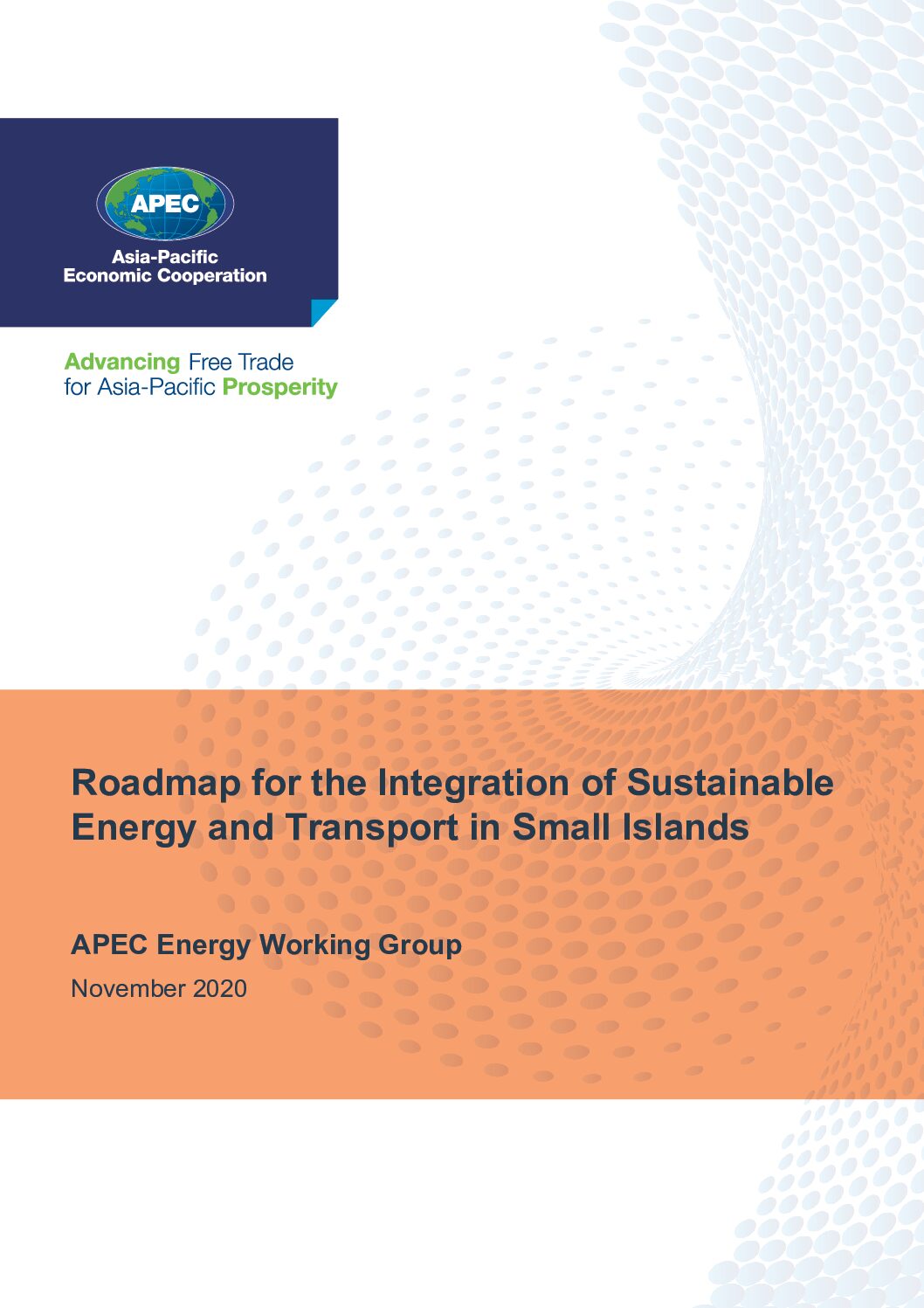
This report highlights the economic, social and environmental benefits that energy and transport sector-coupling and a transition towards EV- and RE-based, efficient systems can create in small island settings, and provides tools for the planning of such a transition.
This article explores how system planning, and in particular assessments of system adequacy, will need to innovate and evolve to allow power systems to keep delivering secure and affordable electricity supply during energy transitions.
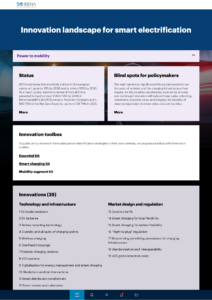
This database presents the current status, policy barriers, and key innovations for electrification of mobility, heating and cooling, and hydrogen production.
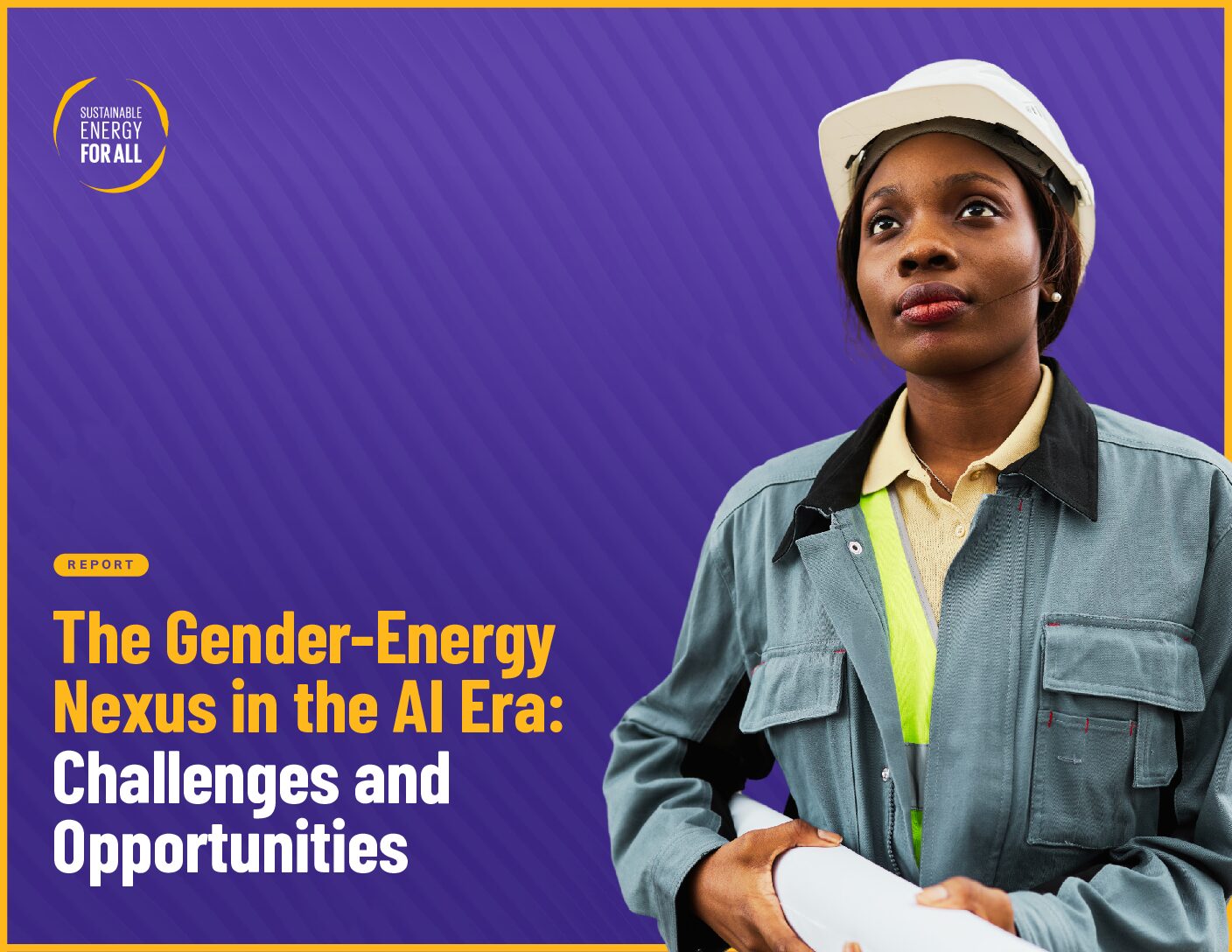
This report explores the critical intersections of AI development, gender equality and energy transitions, emphasizing how AI applications can advance a sustainable, equitable and just energy transition.
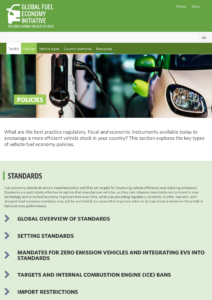
This page explores the best practice regulatory, fiscal and economic instruments available today to encourage a more efficient/electric vehicle stock.