
This second edition from 2025 provides an update to the landmark report from 2019, based on a new survey of 1192 individuals working in the sector, and 233 companies and organizations. The headline finding was that despite widespread efforts, the share of women in renewable energy has not grown over the past six years: it … Continue reading “Renewable energy: A gender perspective (Second edition)”
This report provides baseline data on women’s employment in renewable energy, as well as information on barriers to gender equality and recommendations to close gender gaps.
This report provides baseline data on women’s employment in wind energy, as well as information on barriers to gender equality and recommendations to close gender gaps.
This report provides baseline data on women’s employment in solar energy, as well as information on barriers to gender equality and recommendations to close gender gaps.
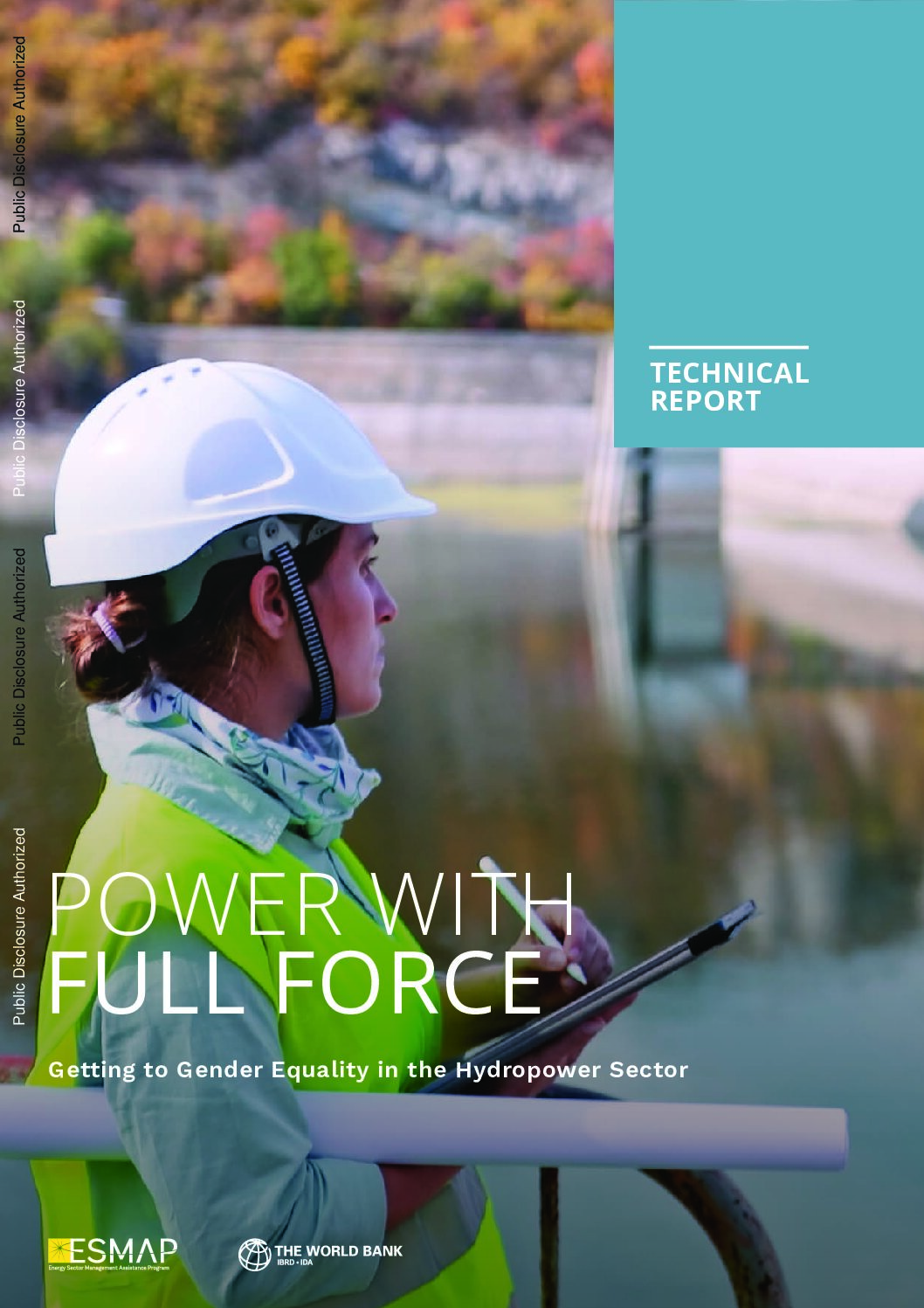
This report provides baseline data on women’s employment in hydropower, as well as information on barriers to gender equality and recommendations to close gender gaps.
This report provides extensive data and analysis on men and women’s views on gender equality in 32 countries around the world, including Uganda and Bolivia.
This guide aims to help energy statisticians understand the various elements and processes involved in renewable energy data collection and management, and identify capacity gaps. It covers seven requirements for effective data management: 1. Legal and institutional frameworks; 2. Well-defined data requirements; 3. Sufficient skilled personnel; 4. Clear methodologies and processes; 5. Appropriate data collection … Continue reading “Capacity needs assessment for renewable energy statistics”
The is comprehensive course is intended for energy statisticians working at national statistical offices and ministries in charge of energy.
This paper underscores the need for sustainable utilities to deliver the energy transition in lower- and middle-income countries, and provides recommendations to governments and other stakeholders.
This paper focuses on strategies, policies, and programs that industry and government can develop to ensure that supply chains for EVs and their batteries are secure, circular, and reduce the need for mining virgin minerals, thus reducing adverse impacts on the planet and its people.