
This slide deck, part of an online course, gives a brief but thorough overview of business models for off-grid solar energy, looking in particular at pay-as-you-go models, and presents insights into the investment landscape for off-grid solar companies.
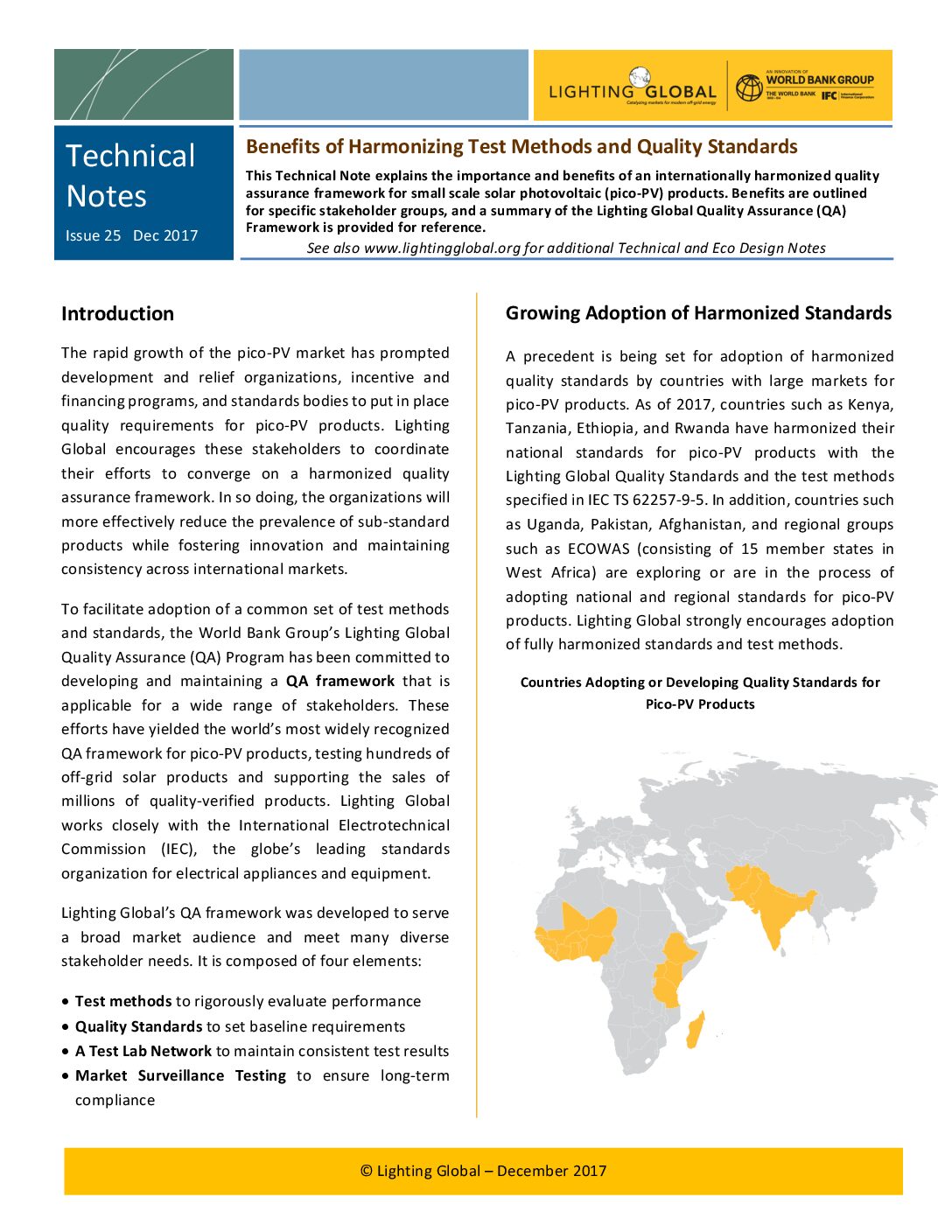
This brief explains the importance and benefits of an internationally harmonized quality assurance framework for small scale solar photovoltaic (pico-PV) products. Benefits are outlined for specific stakeholder groups, and a summary of the Lighting Global Quality Assurance (QA) Framework is provided for reference.
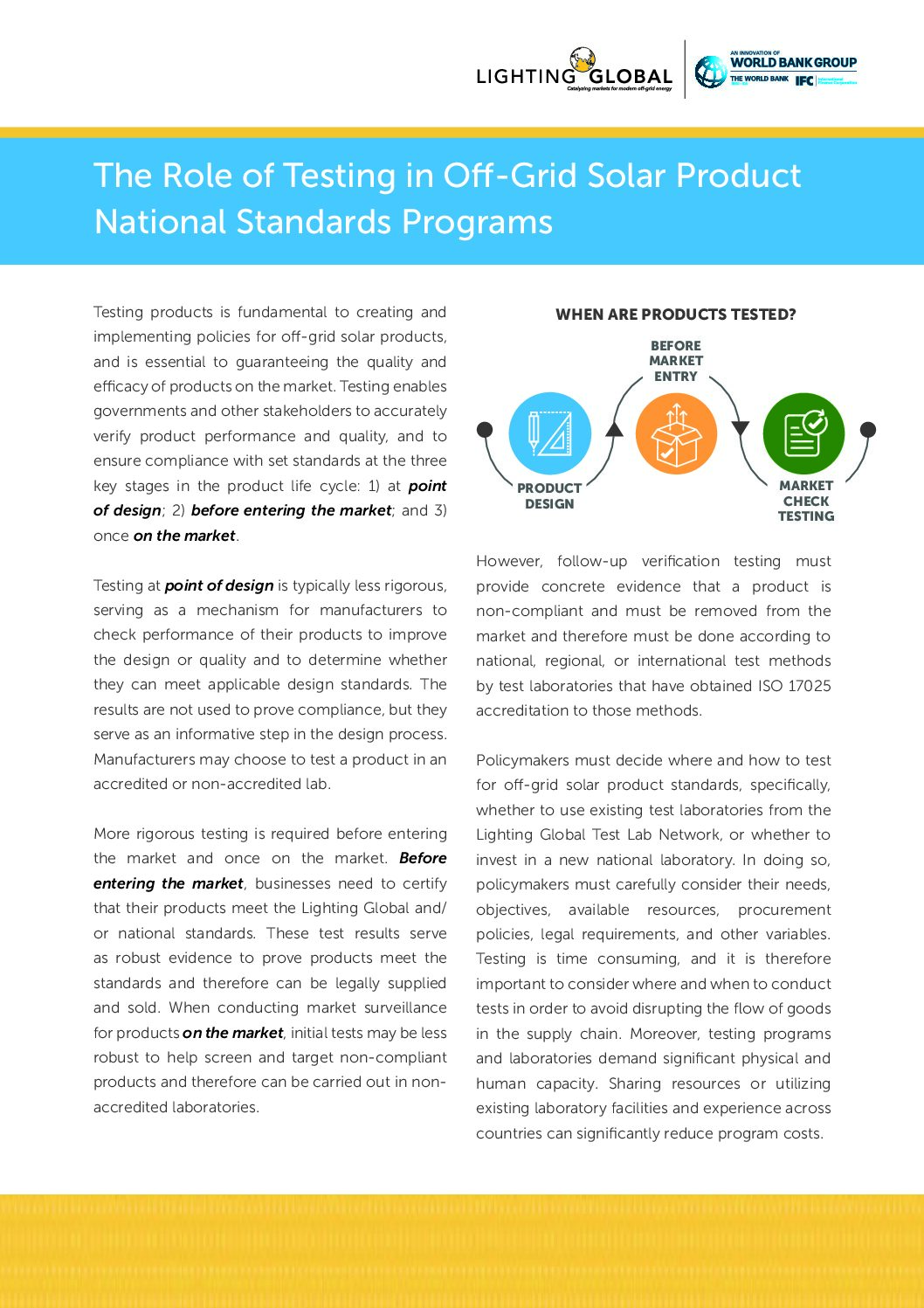
This brief explains the role of product testing in standard-setting for off-grid solar products. It provides recommendations based on good practices and explains how the Lighting Global Quality Assurance Program can help governments implement and enforce standards.
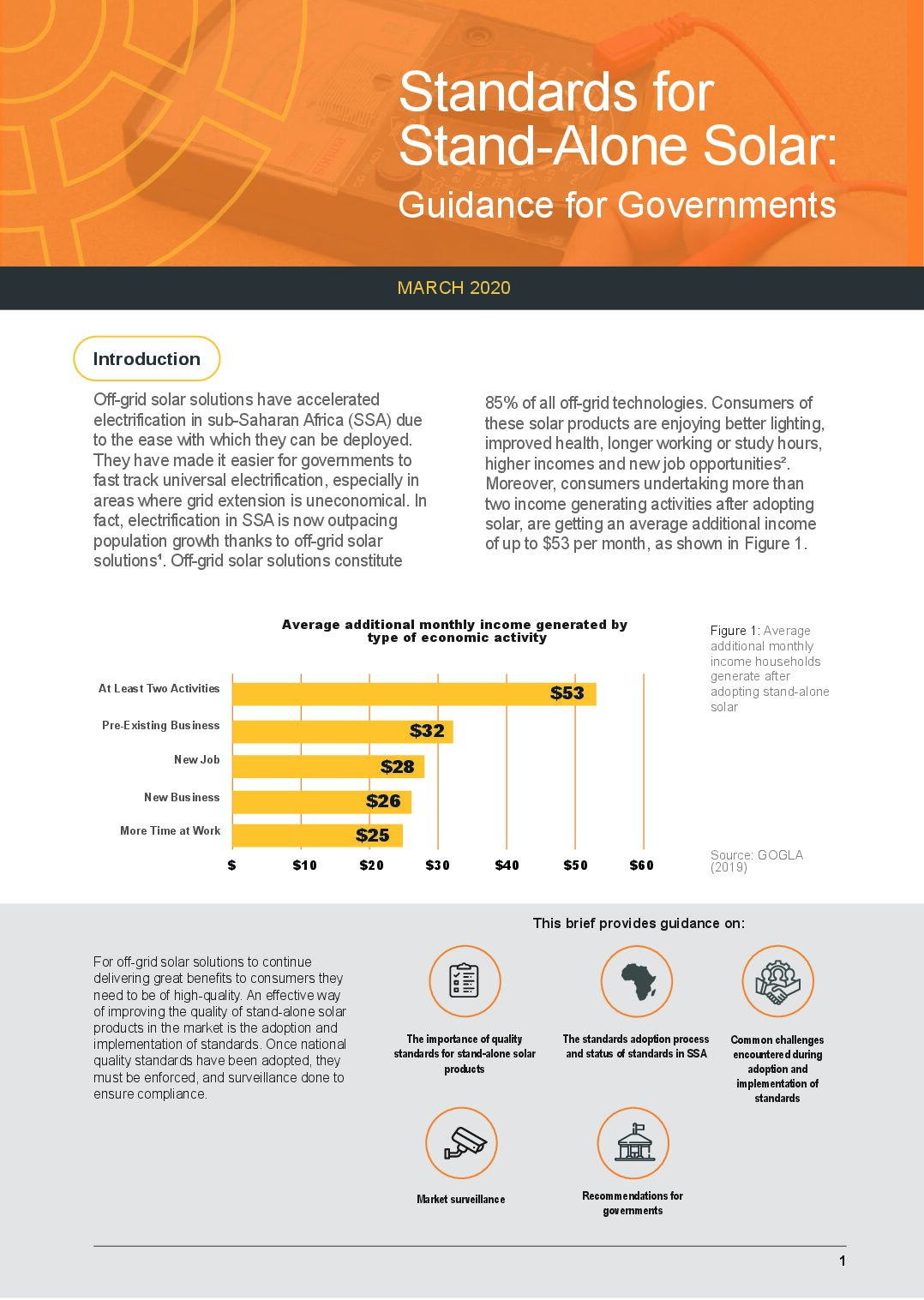
This policy brief provides guidance on the importance of quality standards for stand-alone solar products; how to develop and adopt standards, and the current status in Africa; common challenges encountered in this process; and market surveillance; as well as recommendations for governments.
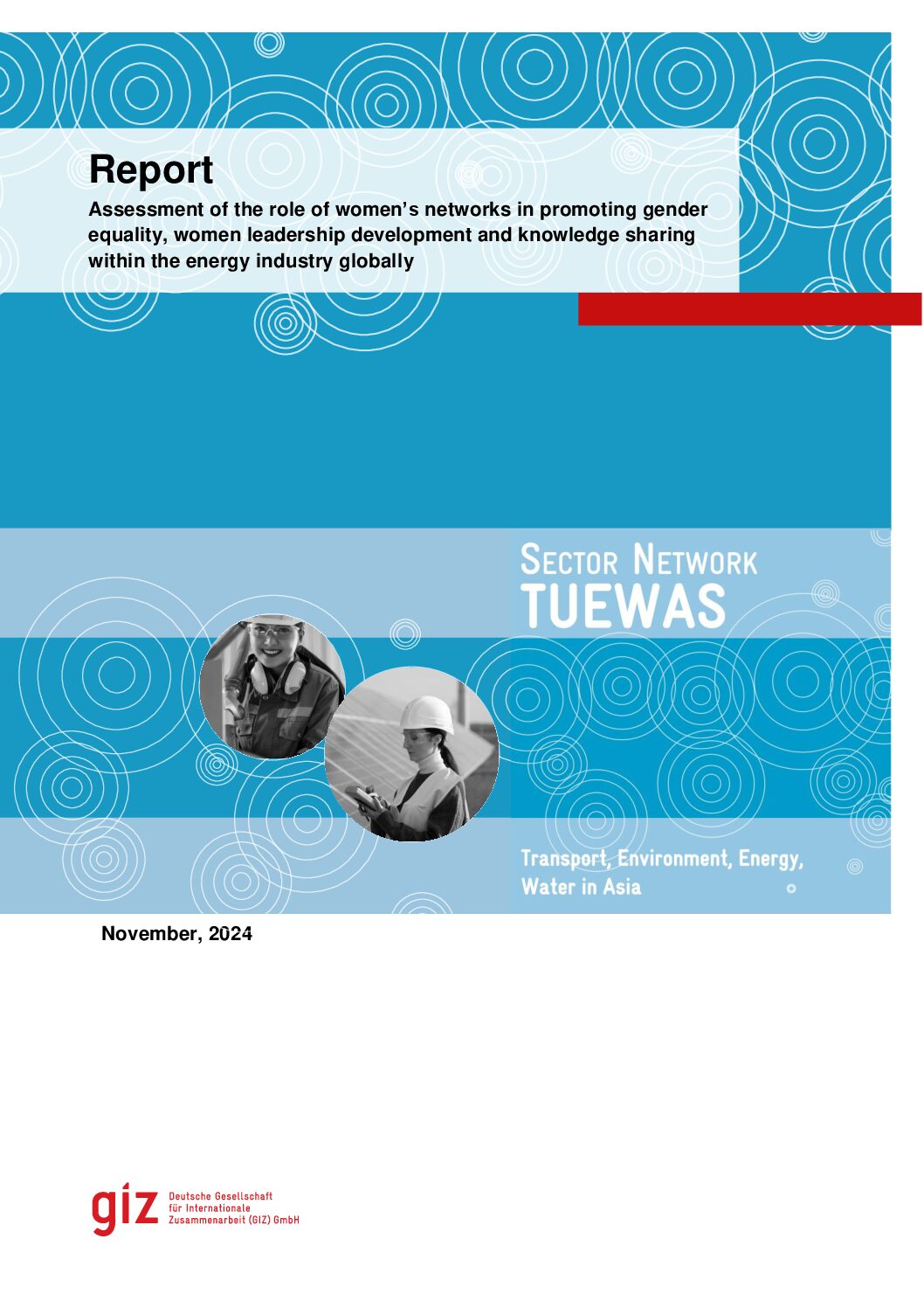
This report assesses the effectiveness of women in energy networks worldwide and offers best practices and recommendations for networks under development or those aiming to enhance their impact.
This market assessment describes the off-grid energy market in Uganda.
This brief provides a high-level overview of the status of Uganda’s off-grid solar markets, as well as relevant policies and programs.
This report describes the potential for financial aggregation to unlock new sources of capital for off-grid solar and e-mobility projects in Uganda.
This report describes regulatory barriers reported by 25 ESCO associations, and offers advice to policymakers to address these barriers.
The goal of this market guide is to serve as a reference document for early exploration of the market for energy service companies in Uganda (ESCOs) with a focus on energy and cost savings for agri-food processing companies.