
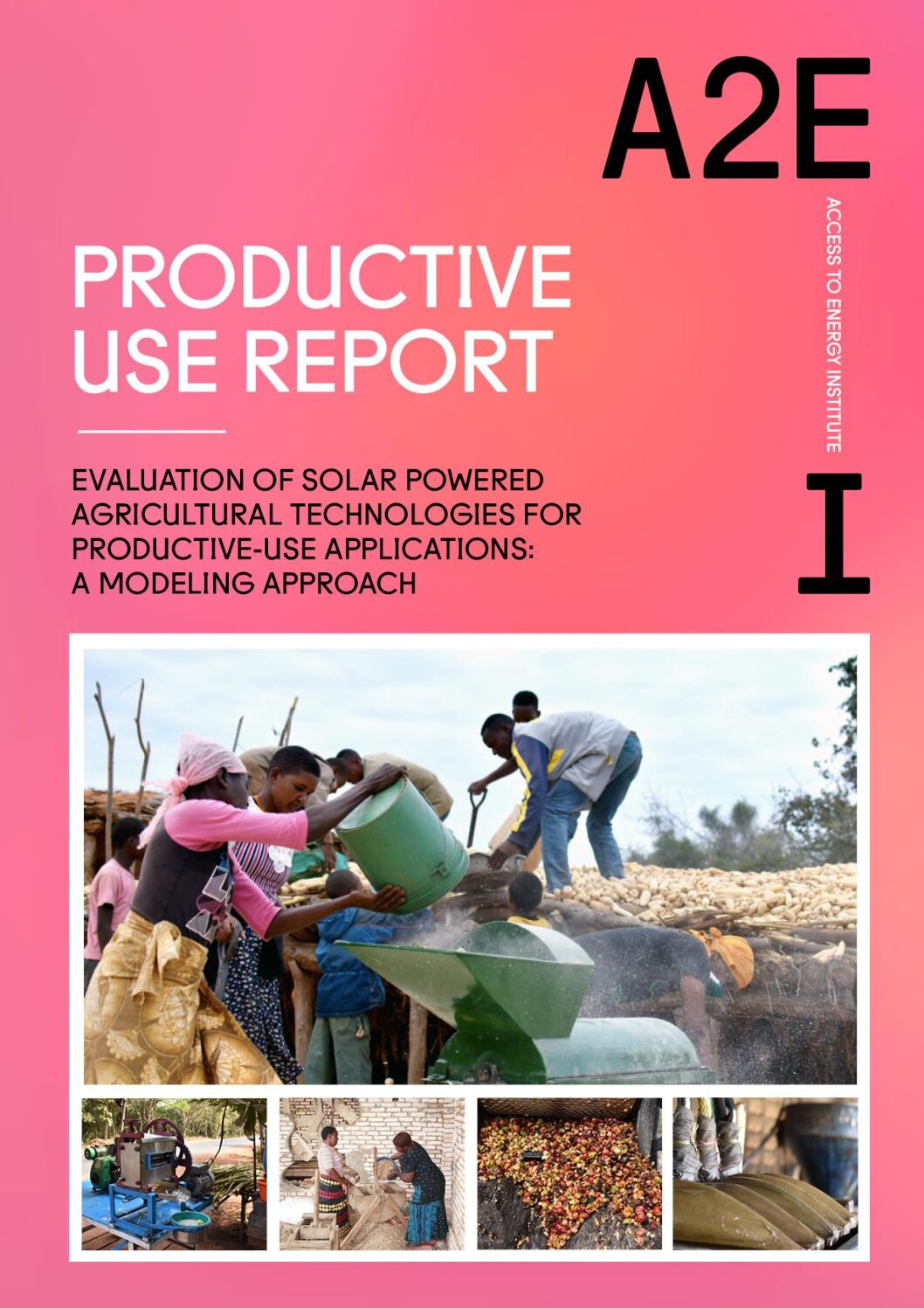
This report uses economic modelling to investigate the viability of ten different productive use applications of solar power in agriculture (oil extraction, maize shelling, rice hulling, fruit juice making, sugar cane juicing, fruit drying, flour milling, peanut shelling and coffee pulping). It investigates each technology in detail and then calculates the profits and other benefits … Continue reading “Productive Use Report – Evaluation of solar-powered agricultural technologies for productive-use applications: A modelling approach”
This brief report introduces the concept of the WEF nexus and explains how the FAO has applied the nexus approach in its work, with many case study examples.
This toolkit presents a glossary and a list of useful resources on the water-energy-food nexus.
This report considers the challenges faced by developers implementing renewable energy projects in the SADC region, analyzes existing prefeasibility or early-stage project preparation funds in the region and globally to assess if they effectively support project developers, and provides recommendations on how to improve and scale up these facilities.
This handbook examines financing mechanisms suitable for the renewable energy access sector in Madagascar, and provides advice on preparing financing applications.
The goal of this market guide is to serve as a reference document for early exploration of the market for energy service companies in Uganda (ESCOs) with a focus on energy and cost savings for agri-food processing companies.
This memo describes the current market for ESCOs in Uganda, barriers to the growth of the sector, and strategies to address these barriers.
This report describes regulatory barriers reported by 25 ESCO associations, and offers advice to policymakers to address these barriers.